Stone Lion Statue: Guardian of Hamadan’s Ancient Lions’ Gate

Site at a Glance
- Rating
- 4.2
- Popularity
- Low
- Country
- Iran
- Primary era
- Classical
- Eras represented
- Classical
- Civilizations
- Ancient Greek
- Site type
- Civic
- Remains
- Monument
On this page4 sections
History
The Lions’ Gate and its destruction
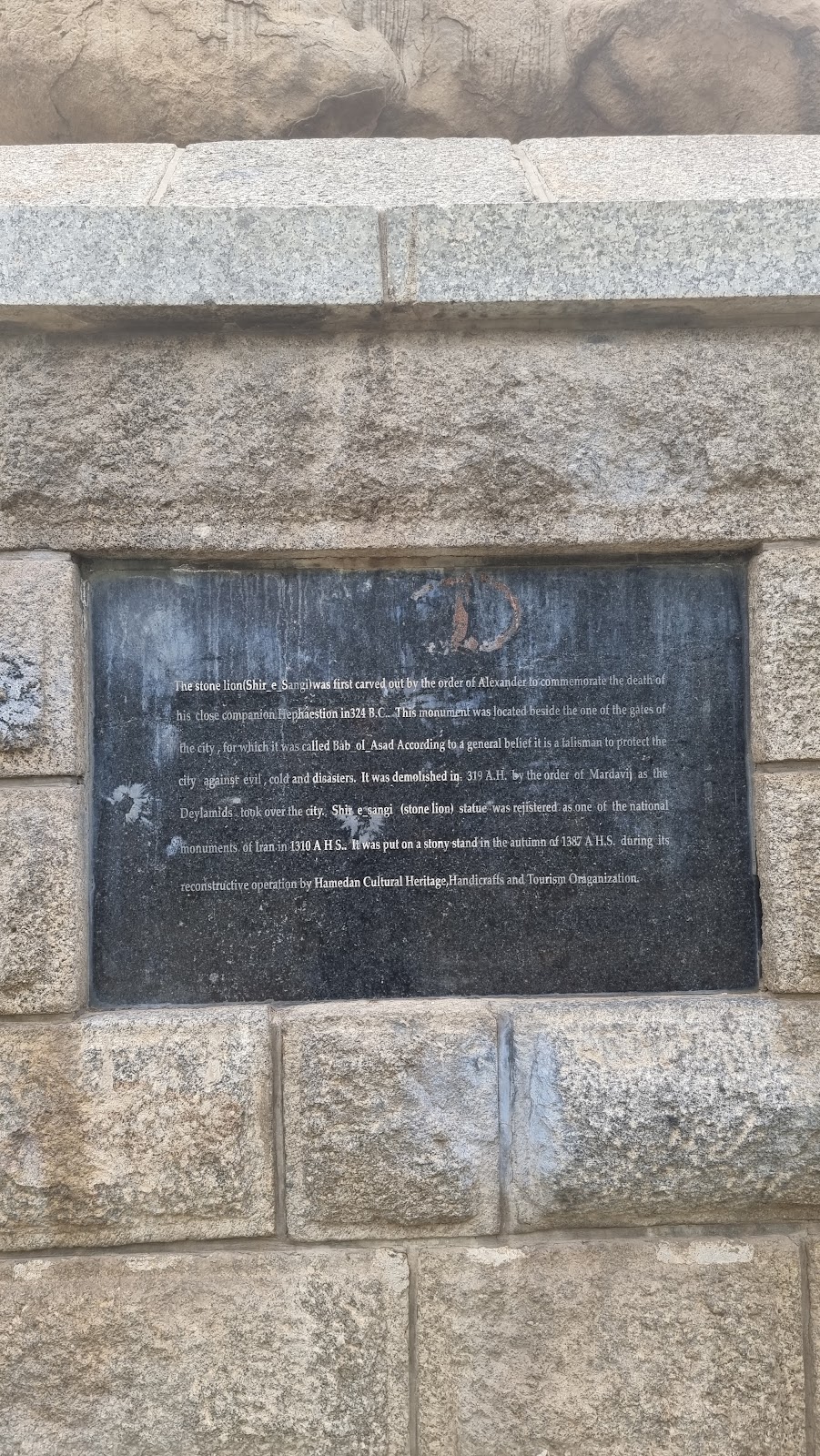
The Stone Lion Statue is a historical monument in Hamadan, Iran, associated with the ancient Lions’ Gate at the city’s southern entrance. The gate originally included two lion sculptures, which together formed part of the city’s defensive or ceremonial entrance. During the Islamic conquest of Persia, Arab conquerors called the structure the “Lions’ Gate.” The Deylamids, Iranian rulers and military groups from Daylam south of the Caspian Sea, demolished the gates in AD 931 after taking control of Hamadan.
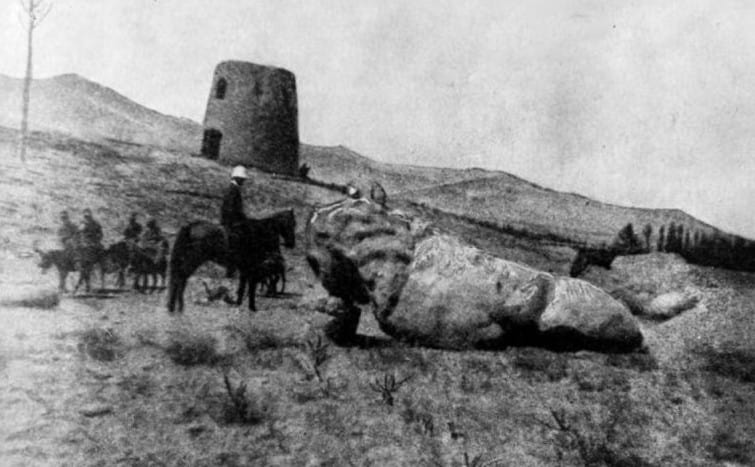
Mardavij, a Daylamite military ruler, later tried unsuccessfully to move one of the lions to Ray. After the attempt failed, he ordered the lions demolished. One statue was completely destroyed, while the surviving lion suffered a broken arm and was pulled down onto its side.
Survival and changing interpretations
The surviving statue remained on its side until 1949, when it was raised with the help of a supplementary arm made for it. Later local restoration efforts helped preserve the sculpture as a cultural landmark. Its original date and purpose remain debated. Interpretations have variously identified it as a Hellenistic sculpture, a work of the Parthian period, or a monument from the earlier Median era. The Parthians ruled a major Iranian empire from approximately the third century BC to the third century AD, while the Medes were an earlier Iranian people associated with a kingdom in western Iran before the rise of the Achaemenid Empire.
In 1968, Heinz Luschey argued that the statue was Hellenistic, a style and historical period that developed after Alexander the Great’s conquests spread Greek influence across parts of the eastern Mediterranean and Asia. He compared it with the Lion Monument at Chaeronea, an ancient Greek funerary monument erected in 338 BC. Luschey proposed that Alexander ordered the Hamadan lion built in memory of Hephaestion, his close companion and senior commander, who died in 324 BC. Iran’s Cultural Heritage Organization has adopted this interpretation. The statue is also regarded as a symbol of Hamadan’s ancient heritage and associated with strength, protection, and power.
Remains
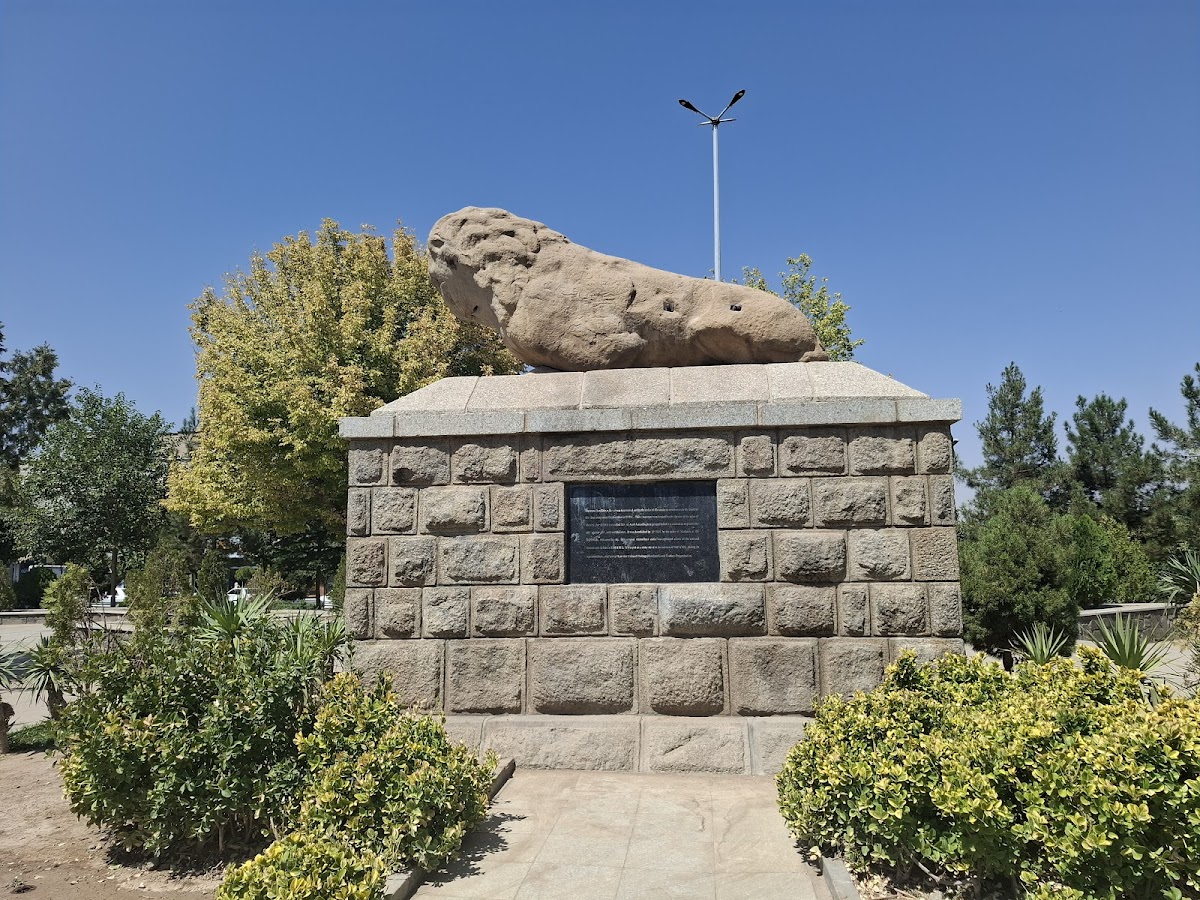
The surviving lion stands on Lion Hill, an elevated site overlooking Hamadan near the city’s southern entrance. Its position provides broad views across the city and the surrounding landscape, while also preserving its association with the former gateway. The sculpture was originally incorporated into a larger architectural structure at the city gates.
Carved from a single block of stone, the lion has a bulky, robust body and an imposing form. Weathering has softened its face, although traces of detail remain around the mouth and eyes. The broken arm was supplemented during the statue’s raising in 1949. Its stylized, powerful forms have been linked with proposed Parthian or Median artistic traditions, but that attribution remains uncertain. Prolonged exposure has also worn away parts of the original muscular modelling, facial detail, and decorative carving.