Ram Castle: An Ottoman Artillery Fortress on the Danube
Site at a Glance
- Rating
- 4.8
- Popularity
- Medium
- Country
- Serbia
- Primary era
- Early Modern
- External website
- Open
- Eras represented
- Classical, Early Modern
- Civilizations
- Ottoman, Roman
- Site type
- Military
- Remains
- Fort
On this page16 sections
History
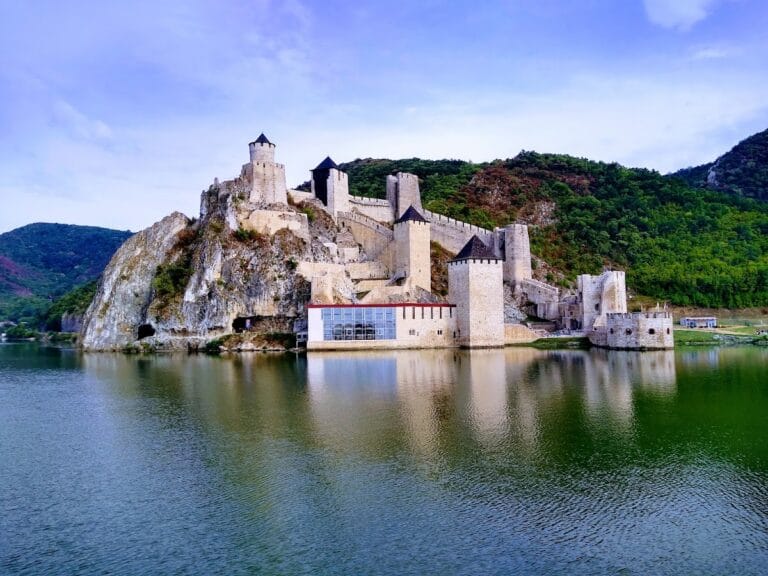
Ram Castle is a fifteenth-century Ottoman fortress in Serbia, built at Ram on the right bank of the Danube in 1483 during the reign of Sultan Bayezid II. Designed as an artillery fortress, a fortification built to use and withstand gunpowder weapons, it defended the Ottoman northern frontier and controlled movement along the river.
Earlier Celtic and Roman occupation
Archaeological investigations carried out between 2015 and 2018 revealed that the Ottoman fortress was built over older remains. Artifacts point to Celtic habitation before the Roman period, and a nearby Celtic fortified settlement, or oppidum, has also been identified. Some scholars have suggested that the area may have been where Alexander the Great encountered a Celtic delegation in the fourth century BC. Others have proposed it as one possible battlefield between the Greeks and the Triballi, an ancient Balkan people. These interpretations remain uncertain.
Roman remains beneath and around the fortress include a mausoleum and other structures. The area entered the historical record during the reign of Emperor Trajan, when it was a settlement used to station cavalry units. The Roman complex probably had a religious function and also served as a navigational landmark on the Danube. Folk traditions say that Attila the Hun visited the area during the first half of the fifth century, but this claim has not been established as historical fact.
Medieval frontier and Ottoman foundation
The earliest recorded medieval event connected with Ram took place in 1128, when a Byzantine army defeated the Hungarians in the area. The fortress visible today belongs to a later phase. Sultan Bayezid II, the Ottoman ruler from 1481 to 1512, ordered its construction in 1483 as part of a program to strengthen Ottoman positions along the Danube frontier.
Ram was intended to resist attacks from Hungary and Serbia, accommodate firearms and heavy artillery, and regulate traffic on the river. It also provided a base for Ottoman expeditions into northern territories. A caravanserai, a roadside lodging complex for merchants, travelers, and their animals, was built near the fortress at the same time. Its development helped the modern village of Ram grow around the stronghold.
Changing strategic importance
Ram’s frontier role changed after the Ottoman defeat of Hungary and the expansion of Ottoman power across the Danube in 1521. After the Battle of Mohács in 1526, the fortress was no longer positioned on the principal frontier and became important mainly as a center connected with trade. The Ottoman presence nevertheless continued, and the settlement developed beyond the needs of a military camp.
Ram regained military importance during the Ottoman-Habsburg wars of 1683 to 1699, 1716 to 1718, 1735 to 1739, and 1788 to 1791. During Koča’s Frontier Rebellion in 1788, an eighteenth-century Serbian revolt against Ottoman rule, the fortress interior was demolished and one tower was completely destroyed. Ottoman use then gradually declined, and the fortress was evacuated in the middle of the nineteenth century.
Ram in the Serbian uprisings
Serbian forces entered Ram in 1806 during the First Serbian Uprising under Vojvoda Milenko Stojković. A vojvoda was a Serbian military commander or duke. Ram also served as the starting point for the uprising’s first Serbian international delegation, led by Prota Mateja Nenadović, a senior Serbian Orthodox priest. In 1817, Karađorđe, the leader of the First Serbian Uprising, returned to Serbia from Russia through Ram.
After Ram became a border settlement, the fortress housed a customs office. The linguist Vuk Stefanović Karadžić worked there as a customs officer when he was young. The site was damaged during both World Wars, adding modern disruption to the earlier layers of military use and abandonment.
Archaeology and reconstruction
Archaeological work began at Ram in 1980. A reconstruction plan was adopted in 2013, followed by further investigation from 2015 and a major reconstruction campaign between 2017 and 2019. The work restored three towers and four walls, while also clarifying the relationship between the Ottoman fortress and the older remains incorporated within it. The restored fortress reopened on 6 August 2019.
Ram Castle is protected as a cultural monument of great importance of the Republic of Serbia. A permanent exhibition about the fortress was established in the elementary school in the village, extending the interpretation of the site beyond the surviving masonry.
Remains
Setting and defensive layout
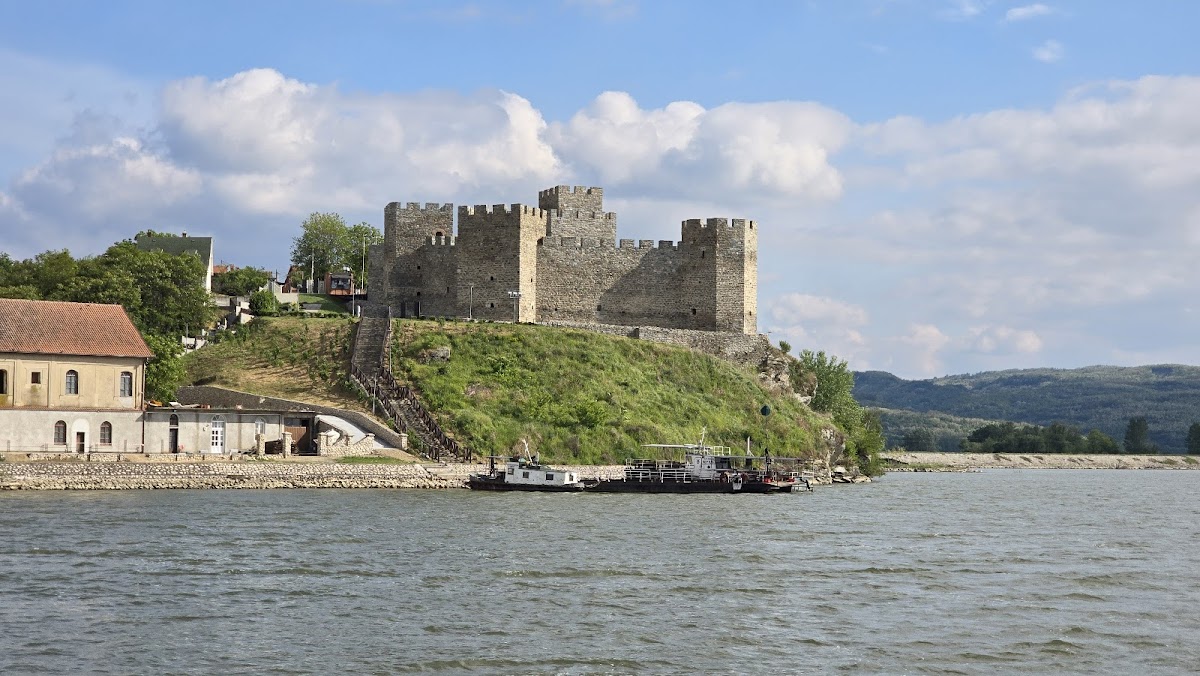
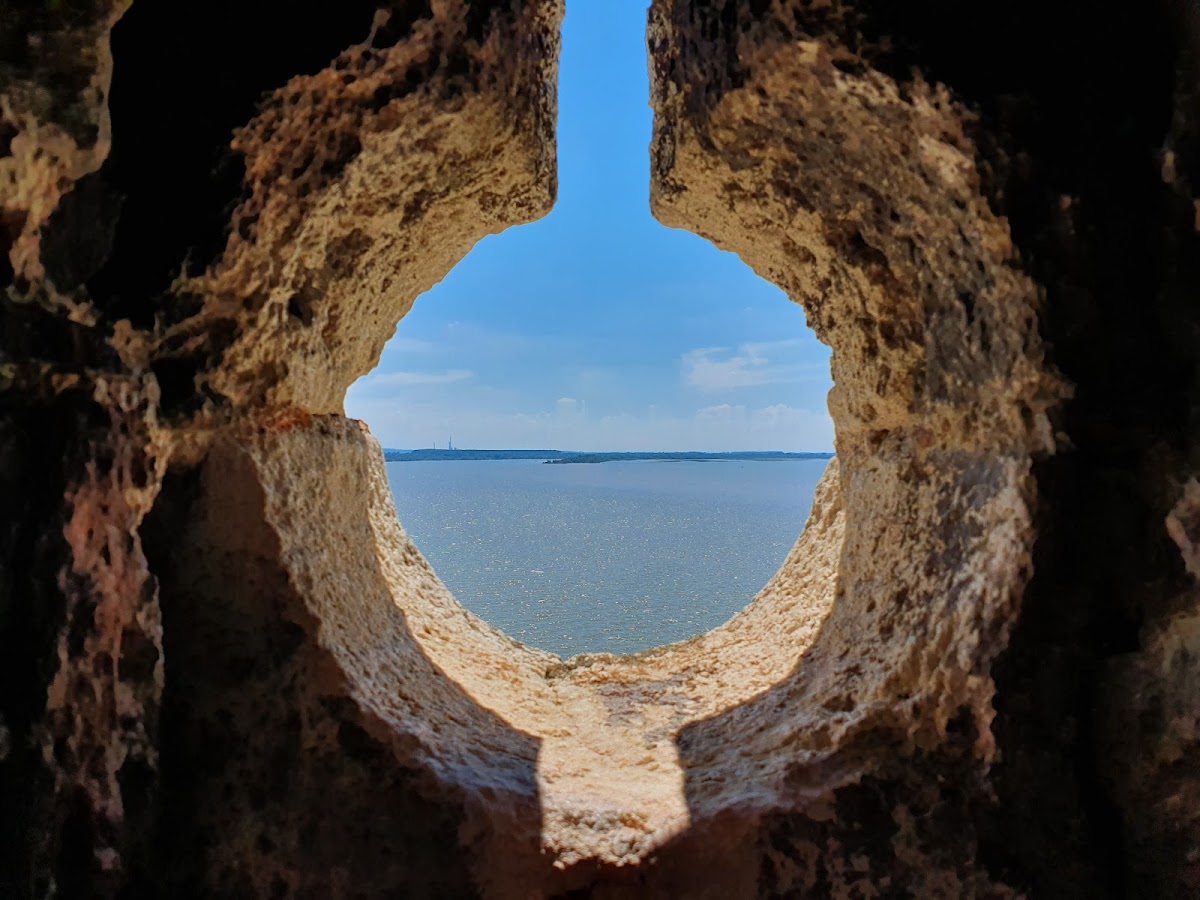
The fortress occupies a steep rocky position above the Danube, opposite the site of the former Haram Fortress on the other bank. Haram has left no visible remains. At Ram, the river is approximately 5 km wide near the mouths of the Karaš and Nera rivers. Marshy lowlands and the islands of Čibuklija and Ostrvo lie to the west, while higher ground rises toward Gorica Hill to the east. The surrounding landscape also includes the Ram-Golubac Sand, a sandy area about 30 km long and 5 km wide. The widening of the Danube near the river mouths later became part of Labudovo Okno, a wetland covering about 50 sq km and recognized as internationally important under the Ramsar Convention since 1 May 2006.
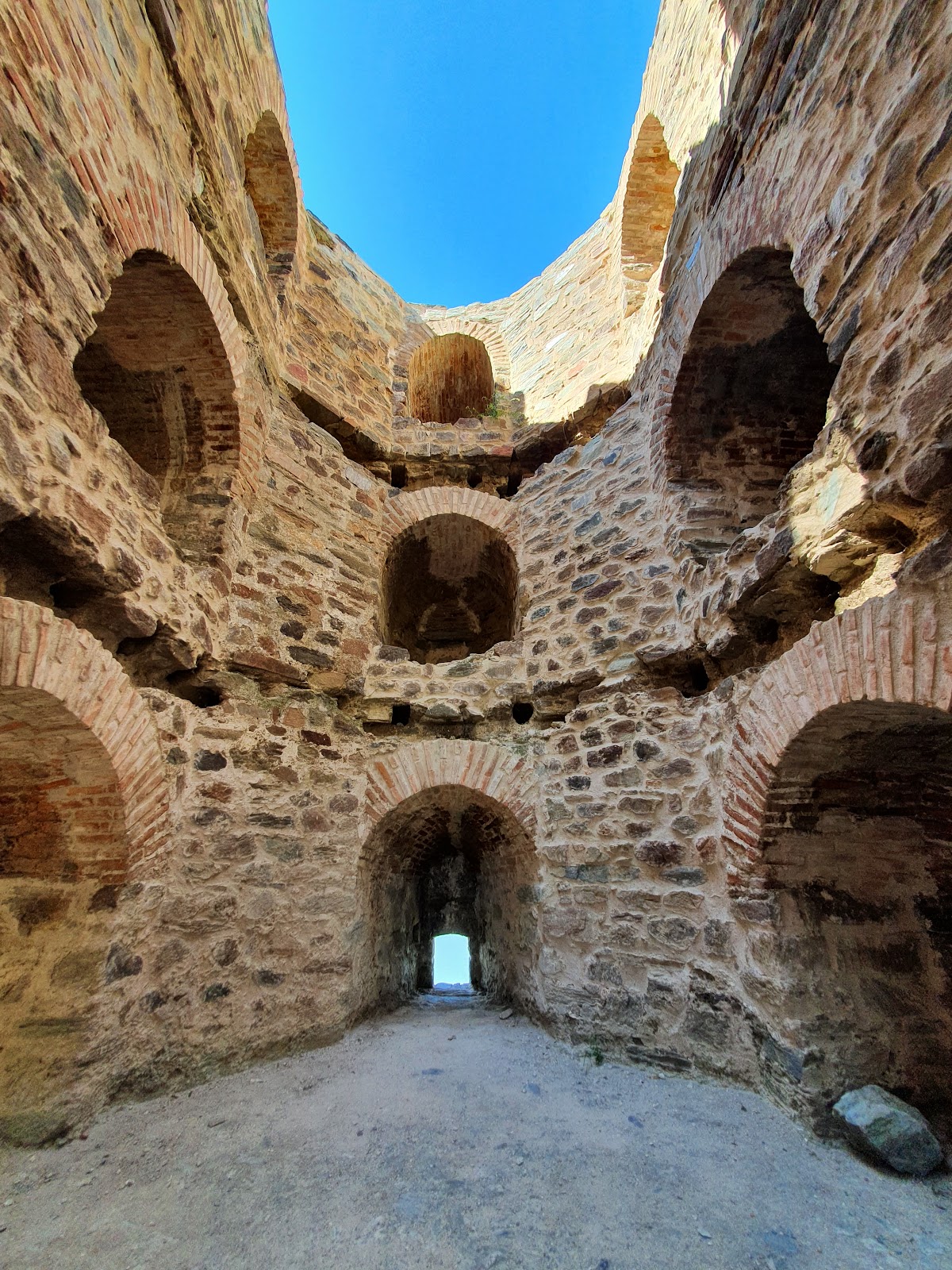
The Ottoman fortress has an irregular pentagonal plan, approximately 35 m long at its maximum and 25 m wide. Crushed stone laid in high-quality lime mortar forms most of the masonry, while brick was used especially in arches and vaults. An original wooden grill-like structural system remains within the walls and continues to help bind the masonry together. The ramparts vary in height and width, with wall thickness ranging from approximately 1.87 to 3.35 m.
Five towers define the fortification. Three stand along the eastern rampart and two along the western one. Four are corner towers, while the keep, or donjon, forms the entrance structure and serves as the principal tower. Although their ground plans differ, the towers share a broadly consistent design, with a ground level and three upper floors. Their first floors originally contained cannon embrasures, openings through which artillery could be fired. Together, the towers held thirty-six embrasures, an arrangement requiring at least 100 soldiers to operate the guns.
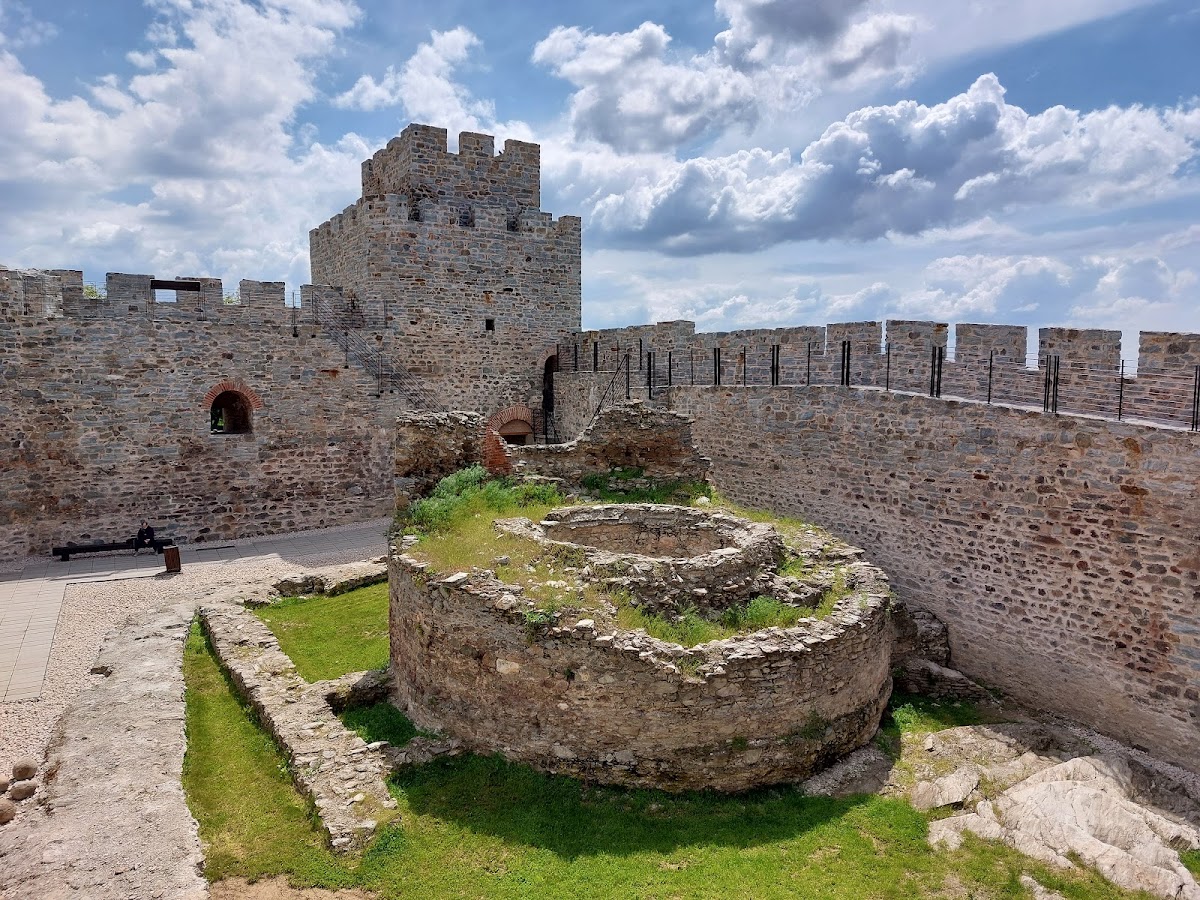
Access to the upper floors was restricted to the gates of the individual towers and exterior stairs, making the interior more difficult to seize. Parapets with battlements protected defenders along the ramparts and tower paths. A wide dry moat surrounds the fortress, together with a low outer wall and two smaller outer ramparts. A bridge beside the southeastern tower crosses the moat and reaches the space between the principal fortification and the lower enclosing walls. The smaller bulwark survives only in traces.
The embrasures in the ramparts are regularly spaced in relation to the towers, except along the western rampart. Below the towers, a paved plateau marks the beginning of a stone stairway descending toward the Danube bank and ferry landing. These elements connect the elevated fortress with the river and its controlled traffic without requiring a separate description of the wider settlement.
Interior structures and domestic occupation
Fortress interior
Exploration of approximately 70 percent of the interior reached the original floor level and exposed several buildings dating from the sixteenth to the eighteenth centuries. Their presence reflects the period when Ram had developed functions beyond those of a strictly military camp. Finds from these investigations include seventeenth-century rifles, small arms, glass bombs, tools, antique vessels, glass, small stone cannonballs used as balance weights, and Chinese porcelain. A 76 cm measuring ruler, apparently used as a construction standard, was also recovered. The objects were intended for exhibition in the fortress after restoration.
Fireplaces with built-in chimneys survive in the masonry, and fireplaces on the upper floors indicate domestic occupation. A toilet built specifically for the fortress commander was also identified. In the central part of the inner enclosure are the ruins of a mosque, while a civilian building beside the western rampart had a regular octagonal plan, with sides approximately 3 m long.
Roman mausoleum
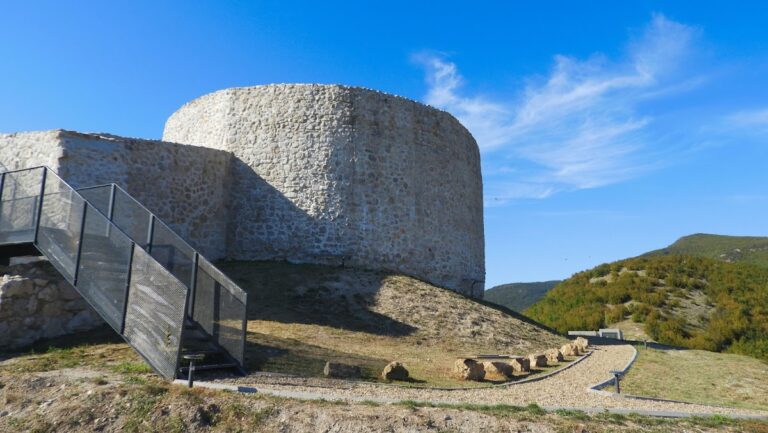
A Roman mausoleum, a monumental burial structure, stands enclosed within the fortress. It is approximately 13 m in diameter, with walls about 3 m thick. Rather than demolishing it, the Ottoman builders constructed the fortress around the older monument. This decision helped preserve the Roman remains in relatively good condition and left an earlier structure physically embedded in the later defensive complex.
Mysterious Tower
A windowless tower within the fortress has long been known as the Mysterious Tower because its function was uncertain. Earlier interpretations proposed that it might have been a mosque or a pantry. Surveys in the 2010s found a stone tablet beneath the fortress bearing a dedication to Jupiter, the chief god of the Roman religious system. The dedication was made by Gaius Licinius Rufinus, a standard-bearer of Legio VII Claudia, during the reign of Emperor Claudius. This discovery has linked the tower with the Roman phase of the site.
Caravanserai and nearby remains
Caravanserai
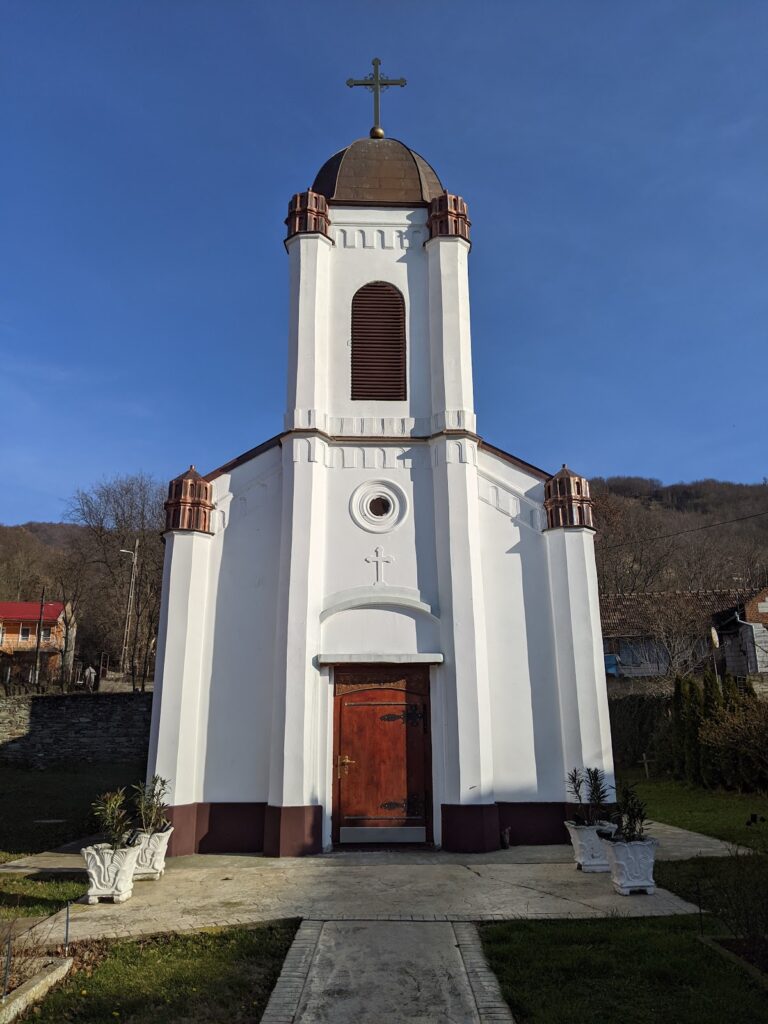
The nearby caravanserai contained twenty-four rooms, each equipped with its own fireplace. Its surviving remains stand beside the nineteenth-century Serbian Orthodox church, whose churchyard occupies the former caravanserai site. The church helped preserve part of the lodging complex by preventing further collapse and the removal of its building materials.
Hammam
Ruins of a hammam, a public bath, survive near the fortress. Together with the caravanserai and the domestic structures inside the walls, they show that Ram included civilian and service buildings as well as defensive works.
Restored masonry
By February 2018, the ramparts and most towers were in good condition, although the front section of Tower II had almost completely collapsed before reconstruction. The tower was partially rebuilt from new foundations to roof level. The restoration of the fortress used materials and techniques intended to correspond to the original construction, including stone from a nearby shale quarry, specially produced bricks, wooden beams, and mortar reproduced after twenty-one analyses. Cement, concrete additives, and iron bars were not used. The resulting work restored three towers and four walls while retaining the fortress’s surviving structural system.