Trakošćan Castle: Medieval Fortress and Residential Manor
Site at a Glance
- Rating
- 4.8
- Popularity
- High
- Country
- Croatia
- Primary era
- Medieval
- External website
- Open
- Eras represented
- Medieval, Early Modern, Modern
- Civilizations
- Habsburg, Hungarian
- Site type
- Domestic
- Remains
- Castle
On this page9 sections
History
Trakošćan Castle is a historic fortress and manor in Croatia, near Bednja in the northern part of the country. Built in the thirteenth century in the Romanesque tradition, it began as a small observation fortress guarding the road from Ptuj to the Bednja Valley. Its successive transformations reflect the changing defensive, residential, and cultural uses of the estate.
Medieval fortress and changing ownership
The name Trakošćan first appears in writing in 1334. One tradition links it to an alleged ancient fortification called arx Thacorum, while another associates it with the medieval Knights of Drachenstein, who were said to have controlled the region. The original fortress formed part of the defensive system of northwestern Croatia, using its position and observation tower to monitor movement along an important route.
By the end of the fourteenth century, Trakošćan belonged to the Counts of Celje, a powerful medieval aristocratic dynasty whose territories included parts of present-day Slovenia and northern Croatia. After the extinction of the family, its estates were divided. Trakošćan passed first to the military leader Jan Vitovac and then to Ivaniš Korvin, who granted it to his deputy warden, Ivan Gyulay.
The Gyulay family held the castle for three generations. When the family became extinct in 1566, ownership returned to the state. King Maximilian later granted the estate to Juraj Drašković, born in 1525, for services rendered. The holding first belonged to him personally and then became a family inheritance, bringing Trakošćan into the possession of the Drašković family in 1584.
From fortification to manor
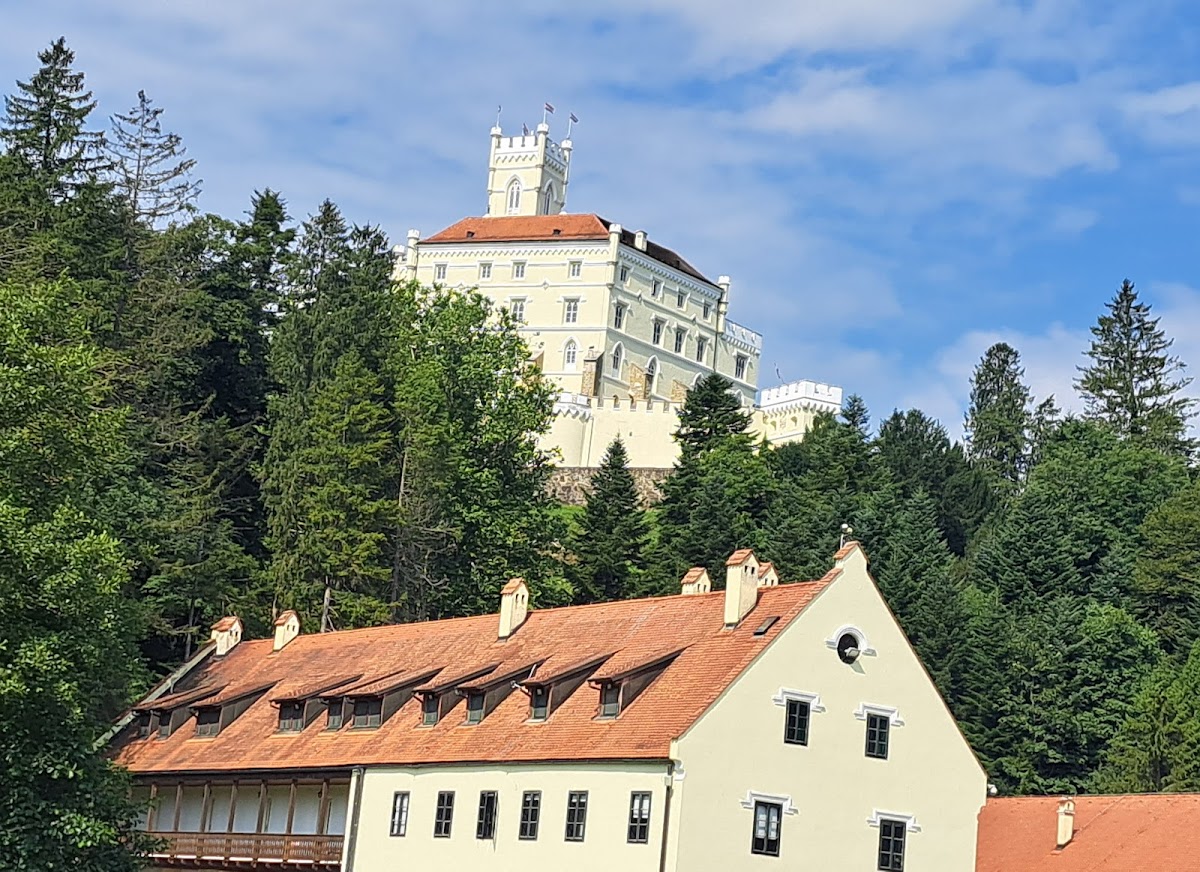
Trakošćan’s defensive system expanded as firearms developed and Turkish attacks became more threatening. Later building phases continued to alter the complex, while its military purpose gradually declined. During the second half of the eighteenth century, when manor construction was flourishing in Hrvatsko Zagorje, the castle was abandoned and fell into disrepair. Outbuildings were erected at its foot during this period, and a stone bridge was built over the Bednja River.
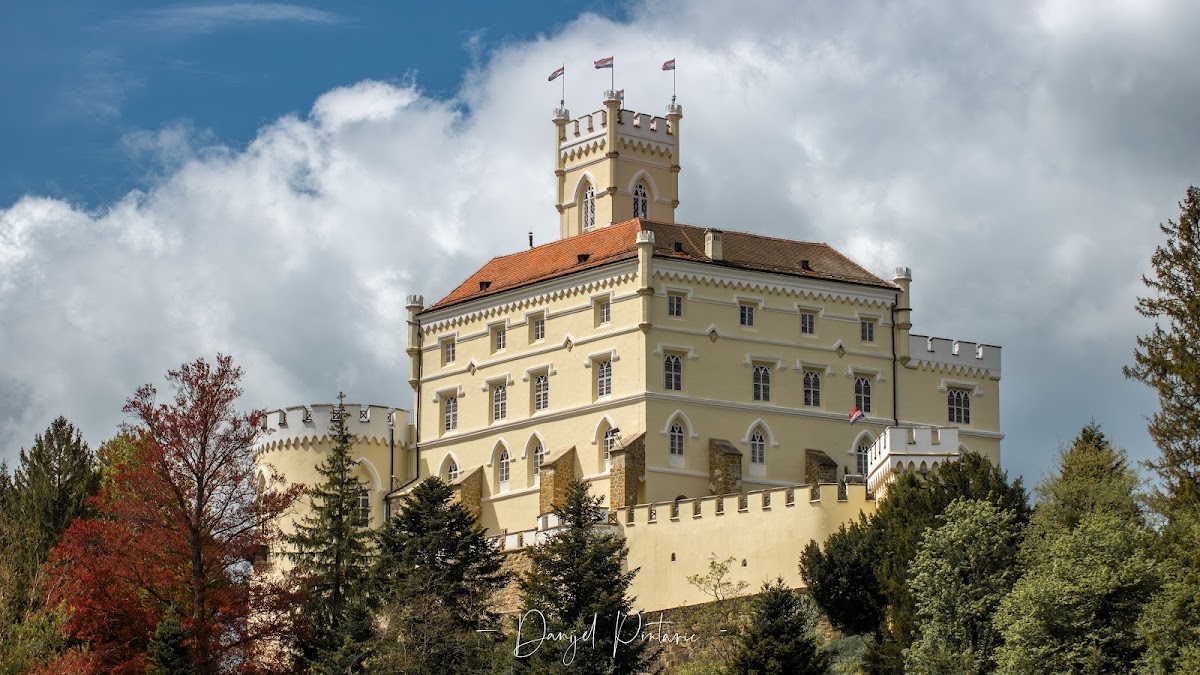
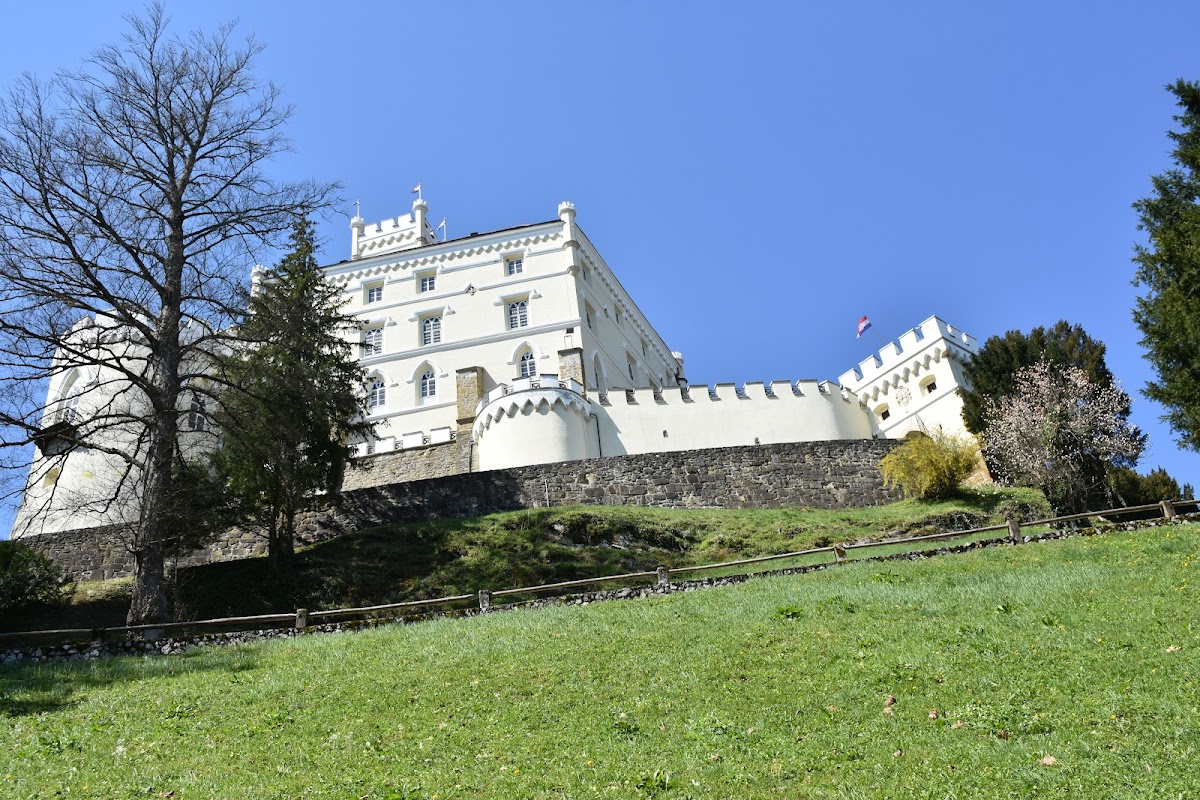
In the nineteenth century, Romanticism encouraged renewed interest in nature, history, medieval traditions, and emotionally evocative landscapes. The deputy marshal Juraj V. Drašković converted Trakošćan into a residential manor house and reshaped its surroundings as picturesque pleasure grounds. The major reconstruction took place between 1840 and 1862, beginning in 1853 under Juraj IV Drašković and his wife, Sofija née Baillet-Latour. Within three years, the castle had acquired a substantially new appearance in the Neo-Gothic style, a nineteenth-century revival of Gothic architectural forms.
The transformation ended Trakošćan’s approximately five-century role as a fortification. A dam turned the valley into a large lake, while the surrounding grounds were arranged according to a plan by Franz Risig, who lived from 1814 to 1896. Count Drašković sold Klenovnik Castle, another family possession, to help finance the restoration. Later generations of the family continued to use Trakošćan intermittently until 1944, when they were forced to emigrate to Austria and the castle was nationalized.
Museum and heritage status
A museum with permanent collections was established at Trakošćan in 1953. After the Second World War, the castle was neglected and dilapidated, leading to immediate protective work on its architecture and interior decoration. More extensive reconstruction followed in recent years. The Republic of Croatia owns the estate, which was designated a Cultural Good of Croatia on April 9, 2003. Trakošćan is regarded as one of the best-preserved and most beautiful castles in Croatia, and its grounds are considered an important part of its cultural heritage.
Remains
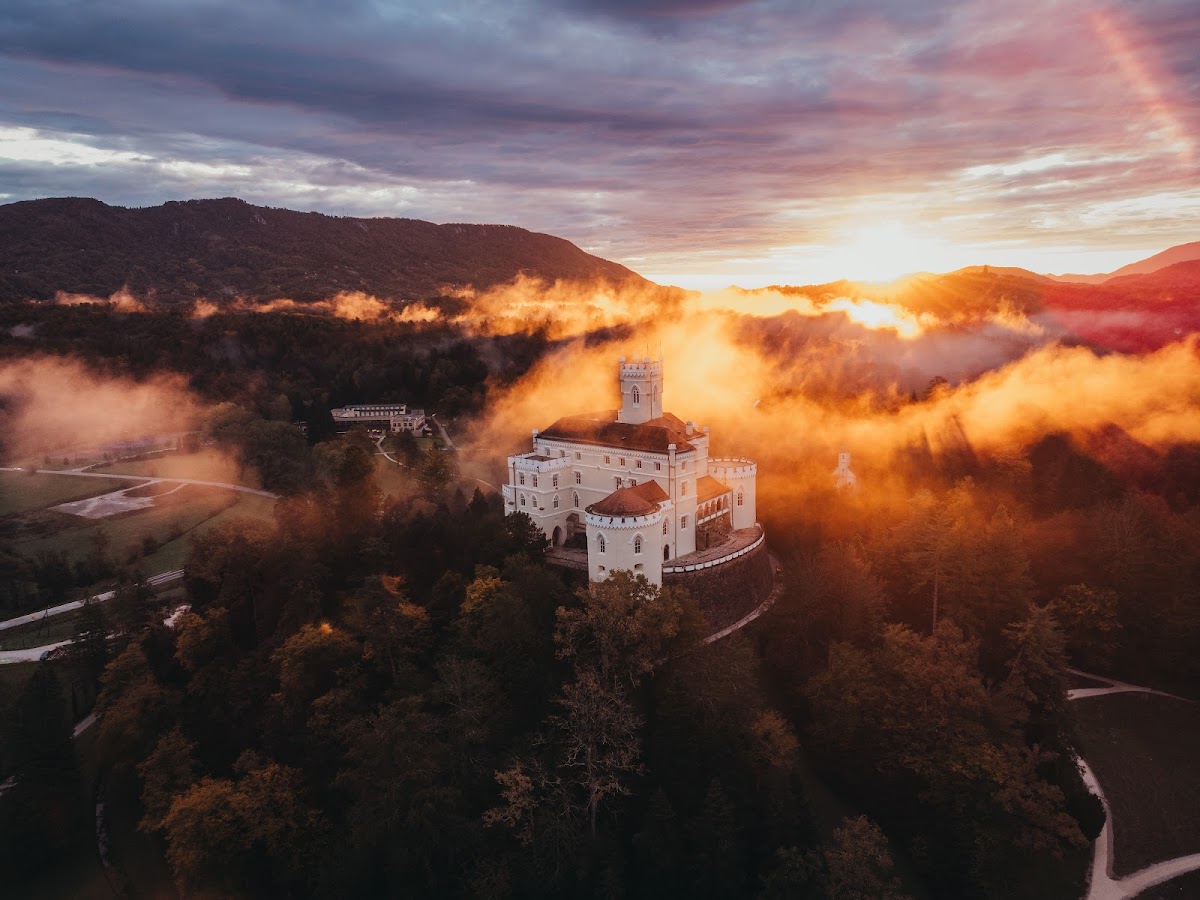
Trakošćan occupies a site near Bednja in Varaždin County. The surviving complex combines a medieval fortified core with later defensive additions, Neo-Gothic exterior and interior work, outbuildings, a bridge, a lake, and landscaped grounds. These elements preserve the physical record of the castle’s change from a practical military stronghold into a residential estate.
Medieval defensive core
The original Romanesque core consisted of a housing unit, a small fortified yard, and a massive high tower. Thick, defensive construction and the tower’s position gave the fortress a compact form that was comparatively easy to protect. The castle’s basic dimensions and three-floor arrangement are shown in a genealogical tree dated 1668, which depicts the complex during a later phase of its development.
Defensive expansions
The western tower was added by Ivan II and Petar, members of the second Drašković generation, as the development of firearms and the threat of Turkish attacks demanded a stronger defensive system. Their work is identified by the family coat of arms and an accompanying inscription. Several further defensive structures were later built around the main complex. A smaller genealogical tree dated 1755 indicates that this later phase had the castle’s largest recorded population.
Neo-Gothic castle and later additions
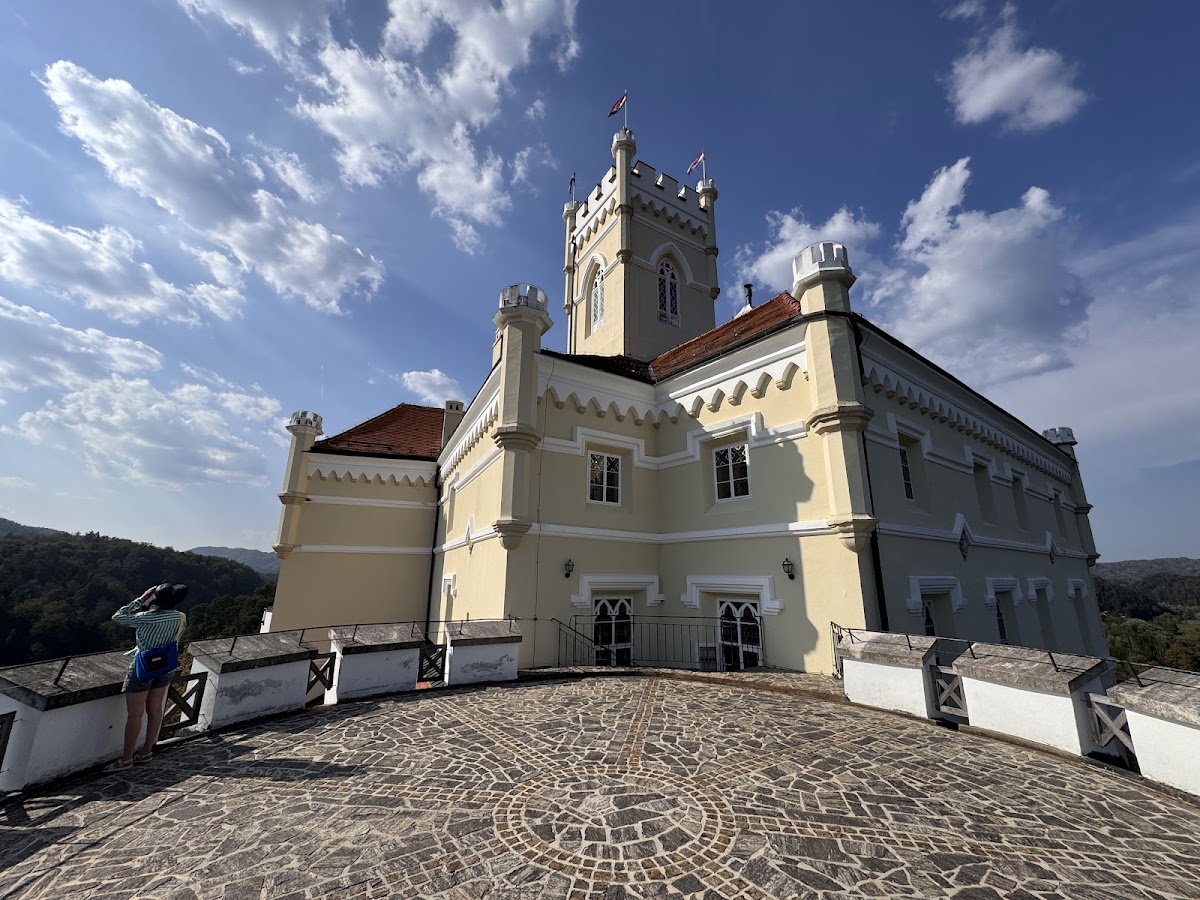
The nineteenth-century reconstruction substantially changed the castle’s exterior and extended the Neo-Gothic treatment into the interior and surrounding landscape. Later Drašković additions included a northern tower above the entrance, a large shingle cap on the top of the tower, and a vaulted terrace on the southwest side. The shingle cap was removed in 1961. Together, these alterations give the present castle a form that combines the medieval structure with nineteenth-century medievalizing design.
Lake and landscaped grounds
The landscape around the castle was shaped as Romanticist pleasure grounds, meaning a picturesque park designed around nature, history, and carefully composed views rather than formal geometric gardens. A dam created a large lake in the valley, while the plan by Franz Risig organized the wider setting. The grounds, which form part of the estate’s cultural heritage, remain physically linked to the castle’s transformation into a residential manor.