Finstergrun Castle: A Historicist Castle and Medieval Border Fortress in Austria
Site at a Glance
- Rating
- 4.6
- Popularity
- Low
- Country
- Austria
- Primary era
- Modern
- External website
- Open
- Eras represented
- Medieval, Modern
- Civilizations
- Holy Roman Empire
- Site type
- Domestic
- Remains
- Castle
On this page14 sections
History
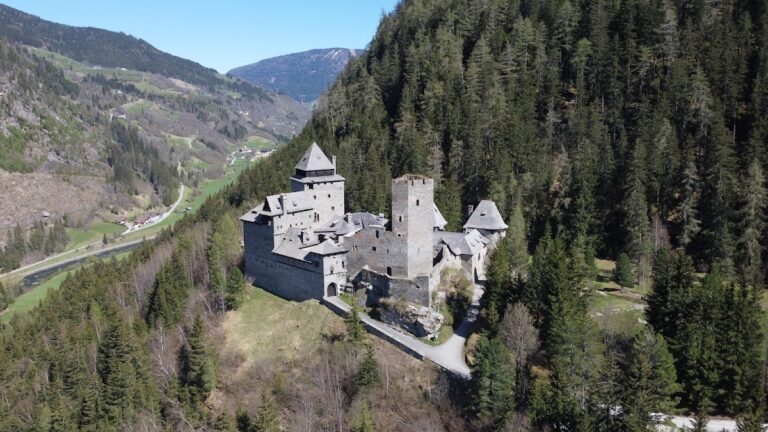
Finstergrun Castle is a castle in Austria above Ramingstein, combining the ruins of a medieval fortress with an early twentieth-century historicist reconstruction. The older stronghold occupied a strategic position in the Mur Valley between the Archbishopric of Salzburg, an ecclesiastical principality whose archbishops also held territorial power, and the neighboring Duchy of Styria. The later castle, modeled on thirteenth-century forms, was built beside the ruins from 1901 and gave the site its present character.
Medieval fortress and Salzburg frontier
The origins of the older fortress are placed in either the twelfth or thirteenth century. A document from around 1138 or 1139 mentions Wilhelm von Ramingstein, although the settlement named in that record may have been elsewhere. The castle itself is securely known by 1300, and it may have been built in 1296 or 1297 by Rudolf von Fohnsdorf.
In the Middle Ages, the stronghold was called Hous ze Ramungestein or Veste Ramingstein. During the conflict between Archbishop Konrad von Fohnsdorf and Duke Albert I of Austria, it appears to have passed to Rudolf von Fohnsdorf, the archbishop’s brother. The Salzburg ruler later recovered it through compensation. In 1324, Archbishop Friedrich III granted the castle and its castle-guard office to the brothers Ulrich and Heinrich von Weißpriach as compensation for losses and imprisonment suffered while serving the archbishop. A castle guard was an official who managed a lord’s fortress and its associated lands and resources.
Salzburg-appointed officials subsequently administered the castle. Members of the Moosheim family held the office from 1429 to 1557, followed by members of the Kuenburg family from 1558. The Kuenburgs received financial support from the archiepiscopal treasury to maintain the castle and the bridge at Ramingstein until 1779. Hungarian forces occupied the stronghold in 1483 and again in 1490.
Mining administration and decline
During the fourteenth and fifteenth centuries, the castle also housed the administrator responsible for Ramingstein’s silver mines. Its high position allowed surveillance of an important route and a toll station, as well as visual communication with other castles and the surrounding area. This gave the fortress both military value and an administrative role linked to mining.
The name Finstergrun first appeared in the seventeenth century as “ancient little castle Finstergruen.” It derives from an expression meaning “dark ditch,” probably referring to a shadowed cleft beside the older fortress rather than to the color green. By then, the medieval castle had already deteriorated seriously.
After an inspection in 1672, the castle was closed with timber, apparently to prevent occupation. In 1735, the mining administration requested repairs because the small castle had been assigned as a residence for a smelter clerk, but the projected cost was considered too high. The tower continued to serve as a grain store. In 1775, the castle, its stable, and adjoining land were offered at auction. Josef Ruef, a mining official, was the only bidder, and his family continued to occupy the property into the nineteenth century.
Fire and early twentieth-century rebuilding
A forest fire that devastated Ramingstein in 1841 destroyed all the wooden parts of the fortress and left the older castle in ruins. Count Sándor Szapáry, a Hungarian Imperial and Royal chamberlain and cavalry captain, purchased the burned remains in 1899. Inspired by his friend Johann Nepomuk Count Wilczek and Wilczek’s reconstruction of Kreuzenstein Castle, Szapáry commissioned a new castle beside the medieval ruins.
Construction began in 1901 under Ludwig Simon, an architect who later became master builder of Vienna Cathedral. The tower was completed in 1903, and the complex had largely acquired its present appearance by about 1908. After Szapáry’s unexpected death in 1904, his wife Margit Szapáry continued the work. The new buildings used materials of the same types as those associated with the medieval castle and recreated historical defensive forms. Their historicist architecture reinterpreted earlier styles rather than reproducing a functioning medieval fortress.
The interior was never completed because the First World War began in 1914. Margit Szapáry assembled valuable historic furnishings from across Central Europe, but financial difficulties resulted in the auction of much of the inventory during the Second World War. In the late 1920s and early 1930s, she operated the castle as accommodation for selected paying guests.
Wartime use and transition to a youth center
During the Second World War, the German Reich Ministry for Science, Education and National Education obtained the castle through a lease and tenancy agreement and held courses there for female teachers. The arrangement appears to have been concluded without Margit Szapáry’s consent. The castle may also have served briefly as a hospital near the end of the war. Margit Szapáry died in 1943, and the property passed in 1945 to her children Béla and Jolántha.
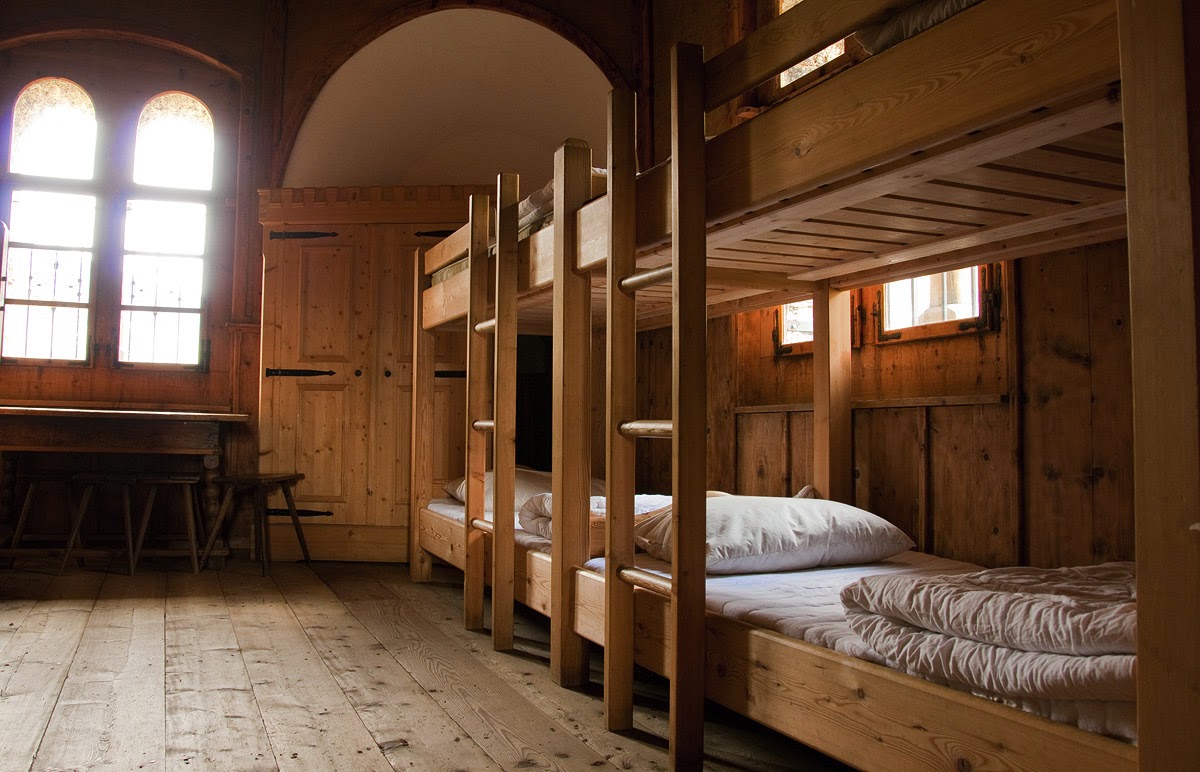
Scouts leased parts of the castle from 1946 to 1949. From 1949, the Austrian Evangelical Youth organization used it for children’s and youth camps, adult seminars, and other activities. The Evangelical Youth of Austria acquired the castle in 1972, and it now functions as a youth recreation center and youth hostel, a form of accommodation intended mainly for young travelers and organized youth groups.
Adaptation for youth use began in 1949 and increased after 1972. Adjacent land was leveled for sports, games, and campfires, while a new approach road and modern utilities were added. Electricity, running water, hot water, toilet facilities, and later central heating changed the practical use of the complex. A castle council was established in 1989 to administer the property on behalf of the Evangelical Youth of Austria.
Fire destroyed the tower roof in 1986, but the alarm system and rapid firefighting response prevented major damage, and the roof was renewed. Between 2001 and 2005, a wood-chip heating system was installed and expanded to heat almost every room except the tower and to produce hot water. In 2004, the castle became an external office of the Ramingstein civil registry, allowing civil weddings in the chapel or Knights’ Hall. From 2006 to 2008, parts of the complex were adapted for an exhibition on Margit Szapáry, with a new exhibition room and a passage between the pantry and crypt. Later work added an accessible toilet and a waste-separation shed designed to meet heritage-protection requirements.
Remains
Setting and castle layout
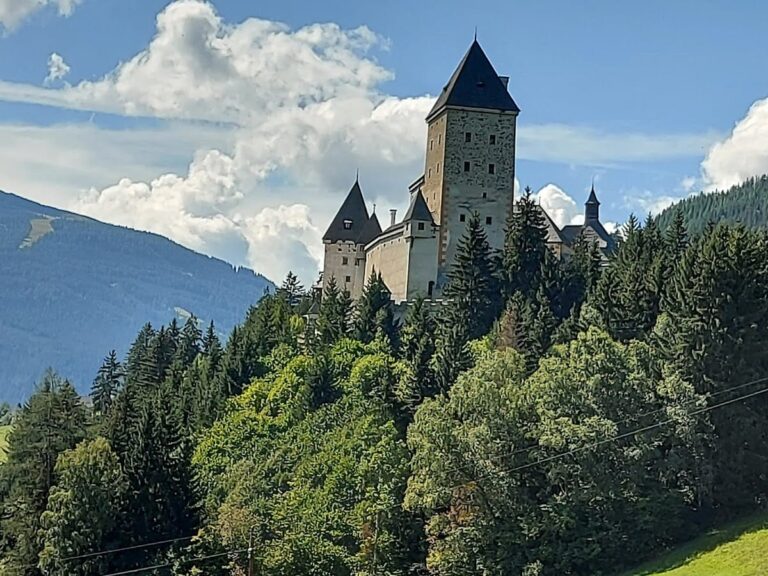
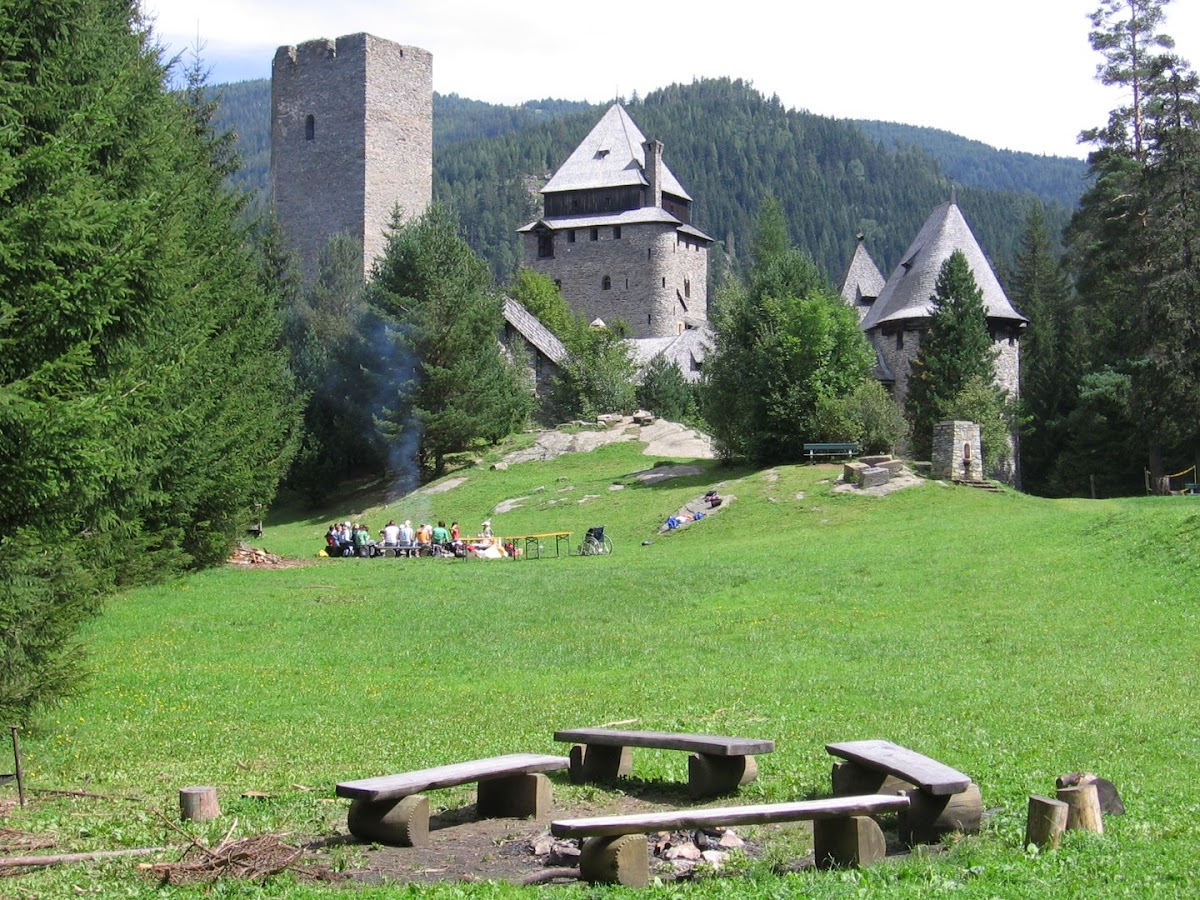
Finstergrun Castle stands at about 1,085 meters above sea level on a steep rocky spur south of and above Ramingstein, whose settlement lies at about 970 meters. The elevated site provides broad views toward the surrounding area and other castles. Two distinct castle parts occupy the spur. The older fortress survives as a ruin, while the early twentieth-century castle adjoins it and was planned as a visually unified ensemble. Its defensive appearance is historicist, representing an interpretation of medieval architecture rather than a surviving medieval defensive arrangement.
Medieval ruins
Main tower and palace
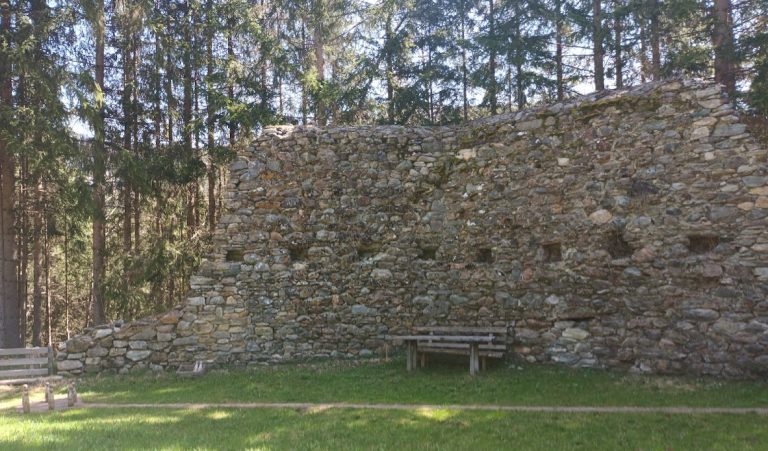
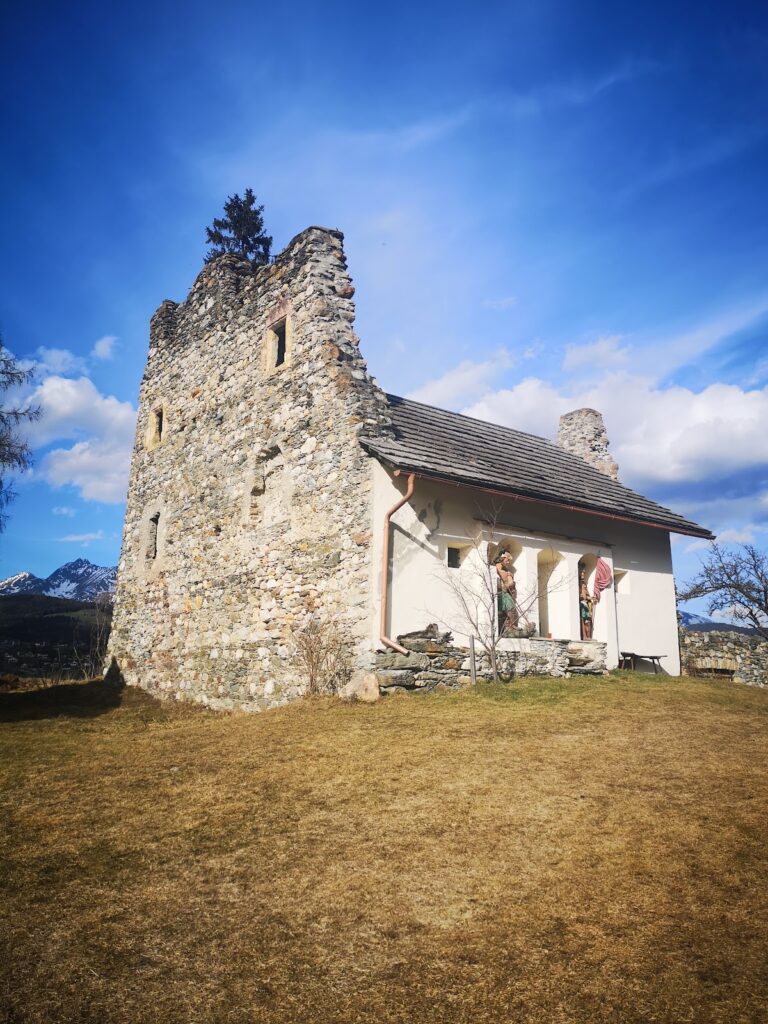
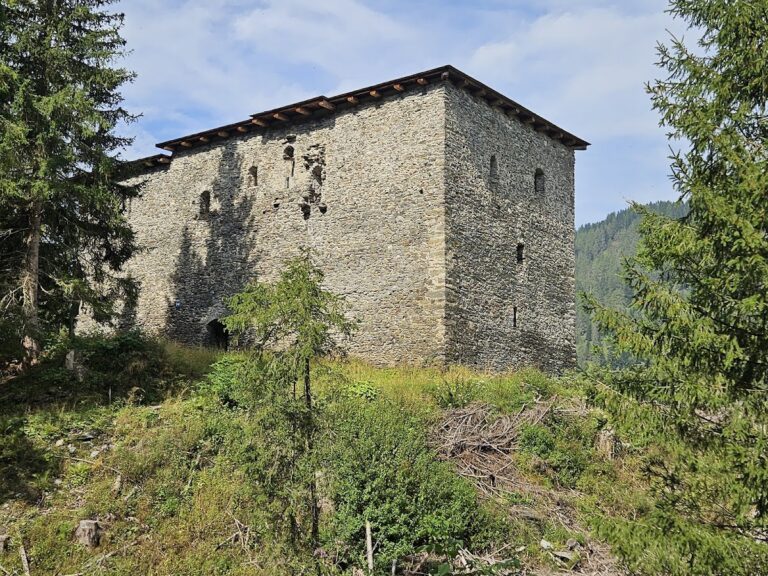
The older castle retains a pentagonal main tower, a small palace, and portions of the former curtain wall, the enclosing defensive wall around a castle. These fragmentary remains belong to the medieval part of the complex, whose date is placed in the twelfth or thirteenth century. The ruins preserve the physical core around which the later castle was constructed.
Early twentieth-century castle
Courtyards and entrance
The newer castle occupies a roughly iron-shaped pentagonal site arranged around courtyards. A gate to the northwest of the main tower leads to the upper courtyard. Service areas and the kitchen stand beside this entrance, while living rooms and a substantial residential tower extend behind them. A wooden stairway linking the second courtyard with the ruins was completed in 2004. The courtyard was renamed Leopold Court during the castle festival held that year, and part of the passage between the first courtyard and Leopold Court was later converted into an exhibition room.
Residential tower and Knights’ Hall
The residential tower has a wooden gallery on its upper level beneath a tent-shaped roof. Its highest floor contains the Knights’ Hall, which is used for events. The hall includes a chased fifteenth-century-style plate armor from a Milanese workshop, identified as “Egon Margrave of Murausch,” placed there in 2002. A painting of Count Sándor Szapáry also hangs in the room.
Chapel and architectural details
A chapel stands beside the second castle gate in the southwestern corner of the grounds. The buildings use Romanesque-style window openings, some divided by central columns. Gothic details survive in the interiors alongside historic exhibits, while other parts of the complex have been modernized for its youth-center function.
Grounds and modern facilities
The land beside the castle was leveled for sports, games, and campfires, creating the recreational grounds associated with its later use. The complex also contains the approach road and utility installations added during its adaptation, including electricity, running water, toilets, and central heating. An accessible toilet and a rear waste-separation shed were added later, with the shed designed in accordance with heritage-protection requirements.
Nearby sites