Saxon Castle: A Medieval Savoyard Fortress in Switzerland
Site at a Glance
- Rating
- 4.6
- Popularity
- Very Low
- Country
- Switzerland
- Primary era
- Medieval
- External website
- Open
- Eras represented
- Medieval
- Civilizations
- Holy Roman Empire
- Site type
- Military
- Remains
- Castle
On this page8 sections
History
Saxon Castle is a medieval Savoyard fortress in Switzerland, built in 1279 or 1280 under Philip I of Savoy. It formed part of the County of Savoy and served as an administrative and military center in the Valais, including as the residence of the bailiff of Saxon-Sembrancher.
Early Savoyard administration
The Saxon family appears in records between 1162 and 1178 as servants of the Counts of Savoy. An earlier Savoyard castle existed at Saxon by 1266. In 1263, Peter II of Savoy created the Saxon-Sembrancher bailiwick, an administrative district governed by a bailiff who represented the ruling authority. The official was initially based in a small tower near Saxon.
At Philip I’s request, construction of the present castle began in 1279 or 1280. The large circular tower was built first, while the outer fortifications remained under construction in 1284 and 1285 and were completed after 1285. The castle and its surrounding territory belonged to the Chablais bailiwick, a historical administrative region around Lake Geneva and the lower Rhône valley that was divided between present-day Switzerland and France.
Military and political role
Saxon Castle and nearby Saillon Castle guarded the valley and supported Savoyard administration. The Saxon family held the bailiff’s office until it became extinct in the middle of the fourteenth century. Afterward, various nobles held the office as a fief of Savoy for about a century.
During the fourteenth century, the castle had a secondary role in conflicts between Savoy and the Bishop of Sion. The bishop was the senior ecclesiastical authority of the Diocese of Sion and also held political power in parts of Valais. Saxon Castle’s principal military function was to transmit messages between La Bâtiaz Castle and Saillon Castle through signal fires.
Destruction and later history
In 1475, during the Burgundian Wars, Upper Valais invaded Lower Valais. These late-fifteenth-century conflicts involved the Duchy of Burgundy, the Swiss Confederacy, and their allies. After Savoy’s defeat by the Bishop of Sion at the Battle of La Planta, Saxon Castle was attacked and burned. It was then abandoned, and the Saxon-Sembrancher bailiwick was absorbed into the bailiwick of Saint-Maurice.
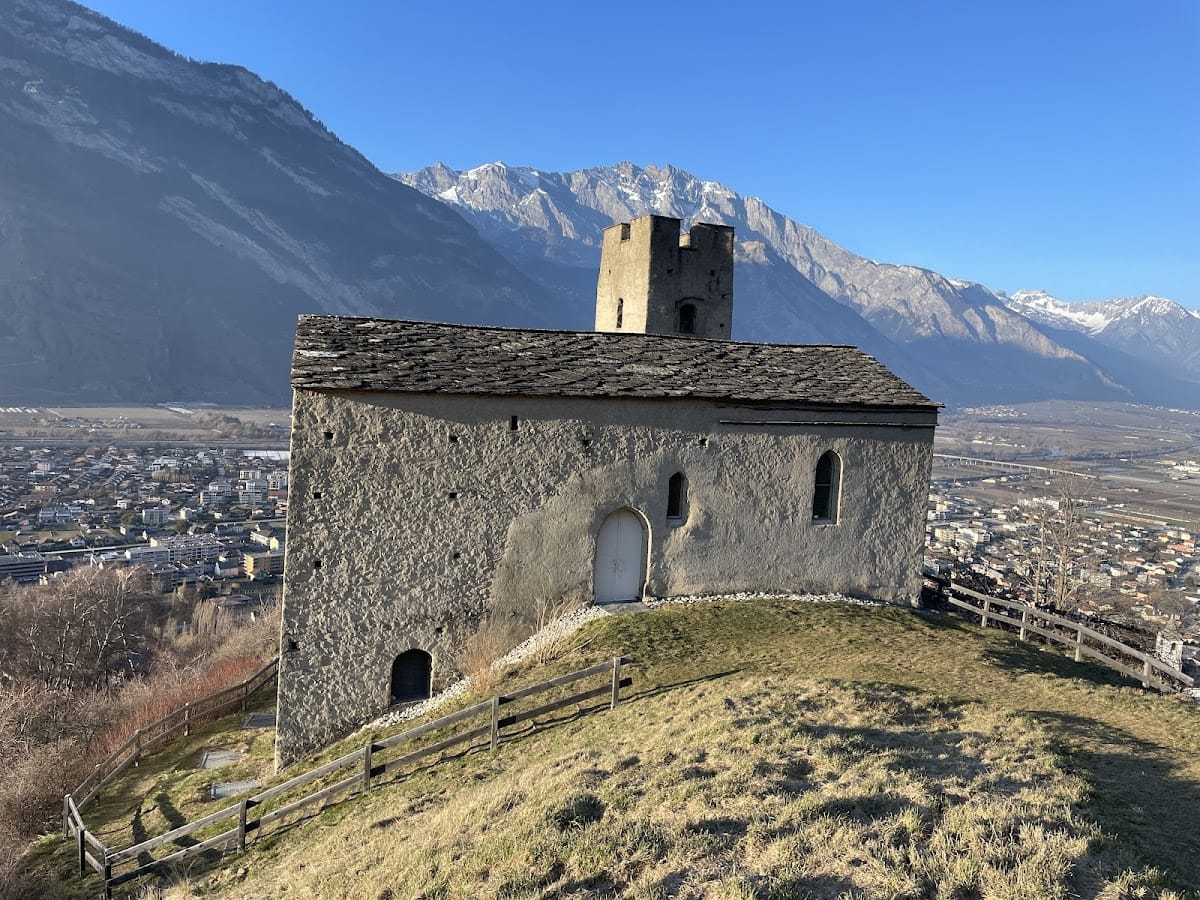
In the sixteenth century, the castle belonged to the Monthey family, a Chablais family connected with Savoy. The surviving tower and chapel preserve the principal standing elements of the former stronghold. The ruins are recognized as a Class B Swiss cultural property of regional significance.
Remains
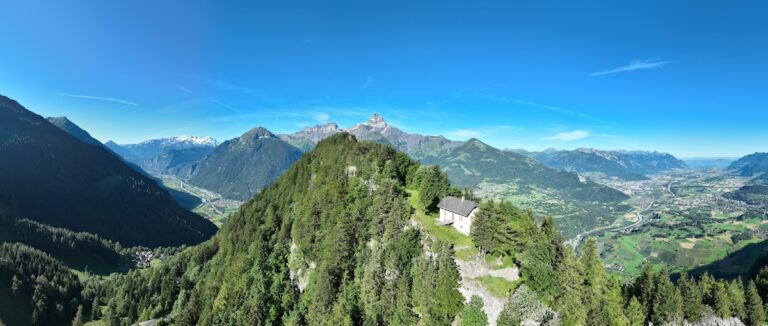
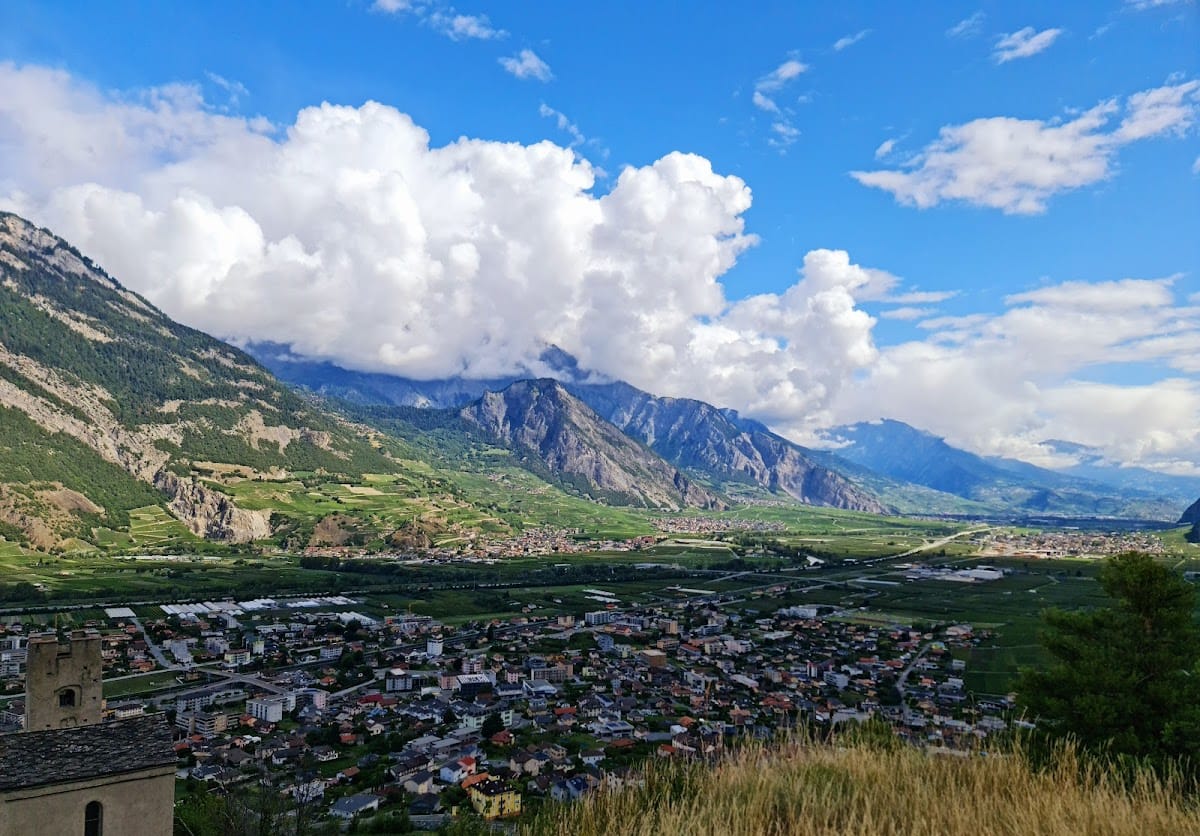
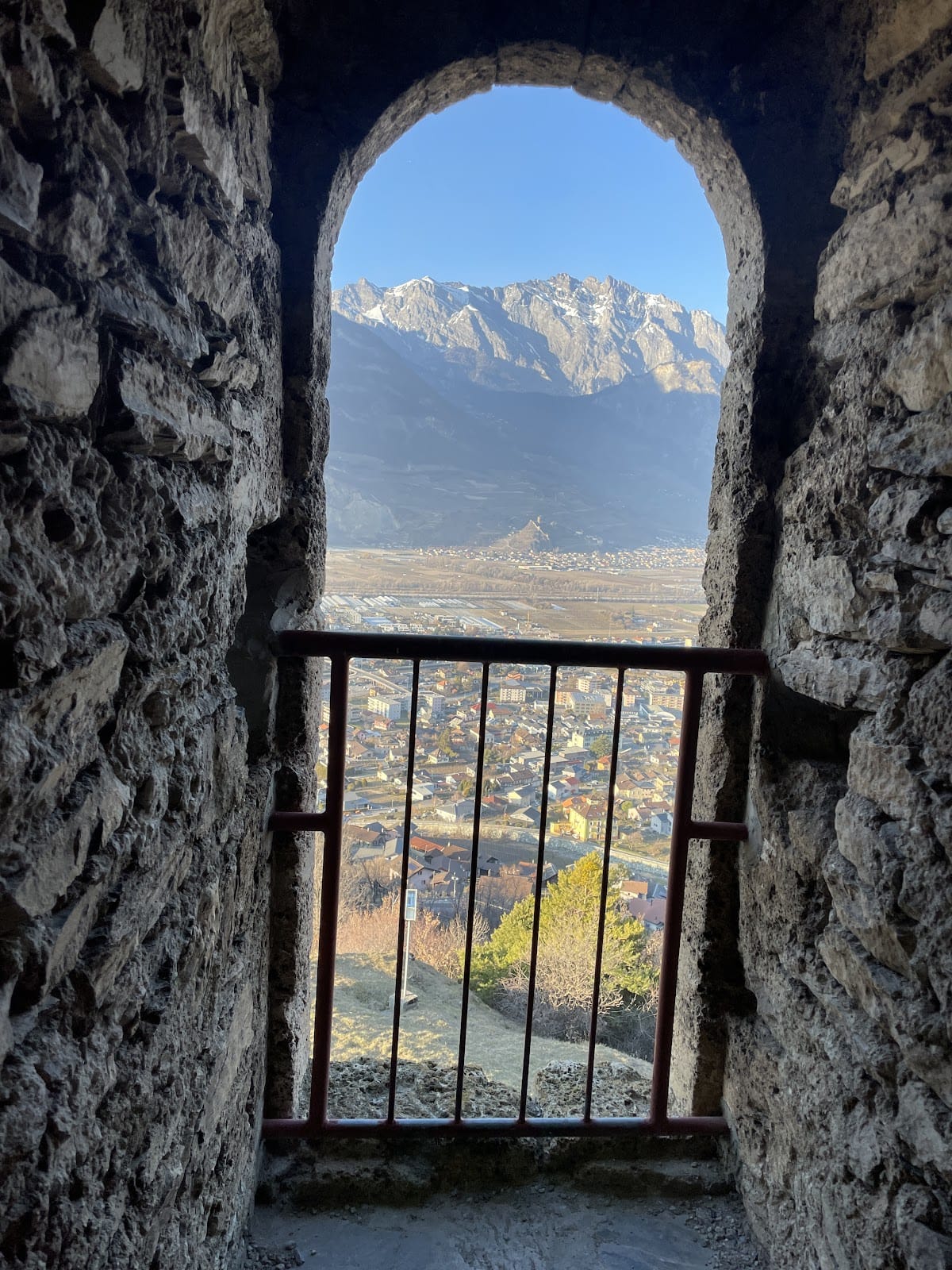
The ruined castle occupies a natural promontory at approximately 661 to 663 metres above sea level, south-west of Saxon. A natural ditch separates the promontory from the mountain, while its elevated position provided views across the surrounding area. The castle was arranged in upper and lower sections at different elevations, with fortifications, buildings, a chapel, and a cistern for collecting rainwater.
Upper castle
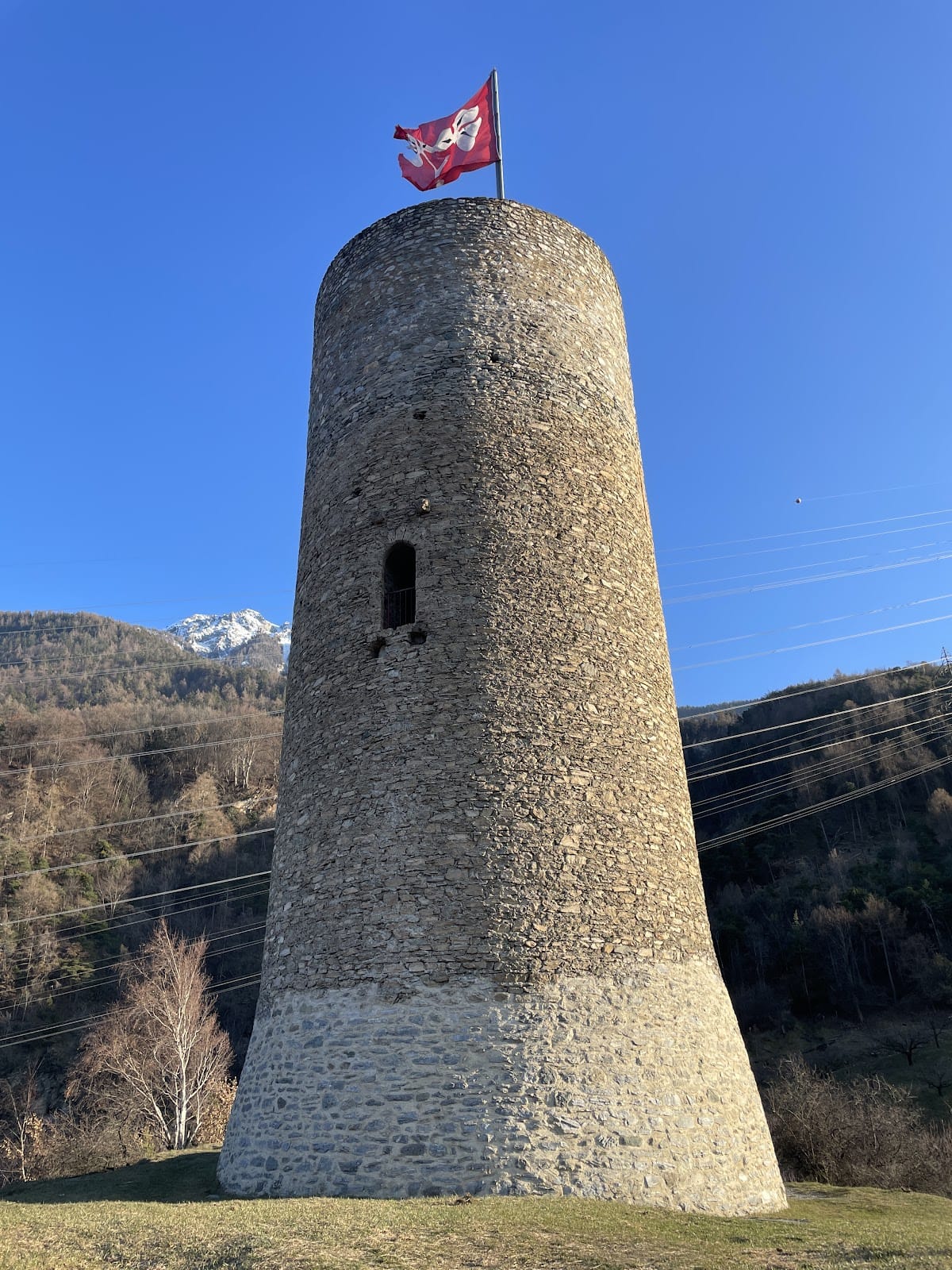
The upper section centered on the large circular keep, protected by a zwinger, an outer defensive enclosure between lines of fortification. A large rectangular gatehouse stood at the northern end, and a residential building occupied the southern side. Together, these structures formed the principal fortified area above the lower enclosure.
Circular keep
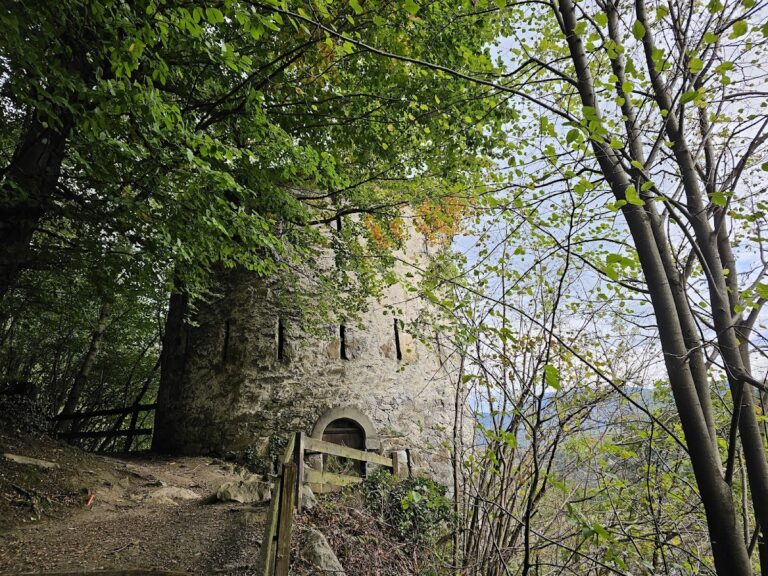
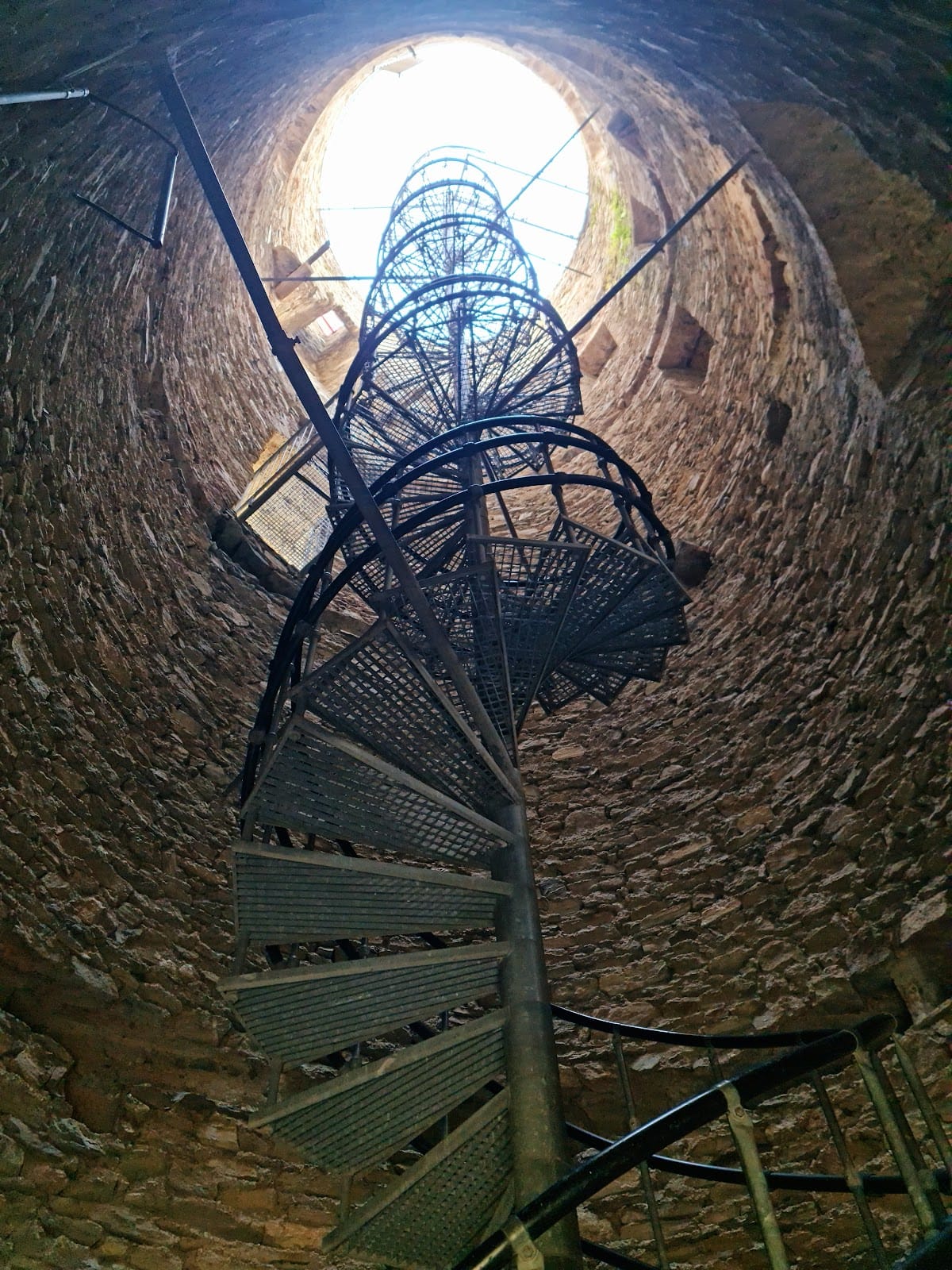
The circular keep has five levels and remains standing. Its entrance lies on the north-east side, about 10 metres above ground level, at the second level. A small garderobe, a medieval latrine projecting from a castle wall, extends from the third level. The fourth level contained a fireplace, while the upper level probably carried wooden hoardings projecting from the walls and was probably covered by a conical wooden roof.
Lower castle and chapel
The lower section consisted of walls enclosing the castle settlement, together with a second gatehouse and the chapel. The settlement may have formed a small fortified community within the larger defensive complex. The chapel’s Romanesque nave dates from the twelfth century. Romanesque architecture is characterized by massive walls, rounded arches, and relatively small openings. The chapel was restored in 1965 and remains standing.
Nearby sites