La Bâtiaz Castle: A Medieval Fortress Controlling the Alpine Route

Site at a Glance
- Rating
- 4.5
- Popularity
- Low
- Country
- Switzerland
- Primary era
- Medieval
- External website
- Open
- Eras represented
- Medieval
- Civilizations
- Holy Roman Empire
- Site type
- Military
- Remains
- Castle
On this page6 sections
History
La Bâtiaz Castle is a thirteenth-century hill castle in Martigny, Switzerland, probably commissioned around 1232 by Landri de Mont, the medieval bishop of Sion. It replaced the earlier La Crête fortress at Martigny-Bourg and occupied a strategic position above the Great Saint Bernard route, an Alpine passage linking northern and southern regions. As Savoy expanded into Valais, the lords of Martigny established the fortress to hinder Savoyard movement near the bend of the valley.
Foundation and Savoyard Seizure
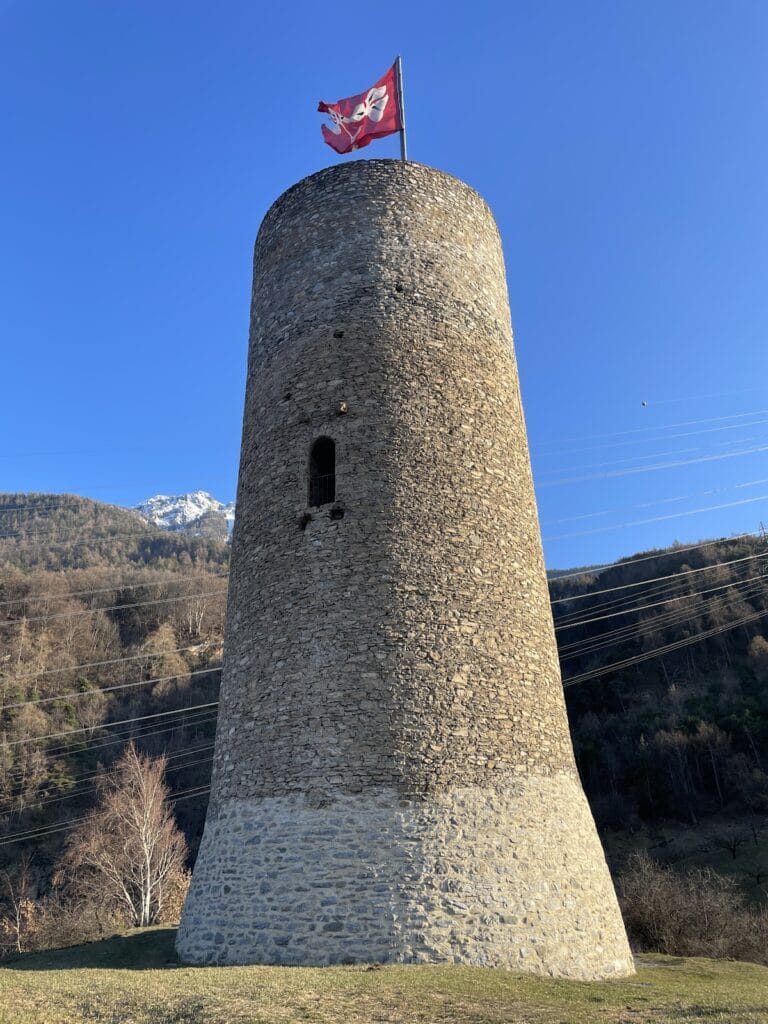
After the middle of the thirteenth century, Peter II, Count of Savoy, declared war on the bishopric of Sion, the church-ruled territory associated with the castle’s foundation and administration. He seized both La Bâtiaz and La Crête. La Crête was abandoned several years later, while Peter II ordered the construction of La Bâtiaz’s major round tower between 1260 and 1268.
La Bâtiaz later returned to the episcopal principality of Sion. The principality undertook further works and expanded the fortress, maintaining its role within the region’s contested political landscape.
Wars, Destruction, and Restoration
During the fifteenth-century Burgundian Wars, a series of conflicts involving the Duchy of Savoy and the bishop of Sion, La Bâtiaz changed hands several times. Valaisan forces allied with the Swiss Confederates eventually captured the castle after fighting had damaged it.
In 1518, conflict between Georges Supersaxo and Matthäus Schiner led to the castle being burned by men acting on Supersaxo’s orders. La Bâtiaz was not rebuilt after the fire. Restoration in 1980 brought the ruins into good condition, and the castle is recognized as a Swiss cultural property and heritage site of national importance.
Remains
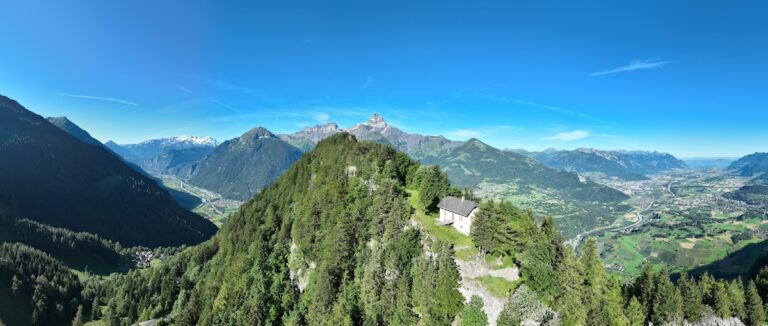
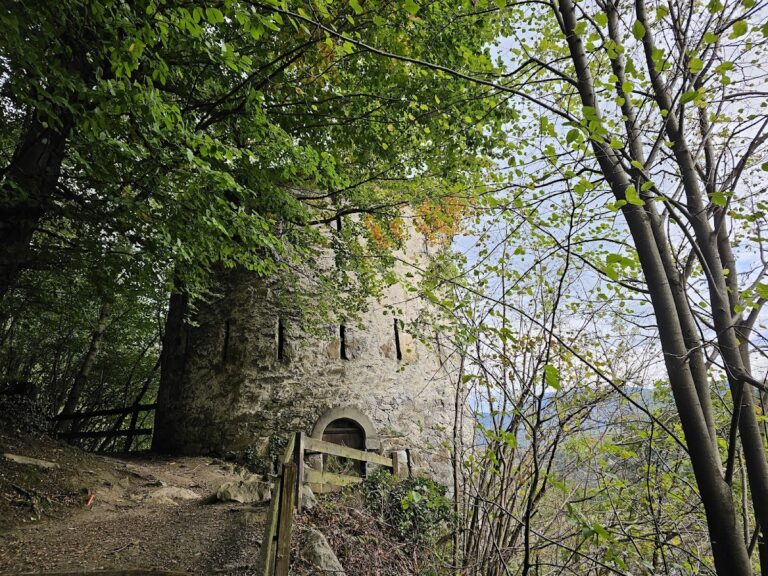
La Bâtiaz survives as a group of hill-castle ruins at approximately 800 metres above sea level in Martigny, in the canton of Valais. The substantial round tower built between 1260 and 1268 remains visible among the ruins and forms the principal surviving element identified at the site.
Tower and Defensive Features
The round tower belongs to the major thirteenth-century building phase commissioned by Peter II of Savoy. Within the castle ruins, the garderobes, medieval toilets often built into or projecting from a defensive wall, contain a distinctive design feature shared with Harlech Castle. This similarity led the historian and custodian A. J. Taylor to identify James of Saint George, a medieval architect from Savoy, as the architect associated with both castles.
Siege Engines
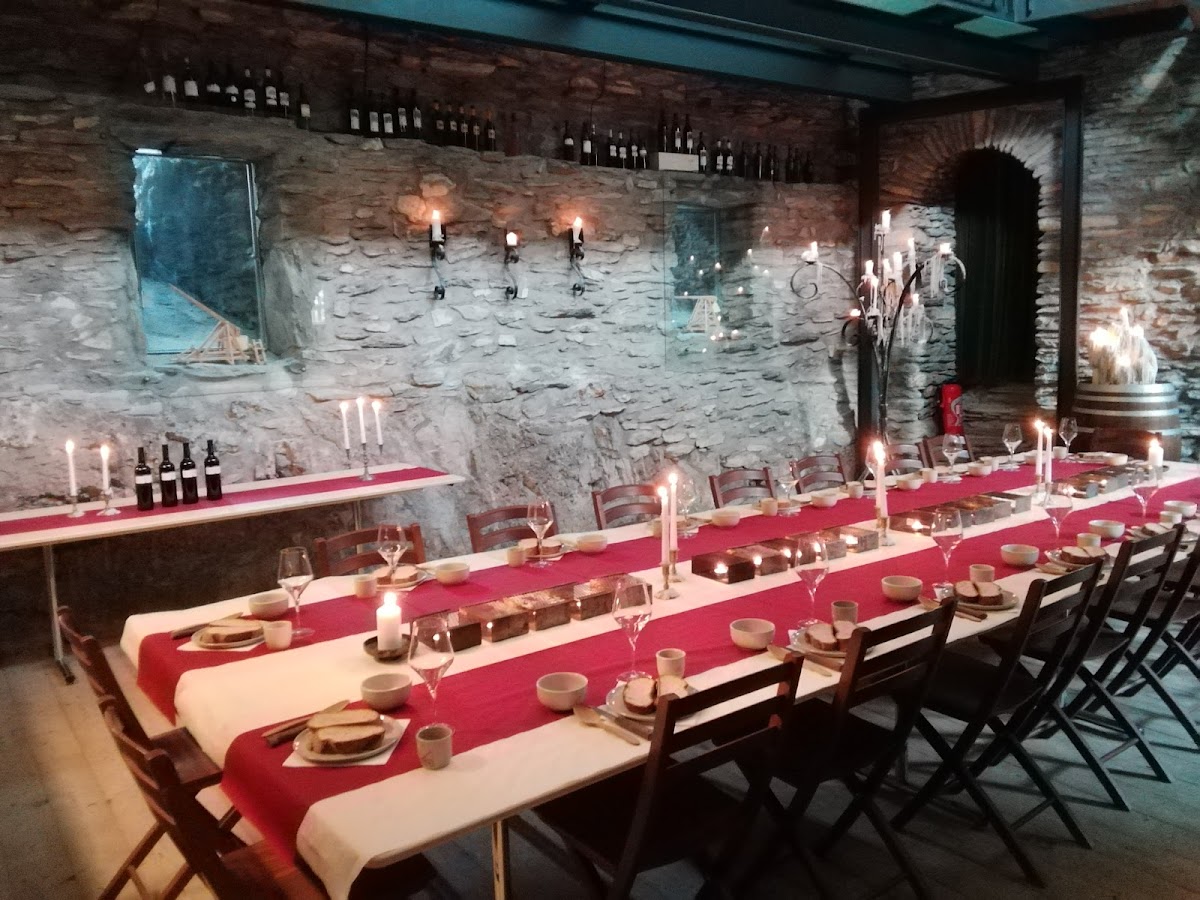
Six siege engines are displayed at La Bâtiaz and used for demonstrations. They comprise a wheeled quarryman-type mangonel, a mangonel, a couillard, a bricole, a trebuchet, and a bombard. The mangonel, couillard, bricole, and trebuchet are medieval siege engines, while the bombard is a large early gunpowder weapon.