Chobienia Castle: A Renaissance Castle in Poland

Site at a Glance
- Rating
- 4.3
- Popularity
- Low
- Country
- Poland
- Primary era
- Early Modern
- External website
- Open
- Eras represented
- Medieval, Early Modern
- Civilizations
- Habsburg, Holy Roman Empire
- Site type
- Military
- Remains
- Castle
On this page7 sections
History
Chobienia Castle is a Renaissance castle in Chobienia, Poland, built in 1583 and later expanded and modernized. It stands on a site associated with the fortified settlement of Cobena, which the Bavarian Geographer, a ninth-century geographical text listing Central European tribes and settlements, mentioned in 845 among 20 strongholds of the Dziadoszans, a western Slavic tribal group linked with the middle Oder region.
Medieval fortified settlement
The settlement or fortification on the left bank of the Oder appears in further references dating to 1209 and 1238. A masonry defensive building was constructed there in the late Gothic period, the final phase of medieval Gothic architecture, around the fourteenth century. This earlier building was probably demolished during the sixteenth century, before the construction of the present castle.
Renaissance residence and later owners
In 1583, Georg von Kottwitz initiated the construction of a Renaissance castle on the site. The Renaissance was a European cultural and architectural period that emphasized classical forms and ornament. Leonhard von Kottwitz enlarged the building during the first half of the seventeenth century. In the eighteenth century, Carl Sigismund von Gellhorn modernized the castle, and another modernization followed in 1905.
The castle’s recorded owners included Georg von Kottwitz, Leonhard von Kottwitz, Carl Sigismund von Gellhorn, and Wolfgang von Saurma. Saurma was the last private owner before the property was nationalized during the interwar period. The castle was also known as Schloss Köben, while the settlement itself was called Köben before 1945.
Events and wartime damage
In 1611, Leonhard von Kottwitz held the wedding of Johann Heermann at the castle. Heermann was a German Protestant writer and theologian. In 1759, Frederick II, the king of Prussia known as Frederick the Great, visited soldiers recovering at Chobienia from wounds received at the Battle of Kunersdorf. He addressed them to raise their morale, an event later commemorated in a painting now held by the Art Museum in Düsseldorf.
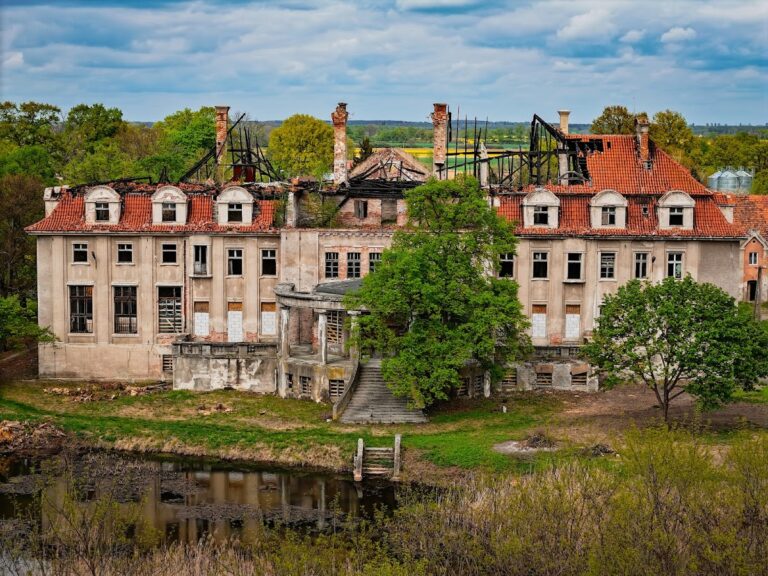
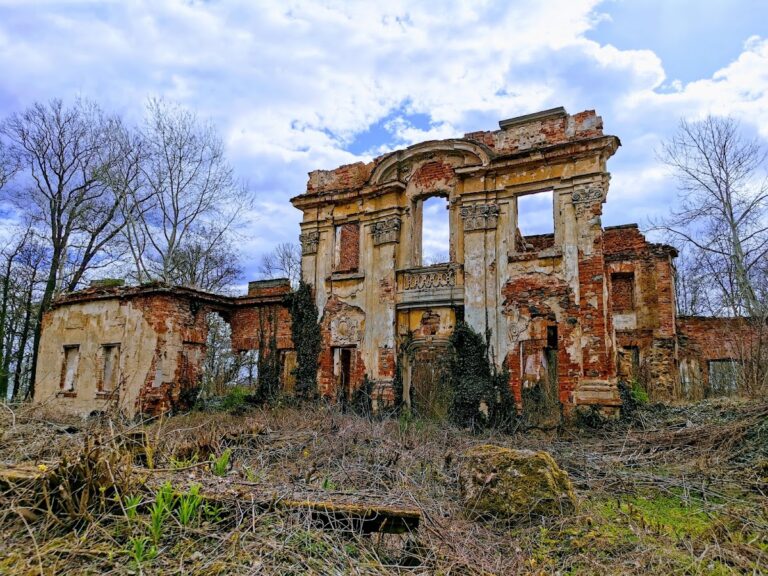
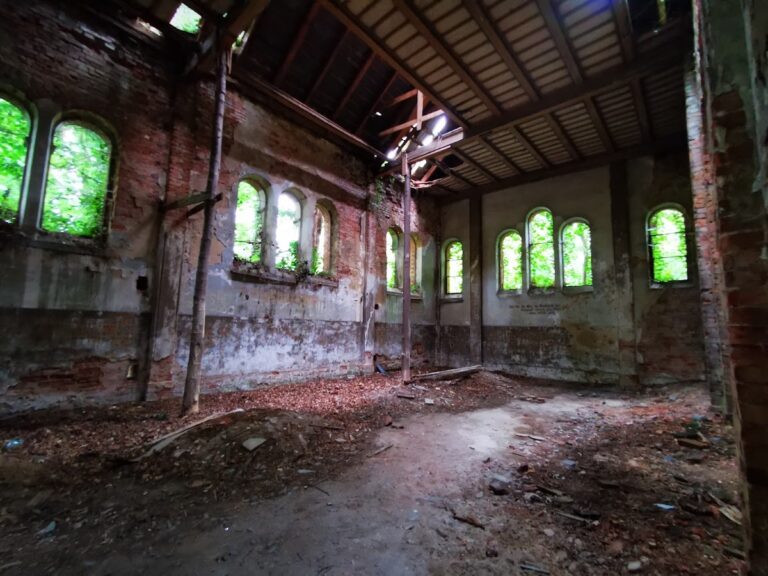
Wartime operations damaged the castle in 1945, and it was not rebuilt afterward. The Chobienia Castle Foundation is overseeing gradual renovation. The building is protected as a cultural heritage monument in Poland and was entered in the heritage register under number 694 on 16 May 1960.
Remains
Plan, courtyard, and towers
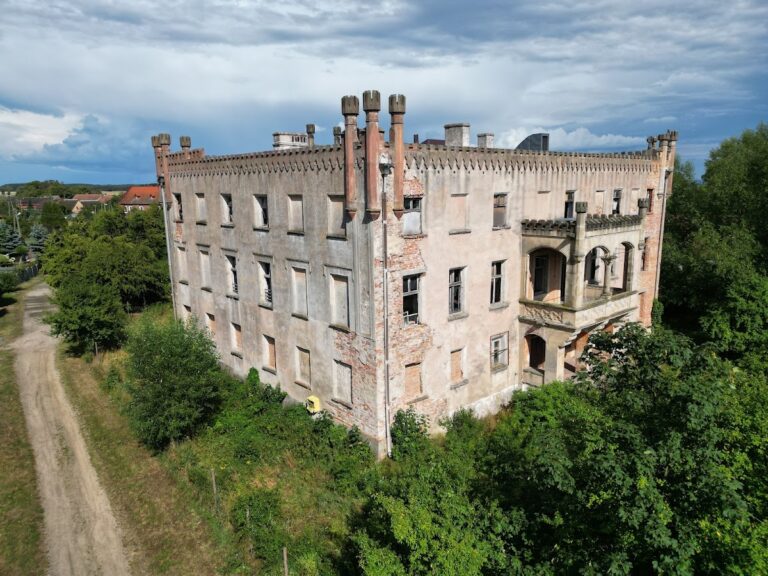
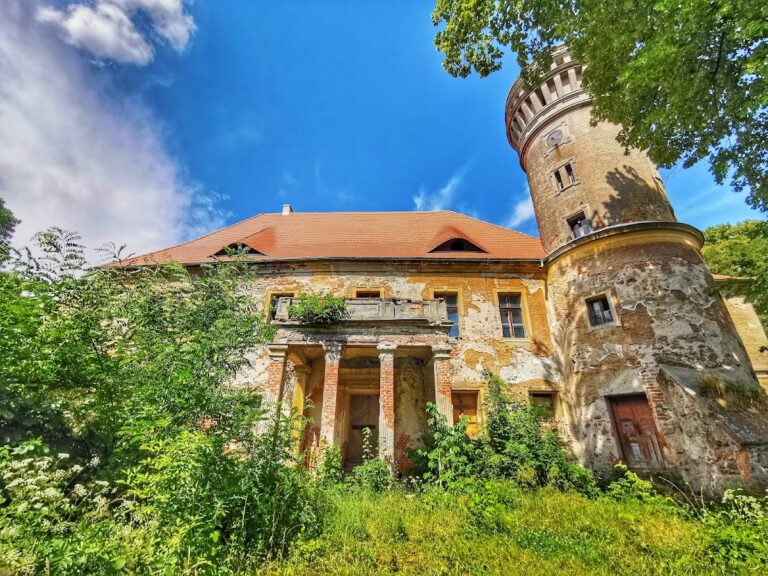
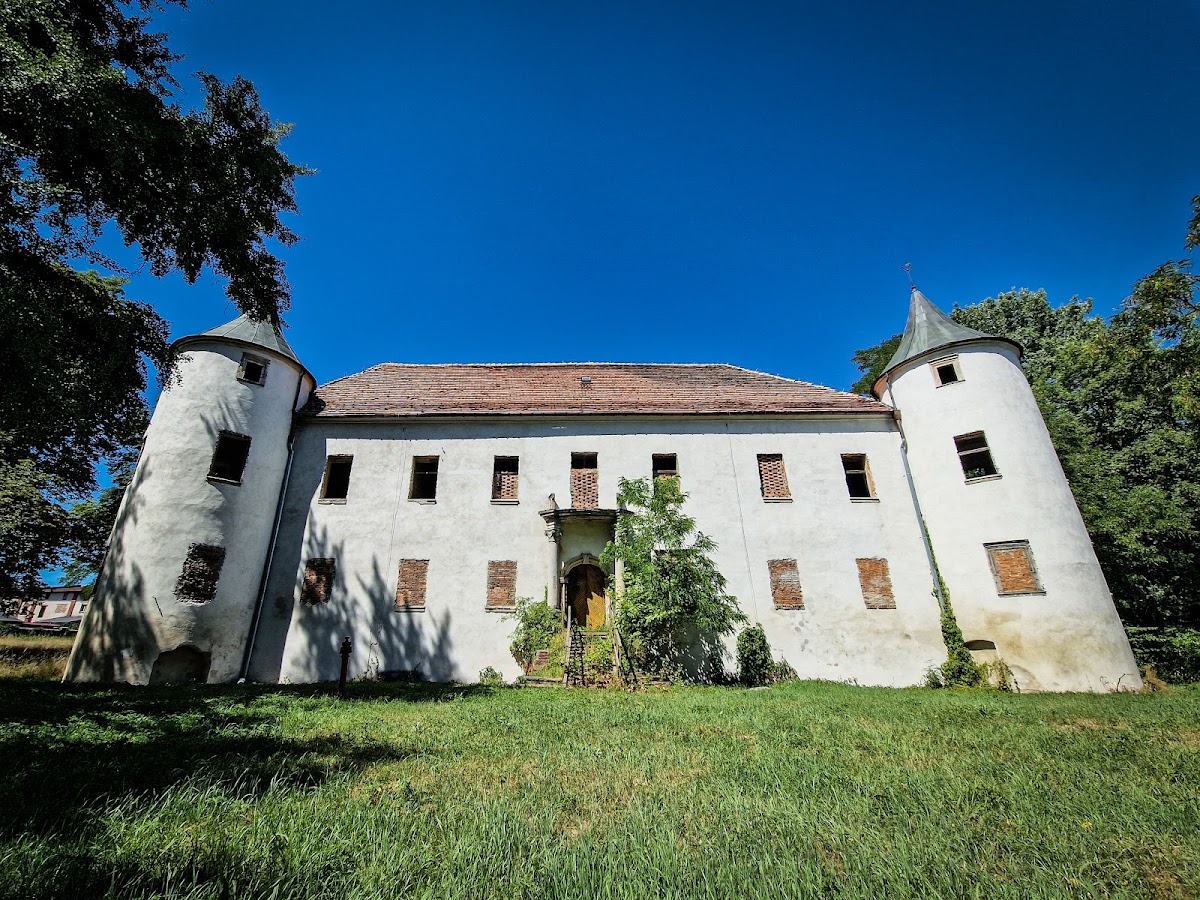
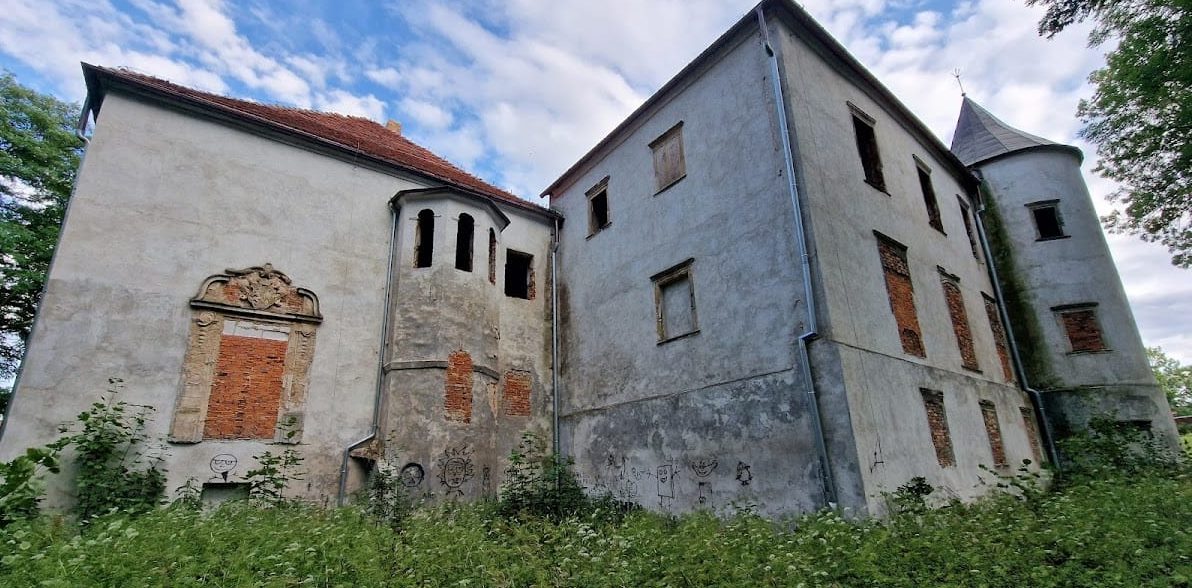
Chobienia Castle has a rectangular plan, with two-storey wings enclosing an internal courtyard. Access to the courtyard passes beneath a rectangular tower incorporated into the west wing. Three additional circular towers occupy the remaining corners, creating a unified arrangement of residential wings and defensive elements. The castle was surrounded by a water-filled moat, while the oldest surviving part is the basement in the northwestern wing.
Interiors and architectural decoration
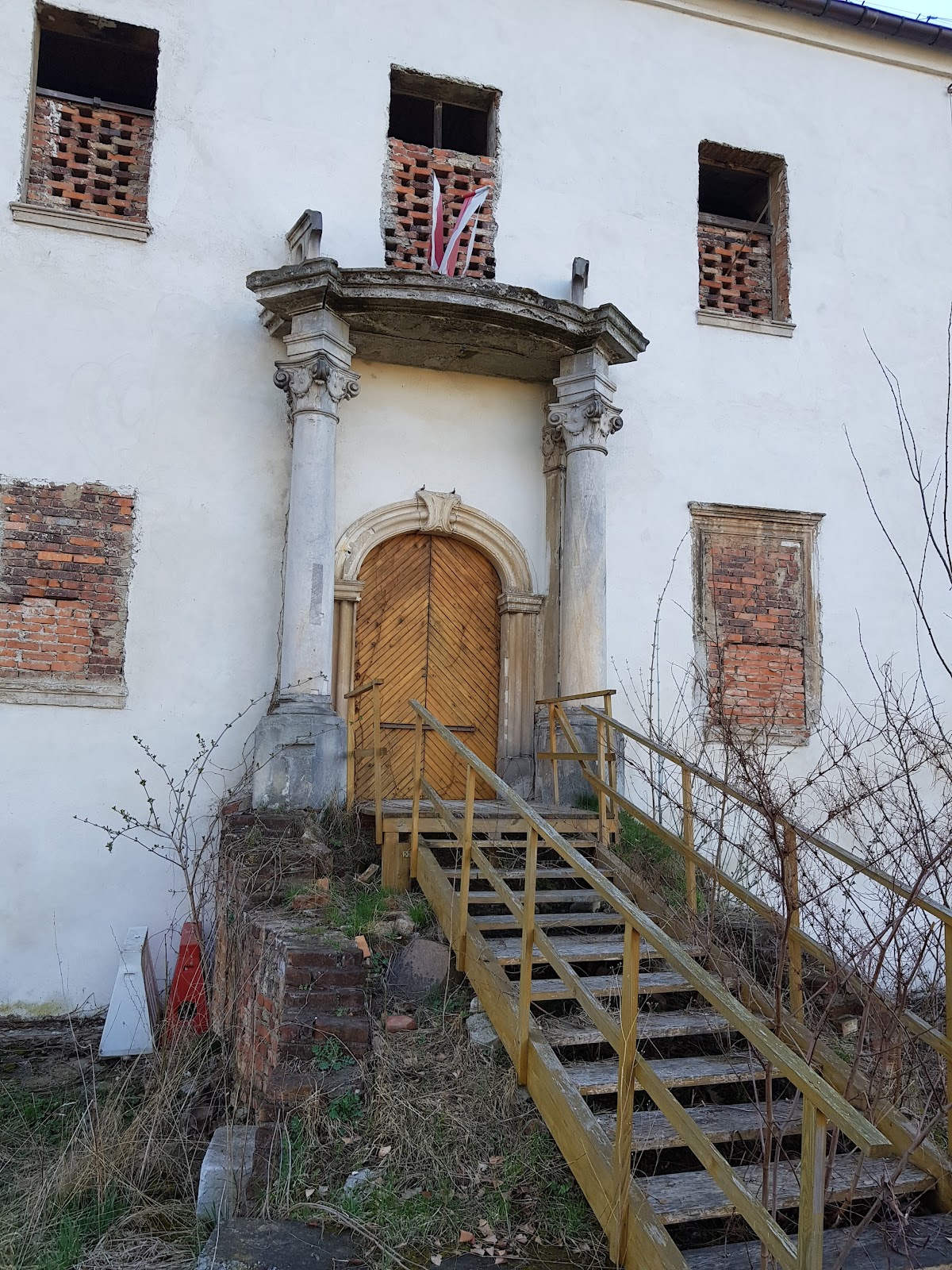
The interiors follow one- and two-bay layouts. Rooms on the ground floor are covered by barrel vaults, continuous semicircular ceilings, with lunettes, the crescent-shaped sections formed where vaults intersect. Renaissance and Baroque portals survive within the building, including a southern portal bearing the von Saurma coat of arms. Renaissance stone window frames and fragments of stucco decoration also remain.
A painted ceiling dated to 1583 was discovered during the 1905 modernization. It is decorated with heraldic coats of arms and preserves a direct connection with the castle’s Renaissance construction phase. The painting The Speech of King Frederick the Great at Chobienia depicts Frederick II’s 1759 address to wounded soldiers at the castle and is held by the Art Museum in Düsseldorf.