Castello il Palagio: A Neo-Gothic Castle in Tuscany


Site at a Glance
- Rating
- 4.7
- Popularity
- Low
- Country
- Italy
- Primary era
- Modern
- External website
- Open
- Eras represented
- Medieval, Early Modern, Modern
- Civilizations
- Grand Duchy of Tuscany, Italian, Republic of Florence
- Site type
- Domestic
- Remains
- Castle
On this page7 sections
History
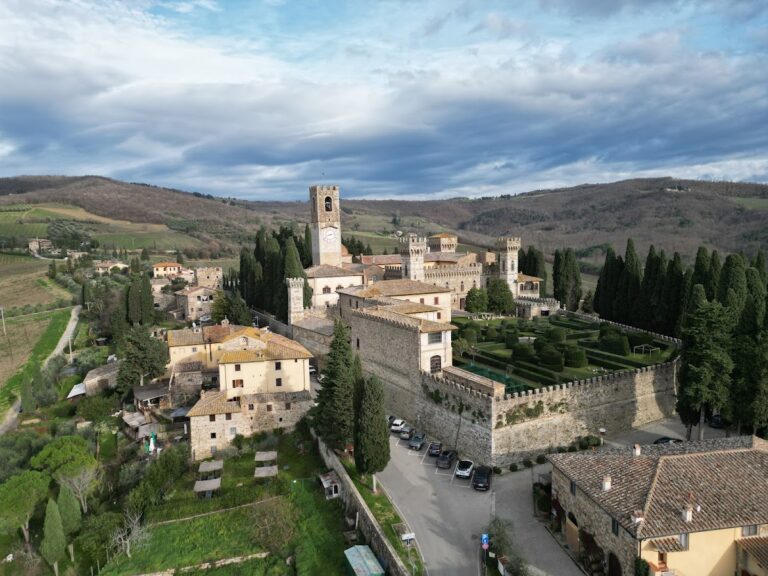
Castello il Palagio is a neo-Gothic castle in Italy, in Mercatale Val di Pesa, with a history documented from 1252. Manuscripts preserved at the nearby Badia di Passignano record the castle during the thirteenth century. The complex belonged to the Canigiani family and endured a series of incursions over the centuries.
Medieval fortress
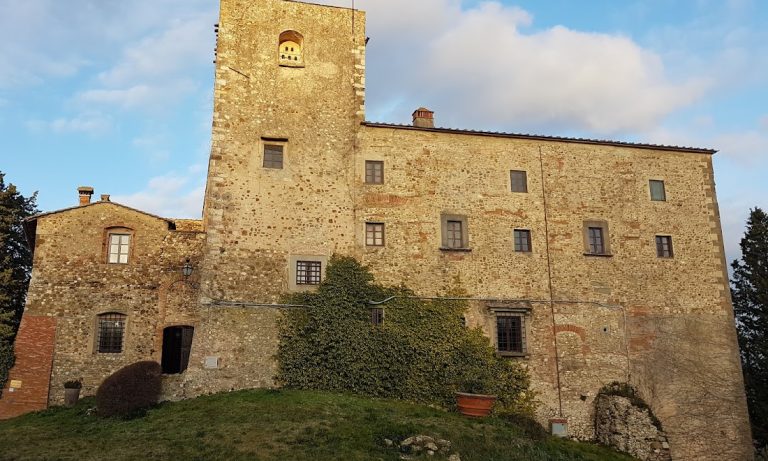
In 1320, the castle was enlarged to a size greater than that of the remains visible today. Its medieval history continued through repeated periods of danger, while the fortress retained its association with the Canigiani family.
From fortress to villa
At the end of the seventeenth century, ownership passed to the Miniati barons and later to the Goretti Miniati marquises. They converted the fortress into a villa and enriched it with works of art, beginning a major change in the character and use of the property.
Twentieth-century transformation and wartime damage
Restoration began in 1910 under the direction of the architect Giuseppe Castellucci and Marquis Ugo Goretti Miniati, who then owned the property. Castellucci substantially reinvented the castle in the neo-medieval style, a modern revival of medieval architectural forms that shaped much of its present appearance. During the Second World War, the Nazi army seized the villa and expelled its owners. The building also suffered heavy bombardment.
Castello il Palagio is now owned by the Lapi family, an old Florentine family undertaking a further restoration of the property.
Remains
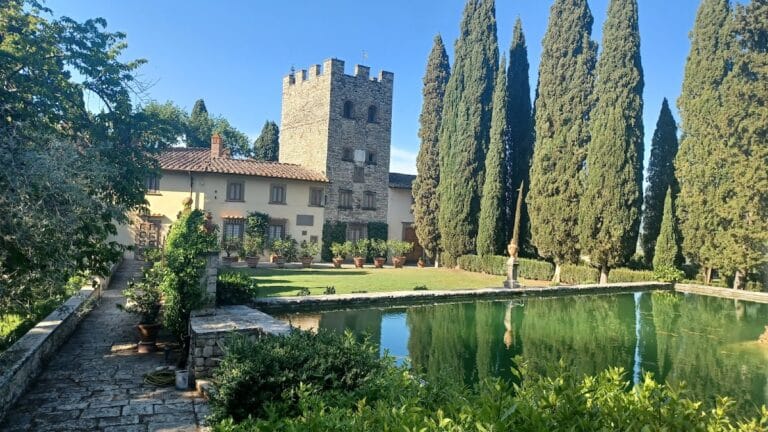
The surviving complex is organized around a tower with Guelf-style crenellations, battlements traditionally associated with the Guelf political faction in medieval Italy. A central courtyard is overlooked by a covered loggia, and the complex also includes a chapel, an entrance, interior rooms, kitchens, a fountain, a tabernacle, and a plaque.
Courtyard and heraldic decoration
The courtyard contains a medallion and numerous heraldic decorations. Coats of arms associated with the Miniati, Barberini, Corsini, Grifoni, Medici, Strozzi, and other families appear among the decoration. One heraldic element is dated 1496, another 1560, and another 1541. The last is tentatively associated with the Antellesi and Miniati families.
Interior features
Inside the castle, a fireplace bears the Canigiani coat of arms. Further heraldic decorations are associated with the Miniati, Zati, Grifoni, and other families, preserving links with the families connected to the property’s history.