Tomb of the Archer: An Etruscan Burial Site in Italy
Site at a Glance
- Country
- Italy
- Primary era
- Iron Age
- Eras represented
- Iron Age
- Civilizations
- Etruscan
- Site type
- Burial
- Remains
- Tomb
On this page9 sections
History
Etruscan burial and later disturbance
The Tomb of the Archer is an Etruscan burial site at La Collina, near Montefiridolfi, in San Casciano in Val di Pesa, Italy, associated with the seventh century BCE. The Etruscans were an ancient people of central Italy whose civilization flourished before Roman dominance. Gold and ivory among the grave goods indicate that the tomb’s occupants were wealthy.
The tomb was desecrated and looted in antiquity. Its collapse probably resulted from weathering and erosion on the steep slope, though centuries of habitation and agricultural activity may also have disturbed it. The area’s name, La Cupola, meaning The Dome, was interpreted as a clue that the collapse had happened relatively recently. After the tomb was profaned, it may have served as a dwelling or animal shelter until at least the late sixteenth century. Traces of fire on the floor and a silver coin from the end of that century support this possibility.
Discovery and modern history
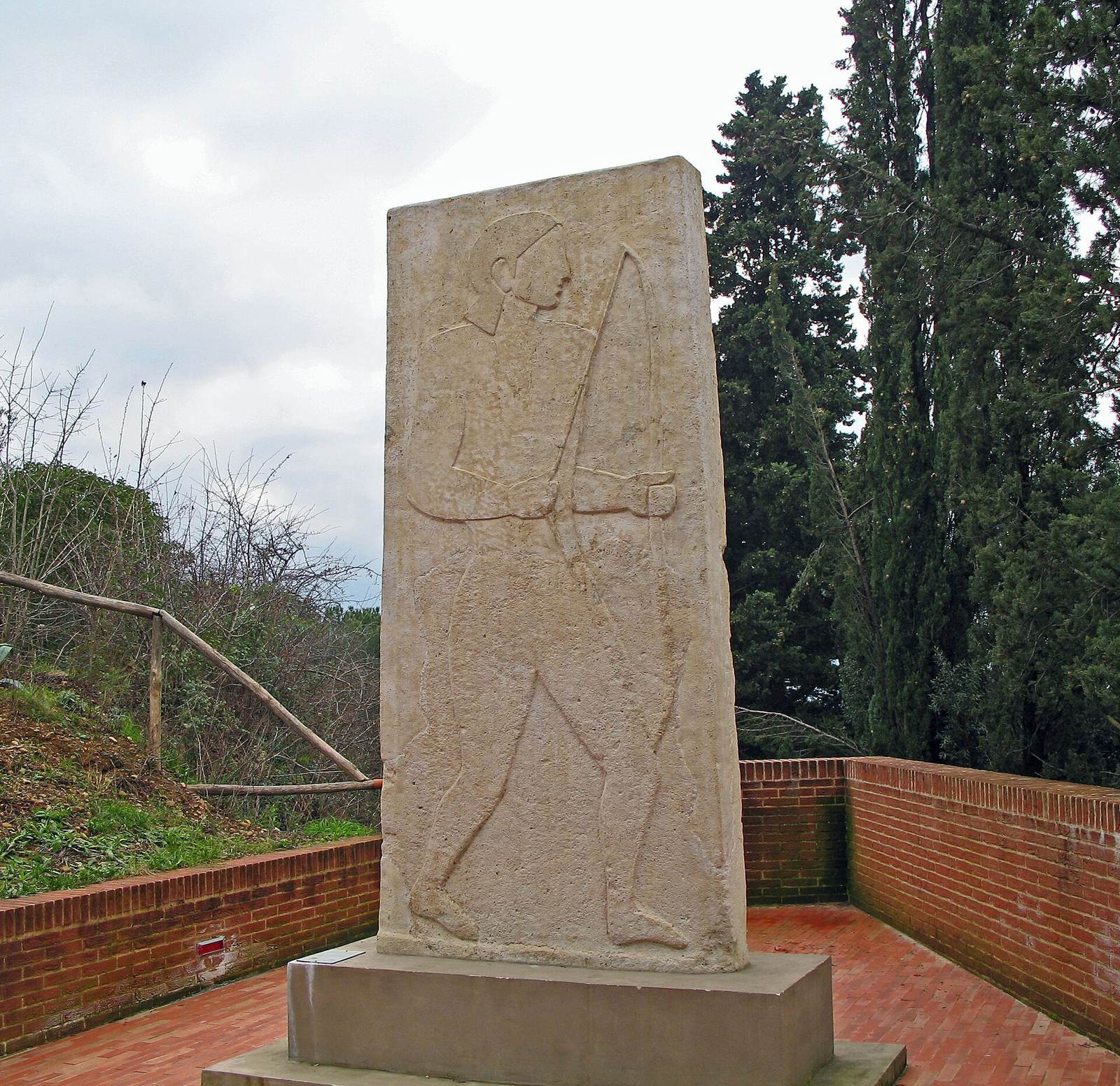
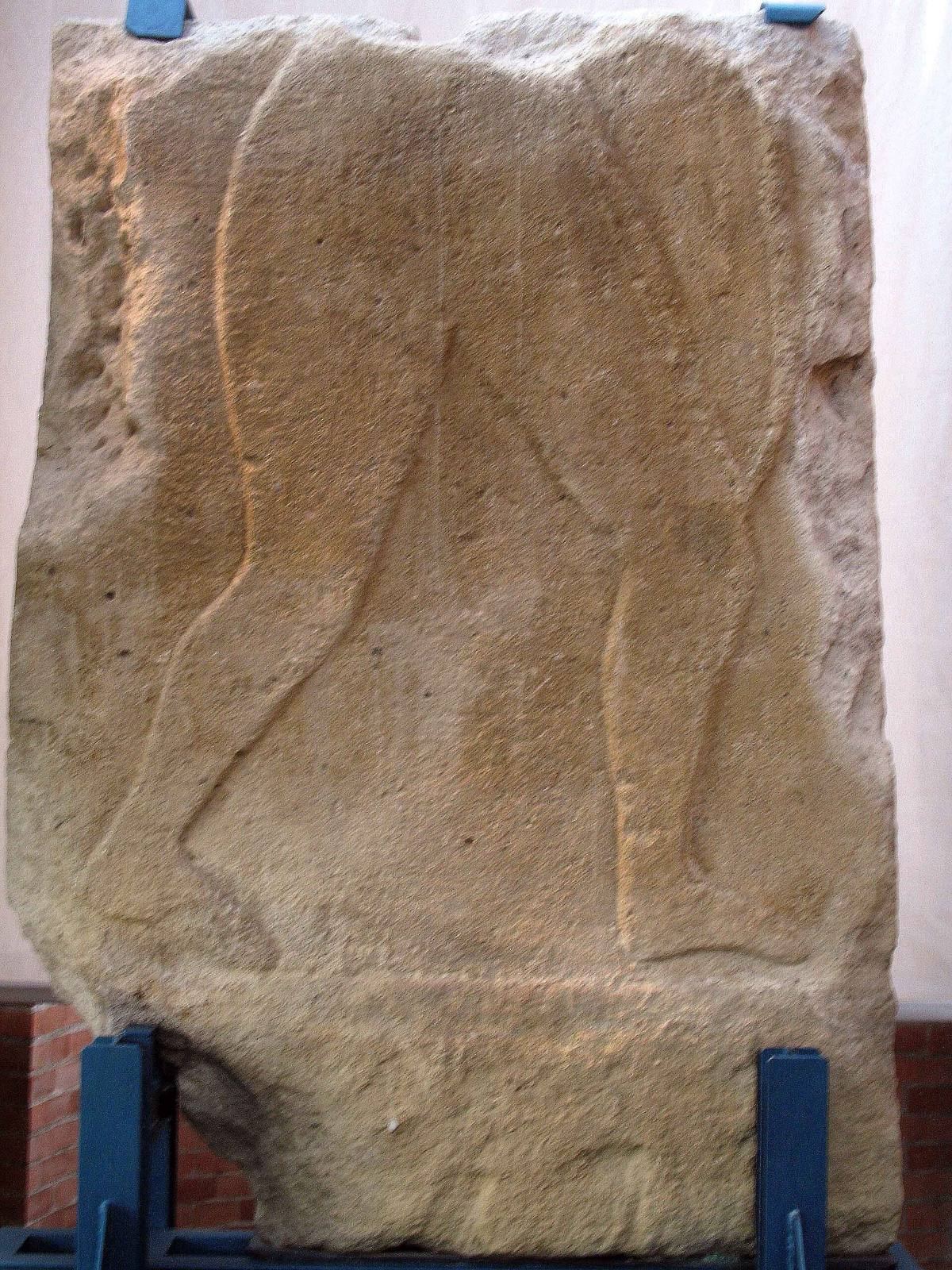
Agricultural work uncovered the tomb by chance in April 1978, when machinery exposed worked stone. Work stopped, and the Archaeological Superintendency of Florence excavated the site in June and July under the direction of Italian archaeologist Giuliano De Marinis. The stele was stored at the Archaeological Museum of Florence until the early twenty-first century. It was then displayed under glass, first in the museum garden and later inside a museum in San Casciano. A reconstruction of the complete stele was installed in Poggione Park in San Casciano in the late 1990s.
Remains
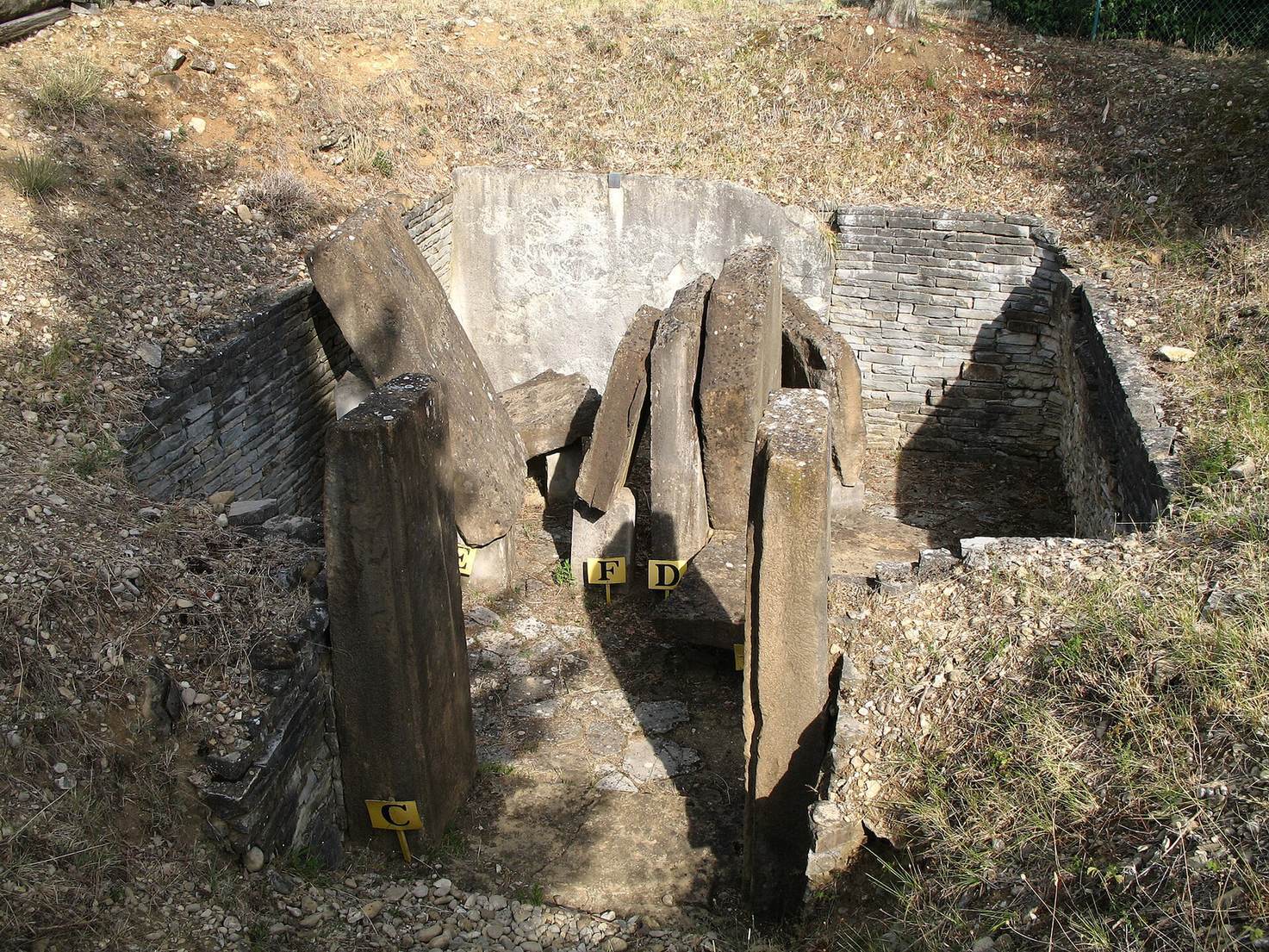
The tomb was cut into a hilltop and covered with excavated earth to form a burial mound. Its layout centers on a square stone chamber reached by a very short entrance passage. Roof blocks recovered around the excavation help reveal how the structure was built.
Chamber and roof
Burial chamber
The chamber measures 5.30 metres on each side, and its entrance faces west. Slabs of alberese, a type of Tuscan limestone, form the perimeter walls. The two side walls slope inward by several tens of centimetres, while a limestone slab forms the back wall. Alberese paving survives across about two-thirds of the original floor. Grooves in the sandstone door jambs held the door in place and provided a socket for its pivot.
Roof and mound
The roof may have formed an elliptical, stepped false dome, a structure made from courses of stone projecting inward, with a continuous inner profile. Its regular courses may have begun at lintel level. This proposed design was unusual in the Volterra and Florence area and differed from tombs at Castellina, Quinto and Comeana. The recovered roof stones are regularly cut, generally about 1.40 by 0.60 metres and 8 to 15 centimetres thick; corner blocks have concave curved cuts. A rectangular closing slab measured 4.70 by 2.70 by 0.25 metres, weighed about eight tonnes and was recovered in seven pieces. The lintel, jambs and roof stones weighed about two tonnes apiece.
A single sandstone pillar rises about 2.25 metres above ground, and its original height is estimated at about four metres. Sandstone was also used for the beams and roof stones. The stone was probably brought from Val d’Elsa, about 20 kilometres away, because it was not available at the site. Transport would have crossed three ridges, between Tavarnelle and Montespertoli, San Donato in Poggio and San Pancrazio, and Montefiridolfi and Sant’Angelo, as well as the Elsa, Virginio and Pesa valleys.
Carved stele
The lower portion of the sandstone stele found during excavation measures 2.15 metres and weighs about two tonnes. The complete monument is estimated to have stood 3.5 to 3.7 metres high and to have been about 25 centimetres thick, with a slightly trapezoidal shape. Its shallow relief, about 1.5 centimetres deep, shows a man carrying a bow and walking to the right. The visible lower part of the bow and its taut string suggest that he is about to release an arrow; he may represent a hunter or a warrior. This imagery is unusual among seventh-century BCE Etruscan stelae, with the stele of Aule Feluske at Vetulonia providing a comparison. The stele may have stood at the tomb entrance or on top of the mound, with the summit considered more likely. Its base extended only about 45 centimetres into the ground, which may explain why it fell and broke soon after it was raised. The largest lower fragment was reused as the tomb’s final closing slab; marks on it are consistent with robbers overturning it while forcing entry.
Burial goods
Finds from the already looted burial included pottery vessels, among them a cup tentatively identified as either a one-handled vessel or a deep drinking cup with handles. Traces of an inscription remain at its base. Two large storage jars were found with their lids. Other objects included an ivory plaque decorated with animals, a leech-shaped gold fibula, a pin used to fasten clothing, probably from a jewelry set, a fragment from that set, part of a silver fibula, and fragments of amber and bronze.