Palais Coburg: A Late-Neoclassical Urban Palace in Vienna
Site at a Glance
- Rating
- 4.7
- Popularity
- Medium
- Country
- Austria
- Primary era
- Modern
- External website
- Open
- Eras represented
- Modern
- Civilizations
- Austrian Empire, Habsburg
- Site type
- Domestic
- Remains
- Palace
On this page7 sections
History
Palais Coburg is a late-Neoclassical urban palace in Vienna, Austria, completed in 1845 for Ferdinand Georg August of Saxe-Coburg-Saalfeld-Koháry. Its design revived the balanced compositions, columns, and monumental forms associated with ancient Greek and Roman architecture. The palace belonged to the Koháry branch of the House of Saxe-Coburg and Gotha, a European ruling dynasty whose members held several royal positions.
Construction and the Coburg-Koháry Family
The Coburg family obtained the building plot through Ferdinand’s marriage to Maria Antonia Gabriela von Koháry, who came from the Hungarian Koháry family. The Viennese architect Karl Schleps designed the palace in 1839. Following Schleps’s death in 1840, the builder Adolf Korompay carried the work forward for the next five years, bringing the building to completion in 1845.
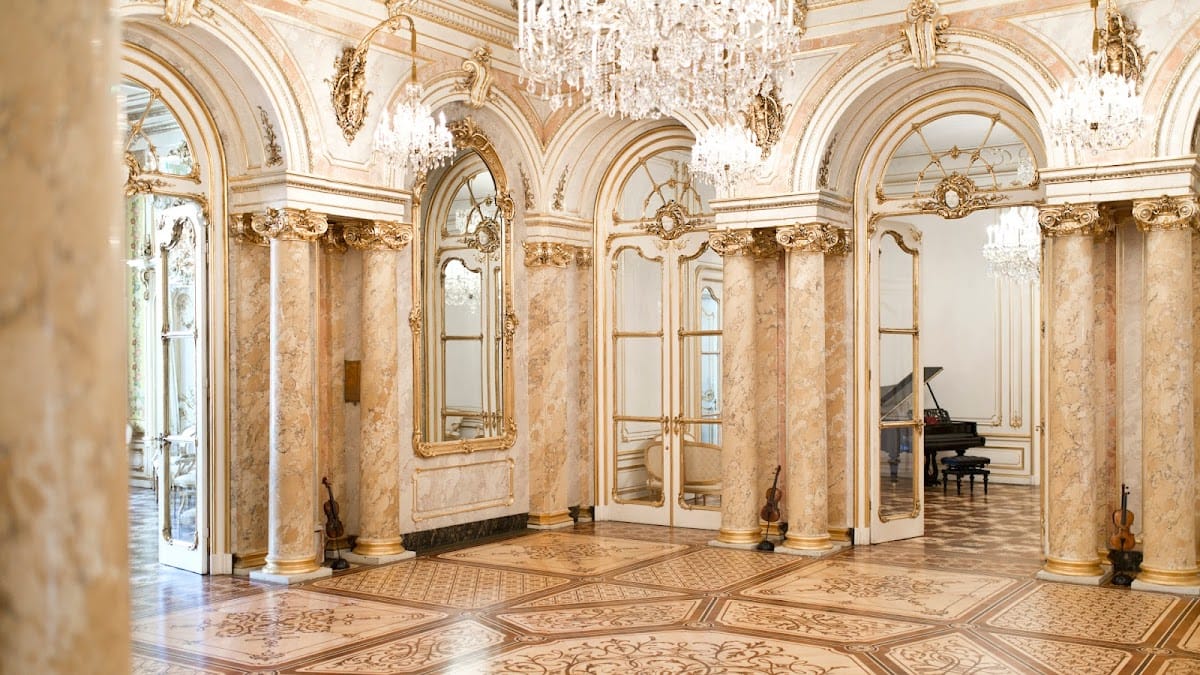
Palais Coburg remained unoccupied after its completion until the Revolution of 1848, a wave of political upheaval that challenged established European governments. In 1849, August of Saxe-Coburg and Gotha and his wife, Clementine d’Orléans, moved into the palace. August belonged to the Coburg princely family, while Clementine was a member of the French royal family. They converted parts of the building into rental apartments and furnished the ceremonial rooms on the first upper floor with insignia associated with both dynasties.
War Damage and Changing Uses
Bombing damaged the palace in 1945. Russian occupation forces then used it as accommodation from 1945 to 1955. From 1955 until 1997, the Austrian Federal Railways rented two floors. Sarah Aurelia Halasz, the last owner from the Saxe-Coburg-Koháry family, lived there until her death in 1994, although she had sold the property to real-estate agents in 1978. After the owner’s bankruptcy, the property passed to Länderbank.
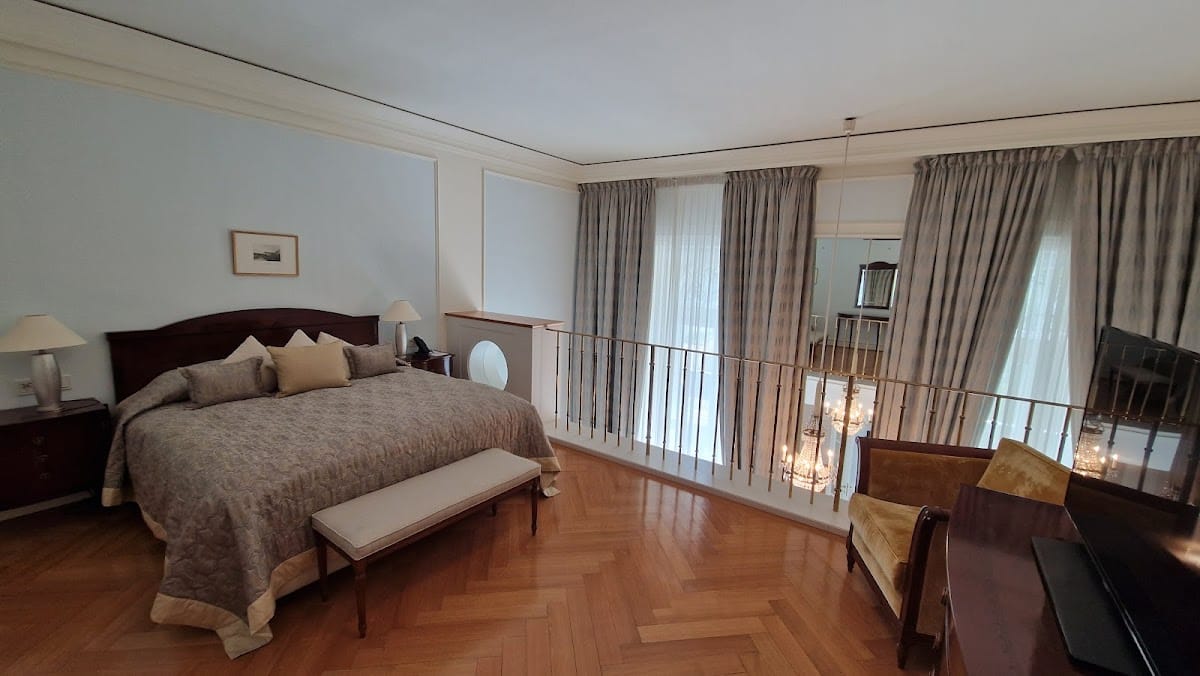
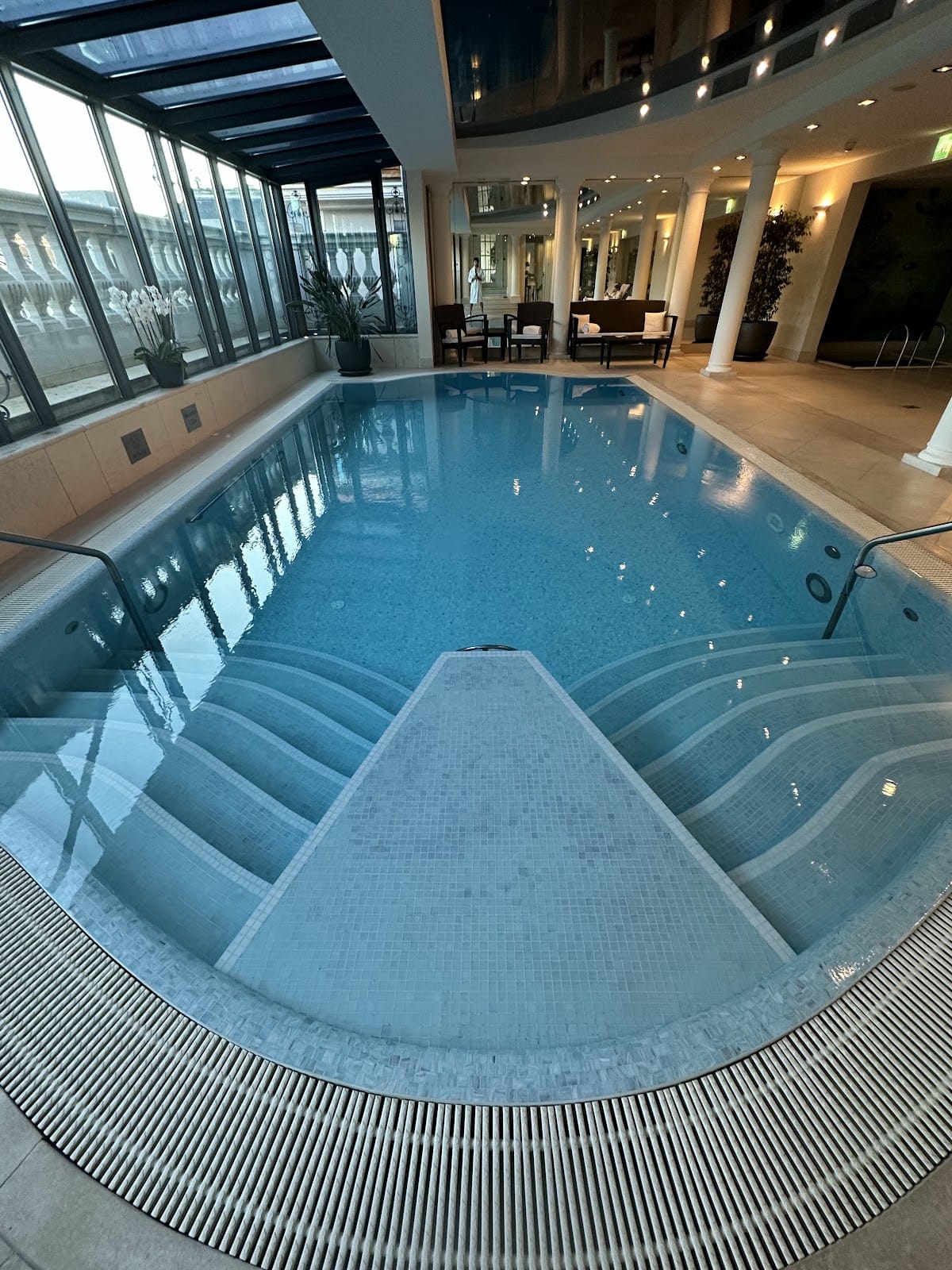
Viennese entrepreneur and asset manager Peter Pühringer acquired Palais Coburg in 1997. By then, the palace had seriously deteriorated. A comprehensive renovation between 2000 and 2003 introduced offices for Pühringer’s companies, the luxury hotel Palais Coburg Residenz, and two restaurants, including the Silvio Nickol Gourmet Restaurant.
International Diplomacy
Palais Coburg later became the setting for negotiations on Iran’s nuclear program. Several rounds involved the foreign ministers of China, France, Russia, the United Kingdom, the United States, and Germany. After three weeks of talks, Iran, the European Union, the five permanent members of the United Nations Security Council, and Germany reached an agreement at the palace on 14 July 2015, concluding a 13-year nuclear dispute.
Remains
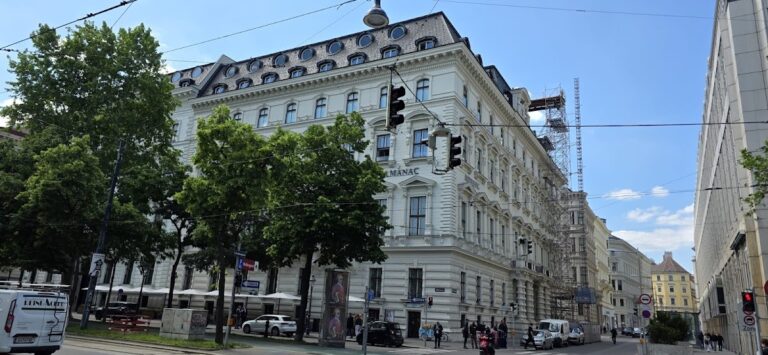
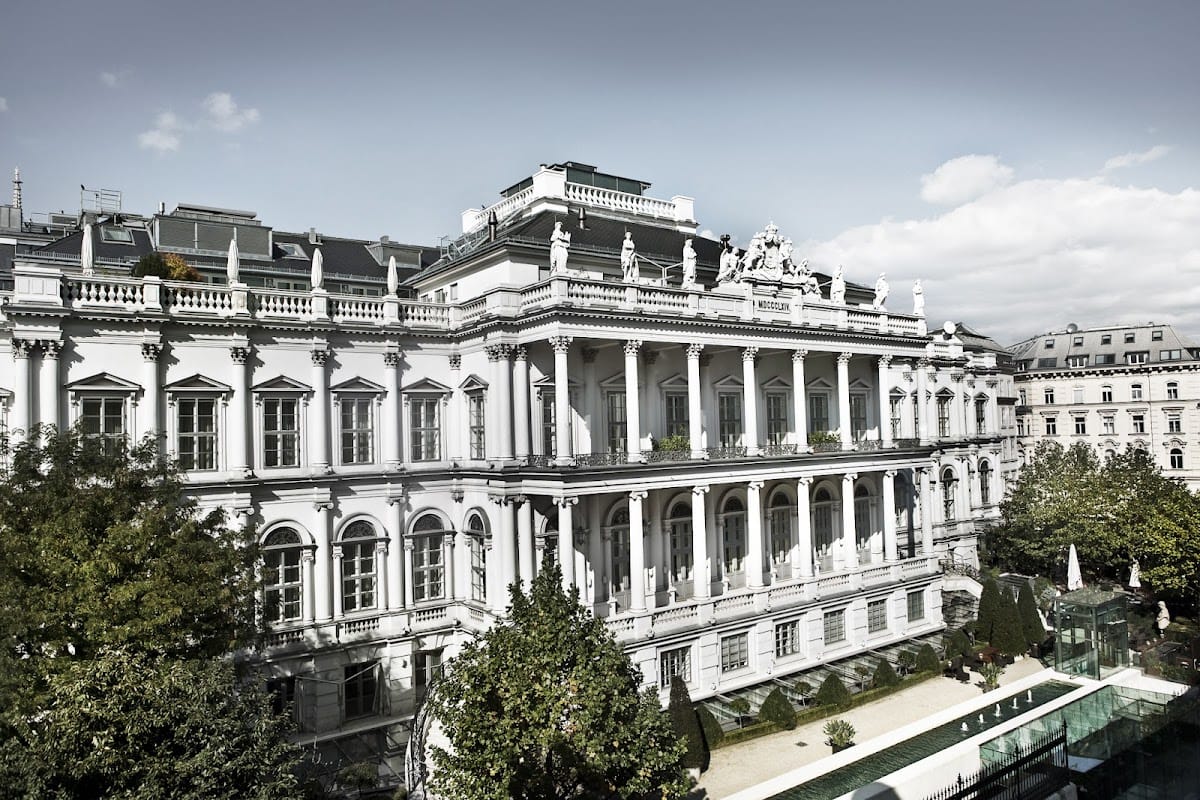
Palais Coburg stands at Coburgbastei 4 in Vienna’s 1st district, on the Braunbastei, a surviving section of the city’s former fortifications. Bastions were projecting defensive positions designed to allow fire along the faces of fortified walls. The surrounding fortifications had been constructed in the sixteenth and seventeenth centuries and were demolished during the nineteenth century. The palace is a late-Neoclassical composition organized around a central façade with numerous free-standing columns.
Exterior Architecture
The central façade gives Palais Coburg its popular nickname, “Spargelburg,” or “Asparagus Castle,” because of the repeated vertical presence of its free-standing columns. A figurative crown was added to the central avant-corps in 1864. An avant-corps is a section that projects forward from the main façade, making the crowned middle section a distinct feature of the building’s exterior.
Stonework and Interior Features
White, particularly hard Kaiserstein from Kaisersteinbruch was used for the steps of all the staircases, especially the monumental grand staircase, and for load-bearing architectural elements. Kaiserstein is a durable limestone used historically in demanding architectural work. The ceremonial rooms on the first upper floor contained insignia connected with the French royal house and the House of Saxe-Coburg and Gotha, reflecting the dynastic connections of the people who occupied the palace after 1849.
Nearby sites