Vieux Château de l’Île d’Yeu: A Medieval Fortress on a Tidal Rock
Site at a Glance
- Rating
- 4.7
- Popularity
- Low
- Country
- France
- Primary era
- Medieval
- External website
- Open
- Eras represented
- Medieval, Early Modern
- Civilizations
- French
- Site type
- Military
- Remains
- Castle
On this page13 sections
History
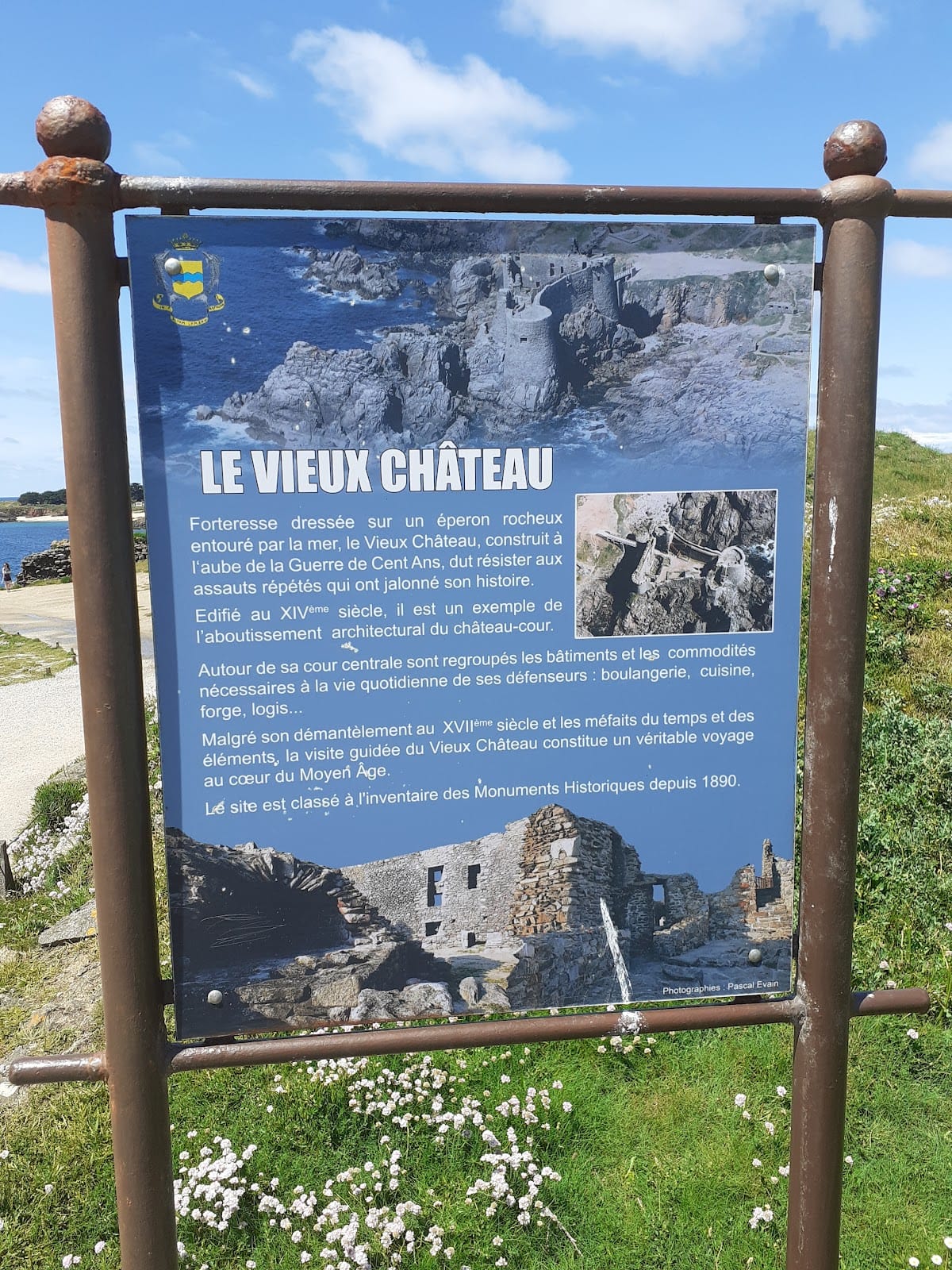
The Vieux Château de l’Île d’Yeu is a medieval fortress on Île d’Yeu, France, whose history developed through roughly three centuries of invasion, rebuilding, and military adaptation. Viking attacks in the ninth century were followed by settlement on the island, while the lords of La Garnache controlled the territory.
From Monastic Refuge to Stone Castle
By the end of the tenth century, Cluniac monks had established a fortified wooden refuge on the site. The Cluniac order was a major reform movement in Western Christian monasticism, centered on the abbey of Cluny and its network of dependent religious communities. The refuge offered protection during violent attacks, but the wooden structure had deteriorated by the end of the thirteenth century. The lords of Belleville, who then controlled the island, judged a reconstruction too costly.
Jeanne de Belleville inherited the island and its associated fiefs in 1320. She probably began replacing the wooden refuge with a stone castle built directly on the rock. The first stone castle took shape during her lifetime and that of Olivier IV de Clisson, whom she married in 1330. Olivier was a major military leader and builder of castles, and he altered and strengthened the fortress as part of his wider network of strongholds. The work also aimed to protect the island’s inhabitants from foreign invasion.
English Occupation and Reconstruction
During the conflict between Jeanne de Belleville and the French royal government, the French army seized the castle. In 1355, the English commander and privateer Robert Knolles captured it and occupied Île d’Yeu for thirty-seven years. In 1392, during the French reconquest of Poitou, Olivier V de Clisson recovered the island, repaired the damage, and improved the castle according to contemporary military principles.
Renaissance Defenses and Military Obsolescence
During the Renaissance, Jean V de Rieux, lord of the island, commissioned bastioned walls around the castle. These were fortifications with projecting defensive positions, designed according to Italian models by engineers brought to France by Francis I after the Italian Wars. The Italian Wars were a series of conflicts, chiefly during the late fifteenth and sixteenth centuries, involving France, Spain, the Holy Roman Empire, and Italian states over territories in Italy. The form of these defenses later influenced and was refined by Vauban, the principal military engineer of Louis XIV’s France.
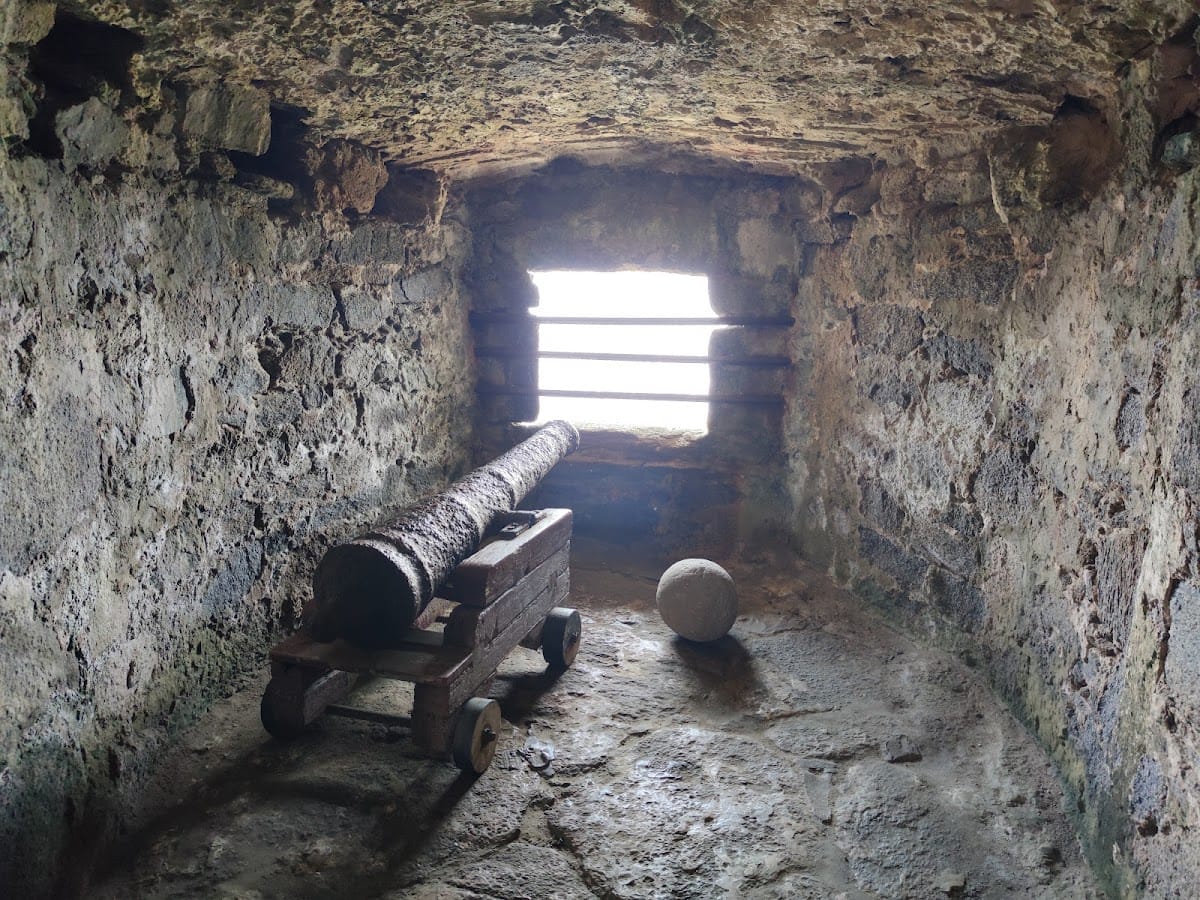
The new defenses resisted an attack by several thousand Spanish troops who landed from the north in 1550. The local garrison defeated the attackers and forced them to return by sea to the Iberian Peninsula. The castle’s military importance later declined when small coastal forts built according to Vauban’s methods between 1654 and 1660 made it obsolete. At the end of the seventeenth century, Louis XIV ordered its dismantling, together with that of several other old French coastal castles, because he feared that enemies could seize them and use them as strategic bases.
Protection and Archaeological Work
The Vieux Château was classified as a French historic monument in 1900. During the 1970s, Maurice Esseul, a native of the island, excavated and restored the castle, helping reveal and preserve its surviving form.
Remains
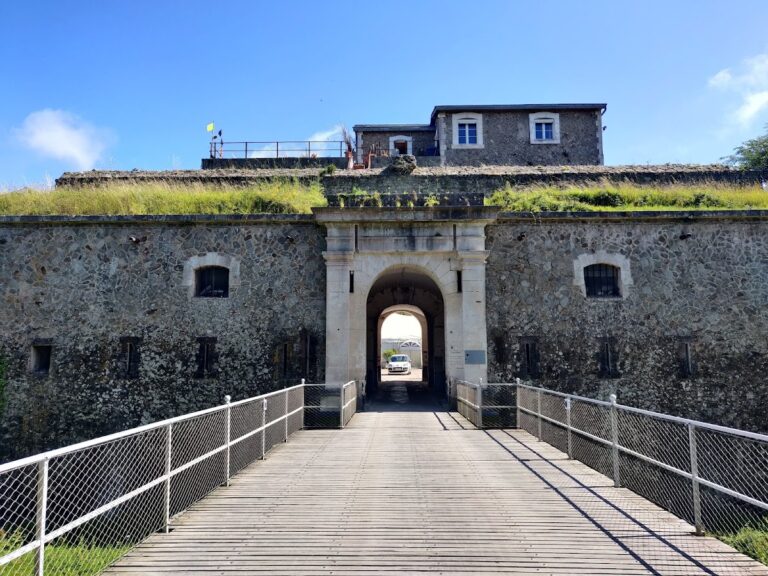
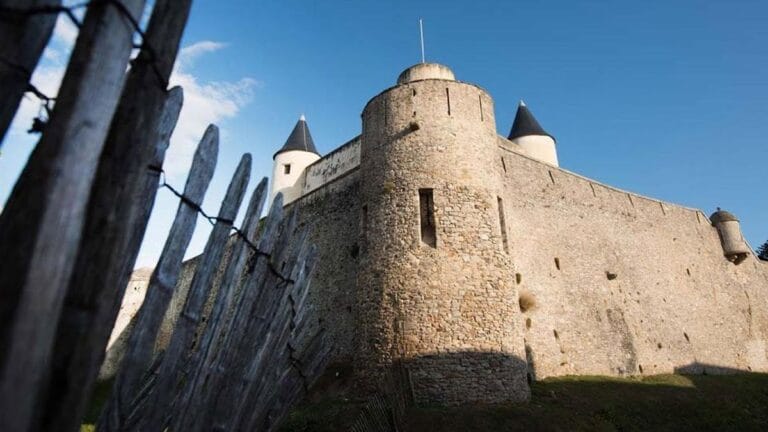
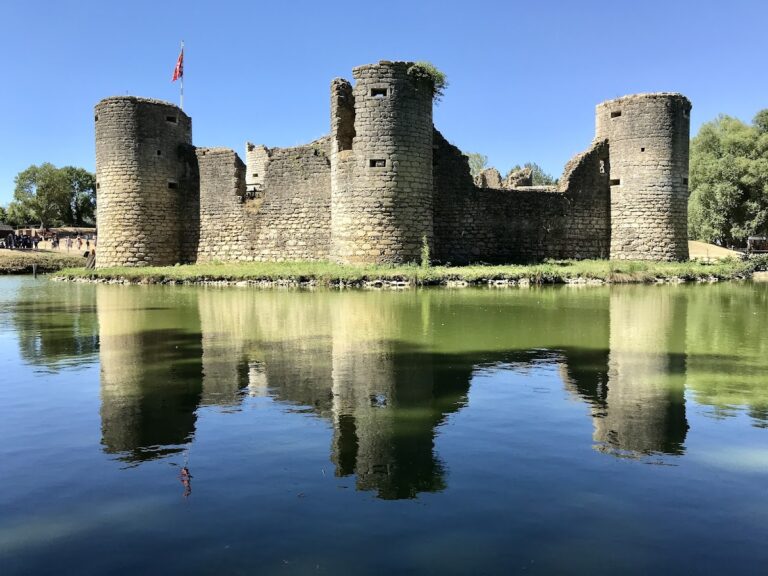
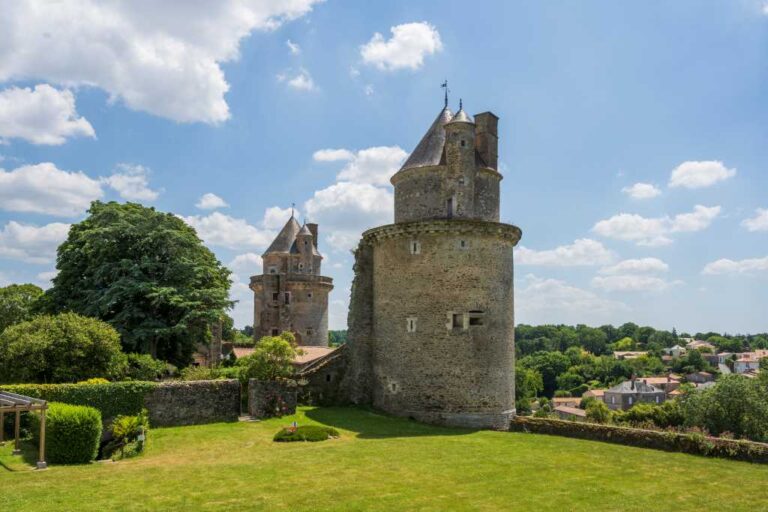
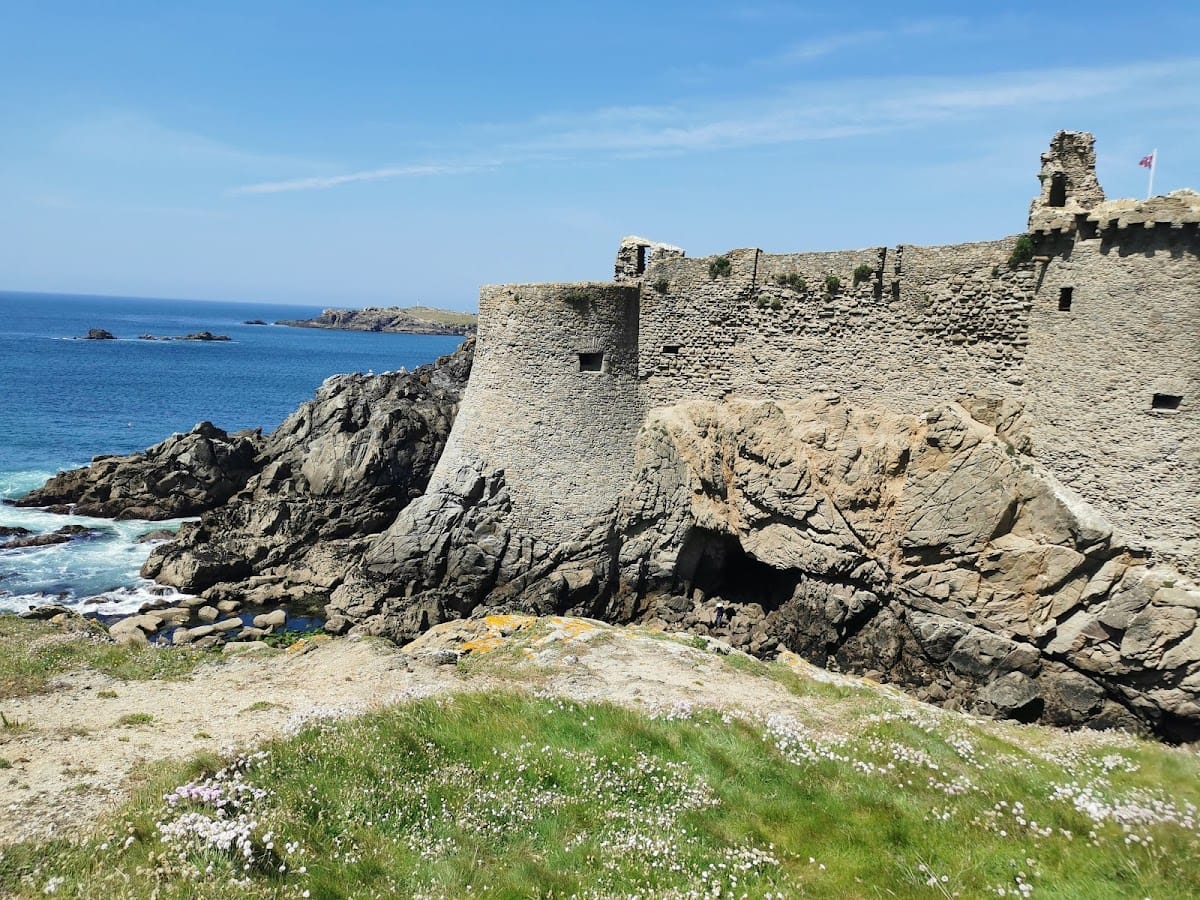
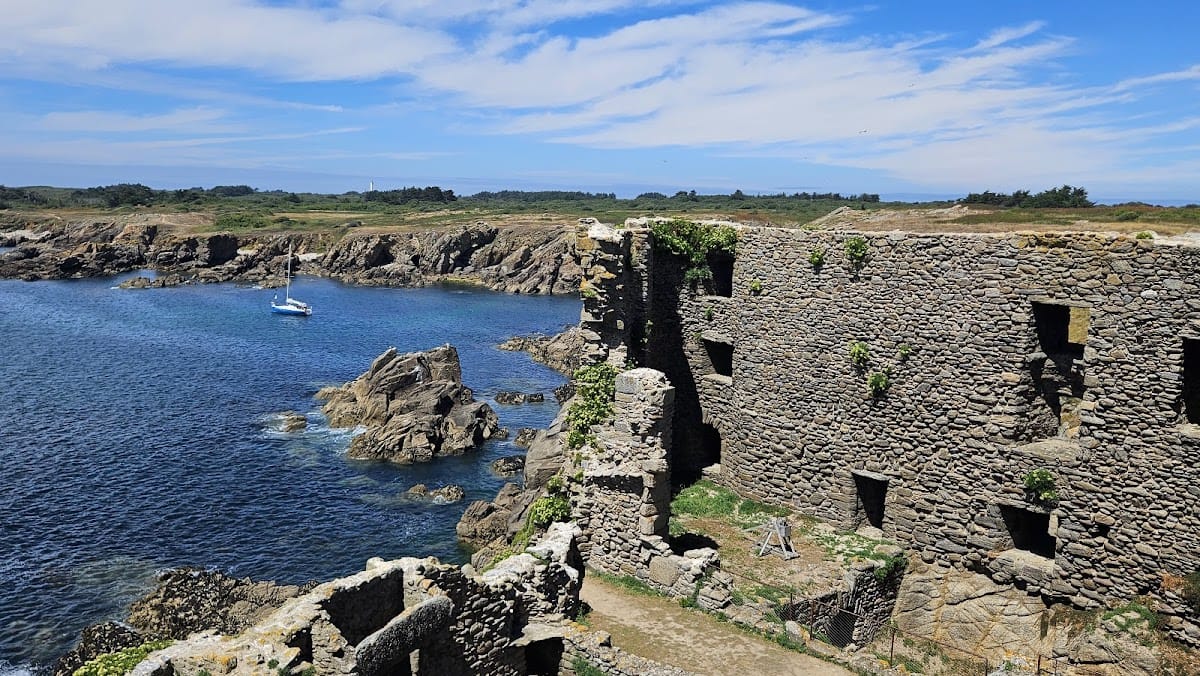
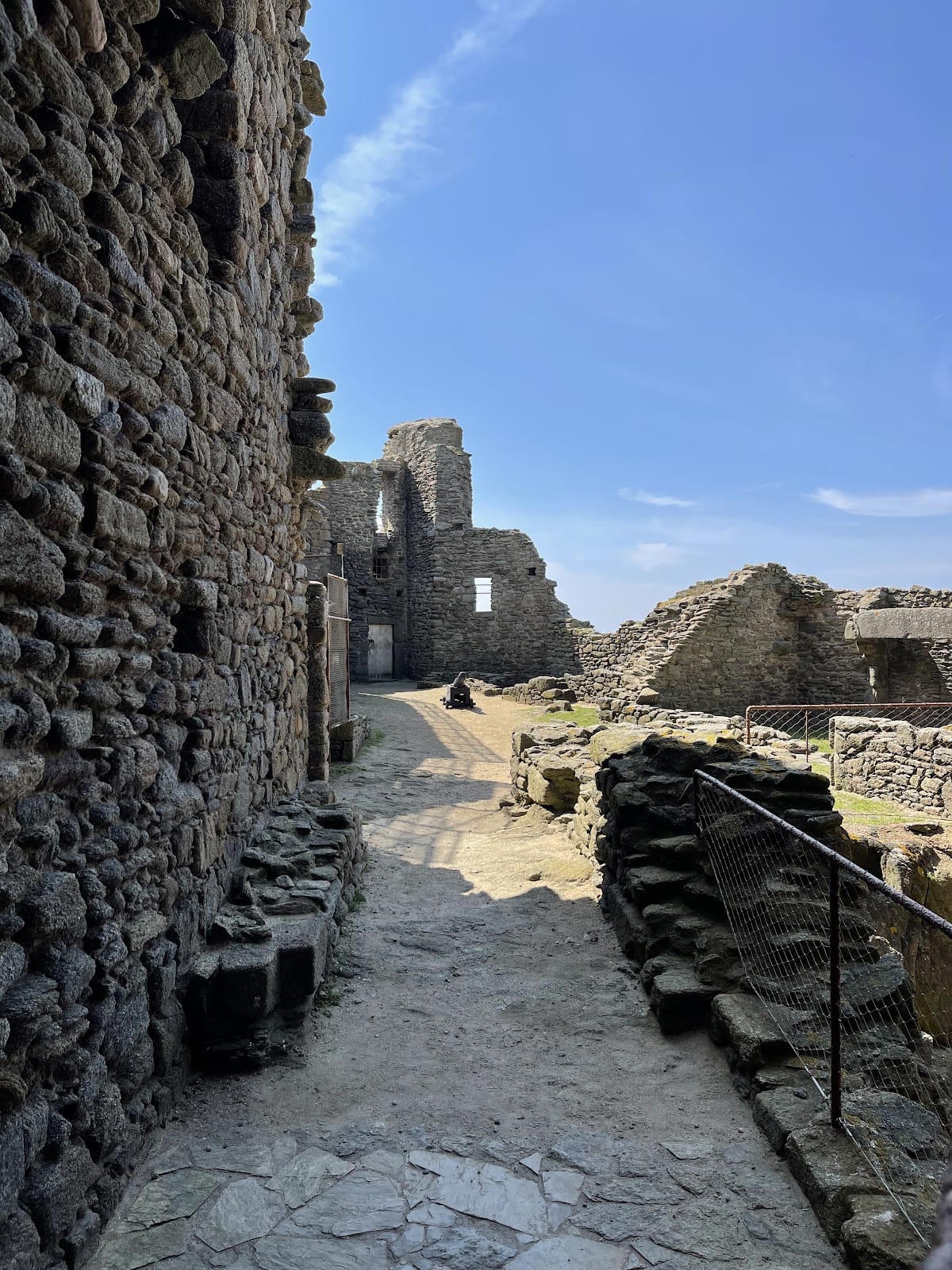
The fortress stands on an abrupt rock isolated from the shore. At high tide, water surrounds the rock and forms a natural moat. Four circular towers flank the castle, while access crosses a fixed bridge before reaching a drawbridge. Inside the enclosure, the defensive walls organized the entrance, residential areas, service buildings, and water supply around the inner courtyard.
Entrance and Defensive Towers
Gateway Towers
A large cylindrical defensive tower rises above the drawbridge at the entrance. A small attached tower helps frame the gate between this structure and a horseshoe-shaped tower farther to the right. Together, these elements form the principal approach to the fortress.
Keep and Interior Towers
At the seaward end stood the keep, the castle’s principal strong tower and a place of defense, residence, or refuge. This large cylindrical tower faced south and had an external staircase descending to the wave-breaking rocks. Within the fortifications, a small quadrangular tower accompanied the keep, while an octagonal tower occupied the western corner.
Residential and Service Buildings
Residence and Wall-Walk
Behind the entrance curtain wall, the fortified wall connecting or enclosing the towers, stood the lord’s residence. A covered wall-walk ran along the defenses and included machicolations, projecting openings through which defenders could drop objects onto attackers below.
Forge and Kitchen Building
A forge stood against the southeastern curtain wall. Across the inner courtyard, beside the octagonal tower, another building contained a kitchen, bakery, and oven. These structures formed the principal working areas described within the enclosure.
Rainwater Tank
A subterranean tank lay between the forge and the kitchen building. It collected rainwater and formed part of the fortress’s internal water supply.