Château de Fournels: A Fortified Noble Residence in France


Site at a Glance
- Rating
- 4.4
- Popularity
- Very Low
- Country
- France
- Primary era
- Early Modern
- Eras represented
- Early Modern
- Civilizations
- French
- Site type
- Military
- Remains
- Castle
On this page6 sections
History
Château de Fournels is a fortified residence in France, east of the village of Fournels. It was reconstructed in 1573 by Jean, an illegitimate son of François Martin, Baron of Apcher and Lord of Hauteville, with construction continuing into the eighteenth century. Its strategic position formed part of the network of fortified residences held by the Barons of Apcher.
The Apcher connection
From the mid-eleventh century, the powerful Apcher family extended its authority across the region around Saint-Chély-d’Apcher and also took part in the Crusades. Jean was legitimized in 1571 as an écuyer, a recognized French noble status commonly translated as “esquire,” and received the right to bear the arms of Apcher. He married Jeanne de Lastic, an illegitimate daughter of Louis de Lastic, on 15 November 1570, and later married Anne de Maumont on 16 November 1594.
Jean’s daughter, Marie d’Apcher d’Auteville, married Jacques de Lastic, himself an illegitimate son of Lastic, in 1616. This marriage established the branch known as the lords of Fournels. The château therefore remained connected to the interwoven noble families who held authority across the region.
Later ownership and memory
Dominique de Lastic de Fournels, the last bishop of Couserans, whose seat was at Saint-Lizier, was born at the château on 16 October 1742. The Michel du Roc family held numerous lordships in Gévaudan, Quercy, and Languedoc. Their Languedoc lordships, which comprised 21 villages, were made the Marquisate of Brion by letters patent issued by Louis XV in September 1756. A marquisate was a territorial lordship held by a marquis.
After Amélie de Lastic, Marchioness of Brion, died in 1817 and her husband, Géraud Pierre de Michel du Roc, Marquis of Brion, died in 1842, the château passed through their descendants. Eugène de Michel Duroc held it from 1842 to 1872, followed by Henri de Michel Duroc from 1872 to 1901 and Christian de Michel Duroc from 1901 to 1958. Christian’s children inherited it thereafter. The Marquis of Brion, regarded as the château’s last known resident, preserved traditions concerning the Apcher and Michel du Roc families.
Château de Fournels was partially listed as a historic monument by order of 18 May 1961 and was classified as a protected site in 1989. These recognitions form part of the modern history of the building and its preservation.
Remains
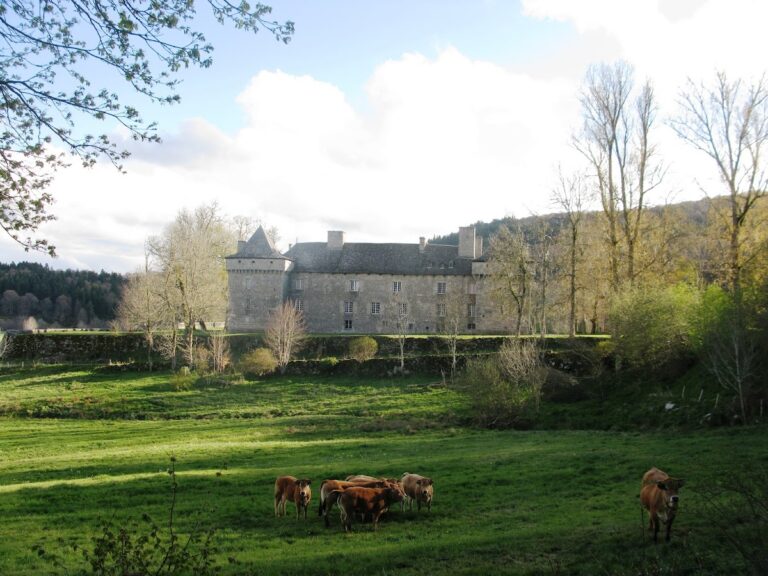
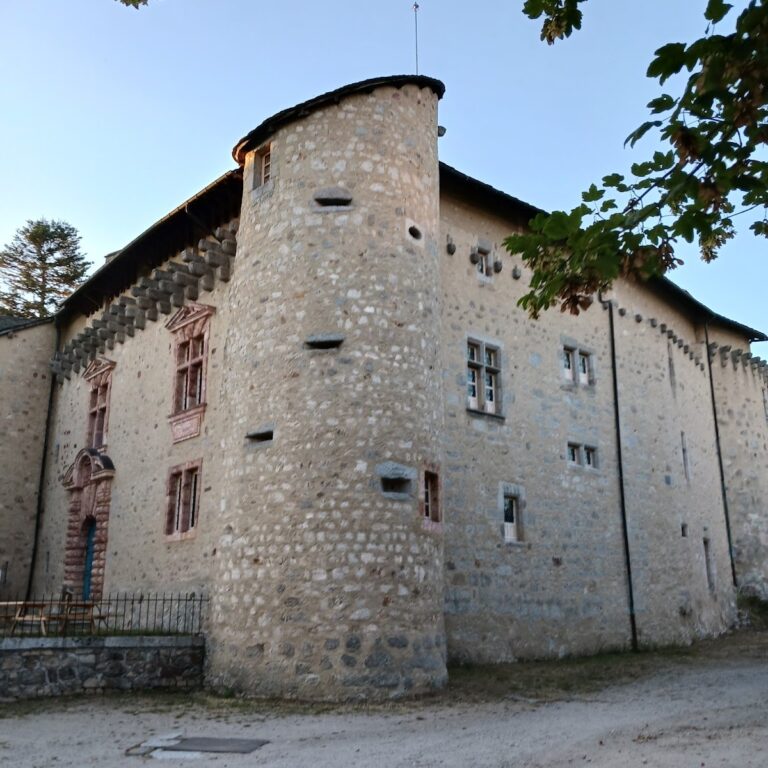
Château de Fournels occupies an elevated position east of Fournels, overlooking three valleys. Its commanding setting helped make it a genuine fortified house. Towers and thick walls define the surviving structure, while loopholes pierced through the walls provided openings associated with its defensive purpose.
Fortified exterior
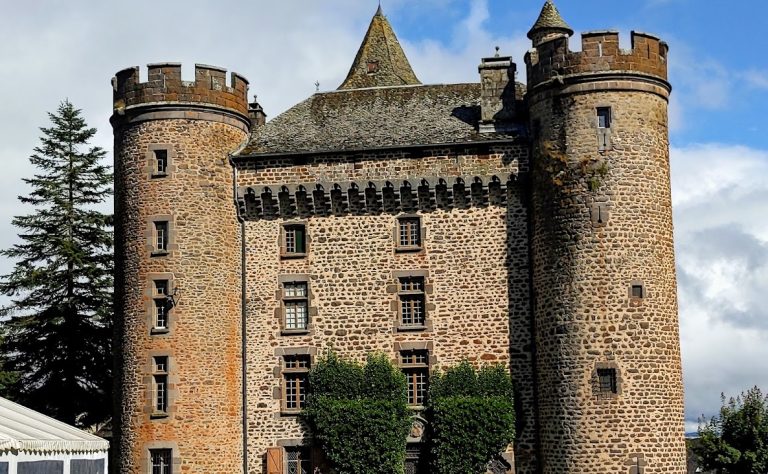
The château’s defensive character remains legible in the combination of towers, heavy wall construction, and loopholes. These elements belong to a residence designed to occupy a strategic high position and retain a protected character. The building has preserved what has been described as an authentic character, even though its former furnishings and decorative contents have been lost.
Interior contents and present condition
The interior formerly contained period furniture, tapestries, and paintings that were described as being in remarkably fresh condition. The château is now empty and abandoned, leaving the walls, towers, and other surviving architectural elements as the principal expression of its historic form.