Château d’Alleuze: A Medieval Fortified Castle in France

Site at a Glance
- Rating
- 4.6
- Popularity
- Low
- Country
- France
- Primary era
- Medieval
- Eras represented
- Medieval
- Civilizations
- French
- Site type
- Military
- Remains
- Castle
On this page7 sections
History
Château d’Alleuze is a medieval fortified castle in France, with origins traced to the twelfth century and a form shaped by fourteenth- and fifteenth-century warfare. Built to defend a strategically important position and help secure Saint-Flour, it served as an advanced military post rather than a royal residence.
Early lordship and ecclesiastical control
In the twelfth century, the castle belonged to Béraud VIII de Mercœur, lord of Aubijoux and Alleuze and constable of Auvergne, a high-ranking military officeholder associated with the region. A predecessor building is dated to approximately 1267–1285. In 1277, Guy de la Tour, bishop of Clermont, acquired the village of La Barge, and the castle was mentioned in the contract connected with that transaction.
The castle later passed to the bishops of Clermont, senior Christian clergy who governed the Diocese of Clermont. Its role developed into that of a protective military outpost and an advanced position for the citadel of Saint-Flour. Archambaud de Bourbon also acquired it from the powerful Mercœur family to maintain a permanent garrison. Soldiers and their captains occupied the castle, whose purpose was military defence rather than royal residence.
Capture, destruction, and rebuilding
During the Hundred Years War, the prolonged conflict between the English and French crowns that affected much of France from the fourteenth into the fifteenth century, Bernard de Garlan seized the castle for the English in 1383. It was defended by only three men. Garlan reportedly terrorized and pillaged the surrounding region before Jean de Blaisy negotiated a large ransom on behalf of the French king in 1390, leading to his expulsion.
In 1405, inhabitants of Saint-Flour burned the castle to prevent Garlan or his successors from using it again. A related episode tells how Pierre Mercier spread a rumor that the English had taken Alleuze, causing panic in Saint-Flour, and then went to destroy the castle. Bernard de Garlan brought a legal complaint against Mercier and Jean Saysset. Saint-Flour lost the case and was required to rebuild the castle.
Monseigneur de la Tour, the castle’s owner, compelled the inhabitants to reconstruct it on its original plan. The rebuilding took place in 1411, and Henri de La Tour died in 1415. The castle was restored again in 1536. In 1575, Huguenots, French Protestants associated especially with the Reformed tradition, captured it. The bishops of Clermont subsequently used its towers as prisons.
Decline and protection
At the end of the sixteenth century, the bishop of Clermont sold the castle to Jean de Lastic-Sieujac. His descendants later allowed it to deteriorate until it became a ruin. The castle ruins and the Saint-Illide chapel have been protected as historic monuments since 1927. The surviving castle is deliberately maintained in a ruined state.
Remains
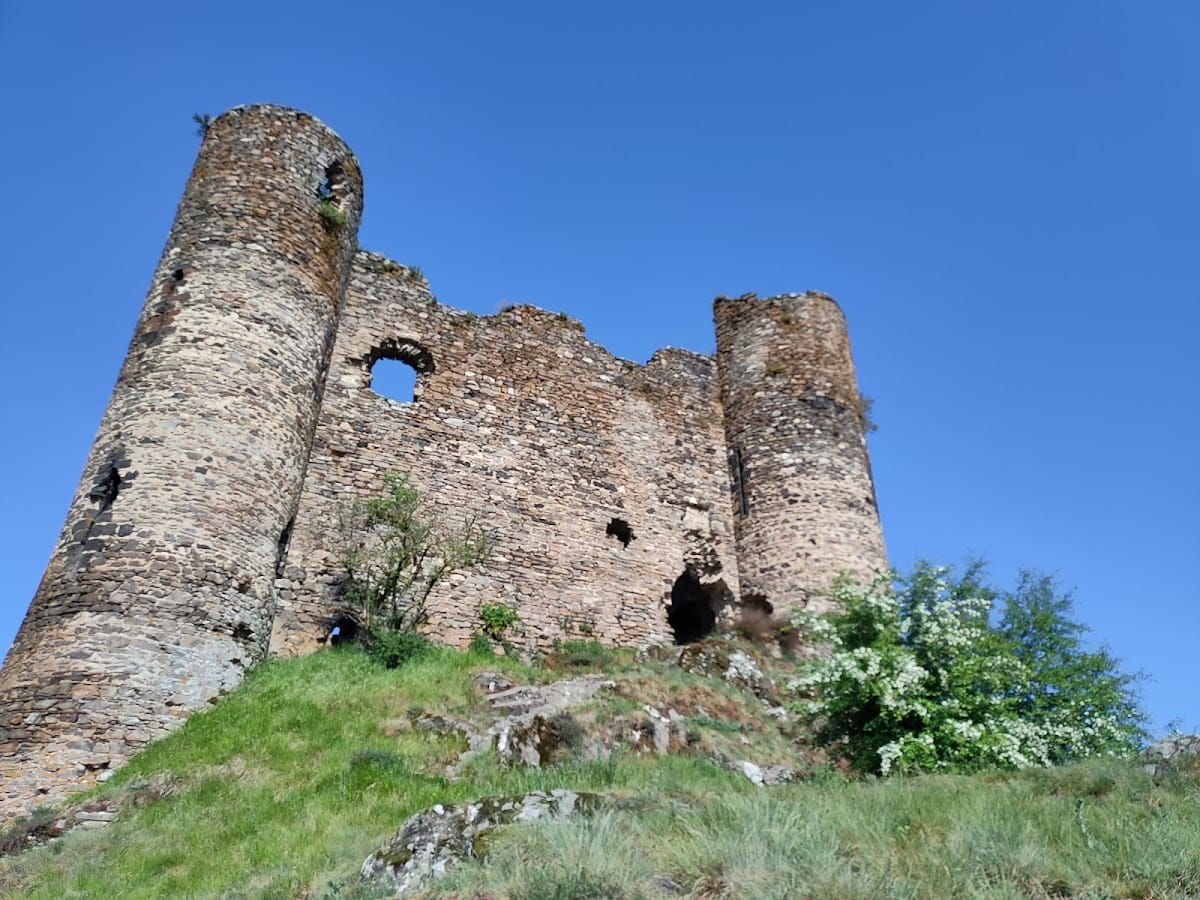
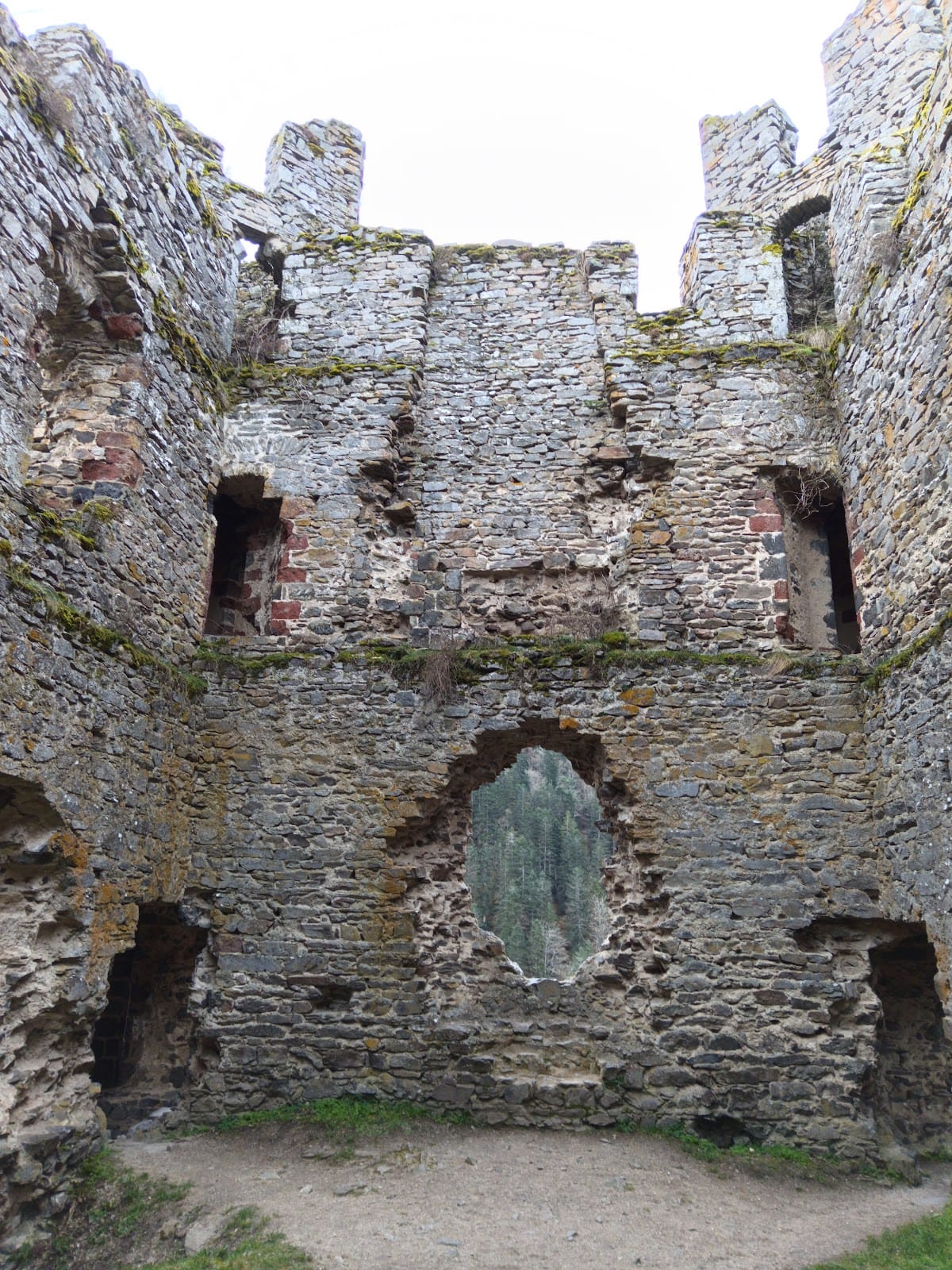
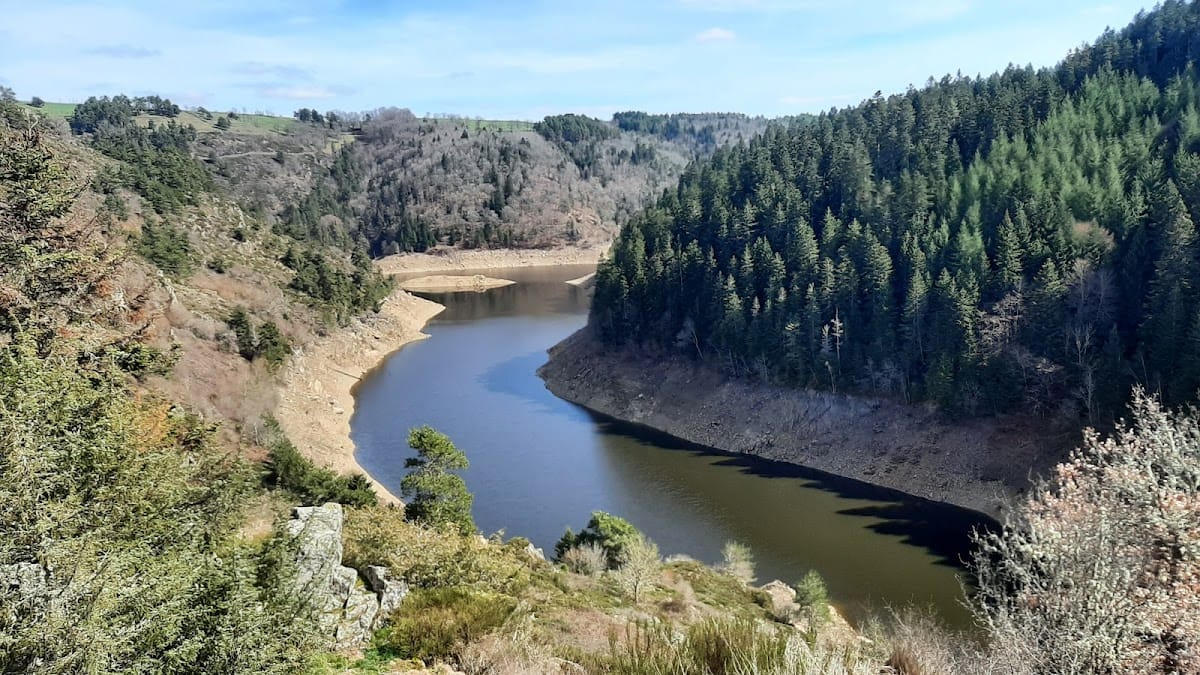
Château d’Alleuze occupies an isolated promontory above the Alleuze River. The river’s terminal section forms part of the Grandval dam reservoir, while the castle’s separation from settled areas helped preserve its remains from complete destruction. The site is a fortified hill castle with a square plan characteristic of fourteenth-century fortifications, and a round tower stands at each corner.
The fortified castle
The reconstruction of 1411 retained the earlier square layout. The castle’s development as a protective outpost also left surviving remains at the lower level. The building now survives as a ruin, with its destroyed condition deliberately preserved instead of being fully reconstructed.
Saint-Illide chapel
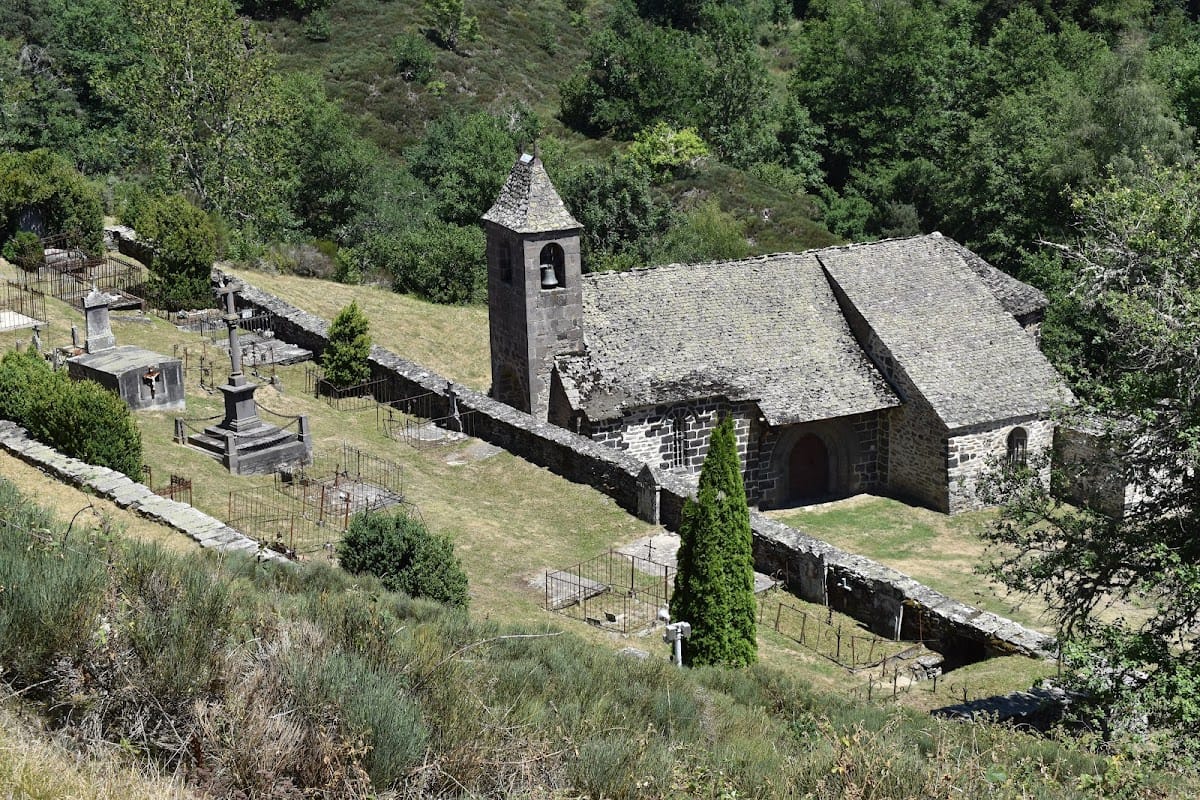
The site is accompanied by the Saint-Illide chapel. It was built in the thirteenth century and reconstructed in the fifteenth century after its destruction, providing a separate surviving element within the castle’s historic setting.