Schloss Ebenthal: A Baroque Palace with Medieval Origins in Austria
Visitor Information
Google Rating: 4.5
Popularity: Very Low
Official Website: www.ebenthal.at
Country: Austria
Civilization: Early Modern, Modern
Site type: Domestic
Remains: Palace
History
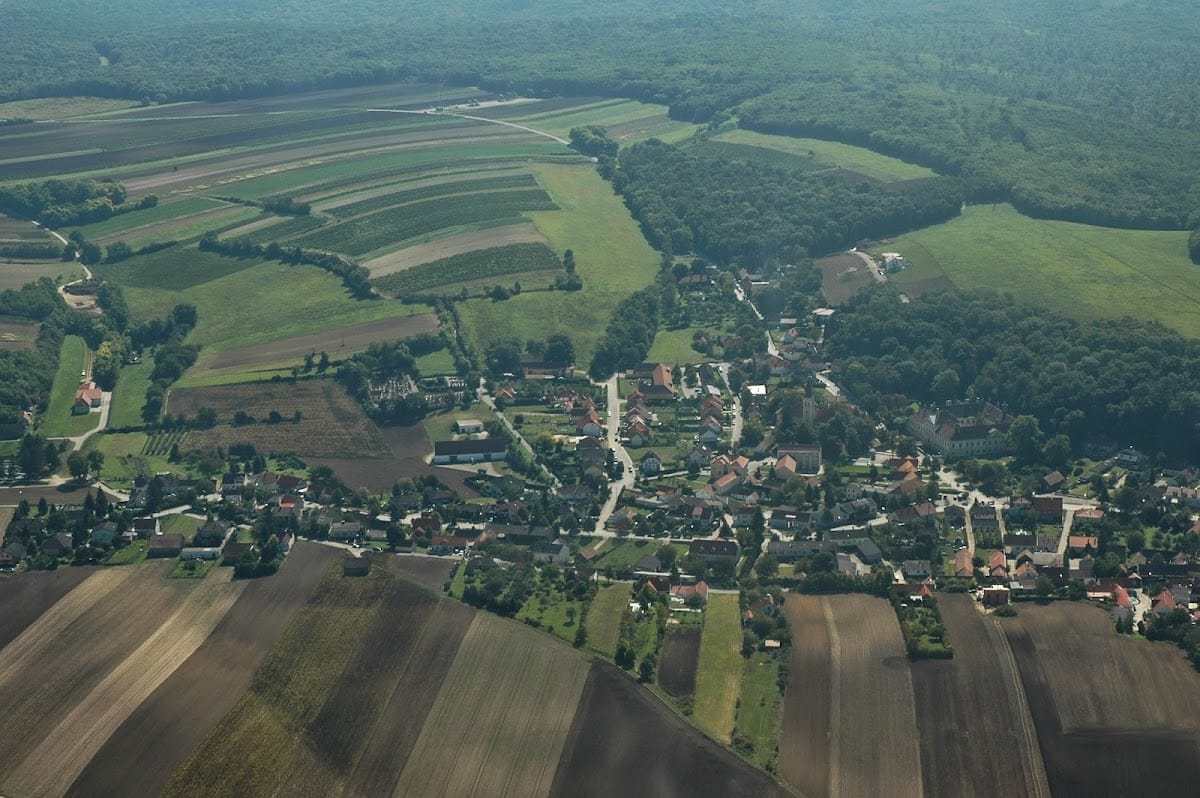
Schloss Ebenthal is situated in the municipality of Ebenthal in modern Austria and reflects a rich history stretching back to the medieval period. The earliest known structure on the site was a fortress referred to as “Veste Ebenthal,” first recorded in 1371. This medieval stronghold likely occupied a hill to the rear of the present palace, within the current park area. However, by 1478 the fortress was described as ruined and neglected, indicating it had fallen out of use well before the modern structure was established.
The palace that stands today was primarily built during the first half of the 18th century under the ownership of Andreas Josef Graf Koháry, who acquired the estate in 1732. Starting around 1733, Koháry expanded and transformed the site into a representative country residence appropriate to his rising social status. Archival evidence, including a detailed sketch dated 1736, documents this period of active construction and redesign. The new building replaced earlier structures but may have incorporated some older building elements. This development marked a significant transformation from a defensive stronghold to an elegant Baroque estate.
In the 19th century, the property passed through inheritance to the House of Sachsen-Coburg-Koháry. Among its notable residents was August von Sachsen-Coburg and Gotha-Koháry, who favored the estate and died there in 1881. His son, Tsar Ferdinand I of Bulgaria, used Schloss Ebenthal as a place of refuge at the end of World War I in 1918. However, his request for asylum was denied by Emperor Karl I of Austria. The palace remained in the possession of the Sachsen-Coburg-Koháry family until 1970. Since then, it has been privately owned.
Prior to the 18th-century construction, the complex was depicted in a 1672 engraving by Georg Matthäus Vischer. This early view shows a two-story building with round towers at the corners, surrounded by a moat. At the time of this depiction, the building appeared either damaged by fire or incomplete, indicating earlier phases of construction or repair. The major 18th-century construction is attributed to Viennese master builder Johann Enzenhofer or possibly Johann Baptist Martinelli, known for their work in the Baroque style. This aligns with the stylistic similarities the palace shares with Schloss Antol, another Koháry commission.
The estate includes a chapel consecrated on August 15, 1747, signaling the religious role integrated into the complex. The chapel originally housed a funerary monument for Duke August of Sachsen-Coburg and Gotha created in 1885 by sculptor Viktor Tilgner. This monument has since been relocated to estates nearer to Coburg. In the early 20th century, descriptions of the palace’s interiors mention a warm and inviting atmosphere, with furnishings spanning Rococo to Biedermeier styles. However, these interiors were lost after 1945. A private palace park surrounds the complex today, with no public access, and nearby stands the historic Ottokar Cross, a stone memorial marking the Battle of Dürnkrut and Jedenspeigen.
Remains
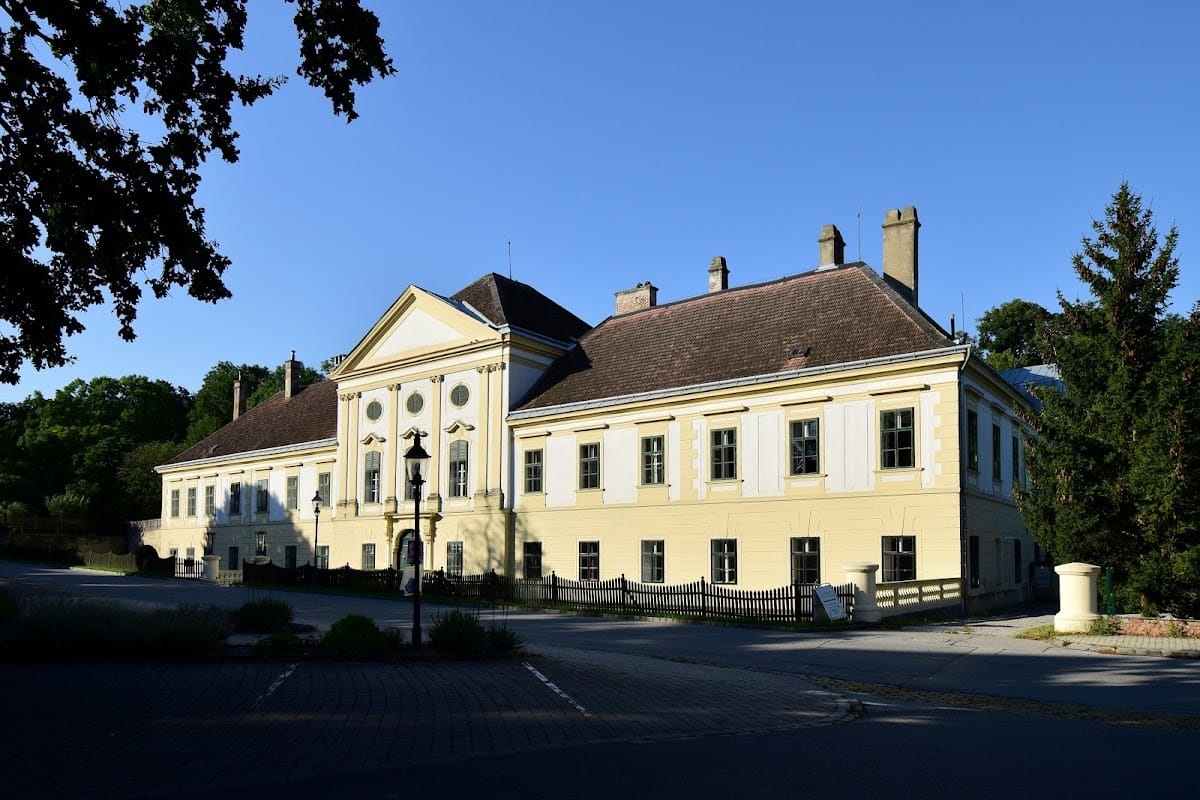
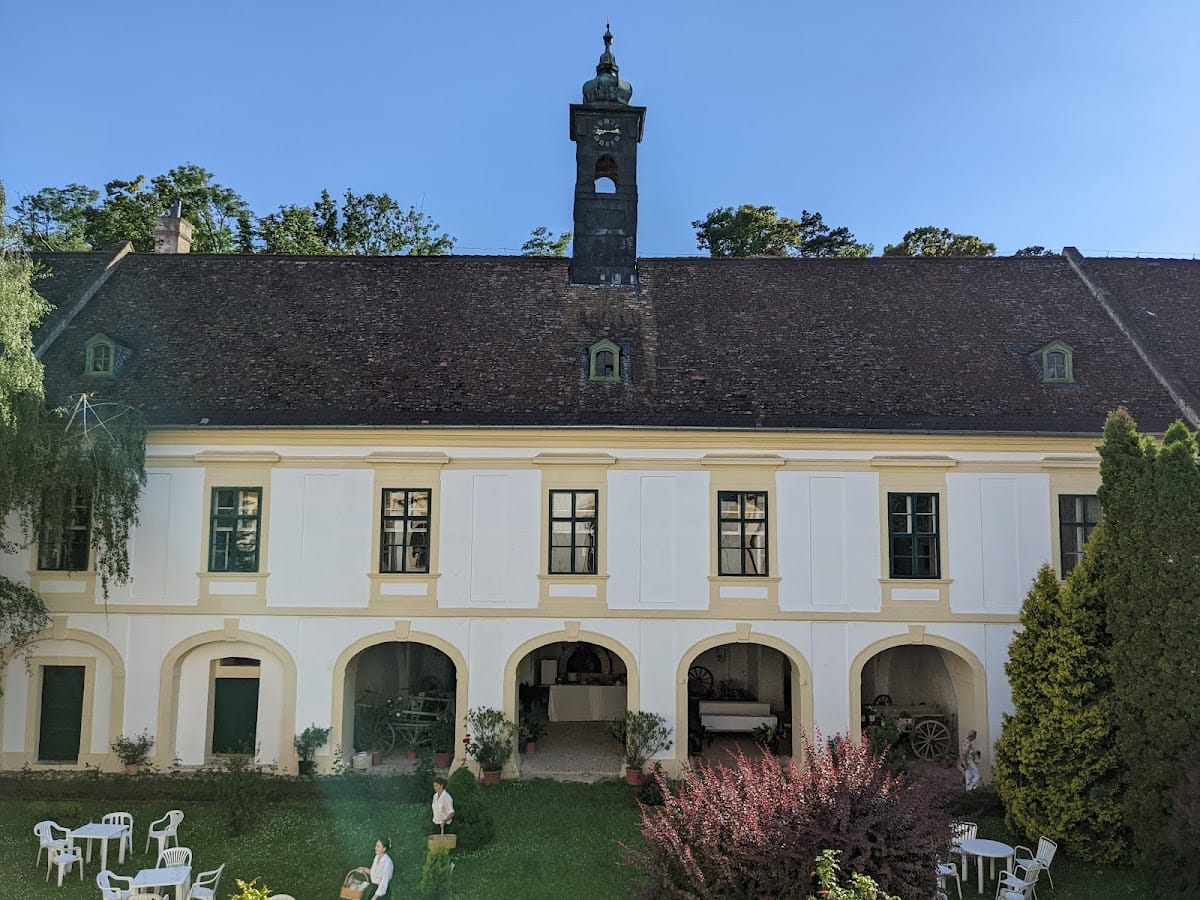
Schloss Ebenthal presents as a two-story Baroque palace arranged around a broad rectangular courtyard set transversely to the main building axis. The overall impression is of a carefully unified late Baroque design that nonetheless incorporates older architectural fragments. This is visible in irregular window spacing and subtle deviations from precise right angles in the courtyard, suggesting the new construction reutilized or adapted existing foundations or walls from earlier periods.
The main facade on the northeast side features side wings of low height flanking a raised central pavilion composed of three bays. This pavilion houses the ballroom and a grand double-armed staircase opening into the courtyard. Architectural details include slender Ionic pilasters at the edges and a triangular pediment atop the central pavilion. Windows have segmental arches with oval-shaped openings (transoms) above, characteristic of Baroque design. The surrounding side wings are more restrained, with simple rectangular windows capped by straight lintels and modest parapet panels. The ground floor shows rustication—a treatment giving the stones a rougher texture—fortifying its appearance with simple window framing throughout.
On the northwest side facing the village, the facade is accented by a central projecting section (risalit) with three bays and topped by a decorative gable blending several styles. This ornamental element does not correspond to the room layout inside. The ground floor along this facade features blind arcades — a decorative motif of arches closed off and filled in — highlighting the building’s dignity.
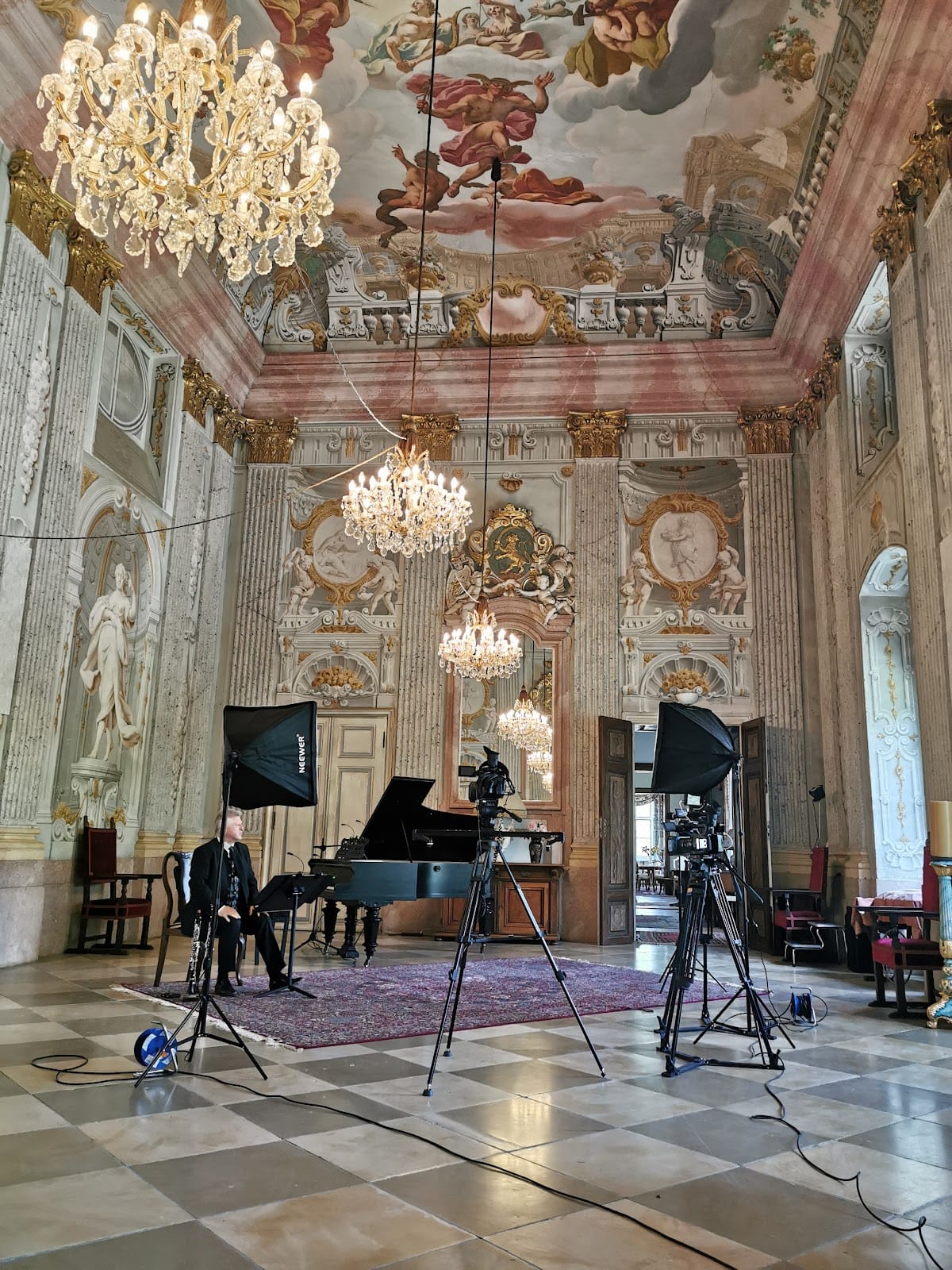
Inside, the ballroom occupies a prominent role, with a tall, deeply proportioned rectangular space lit from one side and adorned with rich decoration. Wall pilasters are fluted, and wall niches contain painted figures rendered in a grisaille technique, which uses shades of gray to suggest sculpture. Above doorways, painted panels (supraportes) depict the Four Seasons. Fireplaces boast elaborately detailed mantels.
The ballroom’s ceiling boasts a striking fresco titled “Glorification of Olympus,” portraying Zeus and Hera with other Olympian deities seated on clouds above a trompe-l’oeil architectural frame — a painted illusion that reveals a mock gallery opening onto the sky. This ceiling decoration was designed in 1736 by Giuseppe Galli da Bibiena, more famous for theatrical set design, making this a rare permanent example of his artistic work. The figurative paintings are credited to an artist linked to Paul Troger’s circle, possibly Anton Schmidt, who also contributed to the decoration of Schloss Antol, while the quadratura elements (illusory architectural painting) are attributed to Bibiena’s hand.
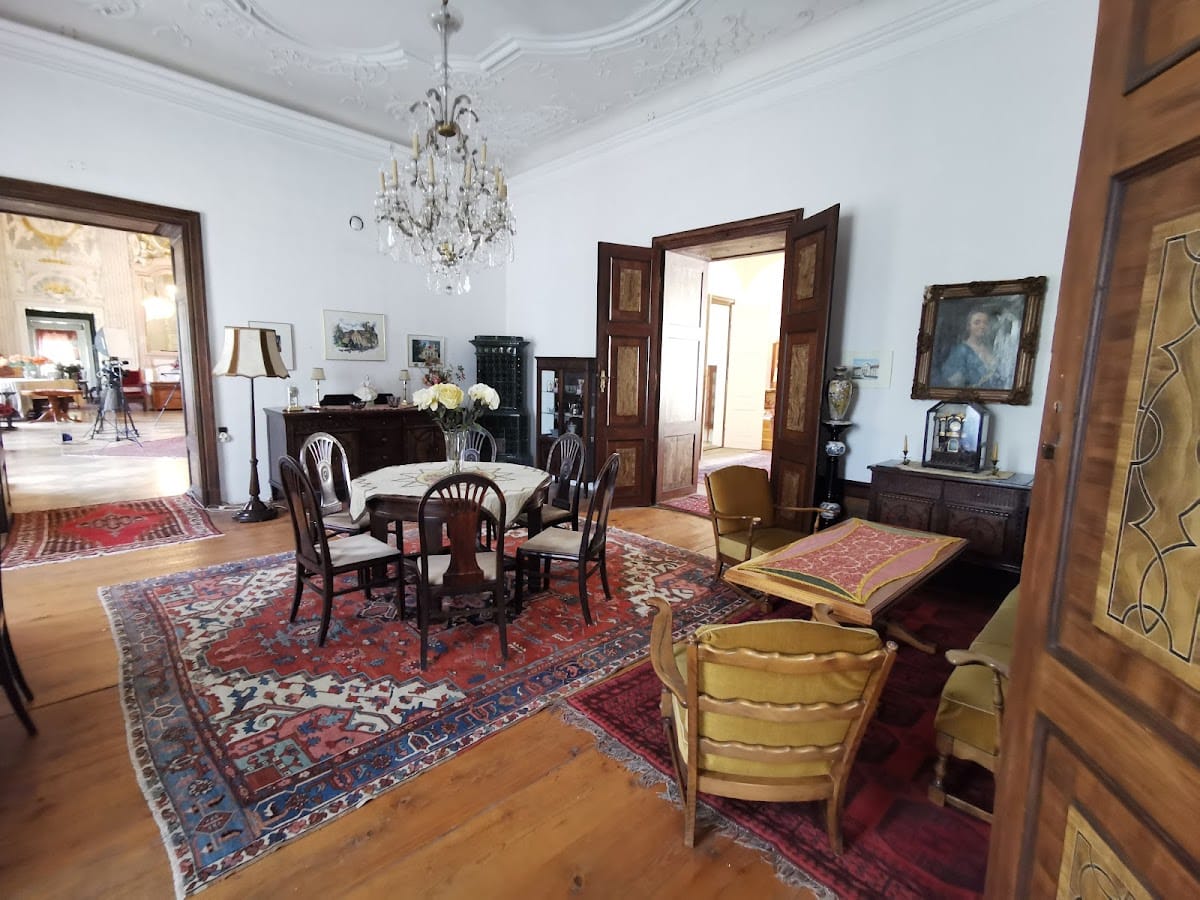
On the upper floor, rooms west of the ballroom retain original ornamental stucco in bandwork style from the mid-18th century, as well as early doors and wood paneling. Rooms to the east underwent remodeling in a late classical style during the early 19th century, featuring decorative stencil work above refined stucco cornices and the unusual detail of a sleeping niche set behind inserted columns.
The ground floor houses vaulted rooms with ribbed vaults and round stucco mirrors—typically ornamental ceiling features recreating reflective surfaces in stucco plaster—while corridors are mostly covered by barrel vaults, simple curved ceilings that run along the hallways.
The palace chapel, located in the building’s southwest corner, rises over two floors and comprises a main worship space, a presbytery (area around the altar), plus oratories and galleries. Its decoration matches the quality and style of the ballroom but is somewhat more reserved, with stucco work simulating marble in tectonic (structural and formed) designs along wall pilasters. The main altar is integrated within these pilasters and dates from just after the chapel’s consecration in 1747. It holds a framed modern painting of Mary with the Child, and a side altar is dedicated to St. John of Nepomuk, who appears as a stucco figure seated on a cloud bank. The chapel vault features mid-18th-century frescoes depicting the Holy Trinity and Instruments of the Passion; however, heavy overpainting obscures the original artist’s identity.
Once housed within the chapel was a large funerary monument to Duke August of Sachsen-Coburg and Gotha, sculpted by Viktor Tilgner in 1885. This monument has since been moved to Coburg family estates nearby.
The palace grounds include a private park surrounding the main building, which is not accessible to the public. Adjacent to a side entrance to the grounds stands the Ottokar Cross, a stone memorial commemorating the significant medieval Battle of Dürnkrut and Jedenspeigen, thus linking the site to regional historic events.