Trecchi Castle: A Medieval Fortress and Aristocratic Residence in Italy
Site at a Glance
- Rating
- 4.2
- Popularity
- Very Low
- Country
- Italy
- Primary era
- Early Modern
- External website
- Open
- Eras represented
- Medieval, Early Modern
- Civilizations
- Duchy of Milan, Holy Roman Empire, Spanish
- Site type
- Domestic
- Remains
- Castle
On this page13 sections
History
Trecchi Castle is a medieval fortress in Maleo, Italy, built on the remains of an earlier castle first recorded in the final years of the tenth century. Its history extends from the political conflicts of medieval Lombardy through a major sixteenth-century rebuilding, when it became a refined aristocratic residence while retaining evidence of its fortified origins.
Medieval fortress and contested stronghold
The castle enters the historical record on 5 September 991. On that date, Gualtero, a judge and envoy of Emperor Otto III, confirmed a donation involving Ermengarda, identified as the lady of the castle of Maleo and the wife of Rotglero. Rotglero was the son of Romualdo, Count of Bariano and a loyal supporter of the emperor.
Cremonese troops destroyed the castle in 1157 and rebuilt it in support of the fortress of Pizzighettone. On 2 April 1164, Frederick Barbarossa, the German king and Holy Roman Emperor involved in the conflicts among the Italian communes, granted the castle to the Bishop of Cremona, an ally in his struggle against Milan.
During the thirteenth and fourteenth centuries, Cremonese and Milanese forces repeatedly fought for control of the site. Napoleone della Torre, a Milanese political and military leader of the della Torre family, conquered the castle in 1261. After Milan regained control, Cremonese troops besieged it in 1294. The assault failed when forces from Piacenza intervened in support of the Visconti, the dynasty that ruled Milan during much of the later Middle Ages and early Renaissance.
Sixteenth-century rebuilding
The castle is described as a fifteenth-century fortress, while its construction is also dated to 1532–1560. During the sixteenth century, the Cremonese nobleman Teodoro Trivulzio completely rebuilt the structure. Its design is attributed to Pellegrino Tibaldi, a Lombard architect and painter associated with major late Renaissance projects in northern Italy.
After this rebuilding, the fortress developed into an aristocratic country residence. Enlargements, decorative work, and later restorations added evidence of several architectural and artistic periods. The transformation changed the character of the complex without erasing the history of its earlier defensive role.
The Trecchi family and modern ownership
In the second half of the seventeenth century, the castle became the property of the Trecchi family. The family held it until Napoleonic troops arrived in 1796, following the Battle of Lodi. When Austrian rule returned to Lombardy, the Trecchi family recovered possession in 1813 by paying a redemption tax to the government.
In 1998, the Tribunal of Lodi offered the castle at auction with a starting price of 3.2 billion lire. An attempted purchase by the Municipality of Maleo and neighboring municipalities did not succeed, and the Brescian company Immobiliare Eleonora acquired the property in 2001 before undertaking a comprehensive restoration. The castle was offered for sale again in 2023 and was purchased by Immobiliare Novembre for 1.37 million euros. The company officially became the owner on 18 April 2023, after the municipality’s pre-emption period had expired.
Remains
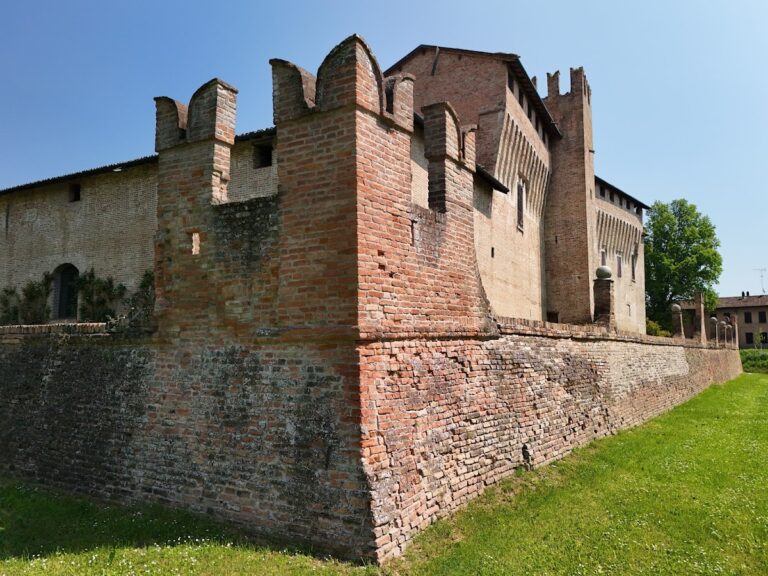
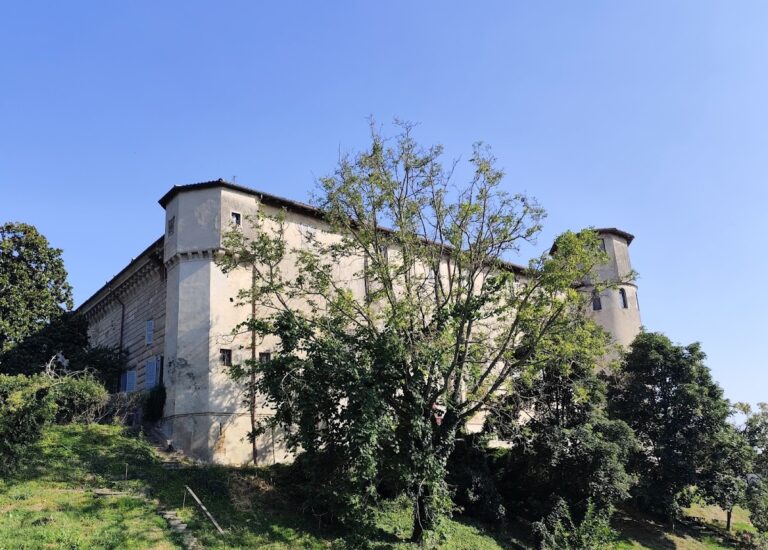
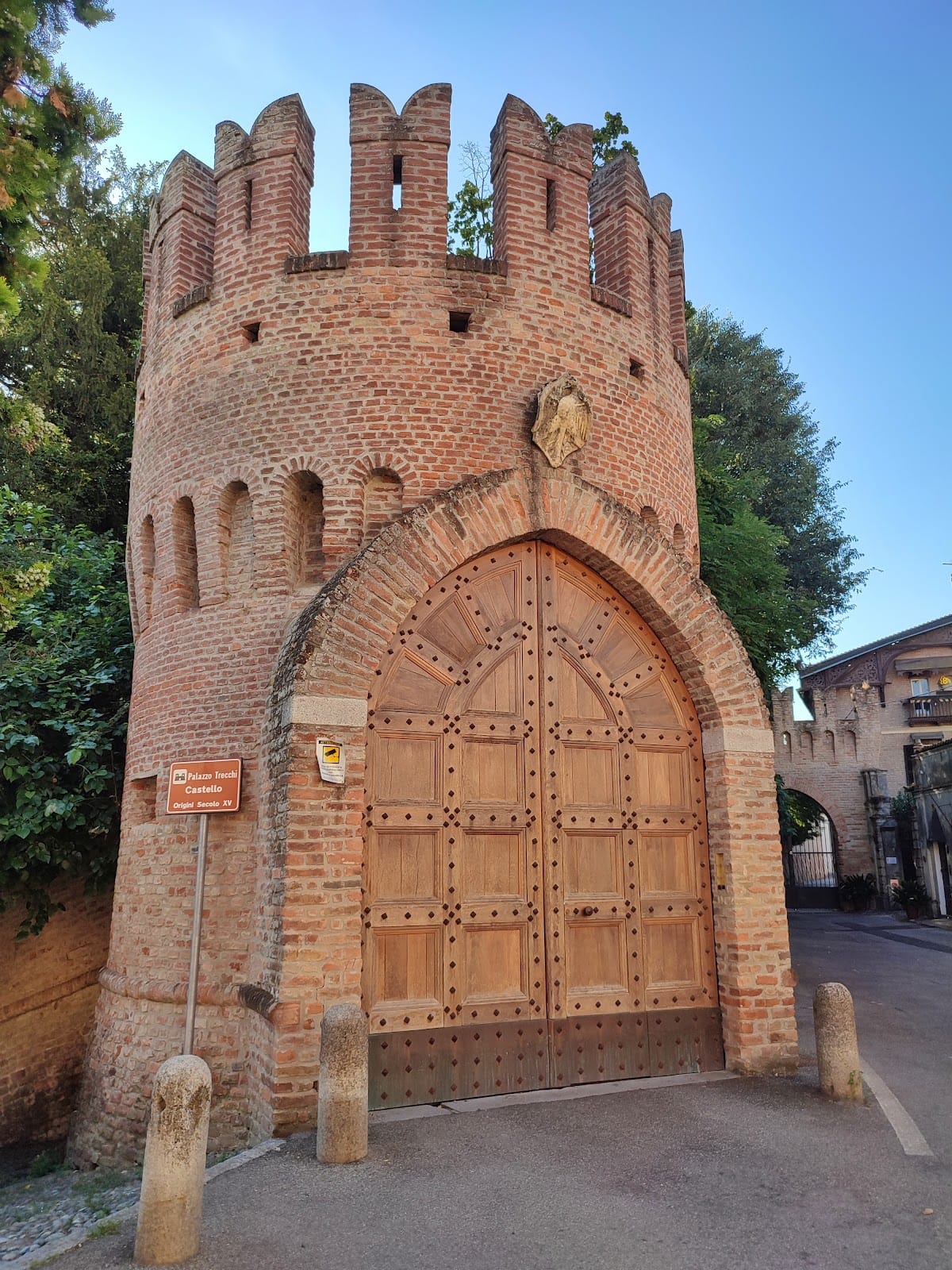
Trecchi Castle is organized as a square-plan block with two principal fronts, one directed toward the park and the other toward the courtyard. Its fortified arrangement includes a moat, flanking towers, and a main entrance incorporated into a crenellated tower. Within this defensive framework, the residence contains several levels and richly decorated rooms associated with its later aristocratic use.
Outer fronts and courtyard
Park front
The park front is approached by a broad stone staircase. A balcony projects above a decorated nymphaeum, an ornamental grotto, fountain, or shrine associated with water and classical imagery. The feature contains a statue of a Faun, the woodland and pastoral nature spirit of classical mythology.
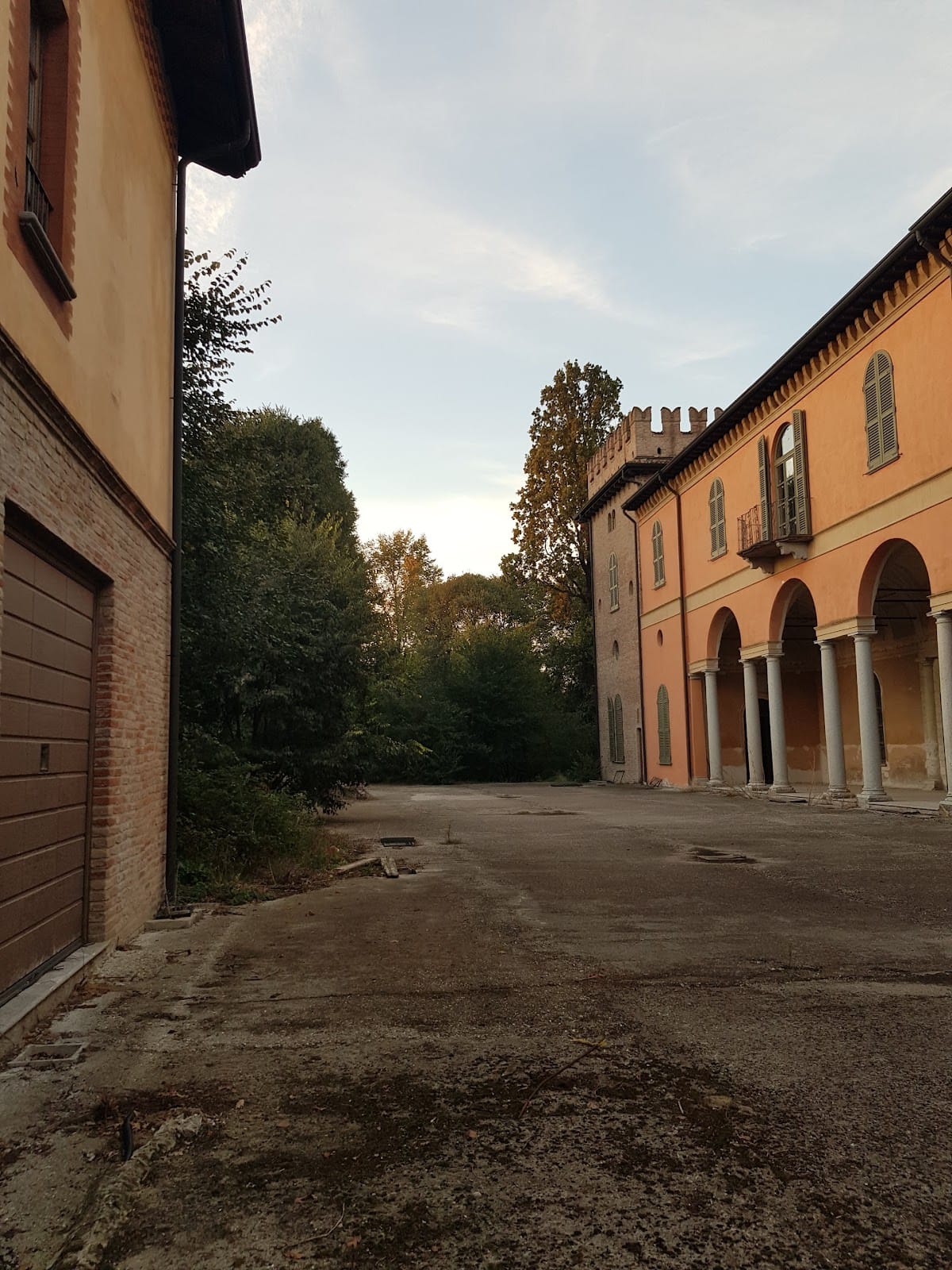
Courtyard front
The courtyard front reflects the sixteenth-century alterations. Its principal feature is a three-arched loggia, an open-sided gallery supported by granite columns. Opposite the loggia stands an eighteenth-century statue of Neptune, the Roman god of the sea.
Interior arrangement and decorated rooms
Principal levels and central hall
The building has a basement with an icehouse, a chamber used to store ice for preserving food and cooling spaces, as well as a ground floor, first floor, mezzanine, and attic. The mezzanine is an intermediate floor used by servants. The ground and first floors, intended for the owners, receive the most monumental treatment.
On the ground floor, a glazed entrance loggia, a chapel, and a grand staircase occupy the short sides of the plan, while a central hall extends along the long side. At the opposite end, a monumental door opens toward the park. The hall contains large paintings of hunting scenes, and the dining room has a large sixteenth-century fireplace with a relief attributed to Giovanni Gaspare Pedoni, a sculptor from Lugano.
Northern apartment
The northern apartment opens from the central hall and includes the Hall of Olympus, the Chamber of the Marine Deities, and the Apollo Cabinet. Painted decoration covers these rooms, while the ceilings of the Chamber of the Marine Deities and the Apollo Cabinet are attributed to Giulio Campi, a sixteenth-century painter of Cremonese origin.
Private chapel
The small private chapel has an octagonal plan and a frescoed vault. A fresco is a painting executed on wet plaster, and the vault is attributed to Bernardino Campi. The altar contains Andrea del Sarto’s Madonna and Child with Saint John the Baptist as a Child. Bernardino Campi’s Nativity and Adoration of the Shepherds are also held within the chapel.
Park and former military ground
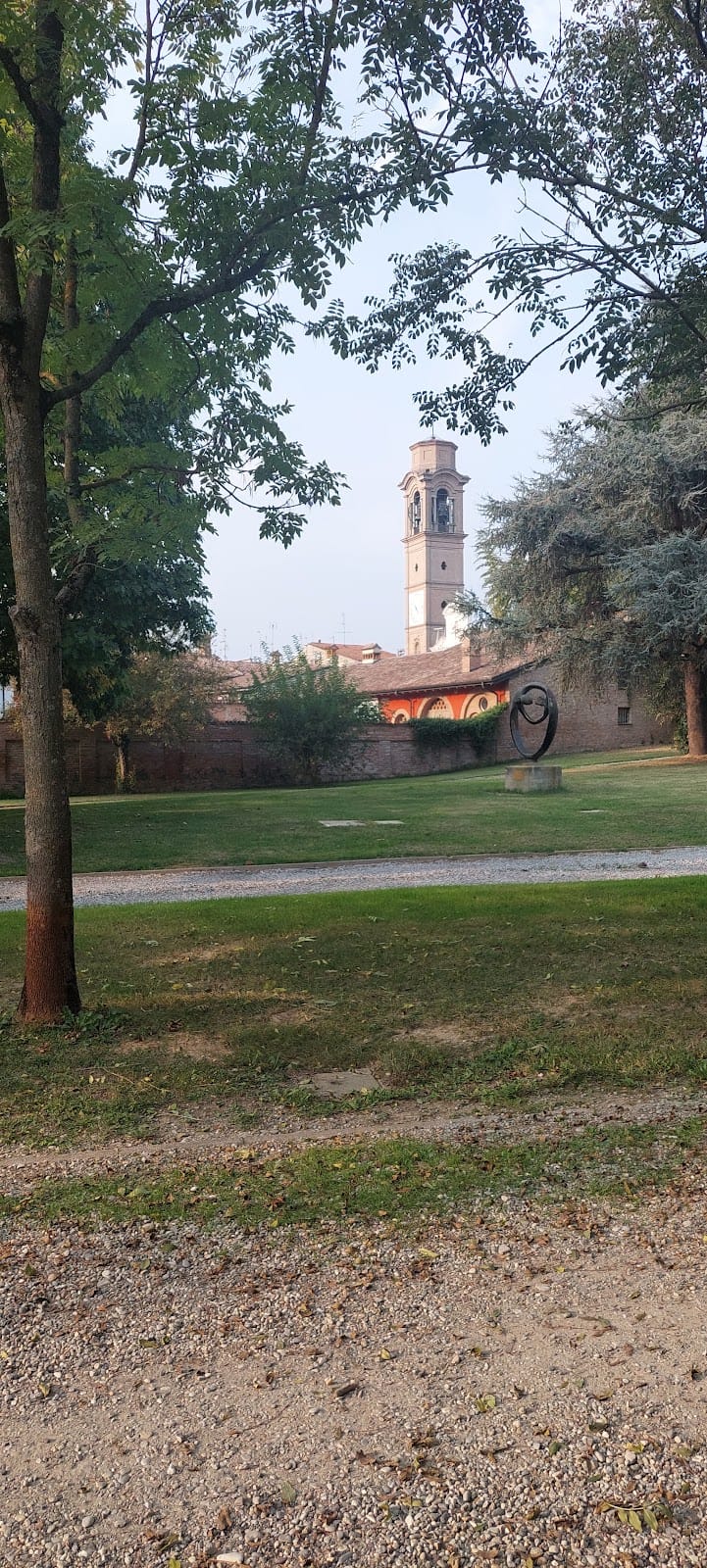
The area now forming the park was originally called the Place of Arms. It is arranged as an English landscape garden, with centuries-old plane trees and poplars, a pond bordered by weeping willows, and a circular temple. This landscaped setting forms the later residential counterpart to the castle’s earlier military organization.