Castle of Jerez de los Caballeros: A Historic Fortress in Spain
Visitor Information
Google Rating: 4.6
Popularity: Low
Country: Spain
Civilization: Medieval European, Roman, Visigothic
Site type: Military
Remains: Castle
History
The Castle of Jerez de los Caballeros is located in the town of Jerez de los Caballeros in Spain. This fortress was originally constructed in the 13th century by Christian forces following the Reconquista, during which the territory was wrested from Muslim control.
Prior to the castle’s establishment, the site had been successively inhabited by various civilizations. Evidence shows that the area was settled during the Paleolithic era, with numerous ancient burial sites known as dolmens nearby. Over time, it became home to Phoenician traders, followed by Celtiberian tribes who named the settlement Ugultiniacum. The Romans later occupied the area, succeeded by the Visigoths, until Muslim rulers held control before the Christian reconquest.
In 1238, King Alfonso IX of León reclaimed Jerez de los Caballeros with the help of two influential military orders: the Knights Templar and the Order of Santiago, Christian groups that played a key role in securing frontier lands. That same year, Alfonso IX granted the town to the Knights Templar, who undertook fortification works including construction of the castle. Due to its strategic position near the border with Portugal, the fortress and its town were frequently targets of Portuguese attacks and endured several sieges throughout the Middle Ages.
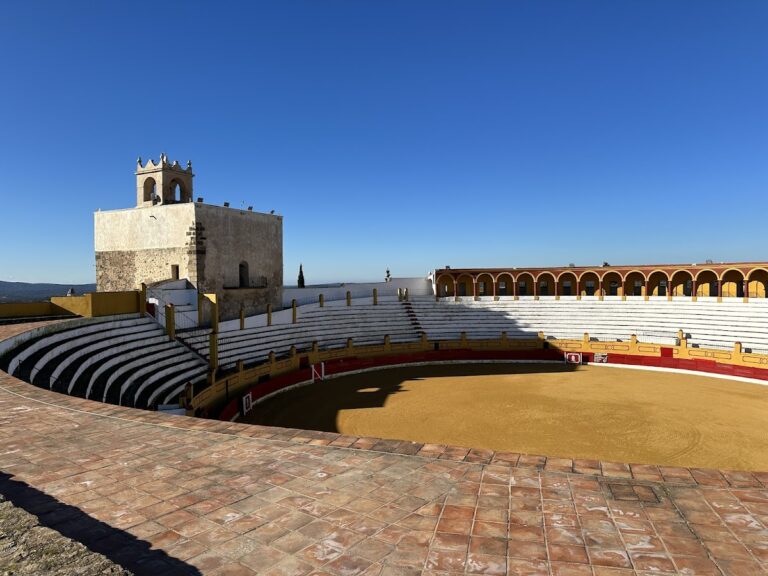
Over centuries, the castle’s role adapted to changing circumstances. While its military importance diminished, it found alternative uses; notably, it functioned as a market venue until the mid-20th century. Since 1949, the site has been legally protected as part of Spain’s cultural heritage, with further measures in 1985 ensuring its preservation.
Remains
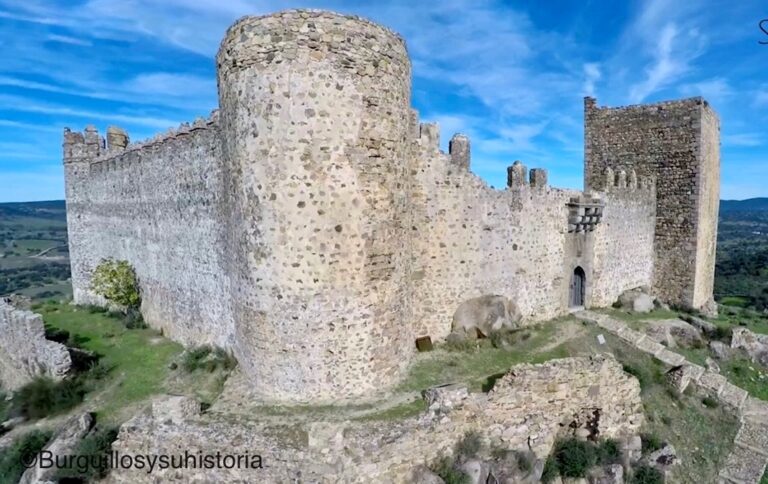
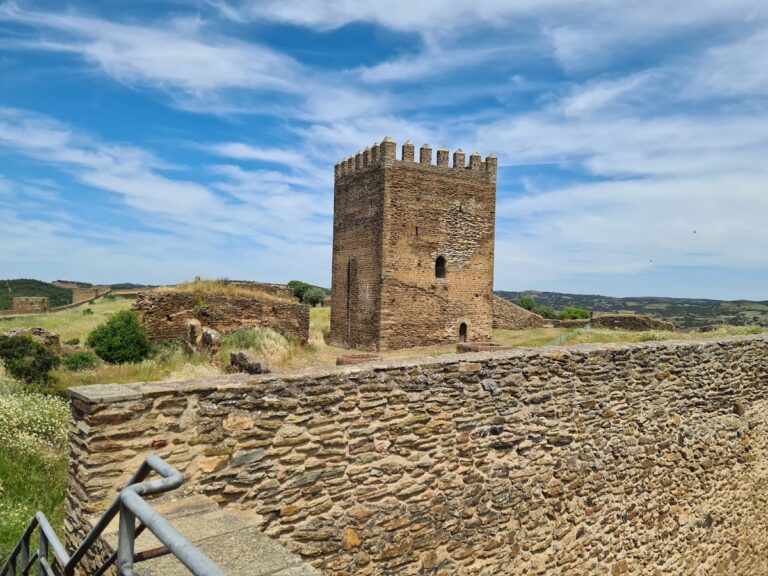
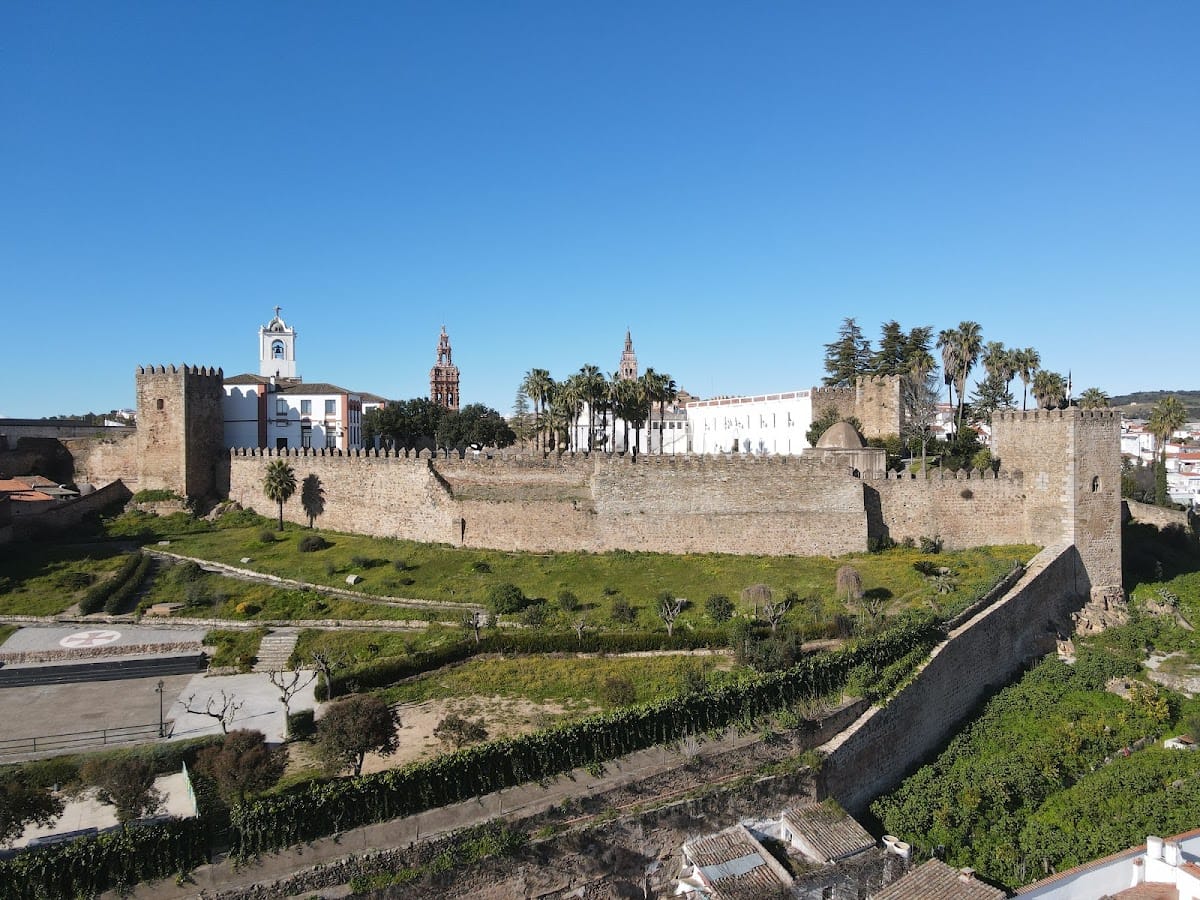
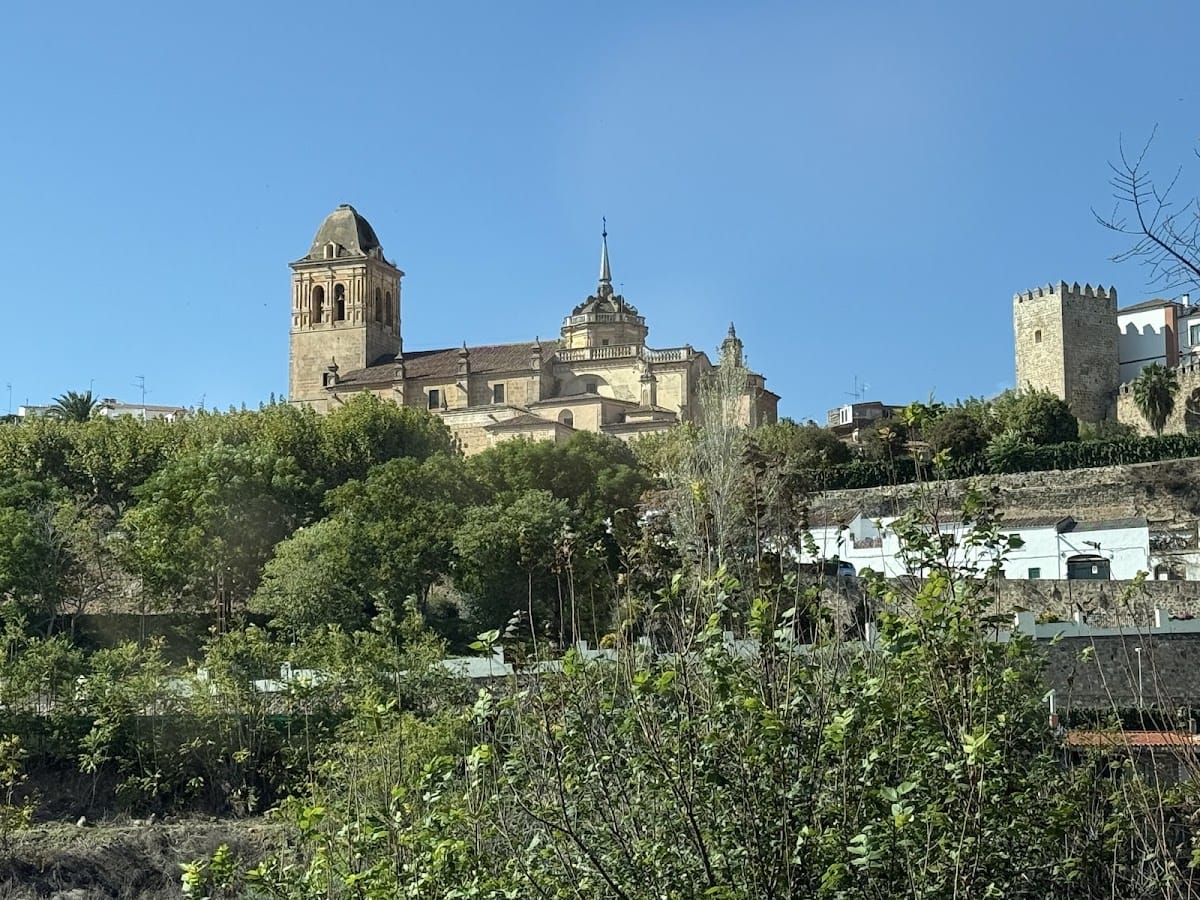
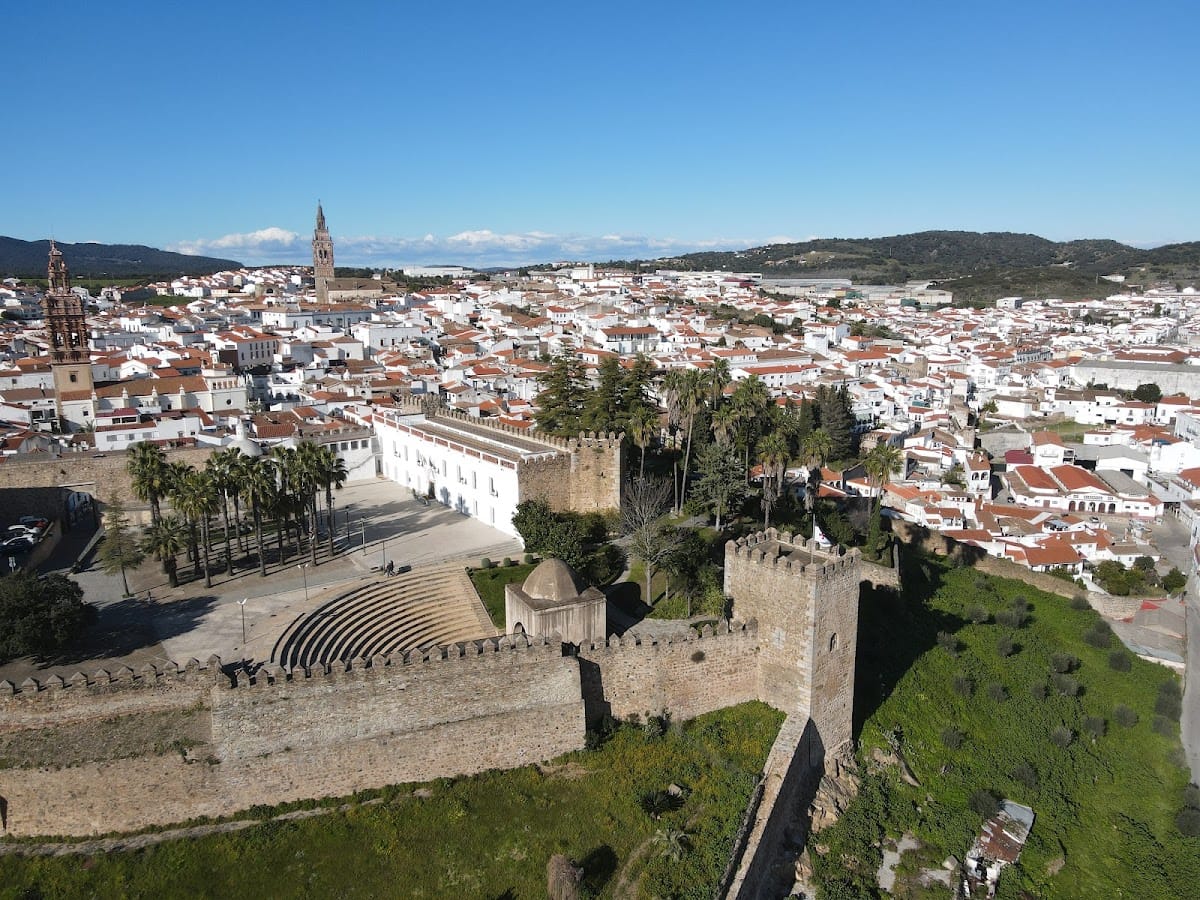
The castle sits atop the western slope of a hill, occupying the most naturally defensible and uneven terrain within Jerez de los Caballeros’ medieval walled enclosure. Its overall design follows an irregular pentagonal form, which takes advantage of the rugged landscape to enhance defense. The construction is primarily of large stone blocks known as ashlar masonry, a technique involving carefully cut stone pieces fitted together without mortar.
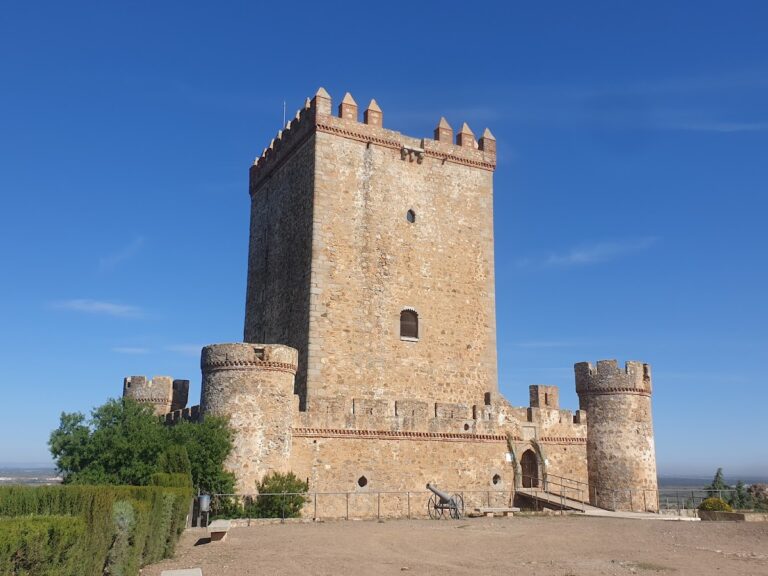
Among its defensive features are several towers distributed along its perimeter. The most prominent is the keep, or main tower, positioned toward the northeast. This tower contains a distinctive Gothic window with twin arches shaped in a polylobed design—arches with multiple curves or lobes that create a decorative effect. Additional notable windows include the so-called “ventana de la Veleta” and “ventana de las Armas” on the northern side, and two angled openings known as the “Carbón” and “Reloj” windows on the southern walls. These features suggest a blend of military and residential uses within the fortress.
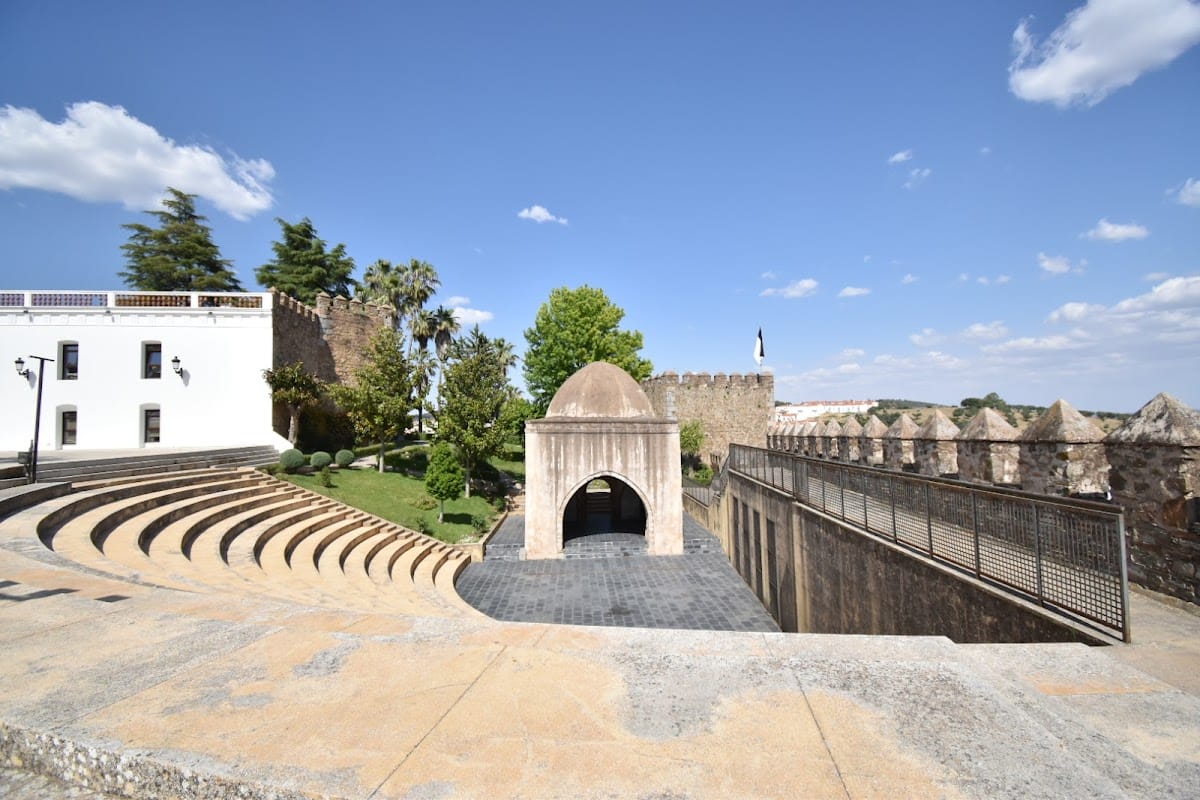
Inside the castle’s walls, much of the original internal structure has vanished over time. Today, the interior is occupied mainly by a garden space. However, two important elements remain in situ: a small chapel dating from the 15th century and a cistern (or aljibe), an underground reservoir used to store water, indicating provisions for prolonged defense conditions. The battlements along the walls, known as almenas, have been restored, helping to preserve the fortress’ silhouette as it would have appeared during the medieval period.
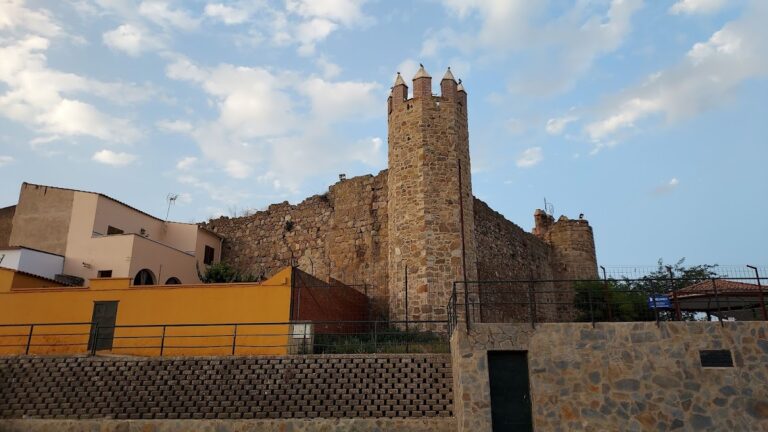
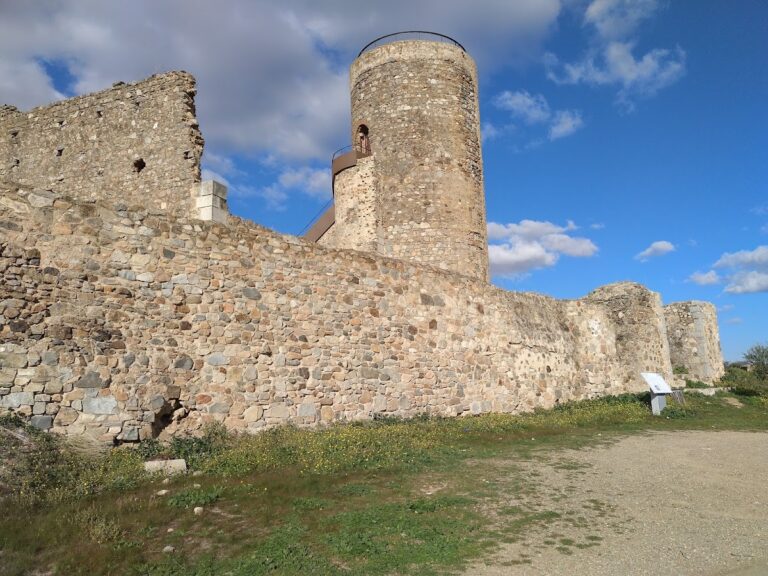
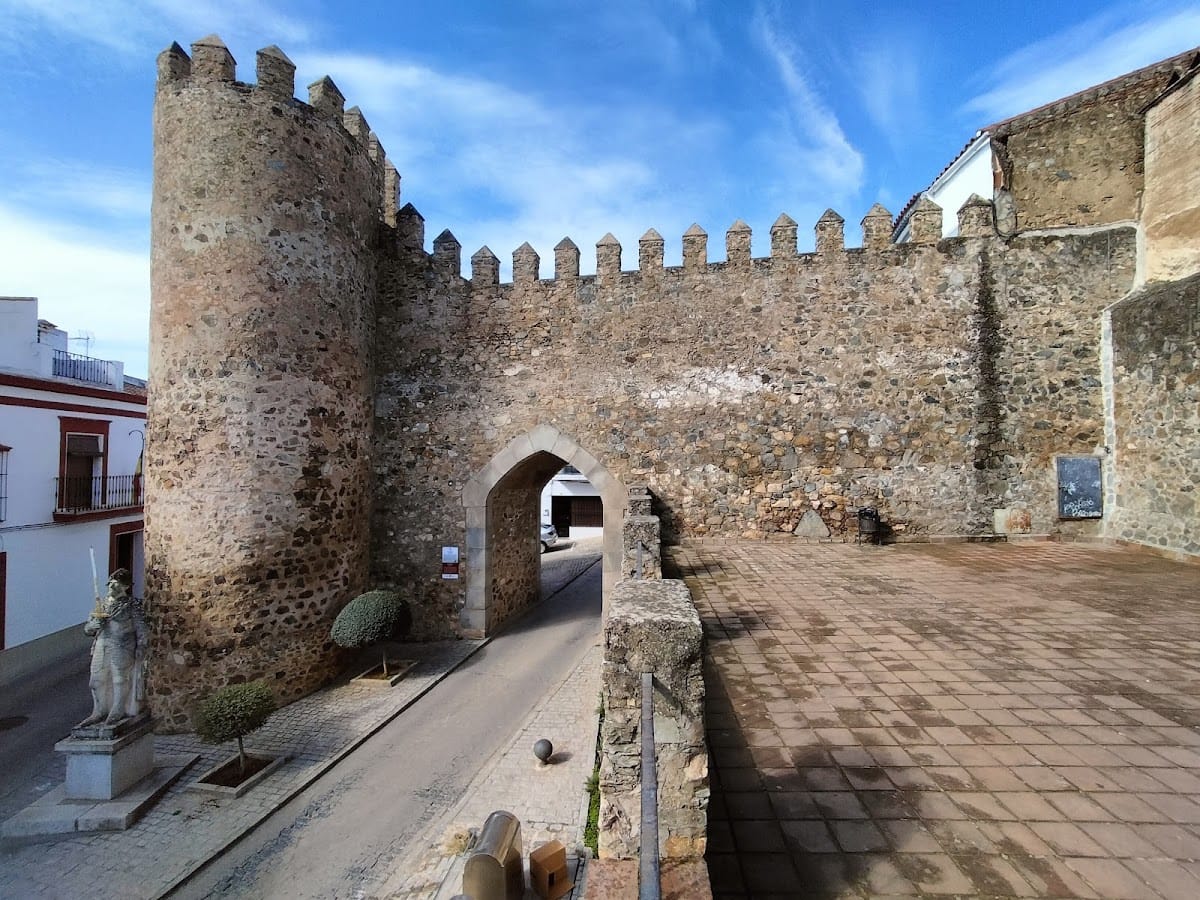
Surrounding the castle is the urban defensive wall, a complex structure of masonry and stone ashlar that reflects multiple historical layers. Its origins lie in Phoenician construction, with Roman and Visigothic modifications evident in the remaining fabric. The wall features semicircular towers topped with battlements, providing vantage points and defensible positions. Two principal gates have survived: the “Puerta de la Villa,” which is notable for a bent entrance design that would have complicated attackers’ access, and the “Puerta de Burgos,” distinguished by a pointed Gothic arch. Other gates once named Santiago, Alconchel, Sevilla, and La Nueva have been partially or wholly lost over time.
Nearby sites