Wohldenberg Castle: A Medieval Hill Castle in Germany
Site at a Glance
- Rating
- 4.7
- Popularity
- Low
- Country
- Germany
- Primary era
- Medieval
- External website
- Open
- Eras represented
- Medieval, Early Modern, Modern
- Civilizations
- German, Holy Roman Empire
- Site type
- Military
- Remains
- Castle
On this page15 sections
History
Wohldenberg Castle is a medieval hill castle in Germany, probably built between 1153 and 1160 by the Counts of Wöltingerode during their expansion into the Ambergau. After 1174, Count Ludolf I made it his principal seat. The castle later became an administrative center of the Bishopric of Hildesheim and remained connected with that ecclesiastical principality for much of its later history.
The Counts of Wohldenberg
The family’s earlier seat at Wöltingerode was converted into a Benedictine monastery and a burial place for the dynasty. The counts increasingly adopted the name Wohldenberg, and Ludolf II was already styled Count of Waldeberch in 1172.
During the conflict between Emperor Frederick I Barbarossa and Henry the Lion, the powerful Saxon and Bavarian duke who opposed the emperor, the Counts of Wohldenberg supported Barbarossa. Henry the Lion destroyed the castle in 1180. It was rebuilt afterward, and the family’s regional influence grew. Hermann of Wohldenberg later received Poppenburg as a fief after Conrad II, Bishop of Hildesheim, had strengthened it as a fortification.
Transfer to the Bishopric of Hildesheim
In 1275, the Counts of Wohldenberg sold their county and castle to Otto I, Bishop of Hildesheim. Otto’s tomb slab in Hildesheim Cathedral depicted the acquisition as the most important of his career. The castle then became the administrative seat of the Wohldenberg office within the Bishopric of Hildesheim, an ecclesiastical principality in which the bishop exercised both religious and territorial authority.
From the early fourteenth century, the castle was repeatedly pledged or granted as a fief, although it remained under the control of the Bishopric of Hildesheim for most periods. Robber knights also occupied it temporarily. In 1402, the Bortfeld family acquired the castle and lordship as a pledge. From 1448, the Bortfelds shared the holding with the von Oldershausen family. Other holders included the knights of Wallmoden in 1412 and members of the Sehlde, Linde, and Steinberg families.
War, destruction, and episcopal rebuilding
After the Hildesheim Diocesan Feud of 1519 to 1523, a conflict that altered control of territories belonging to the Bishopric of Hildesheim, the castle and the Wohldenberg office passed to the Principality of Brunswick-Wolfenbüttel. Aschwin von Bortfeld, the castle’s holder, was expelled without compensation. In 1518, he founded the plague column at the foot of the hill. Drost Bocholtz had it reworked in 1704.
Imperial troops stationed near Bockenem destroyed Wohldenberg Castle in 1641 during the Thirty Years’ War, the prolonged European conflict that devastated many territories between 1618 and 1648. The Bishopric of Hildesheim regained the site in 1643, but the castle subsequently deteriorated. Later episcopal administrators established Baroque buildings and a church there. This phase ended with the secularization of 1802, when church-controlled territories and property were transferred to secular governments.
Ruins and modern uses
After secularization, residents of Sillium removed masonry for a large sheep shelter in the village, and a resident of Astenbeck purchased the ruins for demolition. Most of the remaining buildings were dismantled, while the Catholic church and parish house survived. From 1858, the Hanover government carried out restoration work, including the conversion of the keep into a viewing tower.
The administrative house, or Amtshaus, was built about 200 metres below the castle in 1852, when the Wohldenberg office still consisted of three large subdivisions. After the office was dissolved, the writer Oskar Meding lived there until 1896 and wrote historical novels in the surrounding historical landscape. After his death, the building briefly operated as a hotel.
During the Second World War, the castle keep was used as an anti-aircraft tower. The Caritas Association of the Diocese of Hildesheim acquired the Amtshaus in 1920. Before the war, it had served as a boarding school and as St. Ursula forest school, run by nuns from the Ursuline convent at Duderstadt. The Wehrmacht requisitioned the building in 1942 as a reserve military hospital. Efforts begun in 1945 led to its conversion into a diocesan youth-education center, and Bishop Joseph Godehard Machens inaugurated Haus Wohldenberg on 21 July 1946.
Today, the castle is a ruin about one kilometre southwest of Sillium, in the municipality of Holle in Lower Saxony’s Hildesheim district. It has remained associated with the Bishopric or Diocese of Hildesheim through much of its later history, and the castle complex appears in Sillium’s municipal emblem.
Remains
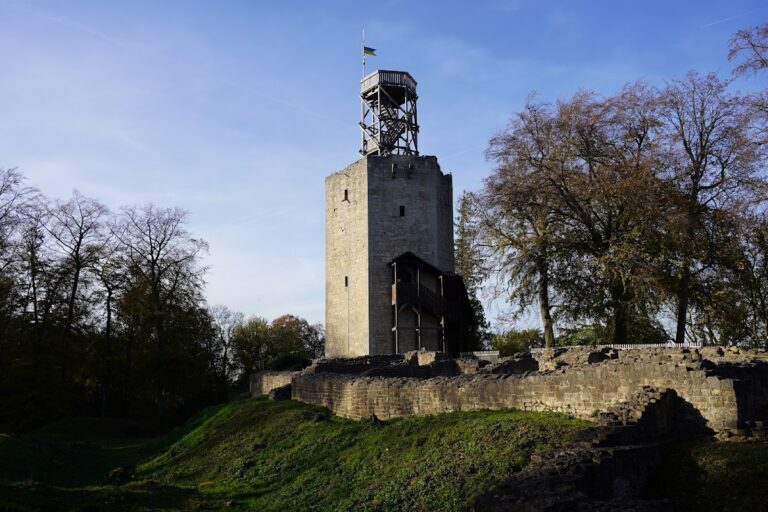
Wohldenberg is set on a projecting rise of the 218-metre-high Wohldenberg, an elongated ridge on the northwestern edge of the Hainberg above the Nette valley. Steep slopes made the position difficult to capture. The castle occupied the northern entrance to the Ambergau, while the Frankfurter Straße and the route between Hildesheim and Goslar ran below it. Its kidney-shaped enclosing area measured approximately 190 by 110 metres and was divided into a southern main castle and a northern outer bailey by a wall and ditch.
Castle layout and defenses
The two parts of the complex each had an inner courtyard, and the site may earlier have contained three courtyards. The main castle included a palas, the principal residential hall, a keep, a chapel, and other buildings. The former main-castle area is no longer clearly legible as a separate space, but sections of the enclosing wall survive, in places reaching two metres in thickness.
The keep
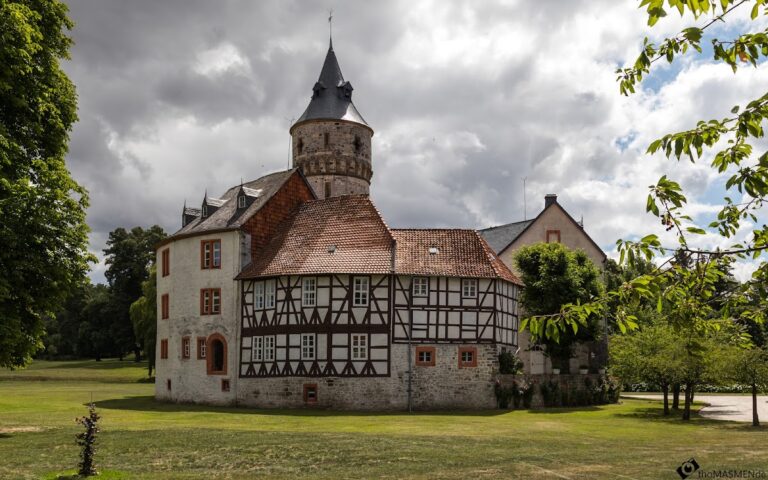
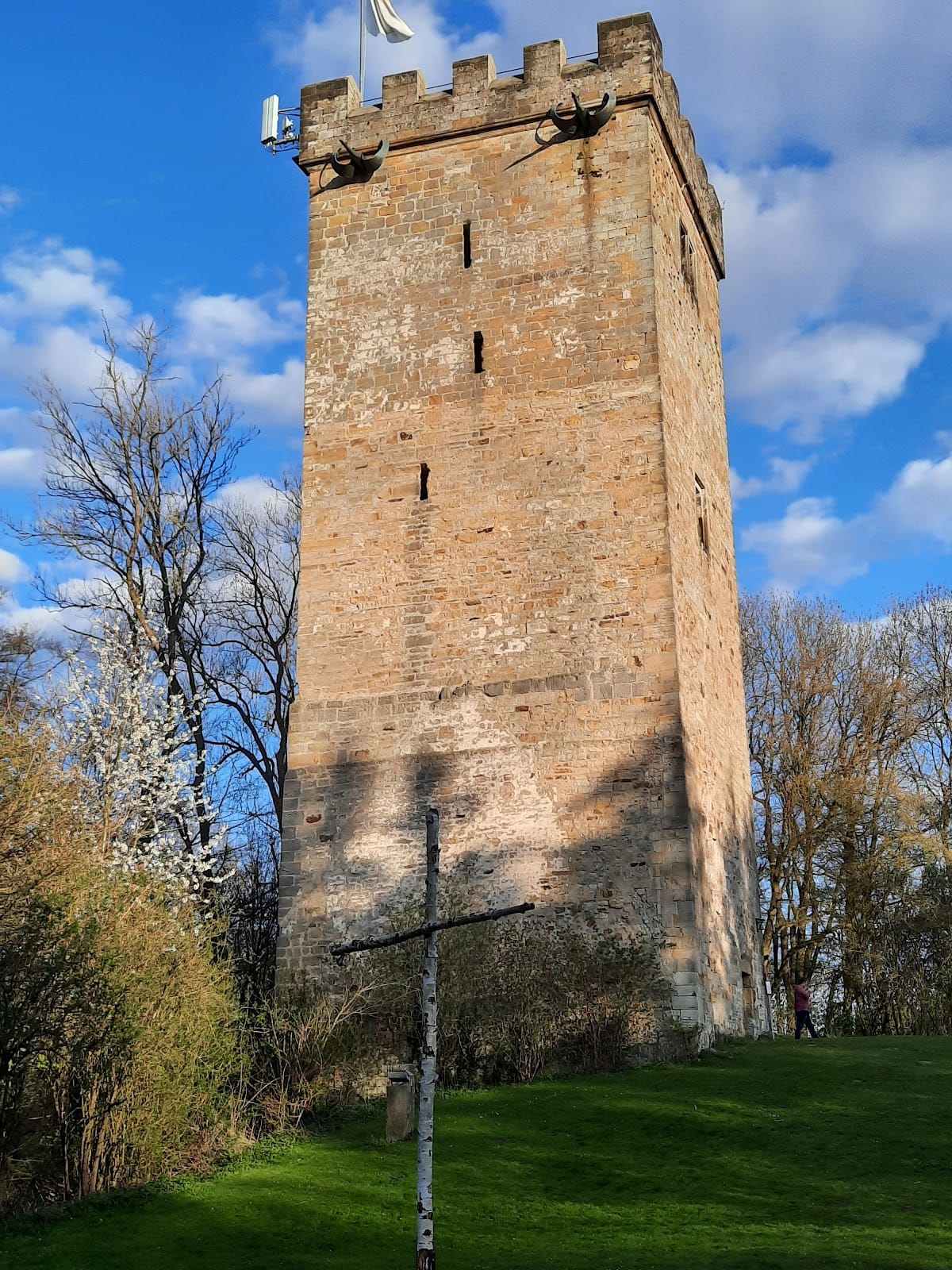
The 32-metre-high Bergfried, the principal fortified tower of a German medieval castle, remains standing. It was adapted as a viewing tower during the restoration that began in 1858 and received a crenellated viewing platform. Traces of structures adjoining the tower survive on its northern and southern sides. The tower now provides views across the municipality of Holle toward the Harz.
The outer bailey and gatehouse
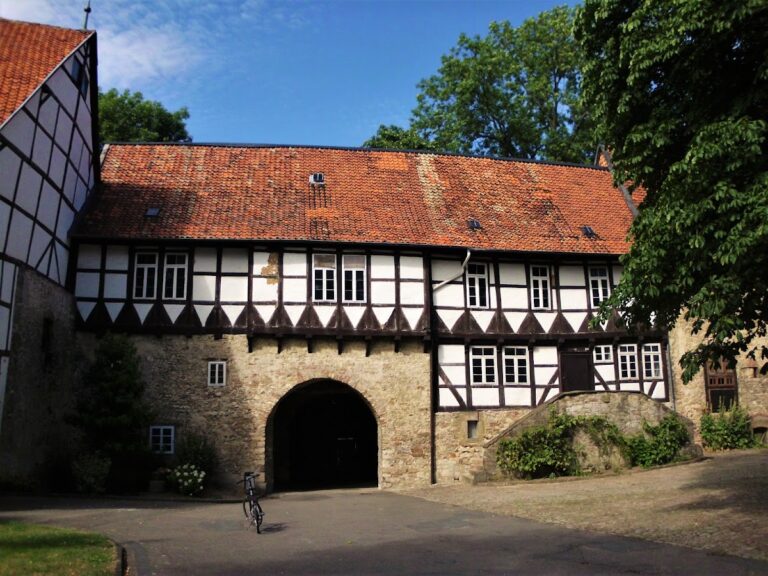
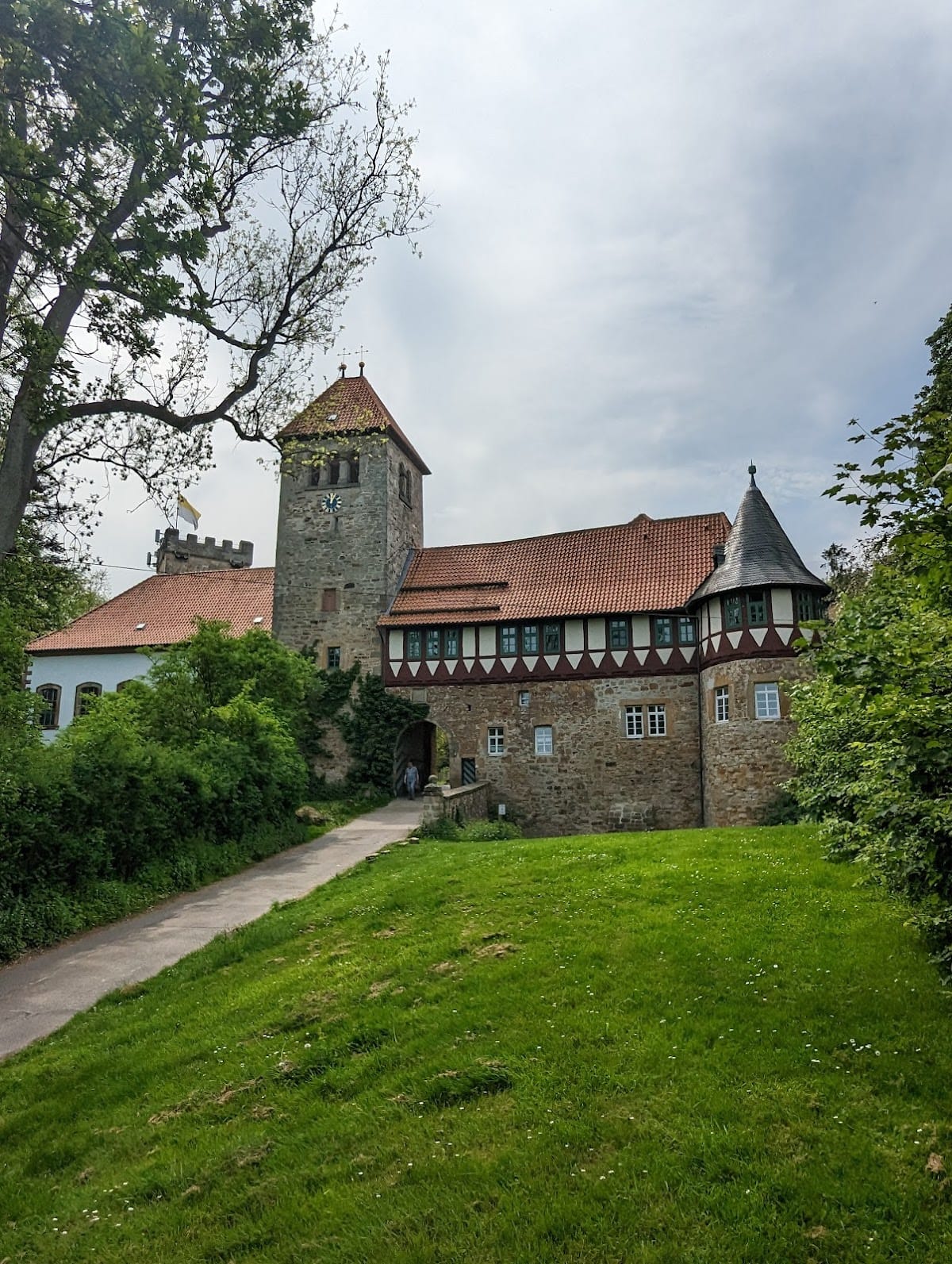
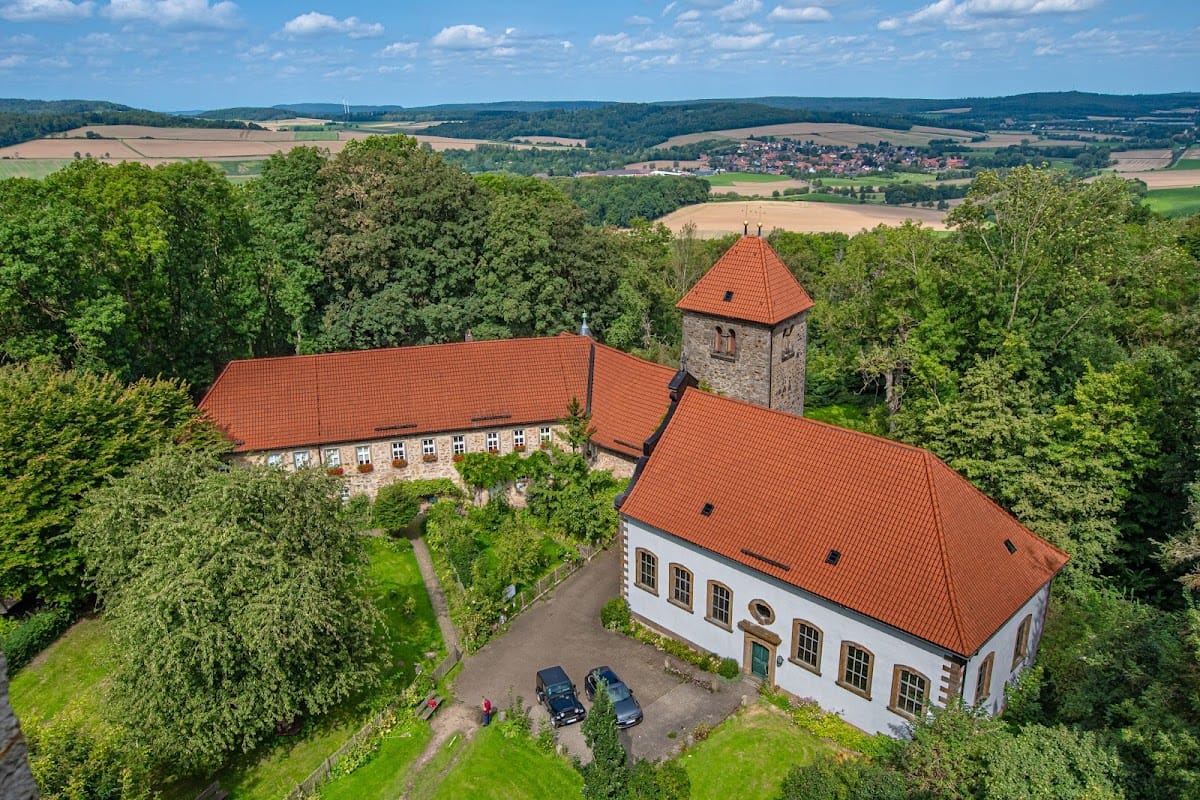
The outer bailey was entered through a later gatehouse. Its approach crosses the former moat on a bridge-like driveway. A residential building with a half-timbered upper storey adjoins the gatehouse after the approach turns southwest. A round flank tower is incorporated on the building’s northern side. Since 1731, the gatehouse complex and adjoining residence have served as the parish house of the Catholic St. Hubertus congregation.
Church and associated buildings
St. Hubertus Church
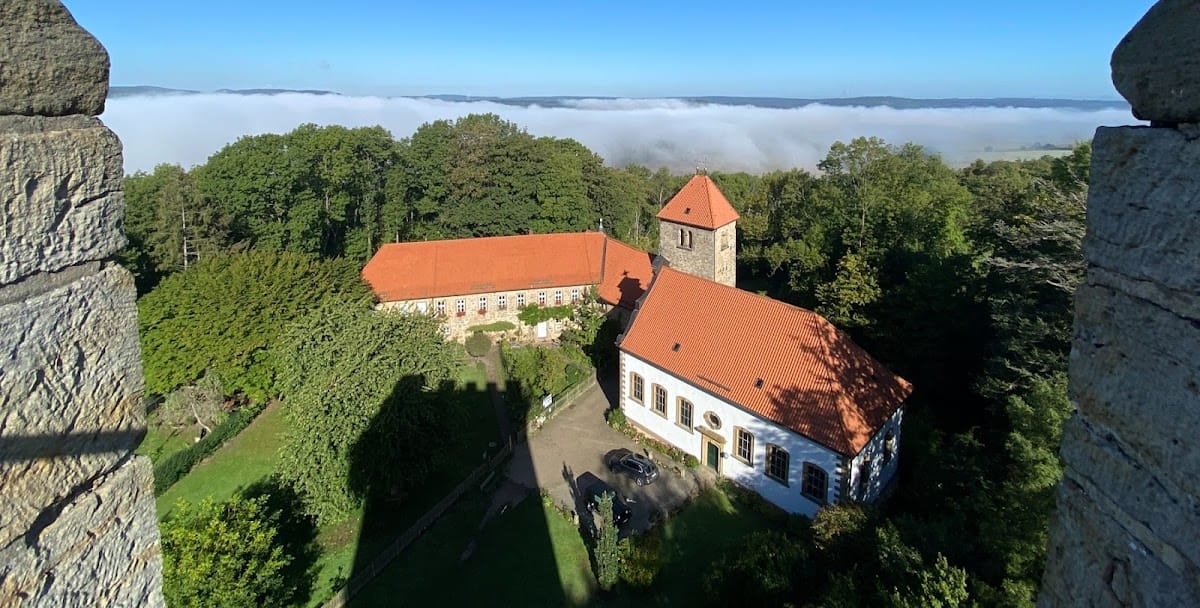
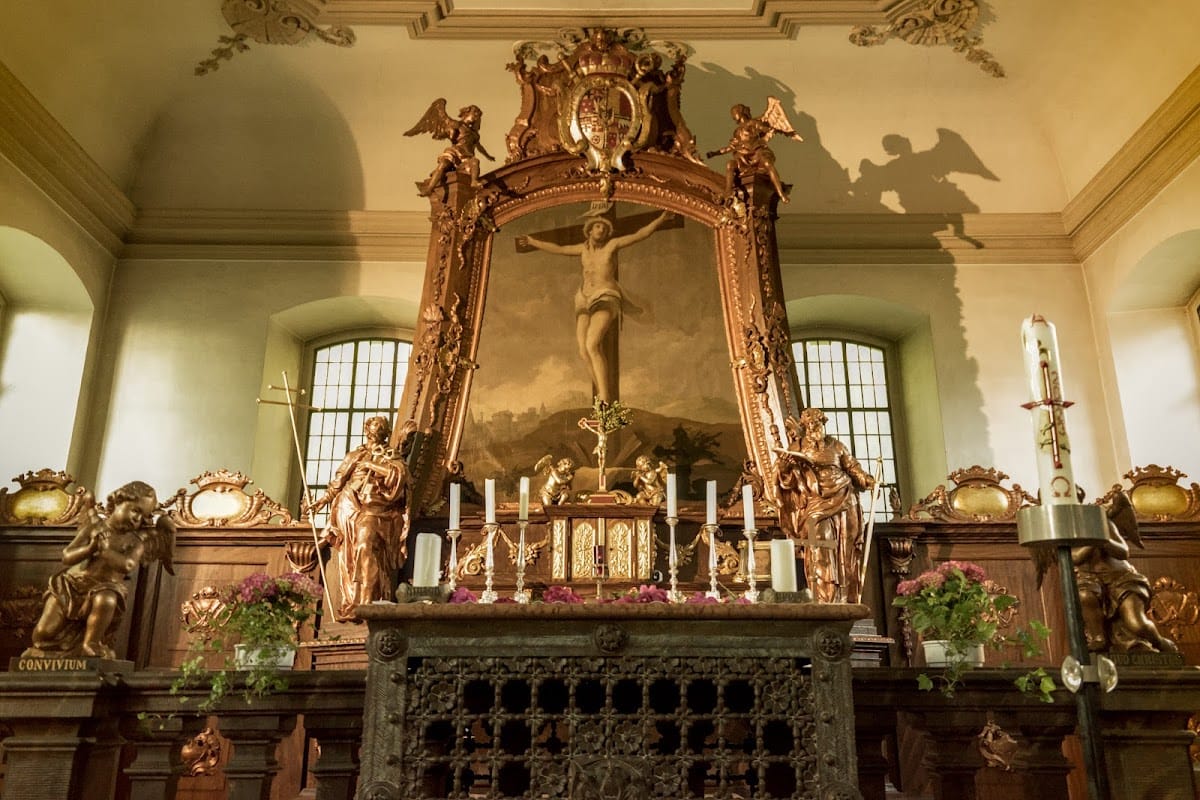
The Catholic Church of St. Hubertus stands beside the gatehouse on the outer-bailey side of the complex. Built in 1731 in the Baroque style, it developed from the former castle chapel. The old gate tower was converted into the church’s bell tower.
The buildings below the castle
About 200 metres below the castle stands the Amtshaus, built in 1852. A former inn dating from 1561 is also located below the castle. These buildings belong to the surviving historical setting associated with the former administrative office.
Plague column and earlier tradition
The Stony Jacob
At the foot of the hill stands the 1518 plague column, a wayside shrine known as the “Stony Jacob.” Drost Bocholtz had it revised in 1704. Its position below the castle connects the surviving monument with the period when Aschwin von Bortfeld held the site.
The alleged offering stone
An offering stone dedicated to Wodan, a Germanic deity associated with Odin in Old Norse tradition, is said to have occupied the summit before the castle was built. An offering stone was a stone or altar-like feature used for ritual offerings.