Sofiero Palace: A Swedish Royal Summer Residence in Helsingborg


Site at a Glance
- Rating
- 4.6
- Popularity
- Medium
- Country
- Sweden
- Primary era
- Modern
- External website
- Open
- Eras represented
- Modern
- Civilizations
- Swedish
- Site type
- Domestic
- Remains
- Palace
On this page12 sections
History
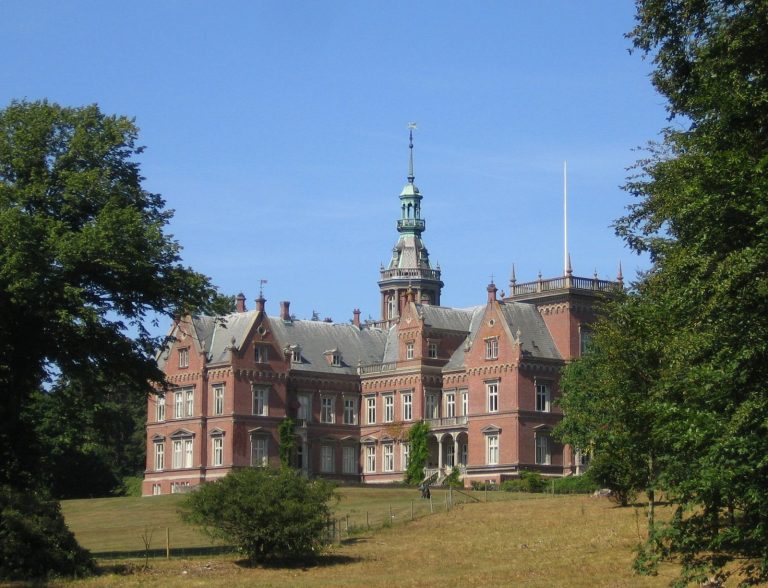
Sofiero Palace is a former royal summer residence in Helsingborg, Sweden, built for the Swedish royal family in the nineteenth century. The first summer palace was completed in 1865, and its later enlargement created the residence associated with the royal estate. Set beside the Öresund, the strait between southern Sweden and eastern Denmark, Sofiero became both a private royal home and, eventually, a public park and cultural venue.
From Skrabelycke to a Royal Summer Palace
The estate began as Skrabelycke, a Scanian property purchased in 1864 by Prince Oscar and his wife, Sofia of Nassau. The couple valued its healthy air, outlook toward Denmark, and wooded ravine leading down toward the Öresund. They renamed the estate Sophie-Ro, and a summer palace was completed there the following year.
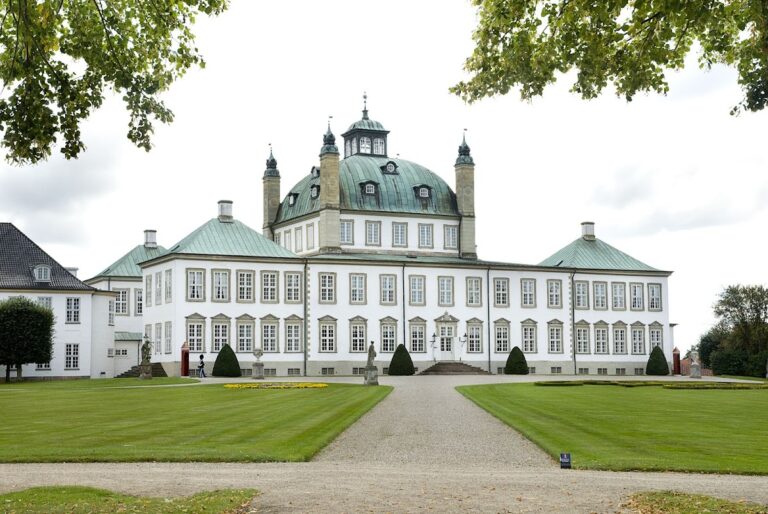
Oscar became King Oscar II of Sweden and Norway in 1872. As the royal household and court grew, the original residence proved too small. It was therefore enlarged between 1874 and 1876, creating a two-storey palace with 35 rooms, apart from service and economic spaces. This expansion established the principal form of the royal summer residence.
Margaret and the Garden Transformation
In 1905, Oscar II and Sofia presented Sofiero to their grandson, Prince Gustaf Adolf, and his wife, Princess Margaret of Connaught, as a wedding gift. They arrived at the palace on 22 July that year. Margaret, a British-born member of the Swedish royal family and a granddaughter of Queen Victoria, changed both the interiors and the grounds. She replaced the heavy, dark character associated with the Oscarian period, the cultural era linked to Oscar II’s reign, with a lighter and more modern style.
Margaret also reshaped the neglected grounds according to English Arts and Crafts ideas. This garden movement favored informal, plant-centered designs, traditional craftsmanship, and a close relationship between gardens and buildings. Her work included the development of the flower avenue, begun in 1910, and the cultivation of the ravine as part of the garden landscape. She died in 1920.
Gustaf VI Adolf and Horticultural Development
Gustaf Adolf married Louise Mountbatten in 1923 and continued to use Sofiero. He became King Gustaf VI Adolf in 1950, but retained the palace as his summer residence until his death in 1973. During his ownership, Sofiero became particularly associated with horticulture. A nursery operated at the estate in cooperation with institutions including Gothenburg Botanical Garden and Kew Gardens in London.
The grounds produced large quantities of pelargoniums and marguerites, while fruit cultivation reached as much as 26 tonnes in a year. Gustaf VI Adolf also developed the estate’s rhododendron collection, planting more than 5,000 specimens representing more than 400 varieties. The collection continued to grow and became a defining feature of Sofiero.
The Bequest to Helsingborg
Gustaf VI Adolf’s will, dated 7 December 1959, gave Sofiero to the City of Helsingborg on the condition that the park and gardens should be maintained essentially in their existing form and remain reasonably accessible to the public. Helsingborg accepted the gift after the king’s death in 1973, and the park opened to the public in May 1974.
The palace was in poor condition when it passed to the city and required extensive renovation. The terms of the bequest protected the grounds from alteration, although the buildings could be changed or demolished. Helsingborg Museum organized the first exhibition at Sofiero in 1978. The first concert followed in 1979, when soprano Birgit Nilsson performed for an audience of 5,000. That year also brought an exhibition of works by Crown Princess Margaret and Prince Eugen. Sofiero was prohibited from commercial use in 1979.
Memorials, Public Culture, and Later Additions
In 1992, Margaret’s children gave Helsingborg a portrait medallion of their mother by Carl Milles in recognition of the city’s care of Sofiero. Reconstruction of part of her original 1910 flower-avenue design began as a memorial and was inaugurated in 1993. A geranium collection followed after city gardener Ole Andersson visited Queen Ingrid at Gråsten in 1994; Ingrid supplied cuttings from her scented geranium collection.
Sofiero was announced as Europe’s most beautiful park for 2010. Since 1 January 2015, the site has formed part of the municipal company Helsingborg Arena and Scen AB. King Carl XVI Gustaf and Queen Silvia inaugurated the permanent Jubilee Garden on 6 June 2016, marking Sofiero’s 150th anniversary. Designed by landscape architect Mona Wembling, it was intended for recreation and inspiration.
A 57-metre bridge across the ravine, known as Sofia’s Bridge, was inaugurated on 14 April 2018. Its components were manufactured in Poland, welded together, and lifted into position. The bridge received the Steel Construction Prize in 2021. The former royal palace now contains a restaurant and café and is sometimes used as a gallery, while the park hosts exhibitions and cultural events.
Sofiero also retains a royal horticultural tradition through myrtle. Since 1935, Swedish royal brides have traditionally carried myrtle from the estate in their wedding bouquets. The plant was propagated from myrtle brought from Britain by Margaret and grown from a plant originally planted by Queen Victoria.
Remains
Sofiero comprises a palace and an approximately 15-hectare park and garden in Helsingborg Municipality, about five kilometres north of central Helsingborg. The grounds extend toward the Öresund and include a wooded ravine descending toward the shore. The surviving landscape combines formal garden elements, sheltered planting areas, productive gardens, buildings, artworks, and open grassy spaces used for outdoor concerts.
The Palace and Estate Buildings
The first palace was a one-storey summer building, and the original summer villa had six towers. The enlargement completed in 1876 produced the present two-storey arrangement with 35 rooms, excluding service and economic spaces. The former royal residence now accommodates a restaurant and café and is sometimes used as a gallery. Other estate features include a workshop building, exhibition and souvenir facilities, and a children’s playground with a cottage dating from 1917.
The Ravines and Rhododendron Collection
The wooded ravine was largely untouched before Margaret’s redesign and was regarded at the time as gloomy. Later gardens introduced plantings on both its northern and southern sides. Most of Sofiero’s rhododendrons grow in the two ravines north and south of the palace. The collection is described as the largest in northern Europe and now contains about 10,000 bushes, nearly 500 varieties, around 300 species, and a comparable number of hybrids. Rhododendrons are flowering woody plants, and the ravines provide suitable conditions through tree shade, mildly acidic soil, and water flowing down the slopes.
Flower Avenue and Perennial Border
The flower avenue contains broad beds at least five metres wide, with each bed planted largely with one type of flower. A trellis protects the plantings from wind and supports hops, honeysuckle, clematis, and tree bindweed. On the eastern side of the garden, a broad perennial border follows a long stone wall from north to south. Annual plants fill spaces among the perennials, while plum and pear trees grow along the wall.
Productive Gardens and Garden Features
When Gustaf Adolf and Margaret received Sofiero in 1905, only a small portion of the grounds had been laid out as garden, chiefly the large lawn east of the palace. The estate included sweet chestnut, blood beech, acacia, and empress trees, as well as fruit and kitchen gardens and late-nineteenth-century bedding schemes on the terrace facing the sea. The present grounds include a rose path, kitchen garden, dahlia area, melon house, greenhouse, maze, pond, lion maze, sculptures, and a monument to Gustaf VI Adolf.
The Vine House, Art, and Public Grounds
The vine house was built in 1914 by Gustaf Adolf and Margaret on a masonry base. It measures 15 by 5 metres and is almost five metres high. Grapevines planted in 1914 continue to be cultivated there. The park also contains a small collection of modern art and large grassy areas used for open-air concerts, while the palace provides the site’s restaurant, café, and occasional gallery spaces.