Kulla Gunnarstorp Castle: A Historic Estate on Sweden’s Öresund Coast
Site at a Glance
- Rating
- 4.2
- Popularity
- Very Low
- Country
- Sweden
- Primary era
- Modern
- External website
- Open
- Eras represented
- Early Modern, Modern
- Civilizations
- Danish, Swedish
- Site type
- Domestic
- Remains
- Castle
On this page10 sections
History
Kulla Gunnarstorp Castle is a privately owned castle estate in Sweden, near Helsingborg on the Öresund coast. Its history reaches back to 1399, while the estate’s two principal residences represent a fortified manor tradition and nineteenth-century brick architecture. Located between Hittarp and Domsten in Scania, approximately 10 kilometers north of Helsingborg, Kulla Gunnarstorp developed through the inheritance, marriage, and management of several prominent Scandinavian noble families.
Medieval Origins and the Brahe Family
The estate first appears in written history under the name Gundestrup. In 1399, the knight Johannes Olofsson Lunge described it as his property in a letter to the Bishop of Roskilde. By the late fifteenth century, it belonged to the Parsberg family, represented by Werner Werner son Parsberg and his son Tonne Parsberg.
A fortified manor house stood at Gundestrup around 1500. Ingeborg Nilsdotter Parsberg inherited the property, probably after her father, Nils Parsberg, acquired his brother’s share. Her marriage to the nobleman Jørgen Ottesen Brahe transferred the estate to the Brahe family under the inheritance laws of the period. Jørgen Brahe later ordered the construction of the Old Castle during the sixteenth century.
Jørgen and Ingeborg both died of plague in 1601 and were buried in Allerum Church. After Jørgen’s death, the estate passed to their ten-year-old son, Tonne Brahe, and was probably administered by his uncle Axel Brahe. Tonne later died at the age of twenty from serious injuries received during the Kalmar War, an early seventeenth-century conflict between Denmark-Norway and Sweden. Axel then became the owner, but after his death in 1616 the estate passed to his son Tige Brahe.
Rosenkrantz, Sparfwenfelt, and Von Konowen Ownership
Shortly before 1630, Tige Brahe sold Kulla Gunnarstorp to Count Axel Eriksen Rosenkrantz, a member of the Rosenkrantz family and owner of Glimmingehus. Margareta Rosenkrantz later managed the estate and appears to have acquired it in 1638, although the precise form of the transfer is unclear.
Under Margareta, Kulla Gunnarstorp became a prosperous estate. Her death in 1677 led to a division among her three sisters. The farms were soon largely abandoned, and the forests were cut down. The estate was reunited around 1720 under Johanna Sparfwenfelt, who sold it in 1730 to Christian Didrik von Konowen. He died the following year, and his son Dietrich inherited the property.
Dietrich von Konowen retained Kulla Gunnarstorp for forty-four years. In midsummer 1749, Carl Linnaeus visited him during a journey through Scania. Linnaeus was an eighteenth-century Swedish naturalist whose travels contributed to his study of Sweden’s plants, landscapes, and natural history. In 1775, Count Gustaf Adolf Sparre purchased the estate from Dietrich von Konowen.
The Sparre and De La Gardie Periods
Gustaf Adolf Sparre was a collector of paintings, and the gallery he assembled at Kulla Gunnarstorp was regarded at the time as one of Sweden’s most distinguished. After his death, his wife Amelie Ramel inherited the castle. Their daughter Elisabeth Amalia married Count Jacob Gustav De la Gardie, but both she and their son Gustav Adolf Frederick De la Gardie died early. Gustav Adolf Frederick left no children, so ownership passed to Jacob De la Gardie, who was also an art collector.
Jacob De la Gardie sold the estate and its art collection in 1837 to Count Carl De Geer. When De Geer died in 1861, the property passed to his daughter’s husband, Count Baltzar von Platen. Von Platen began the construction of a new residence suited to the estate’s coastal setting. He was Sweden’s foreign minister and a naval admiral, and he considered the position beside the sea appropriate for a spacious house with towers overlooking the water.
The New Castle and the Wachtmeister Family
Baltzar von Platen died in 1875, before he could enjoy the New Castle. His wife continued to administer the estate until her death in 1888. The New Castle had been designed in the nineteenth century by the Danish architect Christian Zwingmann. After the estate was inherited by Elisabeth von Platen, she married Axel Wachtmeister, the owner of Wanås Castle, and preferred to live there. Their son Fredrik later inherited Kulla Gunnarstorp and undertook a major renovation.
Fredrik Wachtmeister died without children. After his mother’s death, the castle passed to his brother Axel in 1918. Axel and his wife Harriet also had no children, and after Axel’s death in 1929 the estate passed to his nephew, Count Otto Wachtmeister.
Otto Wachtmeister had married Brita Nordensherna in 1922 and died in 1938, leaving four daughters, Ebba, Charlotte, Elisabeth, and Barbara. Under an agreement, the sisters inherited half of the estate while their mother controlled the other half. Ebba surrendered her rights after moving to Switzerland in 1948. Barbara’s death in 1958 left Charlotte and Elisabeth as the remaining owners.
The estate stayed in the Wachtmeister family until 1978. Charlotte Wachtmeister was married to Baron Nils Trolle, heir to Trollenäs Castle, and their son Gustav Trolle was designated to inherit Kulla Gunnarstorp in 1970. He took responsibility for managing the estate in 1978. The owners have traditionally supported Allerum Parish Church, where the estate is situated, and Vikens Church has also received support on occasion.
Remains
Castle Complexes
The Old Castle
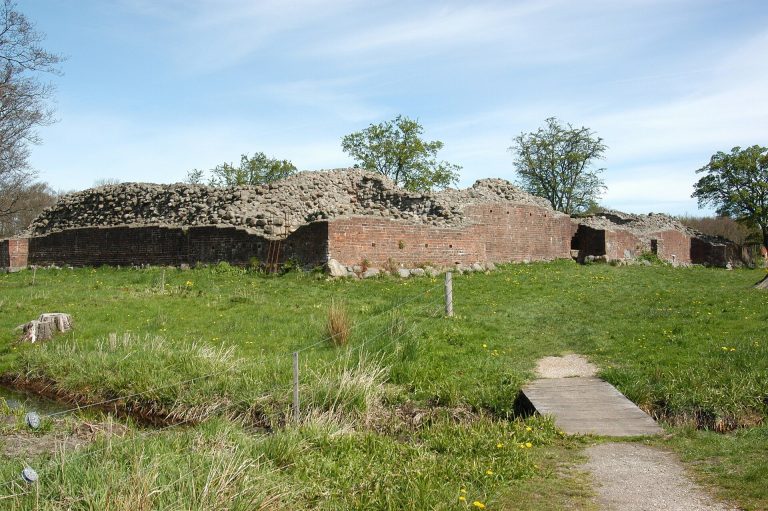
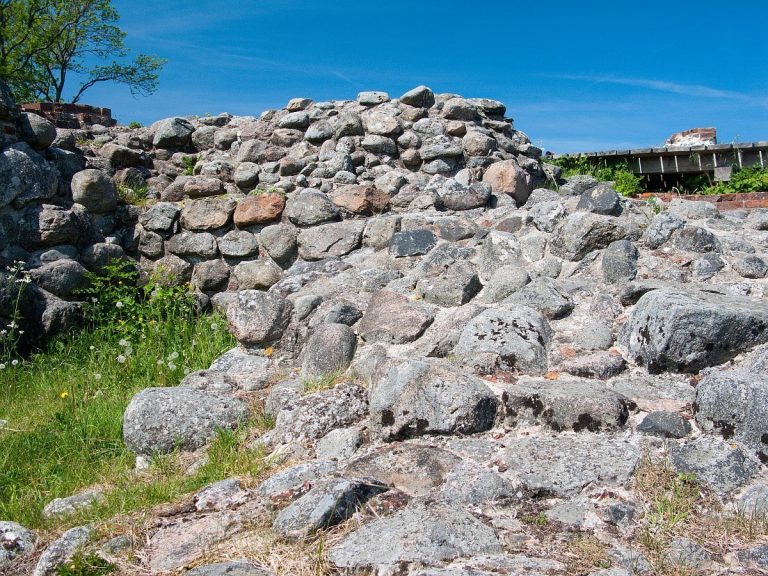
The Old Castle is a sixteenth-century water castle, meaning a fortified residence protected partly or wholly by water. It survives within a rectangular island enclosed by moats and canals. A wooden bridge across the northern moat formed the approach to the complex.
An engraving by Gerhard von Burman, made around 1680, provides the oldest known depiction of Kulla Gunnarstorp. Viewed from the north in panoramic perspective, it shows three buildings arranged around a courtyard. A wall protected the courtyard on its southern side, illustrating the defensive organization of the earlier residence.
The New Castle
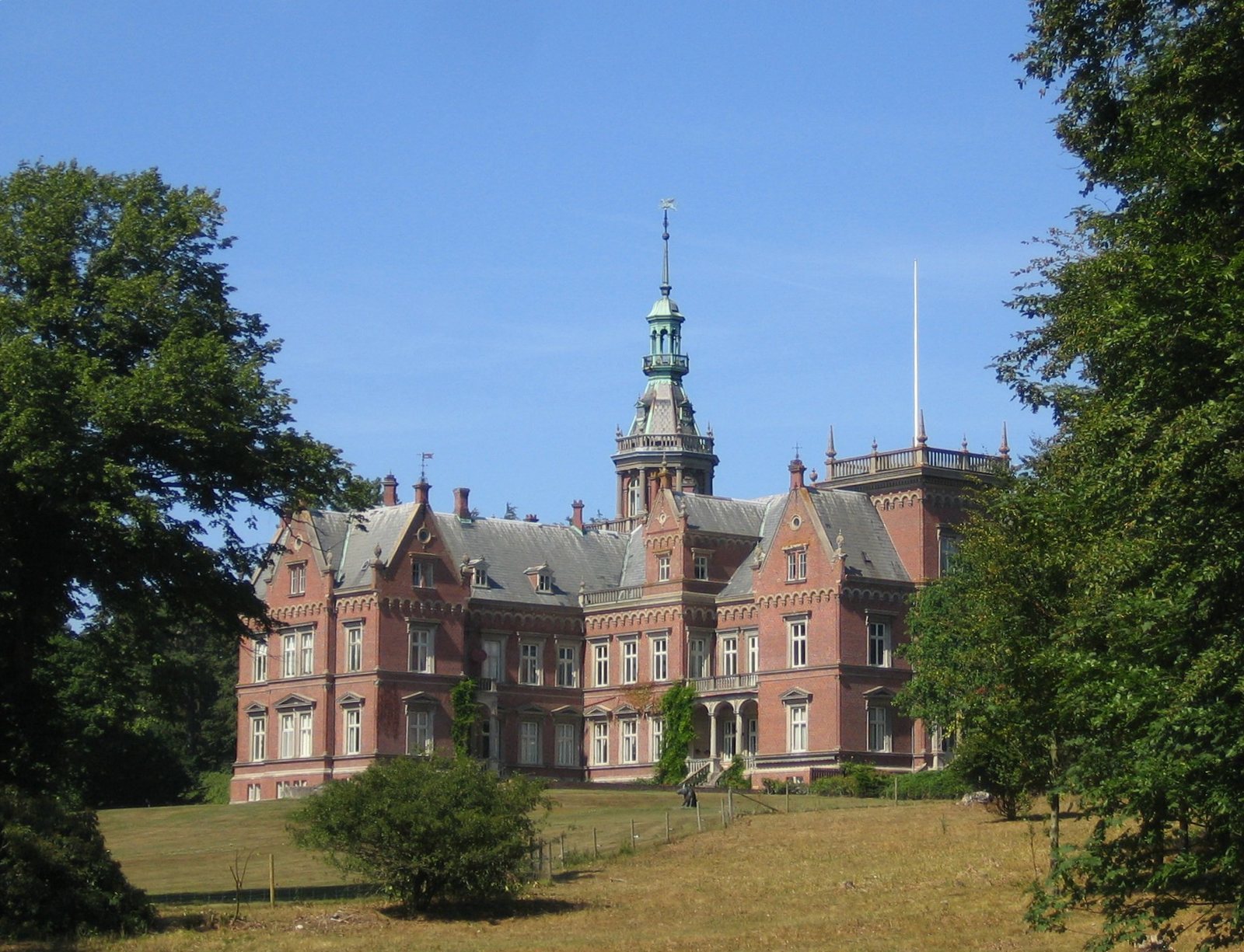
The New Castle was built in 1868 as a brick residence designed by Christian Zwingmann. Its construction used exactly 986,950 bricks. Of these, 422,500 came from the Glumslöv brickworks, 559,825 were made at the estate’s own brickworks, and 4,625 were separately produced corner bricks.
Local peasants and craftsmen worked on the building. Two master masons, Lundgren and Brogren, are associated with the construction. Zwingmann lived at the estate for 646 days while the work proceeded and received 31,447 riksdalers, a historical Swedish currency, for his services.
Mill
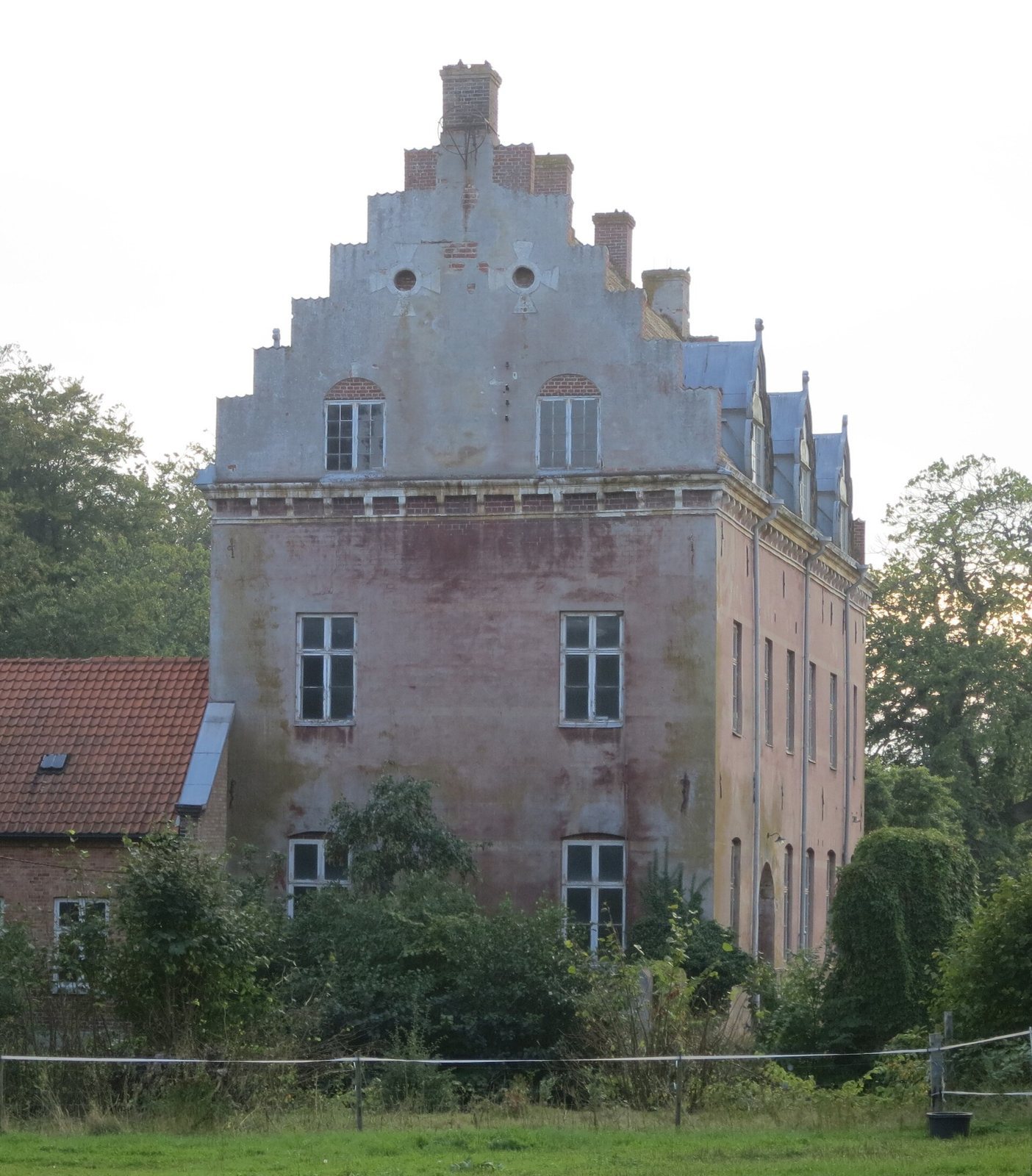
The historic estate also includes Kulla Gunnarstorp Mill, a landmark outside Hittarp. It forms part of the wider group of buildings and features associated with the castle estate.