St Mary and All Saints’ Church, Kidderminster: A Civic Parish Church
Site at a Glance
- Popularity
- Medium
- Country
- United Kingdom
- Primary era
- Medieval
- Eras represented
- Medieval, Early Modern, Modern
- Civilizations
- British, English
- Site type
- Religious
- Remains
- Church
On this page10 sections
History
Origins and medieval church
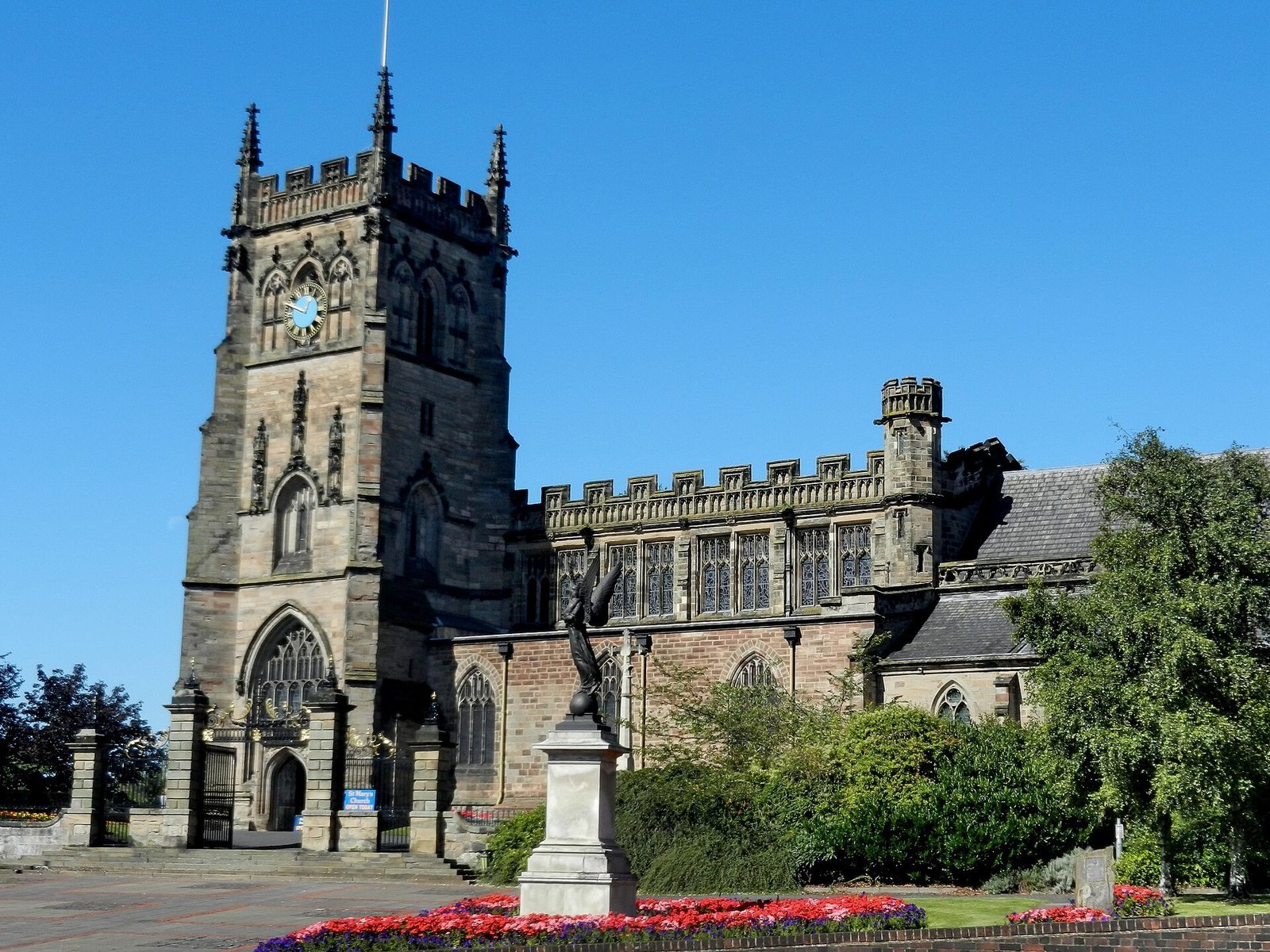
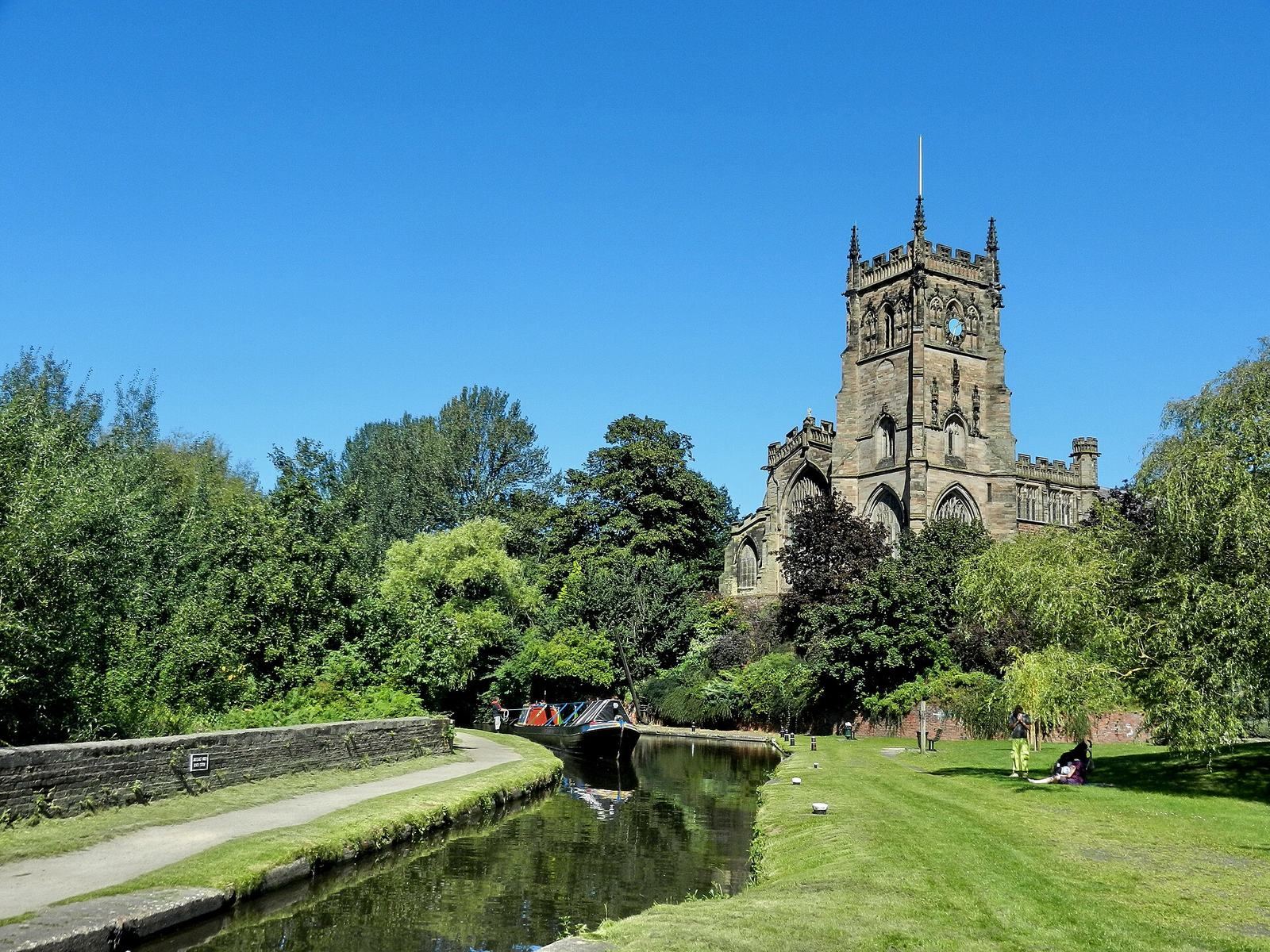
St Mary and All Saints’ Church is a Church of England parish church and the civic church of Kidderminster, United Kingdom. A church foundation existed there by 1086, when the Domesday Book, William I’s survey of landholding and resources in England, was completed. A consecration recorded in 1315 probably concerned the chancel, the part of a church containing the altar and choir. The present building dates mainly from the 15th and 16th centuries.
Seventeenth-century ministry
In April 1641, vicar George Dance agreed to provide £60 each year from his £200 income for a preacher chosen by trustees. Richard Baxter, an English Puritan minister and theologian, was invited and unanimously appointed the church’s minister, or lecturer. In this context, a lecturer was a preacher appointed to deliver sermons.
Changes and restoration in the eighteenth and nineteenth centuries
In 1828, Henry Knight of Birmingham made a new church clock. After repairs in 1852 proved unsatisfactory, a subscription was raised for another clock, which James Harrison of Hull was installing by June 1856. The church proposed transferring the earlier clock to St John’s Church in Kidderminster. A new organ was also sought: the existing instrument at the west end obstructed a window, and the congregation wanted the organ relocated to support a choir engaged to perform full cathedral services on Sundays. George Holdich’s replacement organ was opened by the church organist, Dr William Marshall, on 7 June 1848.
By 1774, the church had a peal of eight bells, a set arranged for change-ringing. The first, sixth, and seventh bells had been cast in Gloucester in 1754. The eighth bell broke on 1 May 1856 and was recast in London the following year. A severe gale in October 1881 badly damaged the tower and led to urgent restoration. New floors were installed below the bells and in a clock chamber, and a new frame was made for rehanging the bells. Three fixed bells, given by local Freemasons, joined the town’s carillon, a set of tuned bells played mechanically. It sounded every third hour on eleven bells, using barrels with secular and sacred tunes. Westminster chimes, a familiar sequence for clocks, replaced the clock’s apparently earlier two-note chime. Another barrel played 182 changes and rounds on the original eight bells.
Twentieth-century work and present role
The church was altered in 1847, and an organ chamber was added in 1874. The tower was refaced between 1893 and 1895 by J. A. Chatwin. Giles Gilbert Scott designed the Whittall Chapel, added in 1921 and 1922, and the main organ case, installed in 1927 and 1928. Hubert Clist worked on the church in 1966 and 1967; Ronald Sims reordered its interior in 1988 to 1990. John Taylor of Loughborough cast additional bells for the present ring in 2003, and they were dedicated on 29 February 2004. The church was designated a Grade I listed building on 20 October 1952. It belongs to the Diocese of Worcester, a church area overseen by a bishop, and to the Archdeaconry of Dudley and Deanery of Kidderminster, subdivisions of the diocese. It is also part of the Kidderminster Ismere team of churches, which includes St John Wolverley, Holy Trinity Trimpley, St Barnabas Franche, St Oswald Broadwaters, St Peter Upper Arley, and St Peter Cookley.
Remains
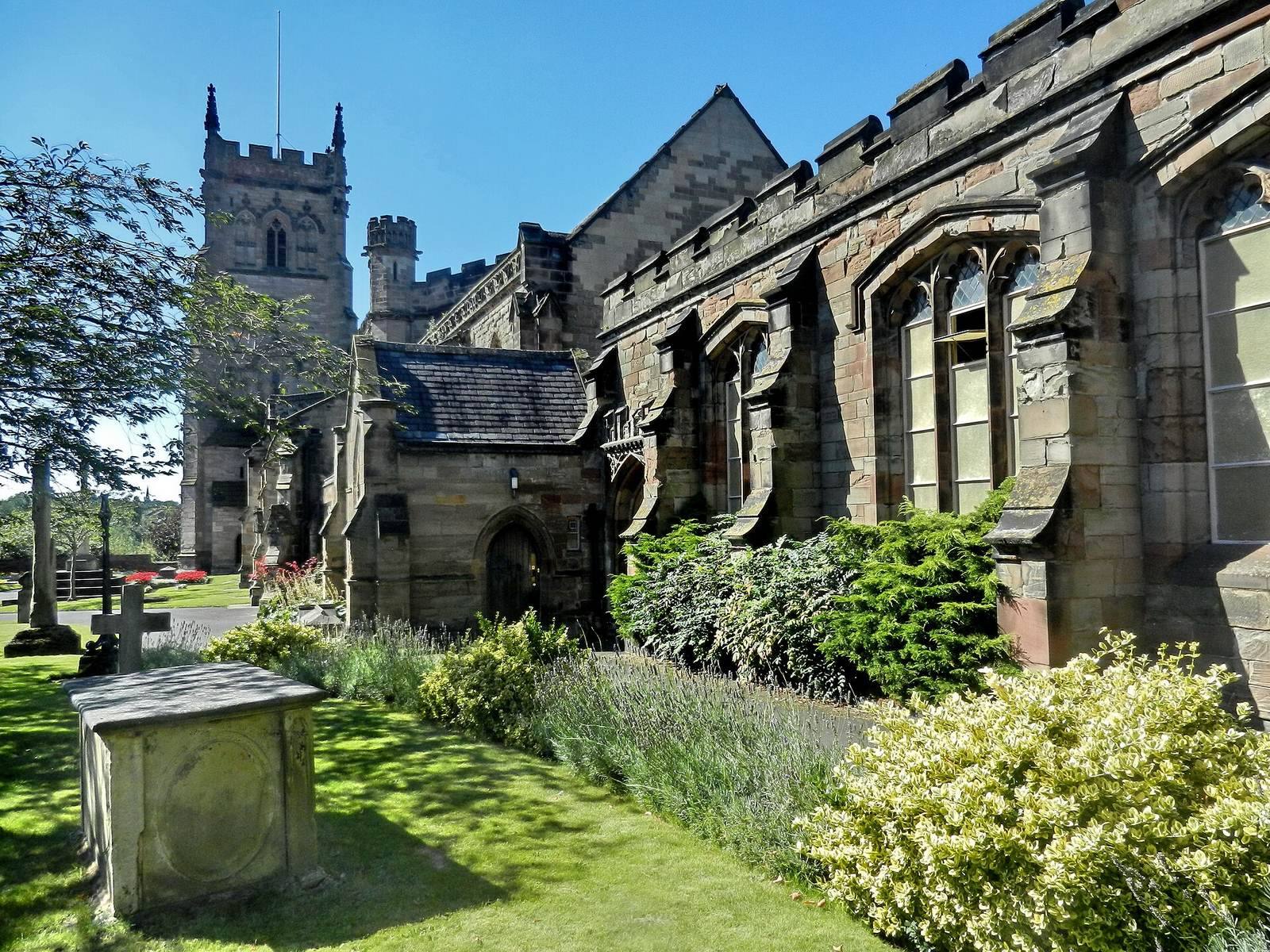
The church is 215 feet (66 metres) long, with its main entrance beneath the tower and entrances to the south aisle. Its interior and fittings reflect successive alterations to the building.
Interior and fittings
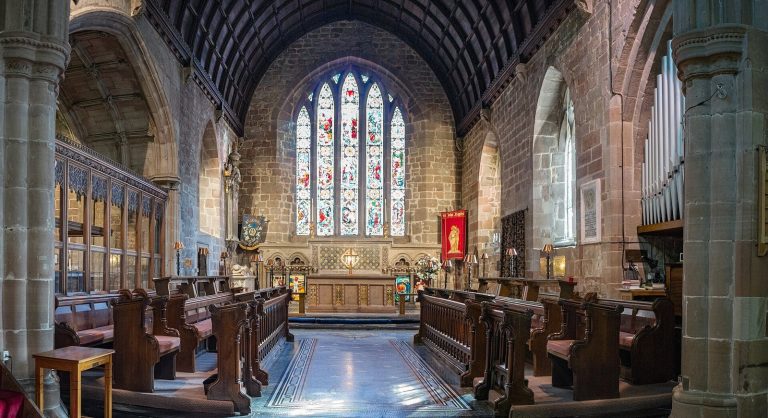
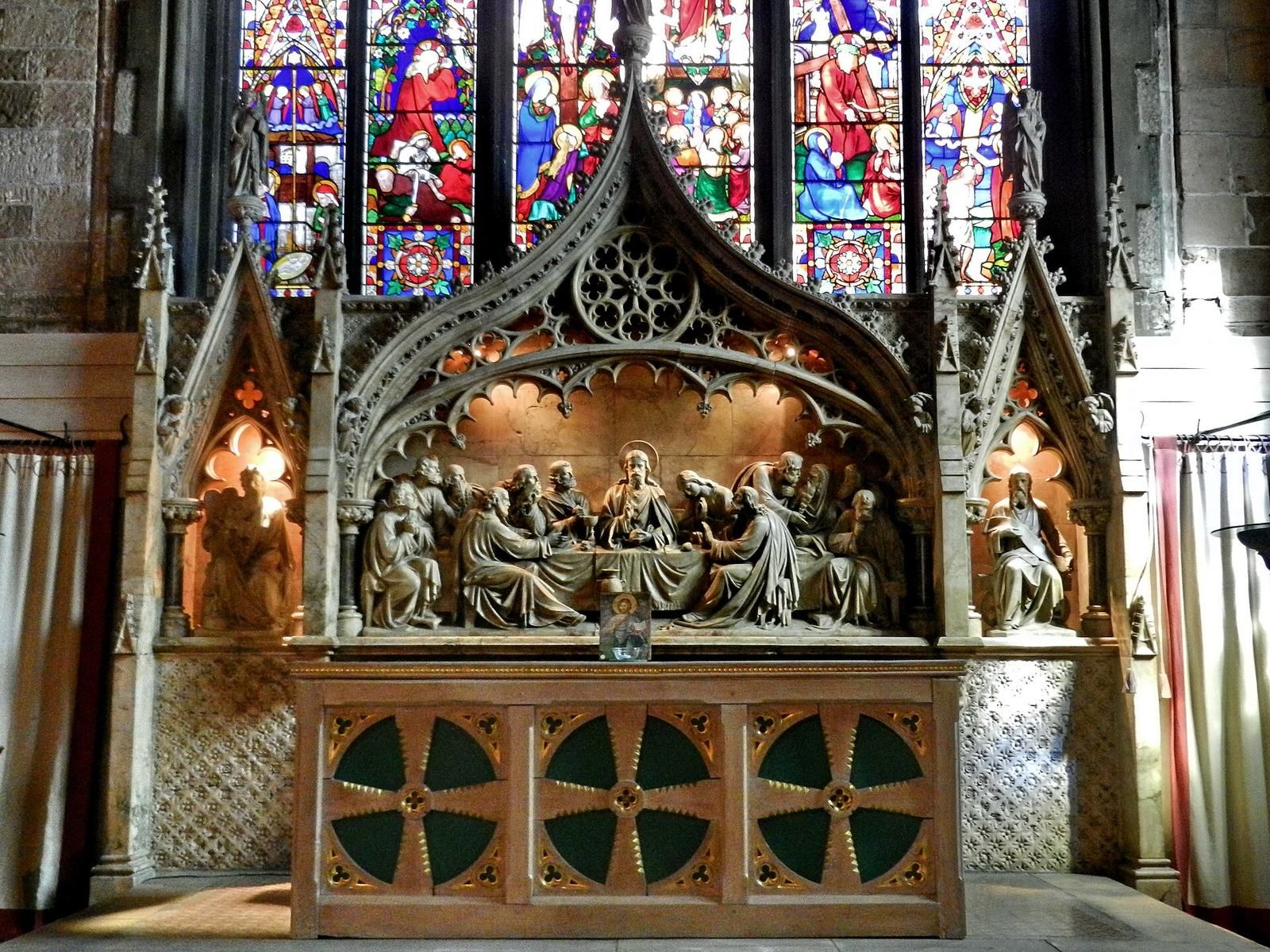
The main body is entered through an arch beneath the tower that had previously been blocked; another entrance to the south aisle passes through an arch on the tower’s east side. The western galleries were removed, while galleries in the aisles remain. An extension to the south aisle has open oak seating and is divided from the chancel by a row of pillars. The vestry door into the chancel was donated by architect Harvey Eginton. Church monuments were cleaned and restored, and the reredos, a decorative structure behind an altar, was painted by Mr Margetts of Oxford. The Whittall Chapel has its own pipe organ. Later rebuilding and renovation of the main organ resulted in a three-manual instrument, with three keyboards and a pedalboard.
Tower fittings
Bells
The tower holds a ring of twelve bells and an additional flat sixth, tuned below the usual sixth bell. The tenor bell weighs 2,856 pounds (1,295 kilograms).
Clock
The earlier clock had an eight-day mechanism, designed to run for about a week between windings, and a great wheel two feet across. Its pendulum weighed 100 pounds (45 kilograms), measured 13 feet (4 metres), and swung 30 times per minute. An additional clock face was placed on the tower’s west side. Harrison’s replacement clock was designed to strike the quarters.