Halesowen Abbey: A Premonstratensian Monastery in England
Site at a Glance
- Rating
- 2.5
- Popularity
- Very Low
- Country
- United Kingdom
- Primary era
- Medieval
- External website
- Open
- Eras represented
- Medieval
- Civilizations
- English
- Site type
- Religious
- Remains
- Monastery
On this page13 sections
History
Halesowen Abbey is a ruined Premonstratensian monastery in the United Kingdom, at Halesowen in the West Midlands. The house was dedicated to the Blessed Virgin Mary for the Feast of the Assumption, celebrated on 15 August, and to St John the Evangelist. Its formal foundation belongs to 1218, when canons from Welbeck Abbey established a community and began substantial building in the early thirteenth century.
Foundation and early development
The abbey originated in 1214, when King John granted the manor of Hales to Peter des Roches, Bishop of Winchester, so that he could establish a religious house. John confirmed the manor to the Premonstratensian canons living at Hales in 1215. The order gives 1218 as the official foundation year, and canons from Welbeck arrived on 6 May. The abbey was probably consecrated on the Feast of the Assumption that year, after the community had grown and the church had reached a suitable stage of completion.
Welbeck remained Halesowen’s mother house, and its abbot acted as the father abbot, the senior abbot responsible for supervision, discipline, visitations, and confirmation of elections. A royal grant in 1227 confirmed Halesowen’s manor and possessions and its relationship with the bishop of Winchester and his successors as patrons. Construction and rebuilding continued after the foundation. Timber came from Kinver Forest in 1223, while further wood was used to fuel fires for melting lead, probably for roofing. The king’s grant for this work amounted to £17 3s. 4d.
Premonstratensian administration
Halesowen belonged to the English Middle Circaria, a regional grouping of Premonstratensian houses. Its abbots represented the monastery within the order, conducted visitations of dependent communities, supervised elections, and attended provincial and general chapters. Halesowen also exercised authority beyond its own precinct. Its canons colonised Titchfield Abbey in Hampshire, whose foundation is dated either to 1222 or to 1231 in its foundation charter, and the abbot of Halesowen became Titchfield’s father abbot. Halesowen later acquired responsibility for Talley Abbey, after a dispute over the paternal relationship between Halesowen and Welbeck was apparently settled in Halesowen’s favour.
Abbatial elections were normally conducted by the convent, although visiting father abbots could settle disagreements. In 1322, the abbot of Welbeck resolved a disputed election by nominating Thomas de Lech. In 1486, a delegated electoral panel unanimously chose Thomas Bridge, while Edmund Green was elected in 1505 after examination by the abbots of Welbeck and Dale. In 1464, Halesowen also absorbed Dodford Priory, an Augustinian house that had declined to a single canon. The former priory became first a monastic cell and later an estate whose demesne and leases produced £24 3s. 1d. in 1535.
Community and discipline
The canons followed the Rule of St Augustine, a late-antique guide to communal Christian life. The community numbered only 11 canons in 1381, including novices, priests, deacons, subdeacons, an acolyte, a cantor, a sacristan, a cellarer, a prior, vicars of dependent churches, and officers responsible for discipline and the infirmary.
Visitation records reveal serious disciplinary tensions. In 1311, a visitation ordered by the abbot of Prémontré found Abbot Walter de la Flagge, the prior, sub-prior, sacristan, precentor, cellarer, and another canon guilty of serious misconduct or disobedience. They were excommunicated after resisting the visitation, although the effect of the sentences on the abbey’s government remains uncertain. In 1497, Richard Walsall and four other canons faced accusations of sexual misconduct, conspiracy, and encouraging resistance among younger members. Their penalties included imprisonment, penance, or transfer, but all five were again resident at Halesowen by 1500.
The canons were required to fast and abstain from meat on many days, which contributed to their defence of fishing rights. Late-fifteenth-century records also mention complaints about poor-quality bread, restrictions on eating outside the abbey, and disciplinary control over relations with local women.
Estates, churches, and local authority
Halesowen’s income came from the manor of Halesowen, regional estates, mills, granges, rents, leases, and appropriated churches. In 1535 its net income was about £280, making it the fourth-wealthiest Premonstratensian house in England. This financial position enabled it to survive the suppression of the lesser monasteries in 1536.
The abbey’s manorial power repeatedly brought it into conflict with tenants. Disputes involved labour services, heriots, the manorial court, compulsory use of the abbey’s mills, fishing rights, and the abbots’ control of property. Organised resistance occurred in the late thirteenth century, and customary services were refused at Romsley in 1387. During Henry III’s reign, Halesowen received a charter to establish a borough with burgages, common pasture, woodland rights, and privileges based on those of Hereford. In practice, the borough and manorial courts remained closely connected, limiting the borough’s effective independence.
The abbey controlled or held the advowsons of Halesowen, Walsall, Wednesbury, and Clent, as well as associated chapels and, at different times, the churches or advowsons of Cradley, Warley Wigorn, and Lutley. An advowson was the medieval right to appoint a parish priest. Appropriation transferred a church’s income and institutional control to a religious house, generally while a vicar served the parish.
Halesowen church came with the manor. The abbey appropriated it in 1270 and established a vicarage, an arrangement confirmed by Pope Martin IV in 1281. It also controlled Frankley chapel, whose burial rights were disputed until 1236. Walsall church and its chapels came to Halesowen through a complicated sequence of royal, episcopal, and papal confirmations. Its appropriation was enacted in 1248, and from about 1309 the abbey regularly appointed its own canons as vicars of Walsall. Halesowen also regained the advowson of Wednesbury after a royal dispute.
John Botetourte, lord of Weoley, granted the advowson of Clent and Rowley, together with land at Clent, in 1340. Halesowen appropriated Clent in 1343, citing the costs of hospitality and recent losses of income, including a fire at Halesowen and declining veneration of a relic identified as the head of St Barbara. Through Joan Botetourt, the abbey acquired the manor of Warley in 1337 or 1338. The grant supported three canons who were to celebrate daily masses and offices for the dead, an annual commemorative service for Joan and her family, and the provision of candles and alms for people experiencing poverty.
In 1467, Edward IV licensed Halesowen to acquire property for a chaplain and for the maintenance of the chapel of St Kenelm, associated with Clent and Romsley. Its annual fair began on 17 July, and its chantry, an endowed foundation for regular masses for specified souls, was established for Edward IV and Elizabeth Woodville.
Dissolution and later history
Halesowen Abbey was surrendered by William Taylor, its last abbot, in the chapter house on 9 June 1538. Thomas Legh delivered the surrender to Thomas Cromwell, a leading minister of Henry VIII, who confirmed the dissolution three days later. This formed part of the Dissolution of the Monasteries, the process by which Henry VIII’s government suppressed England’s religious houses and confiscated their property during the 1530s.
In 1538 or early 1539, the abbey’s movable property, plate, lead, bells, and buildings were sold. Some material went to Halesowen church, including an organ, a cross, and an image of St Kenelm. On 1 September 1538, the abbey’s estates were granted to Sir John Dudley. He granted the manor house, probably including the surviving abbey remains, to his servant George Tuckey. The former estates were later divided, sold, or transferred among the Dudleys, Lyttletons, Scudamores, and other landholders.
The ruins are a scheduled monument and a Grade I listed building. English Heritage manages the abbey, while the surrounding land is privately owned.
Remains
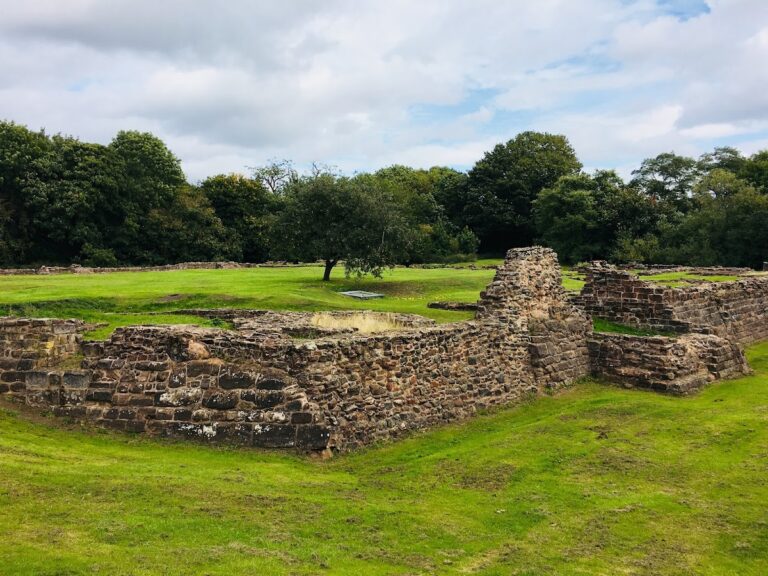
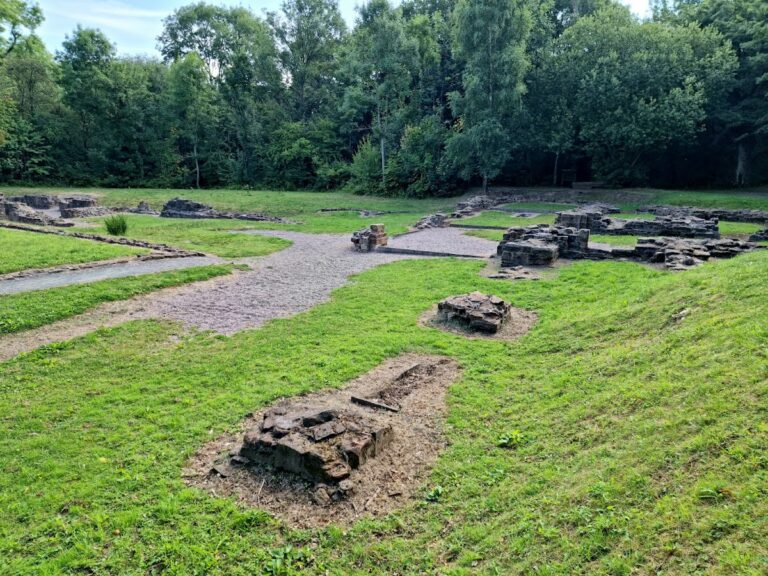
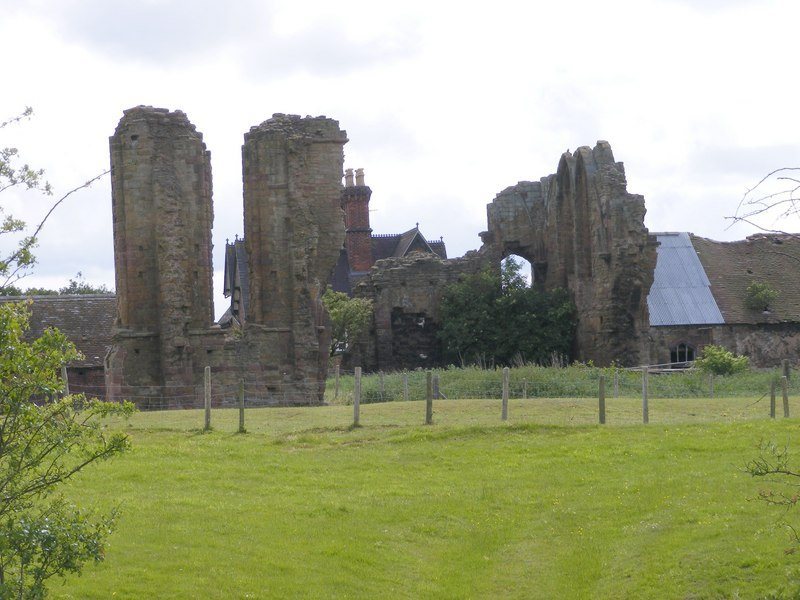
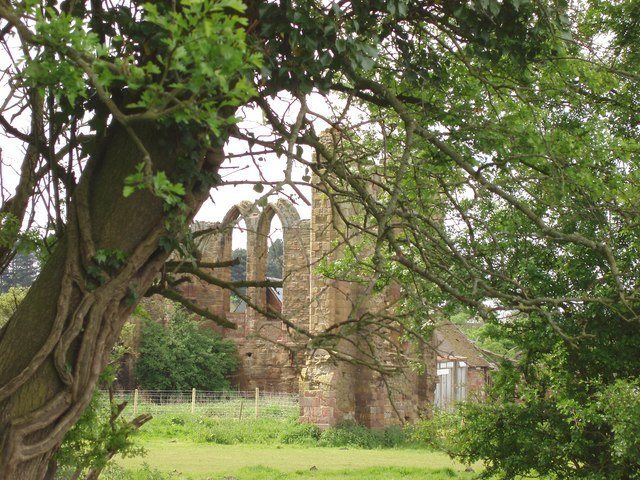
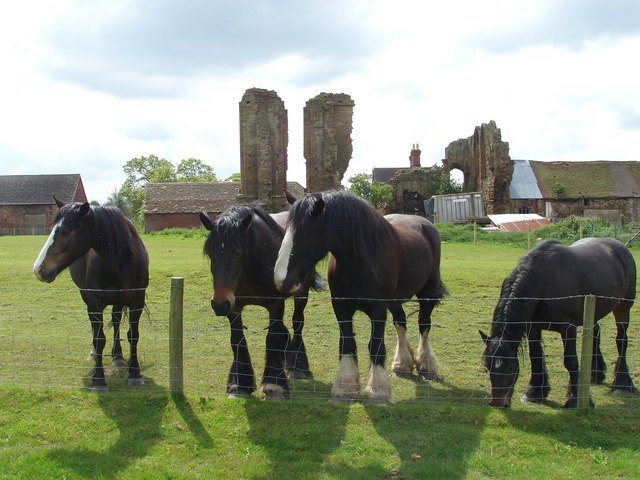
The surviving remains belong to the abbey church and cloister complex. They are fragmentary because the site was extensively dismantled after the Dissolution, when lead, bells, movable goods, and building materials were sold or reused. The visible fabric includes parts of the church’s north presbytery wall, south transept, and south aisle, together with the south range of the cloister.
Church and cloister
Abbey church
The church was arranged with a presbytery, the area around the high altar reserved for the clergy, as well as transepts, crosswise arms of the church, and aisles. Parts of the north wall of the presbytery, the south transept, and the south aisle survive. The church was also the ceremonial setting for abbatial elections and installations, linking these visible remains to the abbey’s institutional life.
Cloister and chapter house
The south range of the cloister survives as part of the monastic complex. A cloister was a covered walkway enclosing an open courtyard and connecting the principal communal buildings. The abbey also contained a chapter house, the room where the community met for governance and discipline. William Taylor signed the monastery’s surrender there in 1538. The remains associated with the former abbey were probably the “mansion of the manor” later granted to George Tuckey.
Water management and agricultural estate
Mills and water features
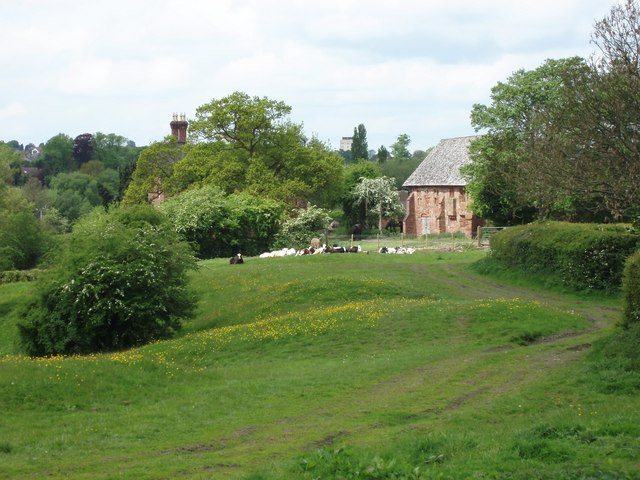
Water-control features survive in association with the abbey, including mills. The medieval water system included streams, pools, mill ponds, sluices, and dams. These features supported milling and fishing, both of which formed part of the abbey’s economic resources and contributed to disputes over its rights.
Granges
The wider estate included granges, agricultural buildings or complexes used by the religious house to store and manage produce. Recorded granges lay at Farley, Offmoor, Hamstead, Radewall, Home, New, Blakeley, Owley, and Helle. Together with the mills, rents, leases, and manorial lands, they formed part of the physical and economic system that supported the medieval community.