Yagyū no Tokusei Hibun: A Medieval Debt-Relief Inscription in Nara
Site at a Glance
- Popularity
- Medium
- Country
- Japan
- Primary era
- Medieval
- Eras represented
- Medieval, Modern
- Civilizations
- Ashikaga shogunate, Japanese, Kamakura shogunate
- Site type
- Civic
- Remains
- Monument
On this page8 sections
History
Yagyū no Tokusei Hibun is a medieval debt-relief inscription carved into a boulder in Yagyū town, Nara City, Japan. It is associated with the Shōchō Peasant Uprising of 1428, a major popular revolt linked to demands for debt relief. The inscription is thought to have been carved by a local resident to commemorate the community’s success in securing relief.
The uprising and debt relief
The inscription is interpreted as stating that debts incurred before the first year of Shōchō were canceled in four Kambe estates: Ō-Yagyū, Ko-Yagyū, Sakahara, and Ōji. Their identification as the Kambe Four Estates is supported by a bell inscription associated with Takuan Sōhō, a Zen Buddhist monk and writer, and preserved at a nearby temple.
The text offers evidence about the terms of relief that participants in the uprising may have won. Records of benefits secured by ordinary people are scarce. In Kyoto, evidence shows that the shogunate, Japan’s military government, prohibited debt-relief measures, but does not establish that it issued a cancellation order. In Nara, the Yagyū inscription and documents connected with Kofuku-ji, a historic Buddhist temple, offer evidence about the relief and present a community perspective rather than that of landlords.
Research and interpretation
Local historian Sugita Teiichi began investigating the monument in 1914. He found a record compiled during the Kyōhō era by Matsuda Shirobei, a retainer of the Yagyū domain, which referred to writing on the Jizō stone concerning the four Kambe estates. In 1924, Sugita proposed that the inscription was a remnant of the uprising. Watanabe Seiyū of Tokyo Imperial University’s Historiographical Institute examined it and identified it as evidence of the revolt.
The inscription reached a wider readership through the Yamato edition of the Osaka Asahi Shimbun on 15 January 1925. Historian Nagahara Keiji surveyed it in August 1964, and his 1965 book helped bring it further public attention. Nagahara interpreted a Kofuku-ji document dated to the eleventh month of 1428 as a set of rules for carrying out debt relief. Because its date matches the inscription’s, he argued that Kofuku-ji issued a relief decree in Yamato, the historical province corresponding broadly to present-day Nara Prefecture, and that the carving followed from it.
The proposed date has also been questioned. Historian Nagashima Fukutarō argued that the word used for “debt” may not have entered use until the late-sixteenth-century Tenshō era or later. A separate debate concerns the phonetic spelling of “four estates”: scholar Kamei Takashi suggested that a light nasal sound before the “g” reflects pronunciation at the time.
Recognition
Nara Prefecture designated the monument a cultural property in March 1953, and it appeared in a high-school history textbook for the 1954 school year. On 19 May 1983, it was designated a National Historic Site under the title “Yagyū Debt-Relief Monument of the First Year of Shōchō.”
Remains
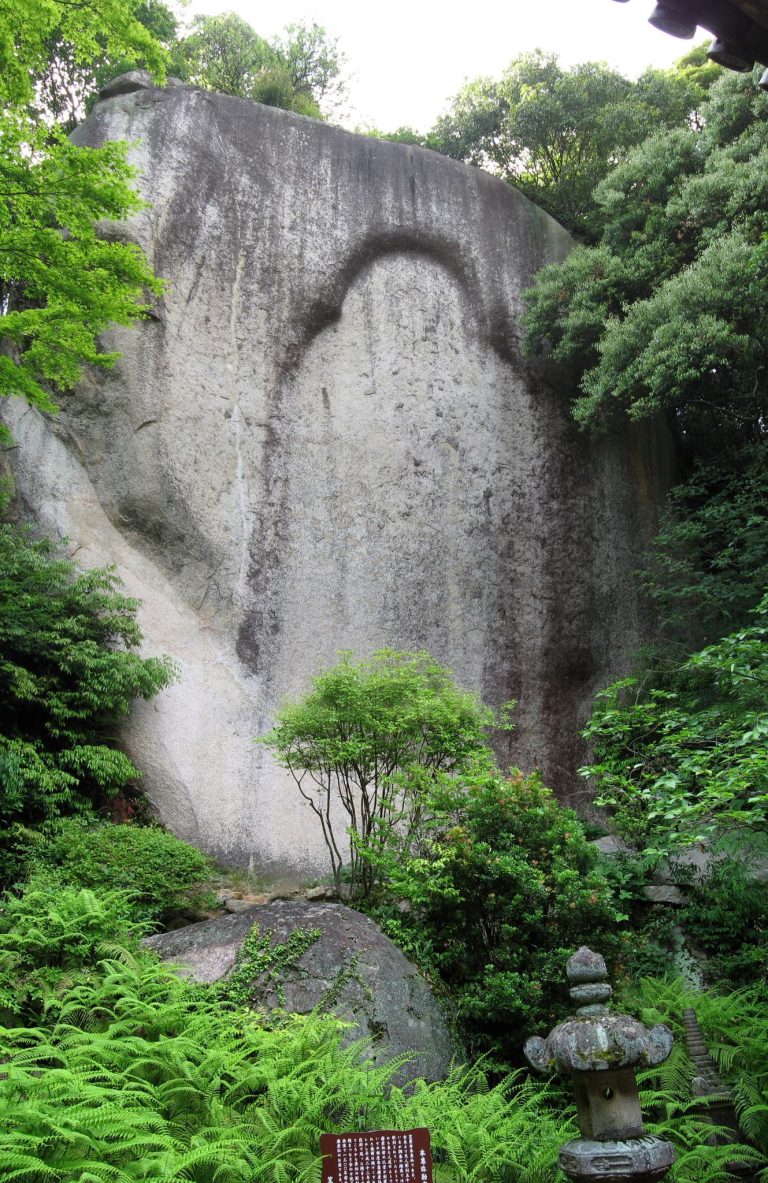
The carved boulder
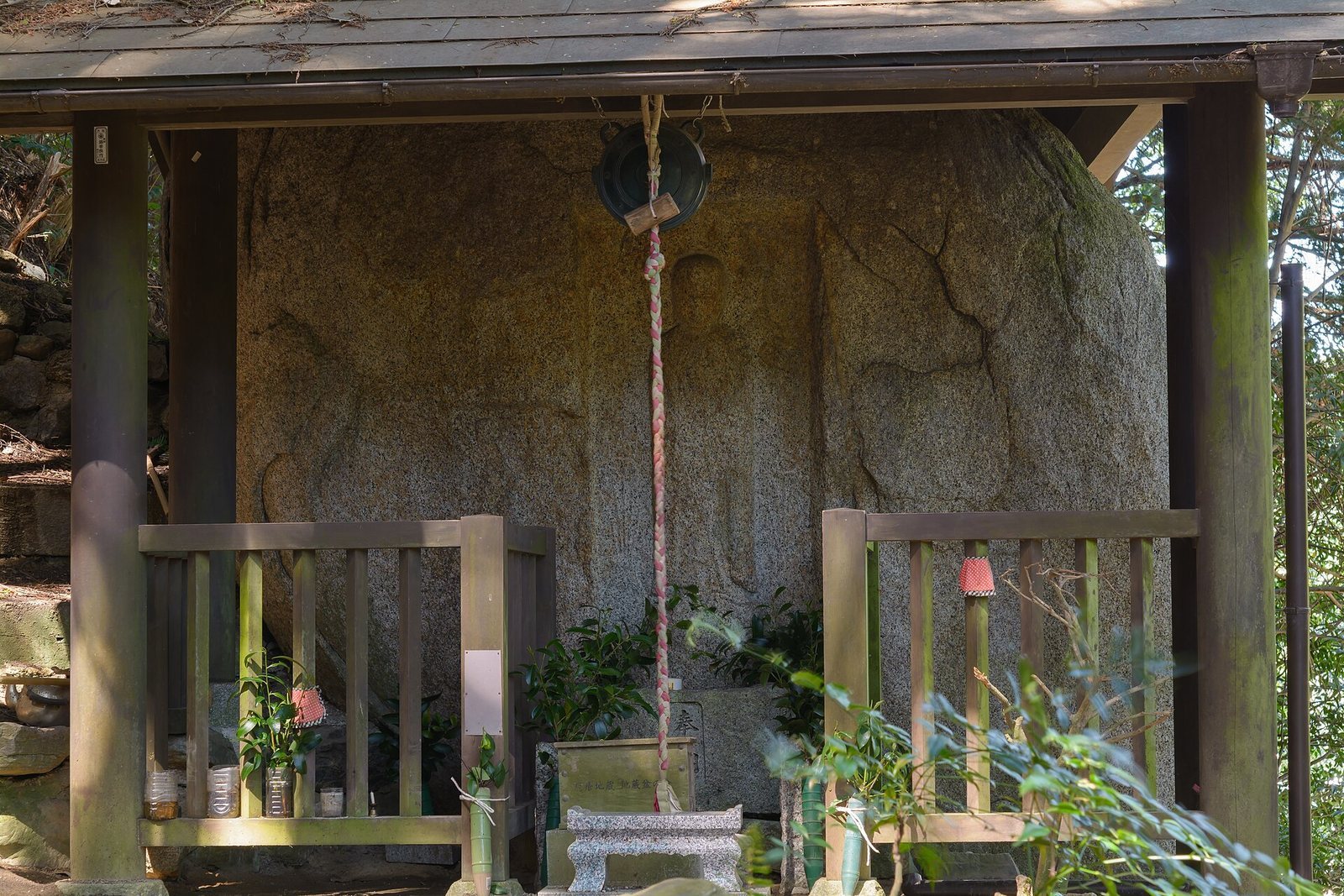
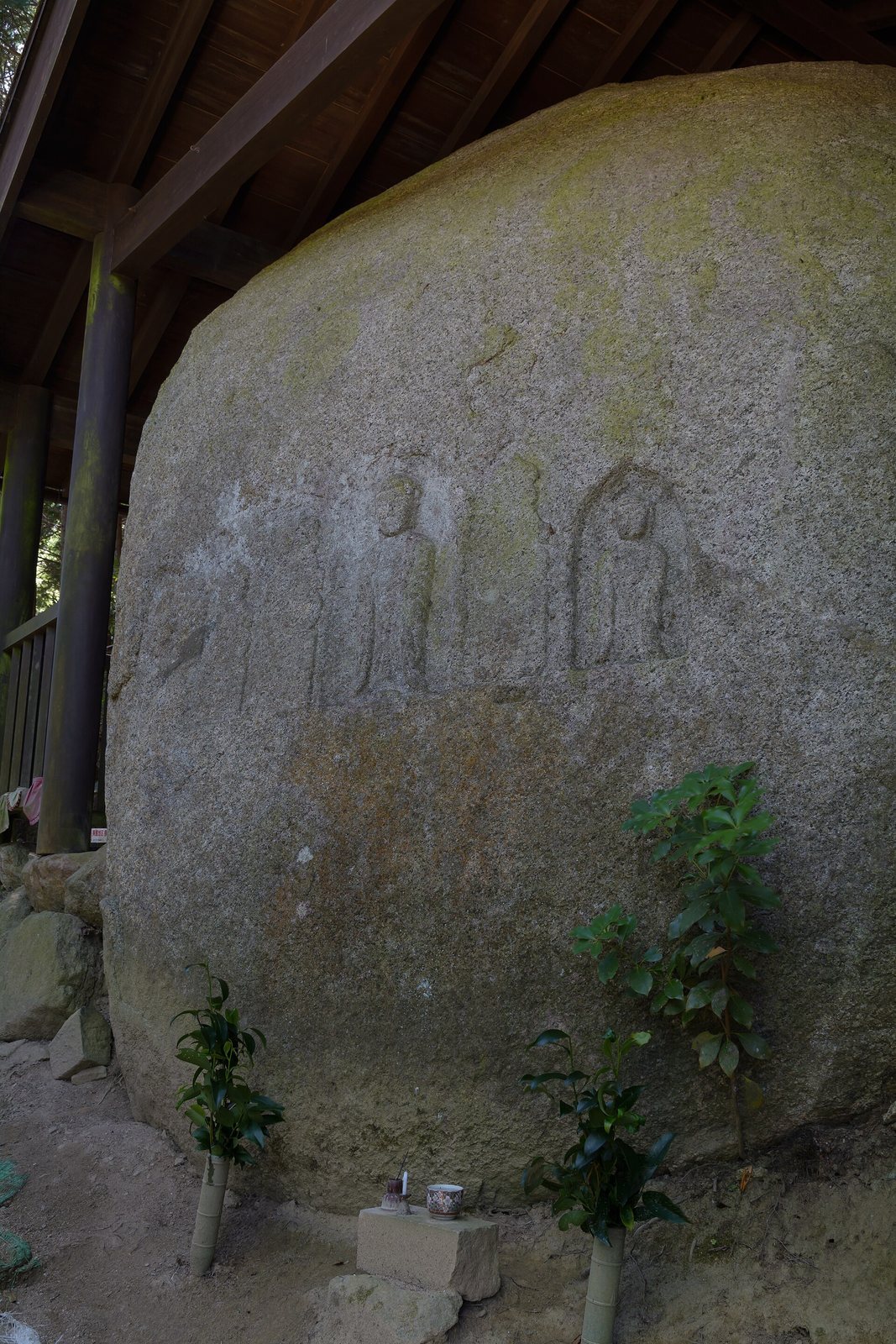
The monument is cut into a large granite boulder on a cliff beside Yagyū Road. It faces a temple across a river and measures about 3 metres high, 3.5 metres across the front, and 2.5 metres across the side. A standing Jizō image occupies the centre, while the debt-relief text is cut into the lower-right area. The boulder was originally exposed to the elements. In 1998, the surrounding area was improved and protection was added; the monument is now sheltered by a roof and enclosed by a wooden fence.
Jizō image
The standing Jizō, a Buddhist figure associated with helping others, bears an inscription dating it to the eleventh month of 1319. The debt-relief text was added 109 years later. Tradition holds that the image was carved as a prayer for protection against smallpox, giving it the common name “Smallpox Jizō.”
Debt-relief inscription
The inscription occupies an area about 33 centimetres high and 21 centimetres wide. It is arranged in three and a half lines comprising 27 characters. Weathering has made the text difficult to read with the naked eye, and the character meaning “long” is the one readily distinguishable. A replica is displayed in the medieval-history exhibition room of the National Museum of Japanese History.