Tour de Vésone: Remains of a Gallo-Roman Sanctuary in Périgueux
Site at a Glance
- Popularity
- Medium
- Country
- France
- Primary era
- Classical
- Eras represented
- Classical
- Civilizations
- Celtic, Roman
- Site type
- Religious
- Remains
- Temple
On this page9 sections
History
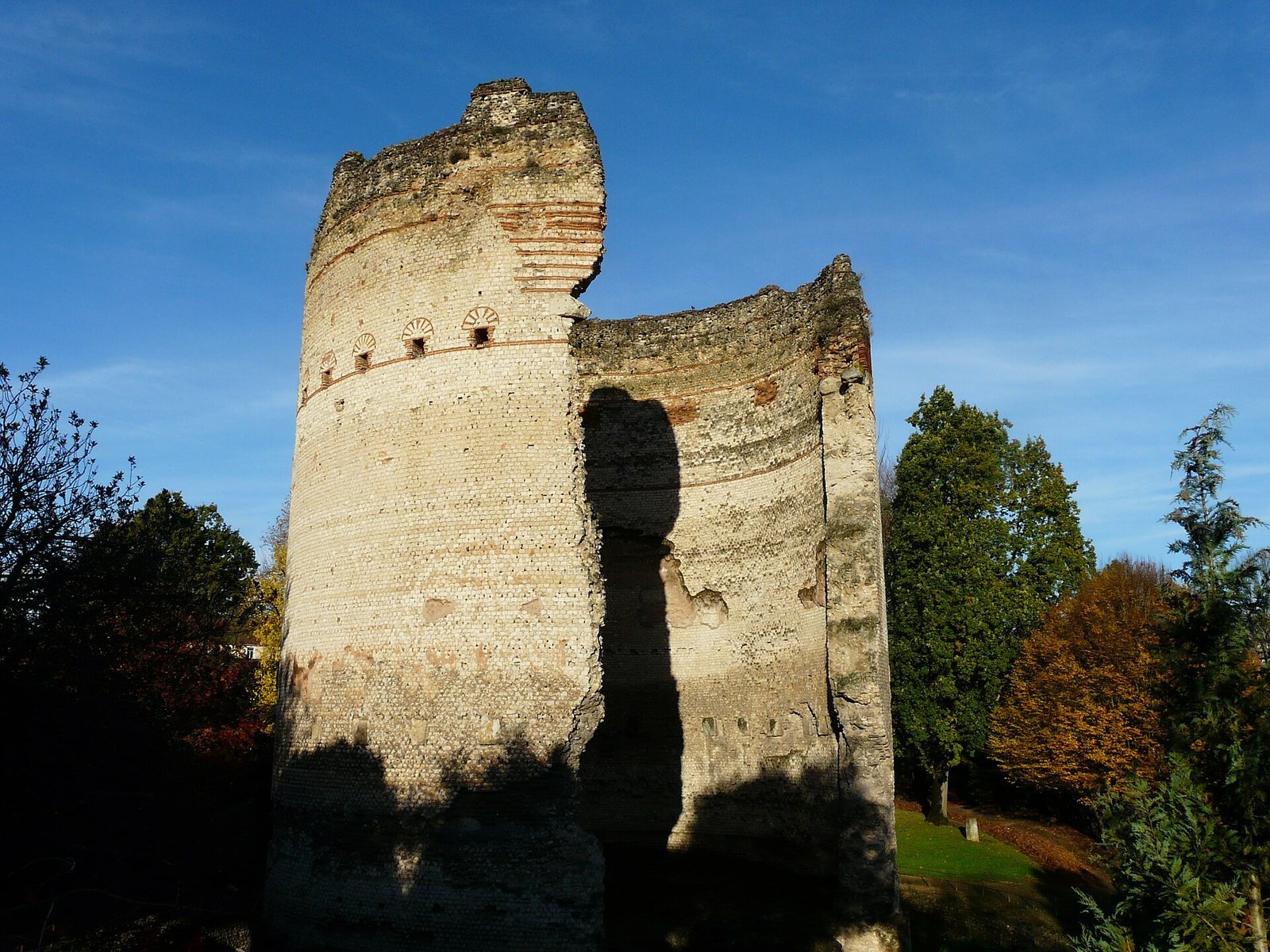
The Tour de Vésone is the remnant of a Gallo-Roman sanctuary in Périgueux, France. Built by a community shaped by interaction between Roman and Gallic traditions, the temple probably dates to the second century CE, though construction in the late first century is also possible. It was dedicated to Vesunna, a tutelary goddess associated with the Petrocorii, an ancient Gallic people. Vesunna was the Gallo-Roman name for Périgueux.
The sanctuary and its deity
The Count of Taillefer proposed that the temple was dedicated to Isis, an ancient Egyptian goddess. Camille Jullian instead interpreted its dedication as “To Tutela, Vesunna,” rather than “To the Tutela of Vesunna.” In Roman religion, a Tutela was a protective deity often associated with a city. Émile Espérandieu accepted Jullian’s reading. Vesunna’s identity remains uncertain; Espérandieu suggested she may have been a spring goddess, comparable to Nemausus, a Gallo-Roman deity associated with Nîmes.
Excavation and protection
The earliest known excavation inside the tower was carried out by the Catholic cleric Machéco de Prémeaux. Work stopped in 1751 when the workers panicked. In 1820, Wlgrin de Taillefer, known as the Count of Taillefer, and Joseph de Mourcin excavated both inside and outside the structure. Their work established the temple interpretation, and Taillefer published a reconstruction of the sanctuary.
After Taillefer’s death, the property passed to the city of Périgueux in 1833. The tower received France’s historic-monument designation in 1846, a heritage-protection status. Construction of the Périgueux–Brive railway, opened in 1860, and nearby street development destroyed remains of the temple’s large enclosure.
In 1894, the city acquired the garden around the tower for an archaeological park and began further excavations. The tower’s interior was cleared to the ancient level. Archaeologist Charles Durand led additional excavations from 1906 to 1909, extending knowledge of the sanctuary’s plan and access.
Remains
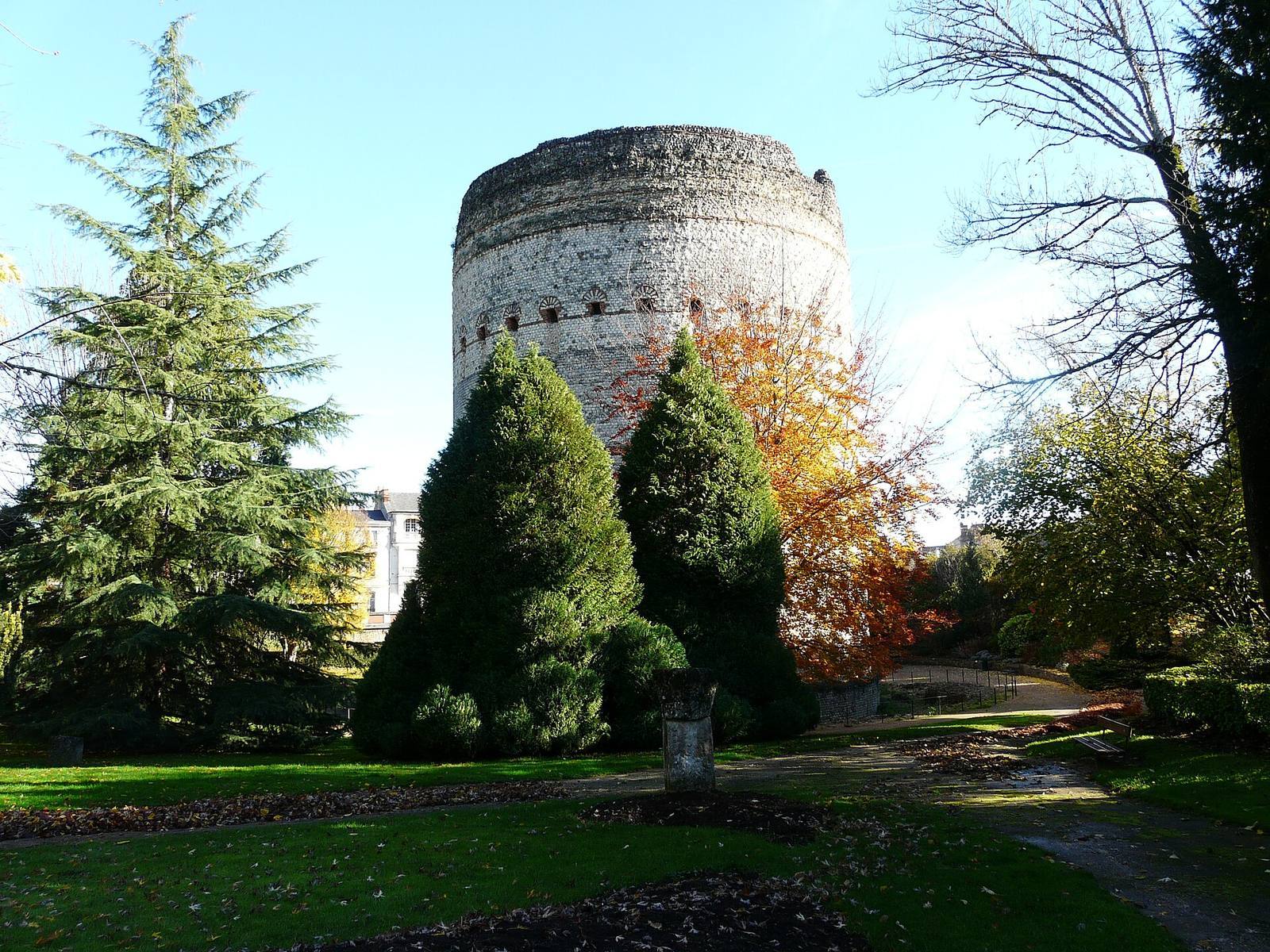
The sanctuary centered on a circular temple within a walled rectangular courtyard. Its design combined a local Celtic temple arrangement, with a sacred central chamber and a low surrounding gallery, with a Roman-style columned entrance. The surviving tower stands in the Jardin de Vésone, beside the Périgueux–Brive railway. The Vesunna Gallo-Roman Museum is 50 metres west and contains remains of the Bouquets Roman house.
Temple layout
Courtyard and colonnade
The courtyard measured 141 by 122 metres, covering more than 1.5 hectares, and was enclosed by a wall. At its centre stood the circular chamber, raised on a platform. A rectangular porch with six columns provided access to the courtyard, while a surrounding colonnade of 23 columns encircled the chamber.
Tower and central chamber
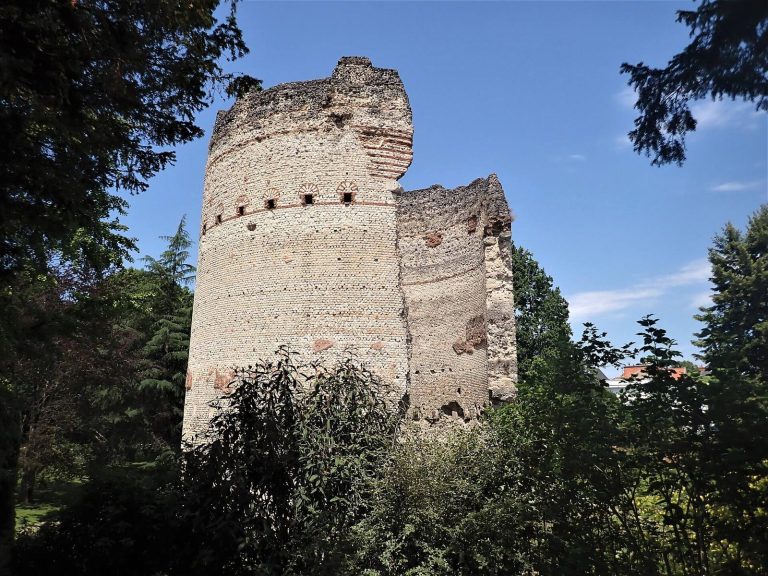
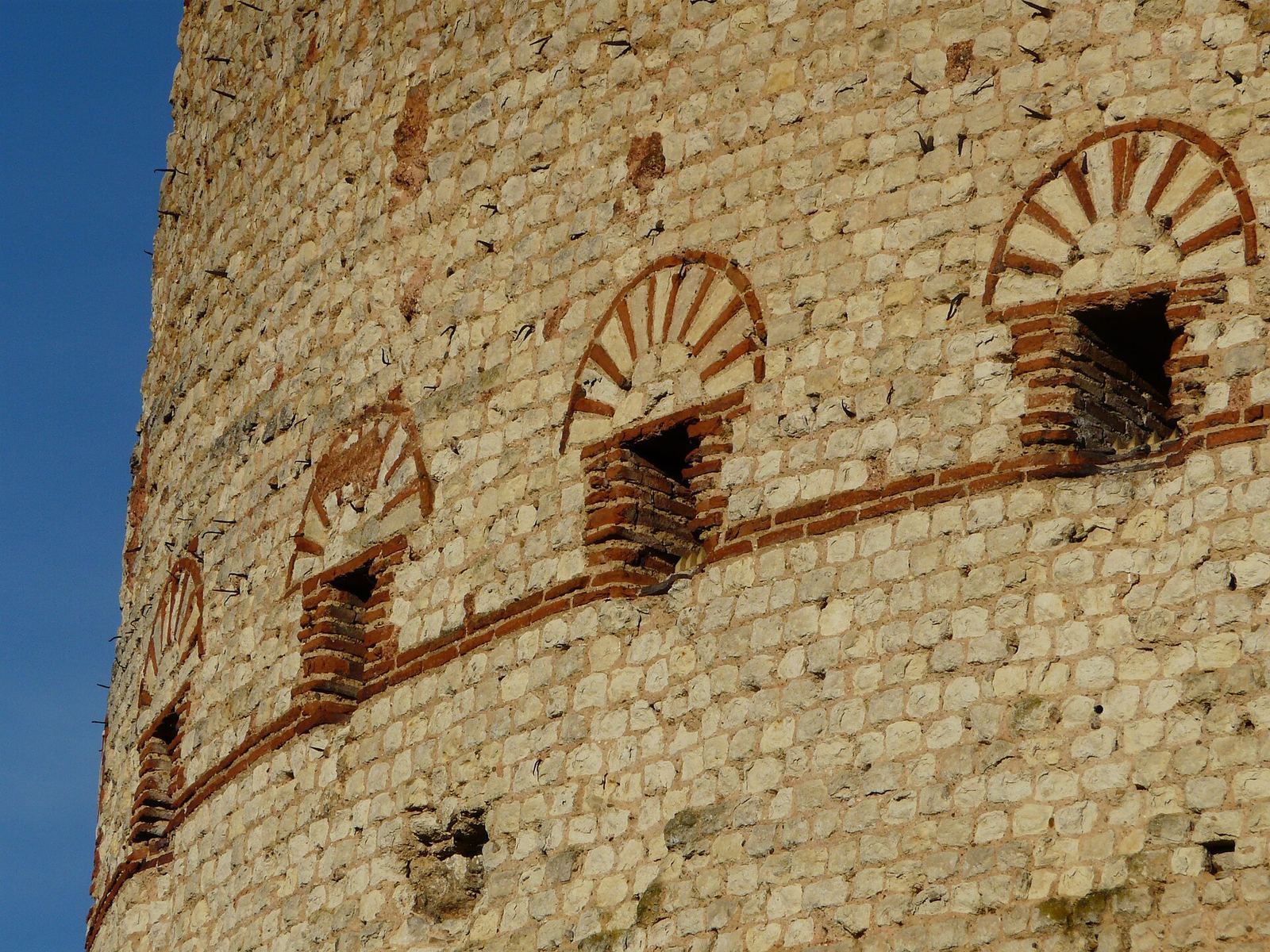
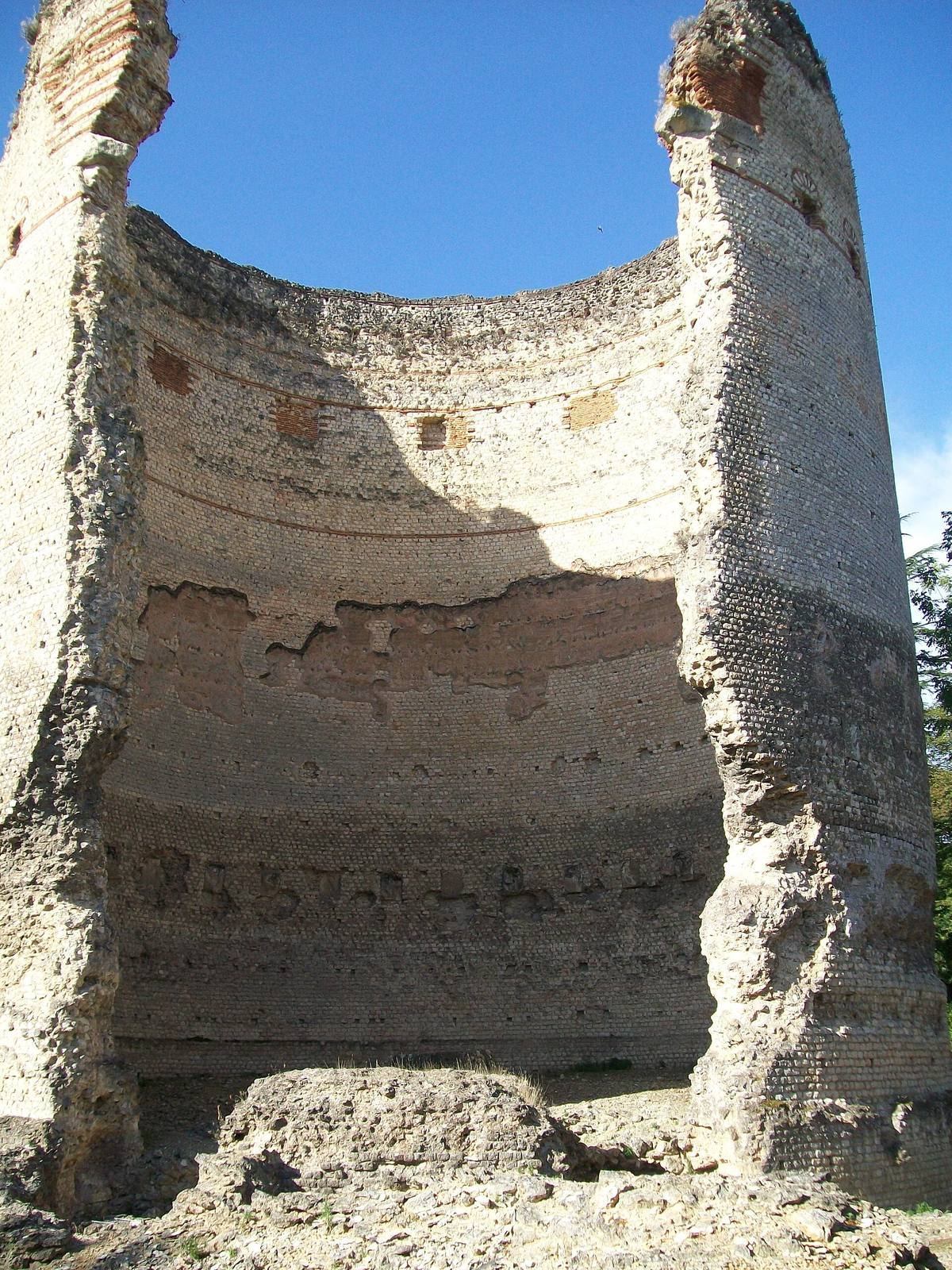
The round tower is the temple’s central chamber, or cella, and its only surviving part. Founded on rock, it is 24.46 metres high above present ground level, or 27 metres when measured from its foundations. Its exterior diameter is 19.6 metres. Brick and limestone form its walls, with cavities visible in the brickwork. The wall is 2.10 metres thick at the base and 1.80 metres above a visible setback; at that level, the interior diameter is 17.10 metres.
A breach nearly nine metres wide opens on the east side. A legend says Saint Front made it with his staff while driving demons from the tower. The opening was caused instead by the removal of large entrance blocks, which brought down the masonry above them.
Circular wall and western buildings
The base of a circular wall survives around the tower. It is about two metres thick and lies 4.55 metres beyond the tower’s exterior face. Taillefer proposed that it had supported the temple’s surrounding colonnade. Opposite the breach, a construction of large blocks interrupts the circular wall and connects with a substantial group of buildings west of the temple. Excavations also revealed passages and galleries around the chamber, which formed part of the route into the temple courtyard.
Inscriptions and carved relief
A dedicatory inscription preserved at the Périgord Museum of Art and Archaeology reads Tute[lae] A[u(gustae) Vesunnae. A separate carved stone relief found southwest of Château Barrière shows a seated panther and bears the fragmentary inscription TVT///// A/////. Its possible connection with Vesunna remains uncertain.