Église Saint-Étienne-de-la-Cité (Périgueux): Périgueux’s First Cathedral


Site at a Glance
- Rating
- 4.3
- Popularity
- Very Low
- Country
- France
- Primary era
- Medieval
- Eras represented
- Medieval
- Civilizations
- Duchy of Aquitaine
- Site type
- Religious
- Remains
- Cathedral
On this page10 sections
History
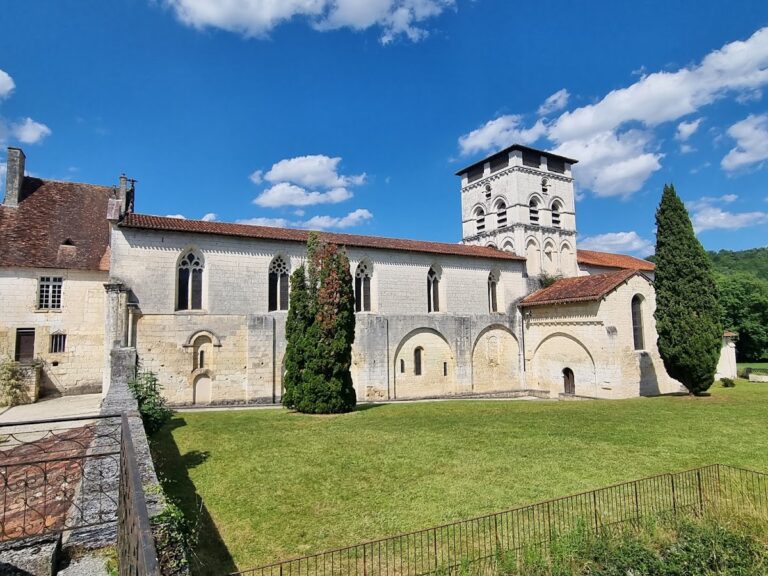
Église Saint-Étienne-de-la-Cité is a medieval Romanesque church in Périgueux, France, built by the Christian community of the city between the eleventh and twelfth centuries. Dedicated to Saint Stephen, it was Périgueux’s first Roman Catholic cathedral and now serves as a parish church of the Diocese of Périgueux and Sarlat.
From the Gallo-Roman city to the first church
The church stands in the former Civitas Petrucoriorum, the Gallo-Roman city of the Petrocorii. Its site had earlier been occupied by a temple dedicated to Mars, the Roman god especially associated with war. At the beginning of the sixth century, Chronope II, bishop of Périgueux, had the city’s first church built there.
Construction of the cathedral
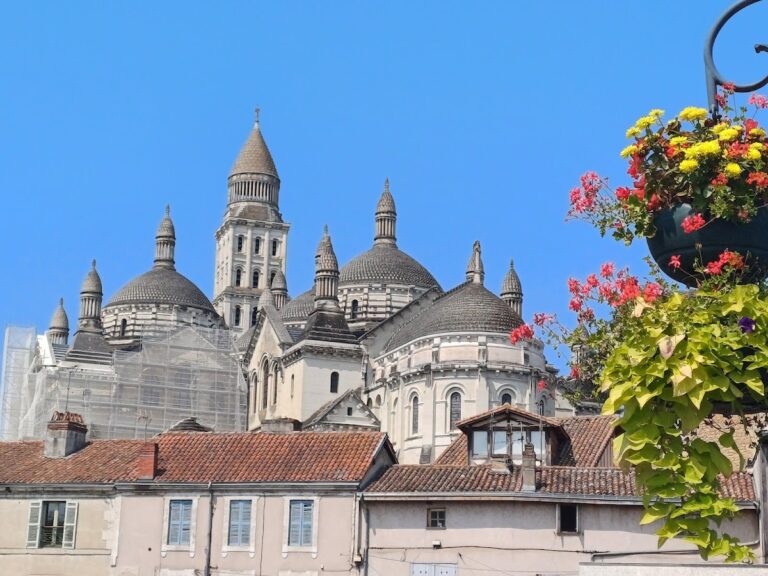
Construction of the present building began in the eleventh century with the western bays and continued into the twelfth century, when the choir was completed. The finished church subsequently became Périgueux’s first cathedral. Its medieval architecture was Romanesque and also incorporated Byzantine characteristics.
Destruction and change of status
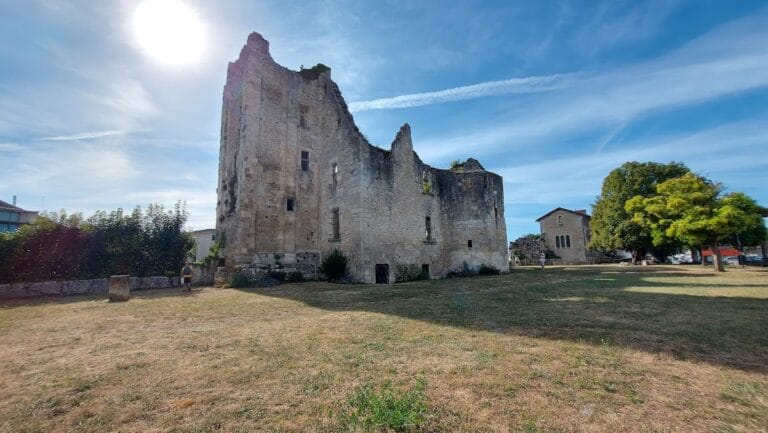
In 1577, during the religious wars between Catholics and Huguenots, French Protestants, fire and destruction severely damaged the cathedral. About half of the building was destroyed, including the two westernmost domed bays and the porch bell tower. The porch bell tower was restored in 1620.
The church suffered further damage in 1652 during the Fronde, a series of rebellions and civil conflicts in France between 1648 and 1653. In 1669, the episcopal seat moved to Saint-Front, which became Périgueux Cathedral. Saint-Étienne-de-la-Cité then became a simple church. The Jesuit-college altarpiece stood there from 1882 until 1973, when it was moved and reassembled in the choir of Saint-Front Cathedral. It is made of oak and walnut. The altarpiece from the church of the Grande Mission, or Grand Seminary, was instead dismantled and reassembled in Saint-Étienne-de-la-Cité; the Grand Seminary had become a barracks in 1792.
Protection and restoration
Église Saint-Étienne-de-la-Cité has been classified as a French historic monument since 1840. Its organ and organ case received separate historic-monument protection in 1976. A major restoration campaign began in 1907 under the direction of Henri Rapine, during which the tile covering of the western bay was replaced with a stone roof. The exterior was restored in stages from 2010 to 2012 and in 2017 and 2018. Restoration of the interior walls, vaults, and stained glass followed from early 2019 to spring 2020, and the church reopened on 30 January 2021.
Remains
Romanesque plan and surviving domes
The medieval church has a flat-ended east end, a western entrance portal, a nave, a choir, and a dome topped by a lantern, a small structure above a dome that admits light. Its original plan consisted of a single nave formed by three square bays, with a flat eastern end and two domes. At its greatest extent, the cathedral had four domes and a bell tower. After the destruction of the sixteenth century, one original Romanesque bay and two of the former four domes survive. One of the surviving domes measures 15 metres in diameter. The north side of the nave and the interior of the dome remain identifiable parts of the building.
Altarpiece and church furnishings
The seventeenth-century altarpiece from the Grande Mission is installed beneath the western dome against the south wall. The church also contains the twelfth-century tomb of Jean d’Asside, bishop of Périgueux, together with baptismal fonts, a seventeenth-century pulpit, and a holy-water font.
Organs
The church’s furnishings include a tribune organ, an instrument installed in an elevated gallery, and a choir organ placed near the choir to accompany liturgical singing. The tribune organ was originally built by Carouge in the eighteenth century. Loiselot restored it in 1824, and it was dismantled in 1870 when a new organ was commissioned for Saint-Front. The instrument was installed at Saint-Étienne-de-la-Cité around 1885. Charles Mutin recomposed and enlarged it in 1904, and Alexandre Guilmant and Fernand de La Tombelle inaugurated it on 8 January 1905. It was restored between 1972 and 1977, then reconstructed between 1990 and 1993 by Bartholoméo Formentelli in a form close to the Carouge instrument. Michel Chapuis inaugurated the reconstructed organ. The choir organ was made by Boisseau.
Inscriptions and religious art
The church contains a Way of the Cross signed by J.-J. Giraud and a stained-glass detail depicting the lion of Saint Mark. A plaque from the south wall of the former cathedral’s altar room bears an engraved table of Easter dates. This Easter table dates from the seventh century.
Nearby sites