Busanjinseong: A Japanese-Built Fortress and Joseon Naval Headquarters
Site at a Glance
- Popularity
- Medium
- Country
- South Korea
- Primary era
- Early Modern
- Eras represented
- Early Modern
- Civilizations
- Toyotomi regime
- Site type
- Military
- Remains
- Fort
On this page5 sections
History
Busanjinseong is a fortress in Beomil-dong, Dong-gu, Busan, South Korea, built in 1593 by Japanese commander Mōri Terumoto during the Imjin War, Japan’s invasions of Korea from 1592 to 1598.
Japanese military occupation
The Japanese military used the fortress as a barracks and command post. In 1598, Japanese commander Asano Nagayoshi may have built or enlarged it. The fortress was also known as Jaseongdae. The name Mangongdae commemorated Wan Shide, a general of China’s Ming dynasty, who stayed there to reinforce Korean defenders.
Ming and Joseon naval use
After Japanese forces were driven out, Ming troops under Wan Shide remained at the fortress. Its walls were repaired after he returned to China. Following the destruction of the original Busan Fortress, the Joseon navy took over the Japanese-style stronghold in 1607 and used it as Busanjinseong. Joseon was the Korean dynasty ruling during the invasions.
The site served as the Busanjin Naval Headquarters and as the headquarters of Gyeongsangjwado, a regional naval command whose name identified its left division. The fortress also housed the left-division naval commander. The command later moved to Suyeong, and the fortress remained in use until 1895.
Demolition and reconstruction
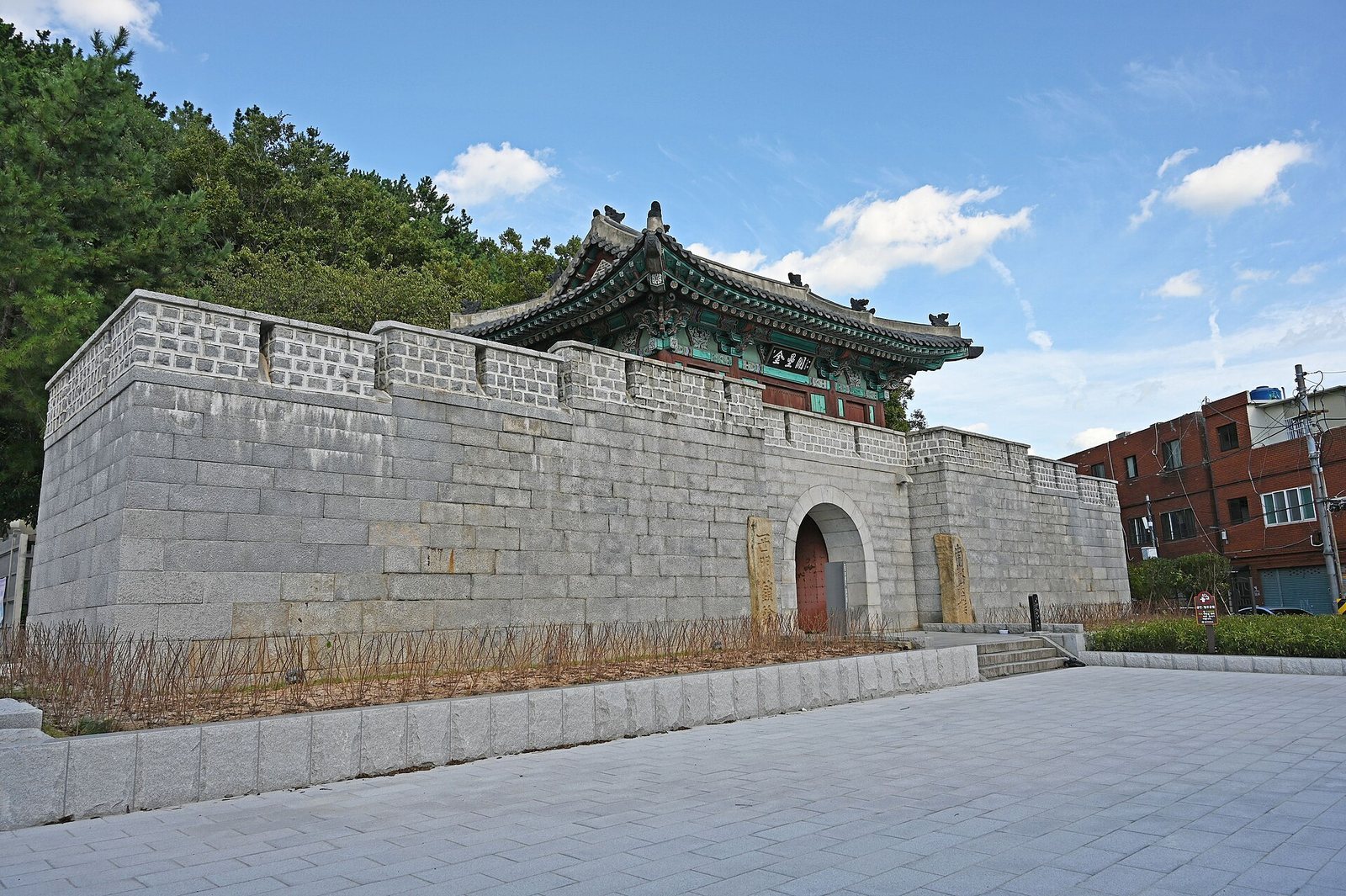
During Japan’s occupation of Korea, much of the fortress was removed. In 1910, a Japanese government order to demolish Korean fortresses led to its demolition. Busanjinseong was reconstructed in 1974. Its cultural-property name changed from Busanjinjiseong to Busanjinseong in 2020.
Remains
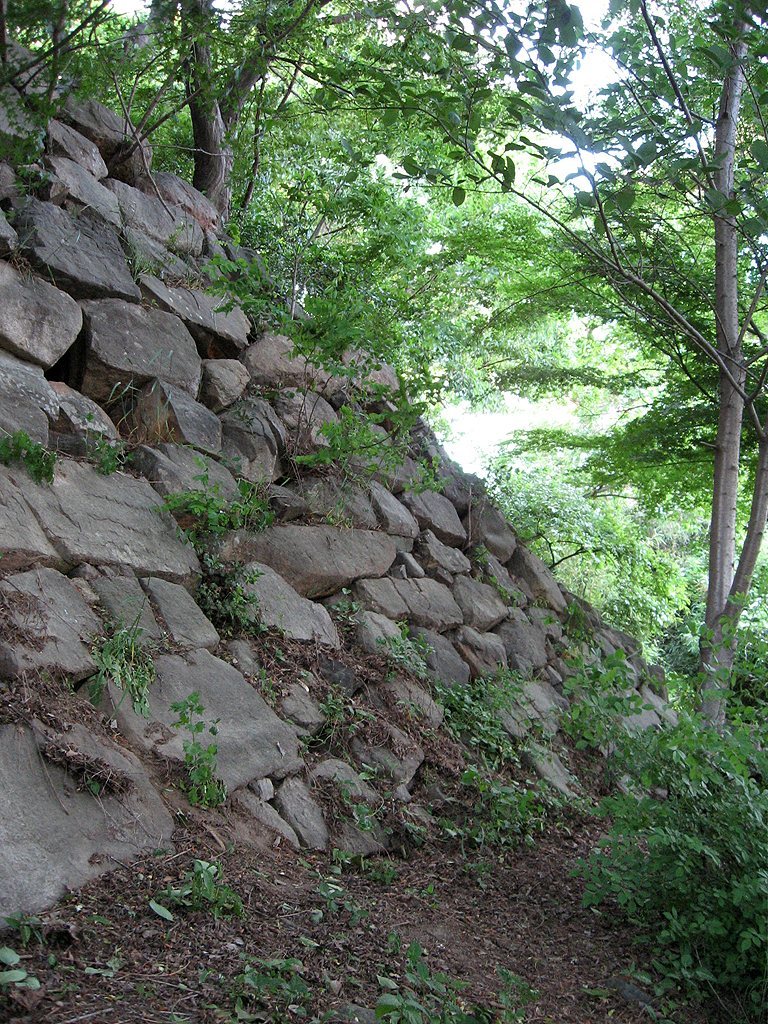
The fortress’s layout included inner and outer fortifications enclosing Jeungsan Mountain at Busanpo. Its original construction used stone, wood, and plaster. The reconstructed walls range from 1.5 to 10 metres in height. Sadaemun Gate and a government office were also part of the complex.
The term jaseong means a subsidiary fortress. The name may refer either to a secondary stronghold associated with a main fortress on Jeungsan Mountain in Jwacheon-dong, or to a fortress on a mountain summit serving as a general’s terrace. Reclamation of the sea around Jaseongdae reduced the site’s area, after which the fortress was repaired.