Geumjeongsanseong: A Joseon Mountain Fortress in Busan
Site at a Glance
- Country
- South Korea
- Primary era
- Early Modern
- Eras represented
- Early Modern, Modern
- Civilizations
- Unclassified
- Site type
- Military
- Remains
- Fort
On this page7 sections
History
Early fortifications
Geumjeongsanseong is a mountain fortress on Geumjeongsan in Busan, South Korea. Its principal defenses were built under Joseon rule from 1701 to 1703 as part of efforts to strengthen coastal security. The date of the earliest fortress here is uncertain. A national heritage classification associates the site with the Three Kingdoms period, when Goguryeo, Baekje, and Silla were kingdoms on the Korean peninsula, and a Silla-period origin has been proposed. Structures stood here by the middle of the Joseon dynasty, which ruled Korea from 1392 to 1897, at the latest.
The earlier fortress was captured and rebuilt during the Japanese invasions of 1592-1598, major attacks on Joseon Korea. In 1667, a naval commander wrote of ruins from an older fortress at the site and urged the king to order repairs. The Manchu invasions of 1627 and 1637, further attacks on Joseon, followed the Japanese invasions. In their aftermath, strengthening coastal defenses became a priority.
Construction and abandonment
Construction of the major fortress began in 1701 after a recommendation by Jo Tae-dong, governor of Gyeongsang-do, and was completed in 1703 during King Sukjong’s reign (1674-1720). In 1707, builders added a wall around the main fortress, dividing the extensive defenses into northern and southern sections. The fortress saw little use because its scale made it difficult to maintain and defend, and it was abandoned in 1774.
Repairs and modern restoration
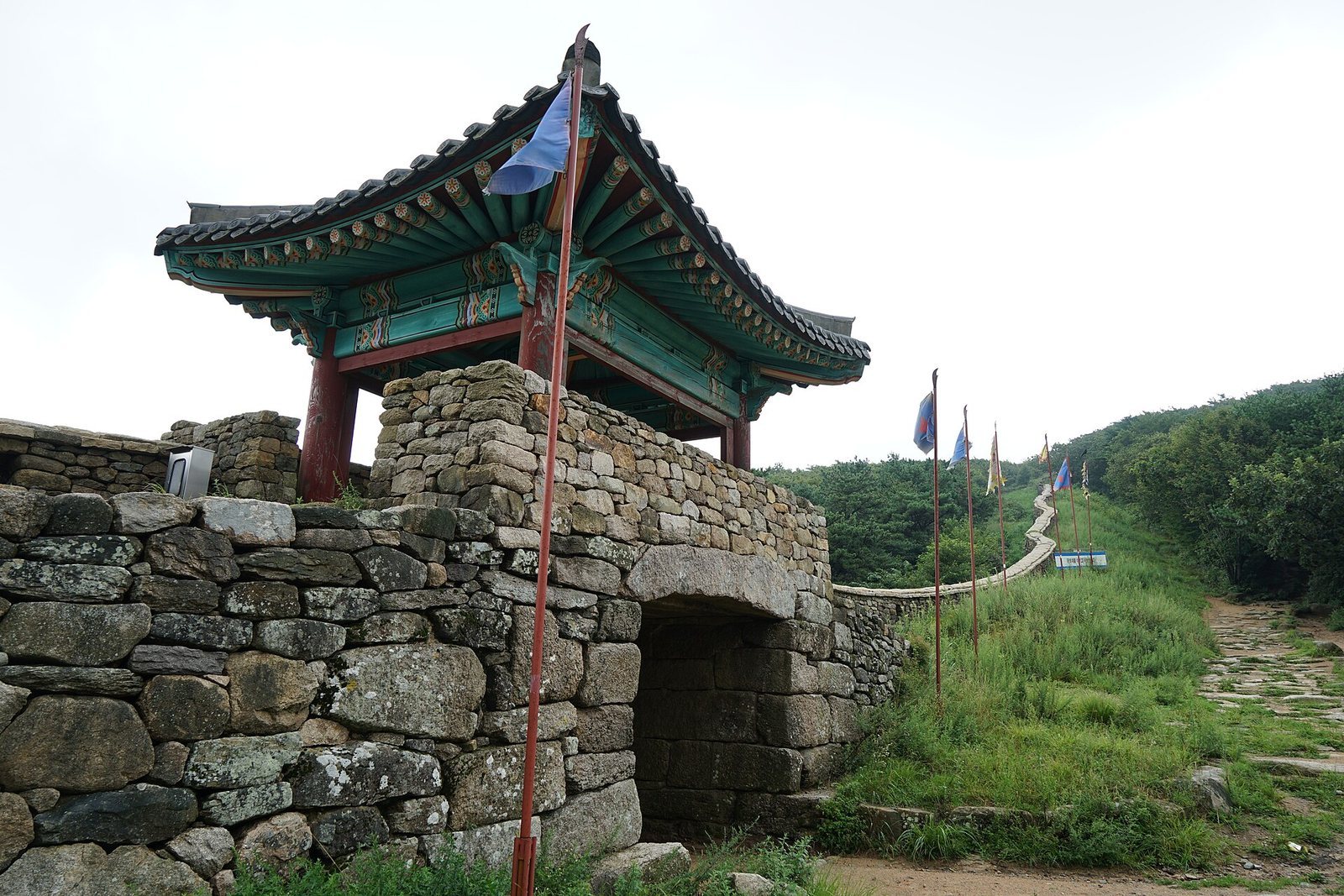
Repairs took place in 1806. The following year, Dongnae magistrate Oh Han-won oversaw construction of the West Gate and ordered further gates in subsequent years. Many parts of the fortress were destroyed during the Japanese occupation of Korea, from 1910 to 1945. Restoration began in 1972; the East, West, and South Gates were restored by 1974, and the North Gate was rebuilt in 1989.
On February 9, 1971, Geumjeongsanseong was designated South Korea’s Historic Site No. 215, with a designated area of 818,177 square meters. Further restoration proceeded in three phases from 1996 to 2010. Work from 1996 to 2000 covered the western sector between the North and West Gates. From 2000 to 2005, work focused on the eastern wall between the North and East Gates and observation towers 3 and 4. The 2006-2010 phase covered the area south of the West and East Gates, including the South Gate and towers 1 and 2.
Remains
Walls and gates
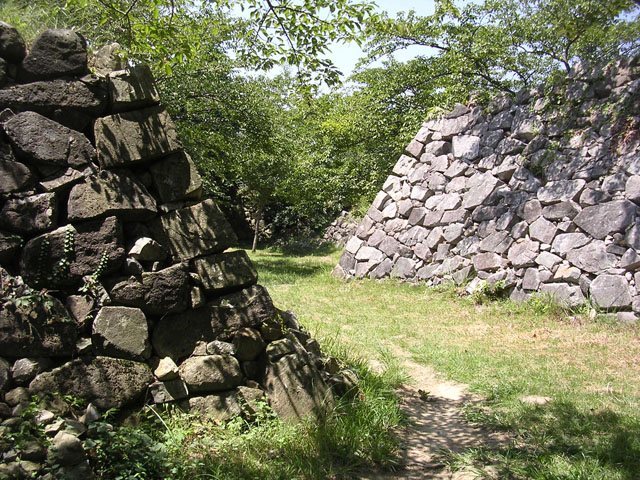
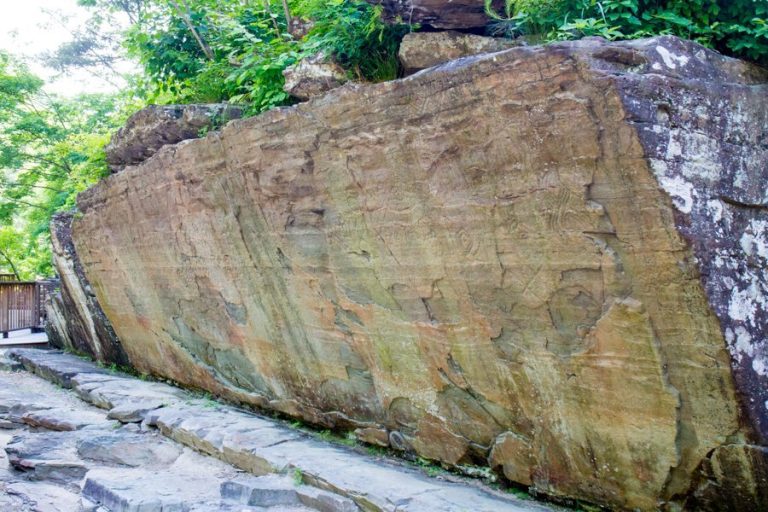
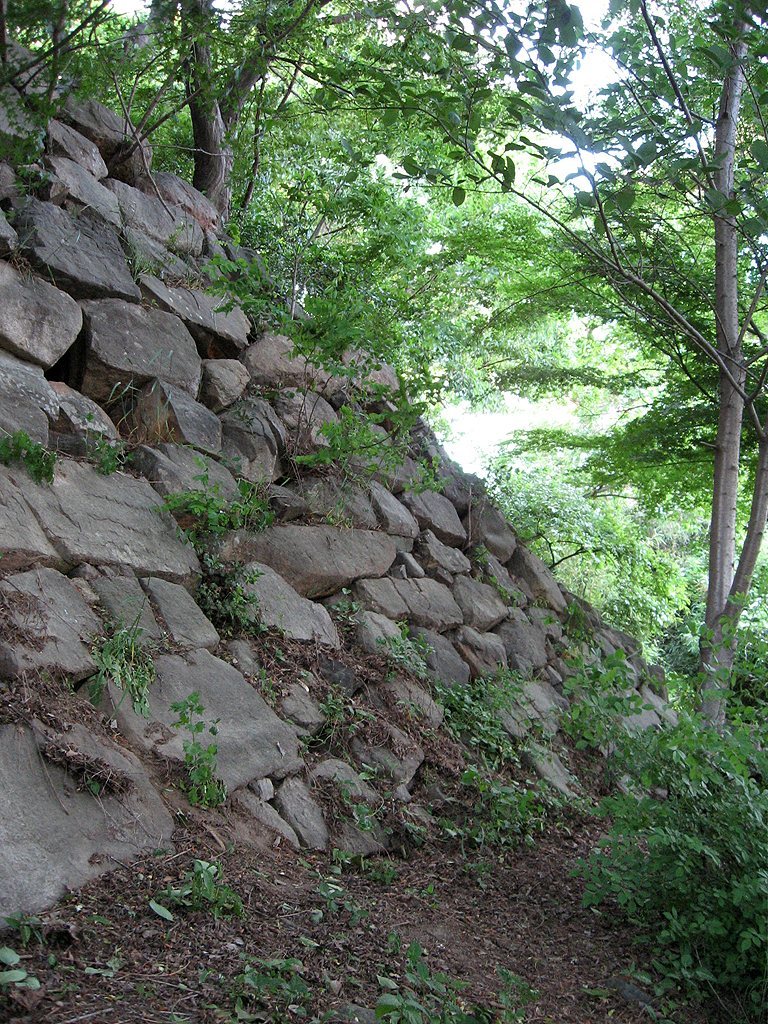
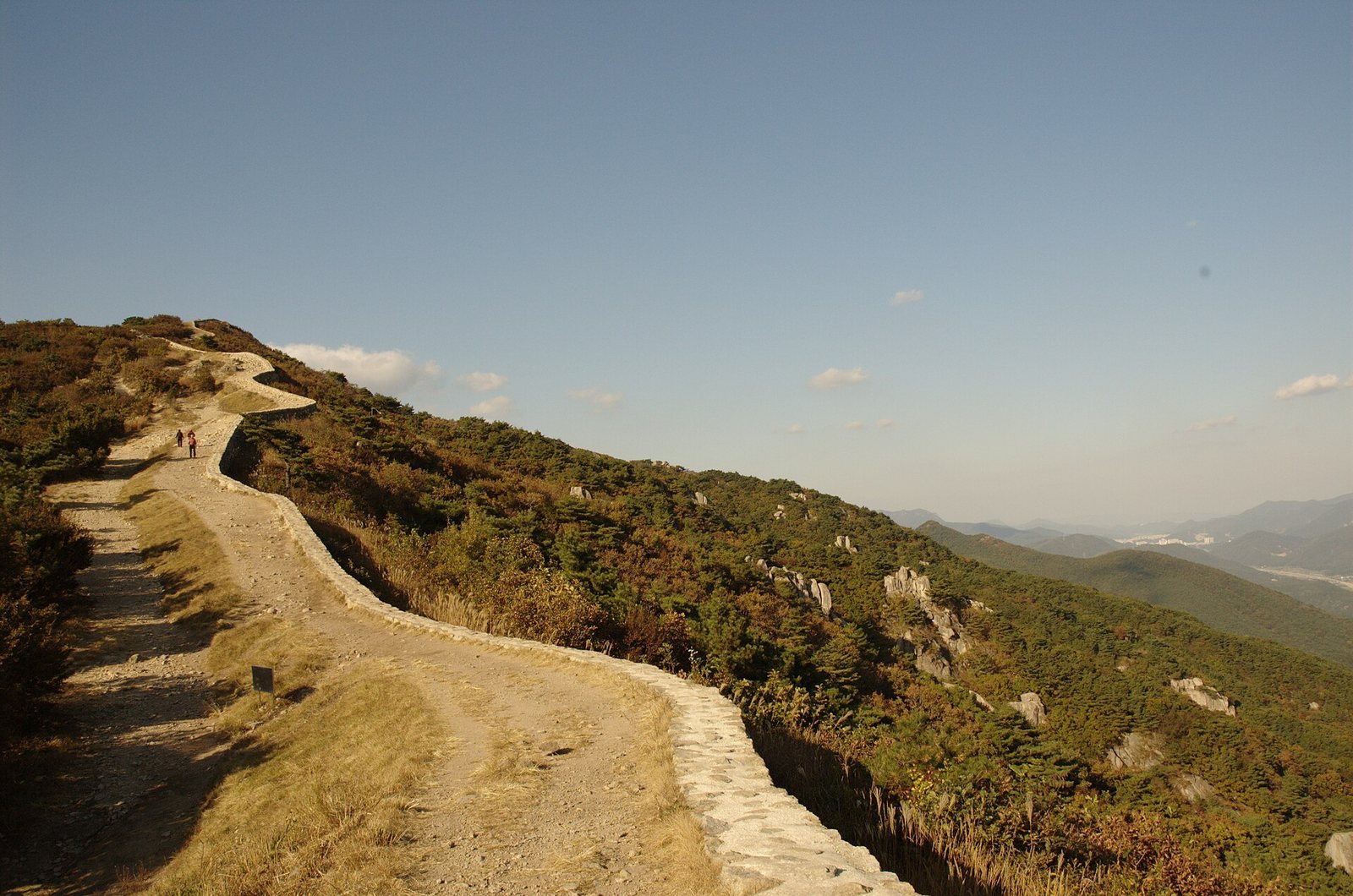
The fortress occupies Geumjeongsan and overlooks the Nakdong River estuary and the Dongnae region. Its walls enclose about 8.2 square kilometers and extend approximately 17 kilometers, with heights of 1.5 to 3 meters. About 4 kilometers of wall remain. Builders used natural stone, including granite in its natural form, much of it from the mountain. The stonework varies in appearance around the fortress; weaker sections were strengthened with cut, square blocks. The surviving and restored fortifications include the East, West, South, and North Gates. A stone stele bears an inscription concerning their construction.
Observation towers and excavation finds
Four observation towers formed part of the fortress. Tower No. 1 stood in the southwest and was destroyed by Typhoon Rusa on the morning of September 1, 2002. A trial excavation in 2016 recovered 30 pieces of archaeological material, including roof tiles. The Busan Metropolitan Museum holds the finds.