Glaswein Castle: A Baroque Hunting Lodge in Austria
Site at a Glance
- Popularity
- Medium
- Country
- Austria
- Primary era
- Early Modern
- Eras represented
- Early Modern
- Civilizations
- Habsburg, Habsburg Austria, Holy Roman Empire
- Site type
- Domestic
- Remains
- Elite Residence
On this page8 sections
History
Construction and Ownership
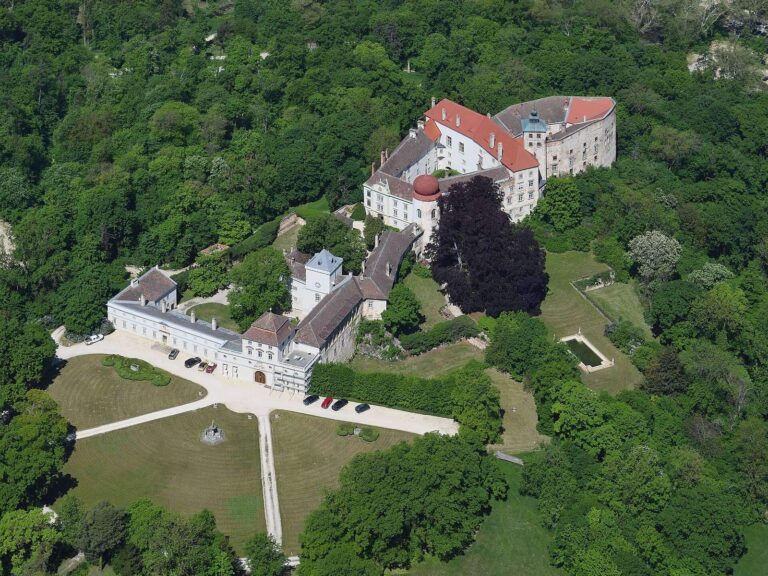
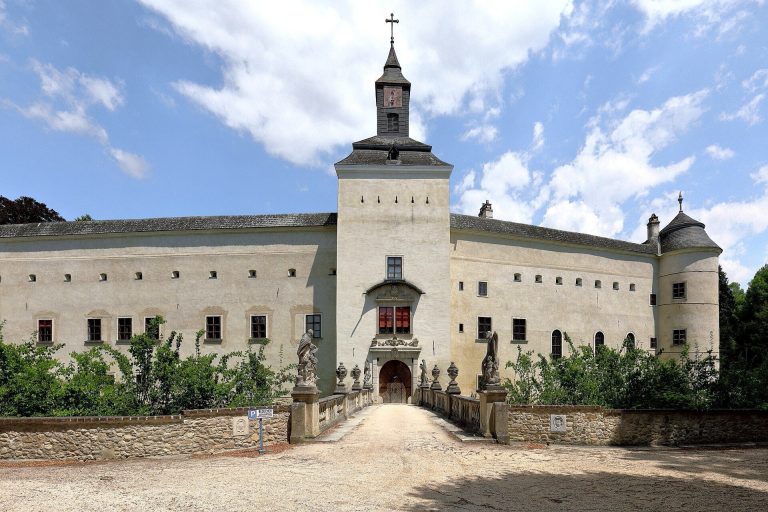
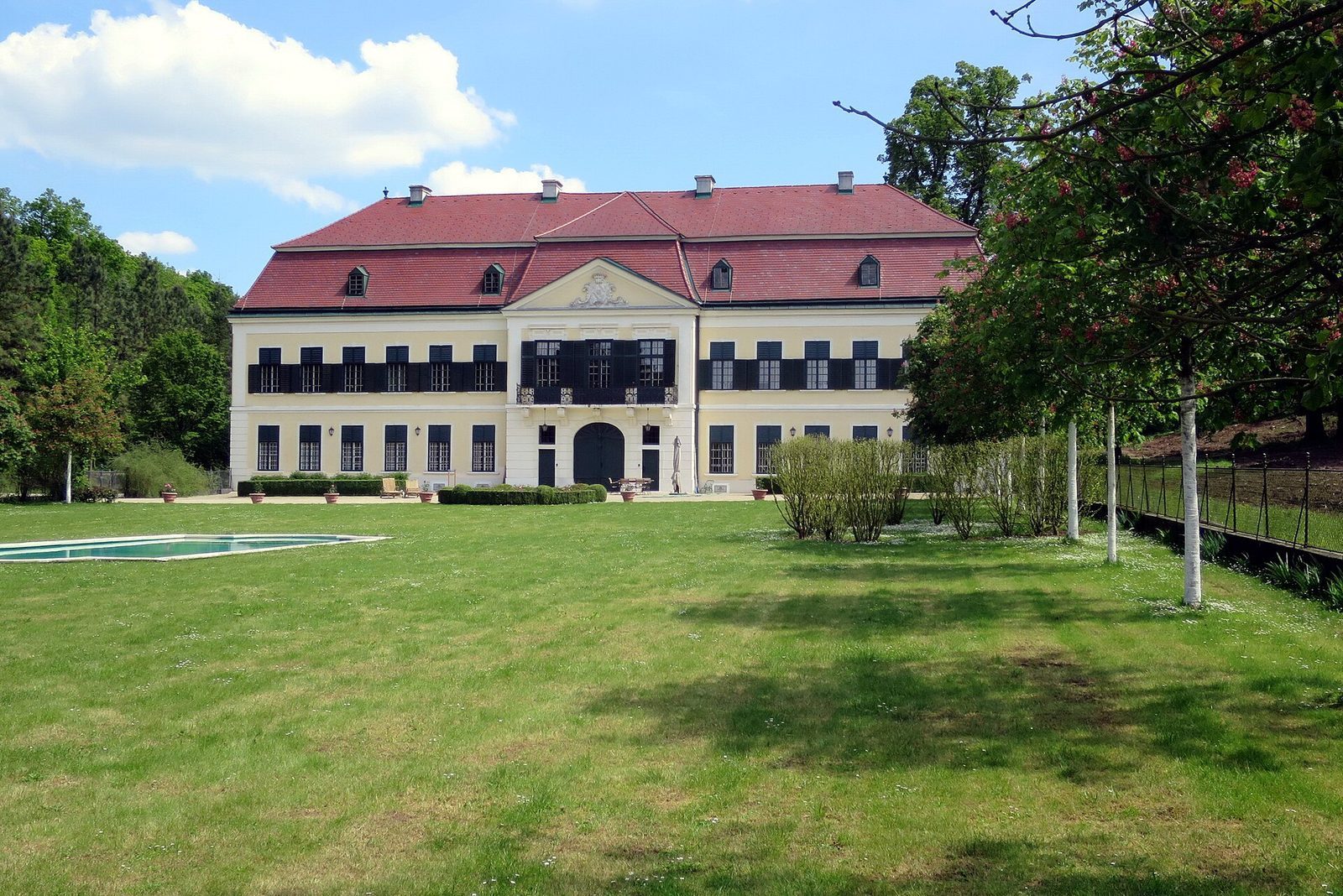
Glaswein Castle is a hunting lodge in Glaswein, a locality of Großmugl in Lower Austria, Austria. Count Wenzel von Sinzendorf built it in 1762 in the Baroque style, a European artistic and architectural tradition that flourished from the late sixteenth through the eighteenth century. The lodge was intended for occasional use.
After the Sinzendorf family, the property passed to the Counts of Fünfkirchen and then, in 1831, to the Barons of Bartenstein. They sold it in 1850 to Baron Max Josef von Vrints-Berberich. The estate later passed to the Seutter von Loetzen family through the marriage of Countess Eugenie Vrints zu Falkenstein and Botho Seutter von Loetzen.
Wartime Damage and Restoration
During the Second World War, the castle served as a military hospital. In 1945, soldiers of the Soviet Red Army looted and severely damaged it. Repairs continued until 1954. Its current owner, Dirk Brandis, later had the hunting lodge restored to its original appearance. The castle is listed as a protected monument.
Remains
Building and Courtyard
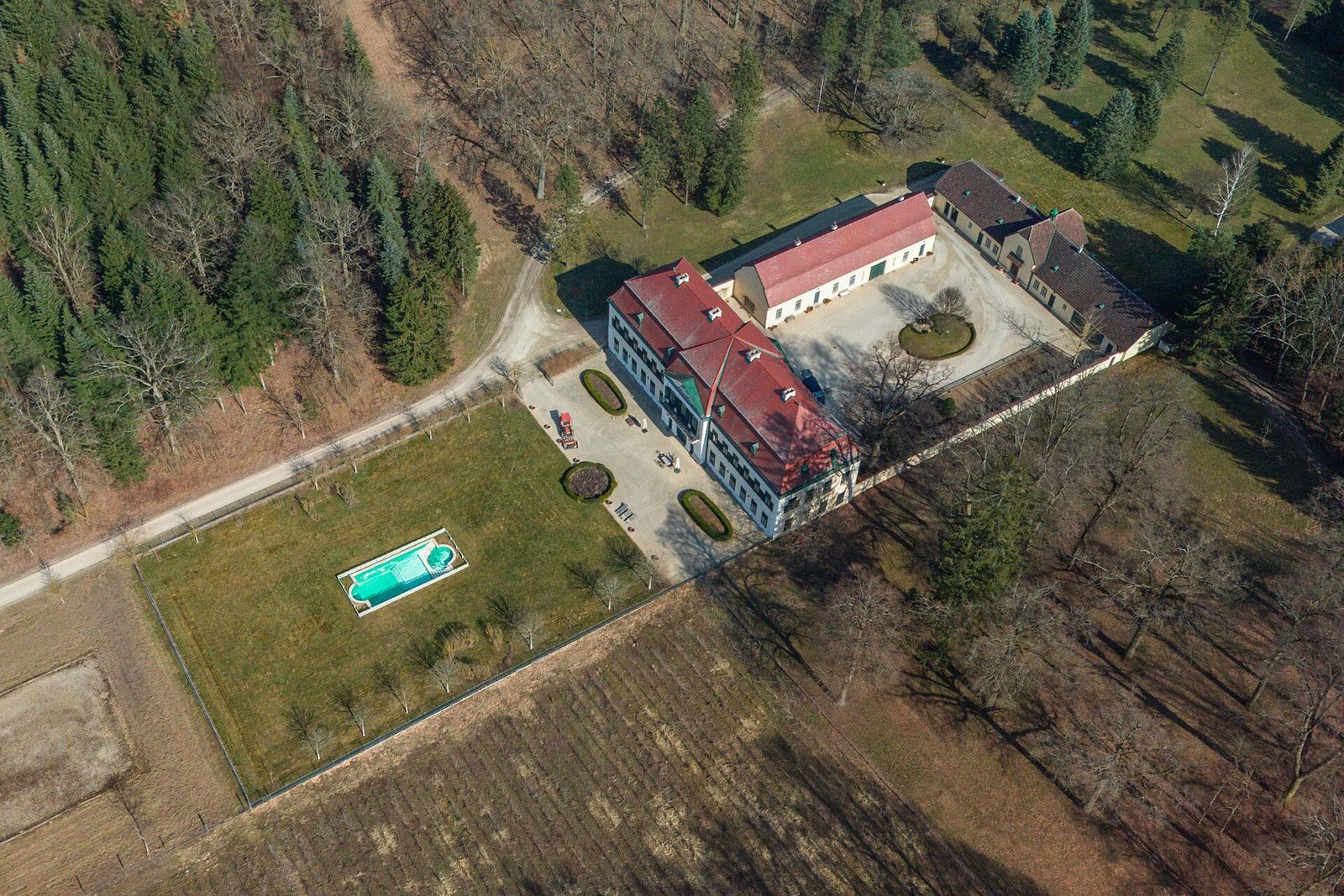
The castle is a two-storey building surrounded by single-storey adjoining wings that form an inner courtyard. Substantial parts of the complex survive.
Interior Decoration
Staircase and Great Salon
The lodge has richly appointed interiors despite its intended occasional use. A grand staircase, ornamented with vase-shaped forms designed as lanterns, leads to the Great Salon. In 1769, the Austrian painter Johann Franz Greipel decorated the salon with oil paintings on smoothed plaster. Its ceiling depicts Diana, the Roman goddess associated with hunting and the natural world, in a cart drawn by dogs. Rural scenes cover the walls.
Side Salons
Two further salons on each side of the Great Salon are also decorated with wall paintings.