Sorn Castle: A Tower House and Scots Baronial Residence
Site at a Glance
- Popularity
- Medium
- Country
- United Kingdom
- Primary era
- Medieval
- Eras represented
- Medieval, Early Modern, Modern
- Civilizations
- British, Kingdom of Scotland
- Site type
- Domestic
- Remains
- Castle
On this page8 sections
History
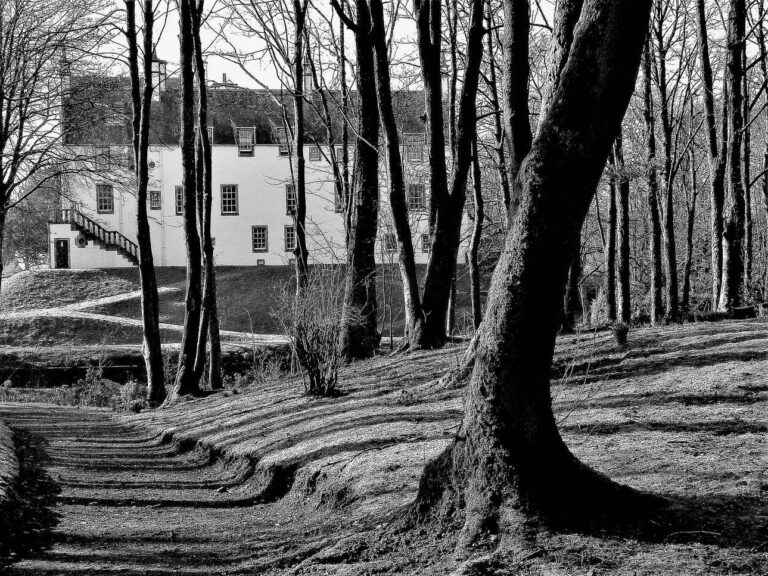
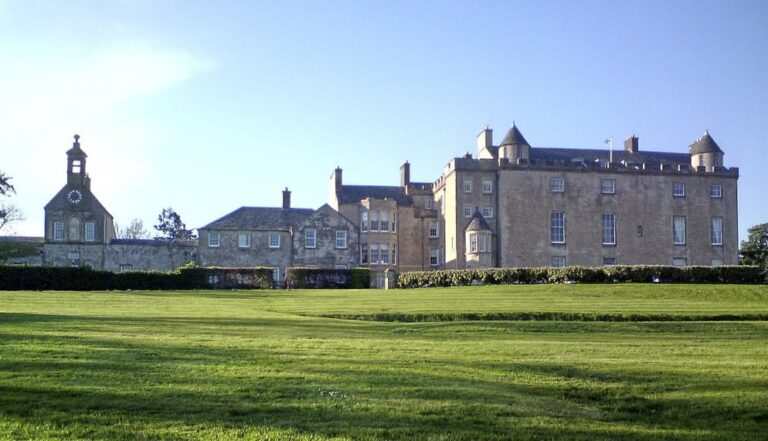
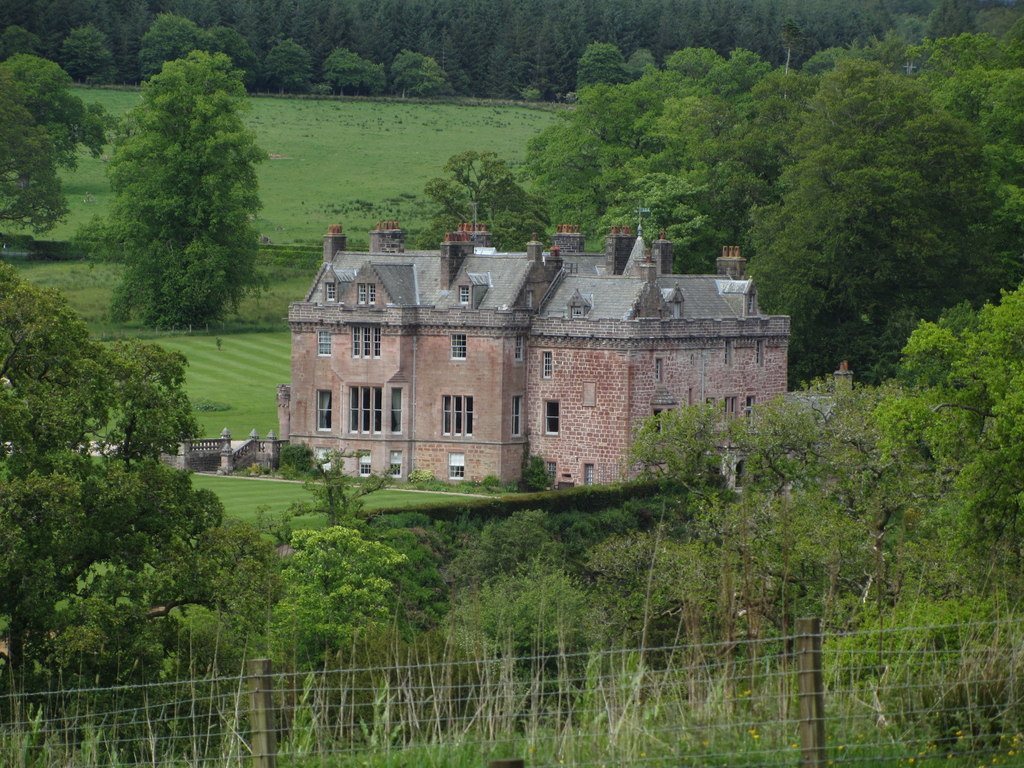
Sorn Castle stands just west of Sorn village, on the north bank of the River Ayr in the United Kingdom. Its earliest core was a tower house, a fortified residence built around a tower, probably dating to the fifteenth century or earlier. The castle was later remodelled in Scots Baronial style, a nineteenth-century revival of forms associated with Scotland’s historic castles and tower houses.
Early development and royal visit
The castle was extended westward in the sixteenth century. In September 1598, a banquet at Sorn celebrated the marriage of Ludovic Stewart, 2nd Duke of Lennox, and Jean Campbell, a great-granddaughter of James IV of Scotland. James VI, king of Scotland, attended and stayed for two nights. A tradition connects the names King’s Stable and King’s Well at Fenwick with a visit to Sorn and the surrounding area by James VI or his grandfather, James V.
Later alterations and residents
The castle was enlarged in 1783, with further additions in a castellated style later in the eighteenth century. In 1865, while the Somervell family owned it, a major remodelling was carried out. Thomas W. McIntyre bought the castle in 1908, commissioned a new entrance and undertook internal remodelling; another enlargement followed in 1909. Notable residents included James Somervell and James Gordon McIntyre, Lord Sorn, a Scottish lawyer and judge.
Listed status
Sorn Castle received Category A listed status in 1971. Category A is Scotland’s highest listed-building grade, for buildings of exceptional national or international importance. The stables have a separate Category A listing.
Remains
Castle complex
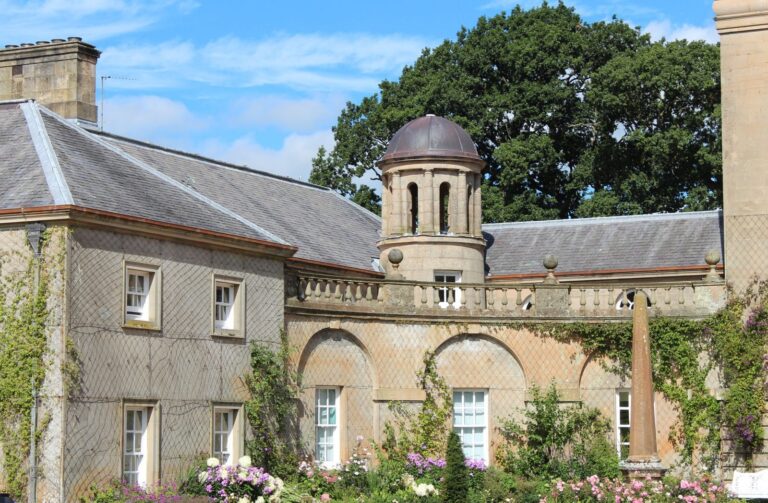
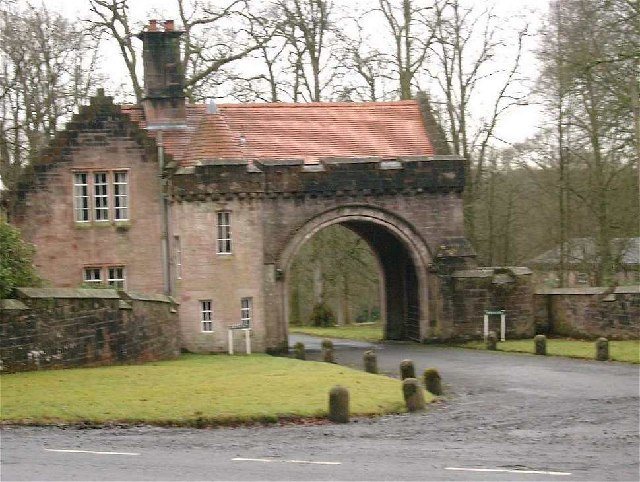
The castle buildings enclose a courtyard, with the original three-storey tower house at the southwest of the complex. The castle has a Scots Baronial character and crenellations around its perimeter, formed by alternating raised sections and gaps along the parapet. A gateway gives access to the courtyard and is decorated with a triangular pediment above the entrance and a pair of pilasters, shallow column-like projections attached to the wall.
Stables
The stables date from the 1830s and stand about 300 metres northwest of the castle.
Wall tablet
A tablet on the castle wall bears the inscription: “Extant AD 1409, Added to AD 1783, Restored AD 1865, Enlarged AD 1909.”