Wilton Castle: A Medieval Fortified Residence in Herefordshire
Site at a Glance
- Popularity
- Medium
- Country
- United Kingdom
- Primary era
- Medieval
- Eras represented
- Medieval
- Civilizations
- English
- Site type
- Military
- Remains
- Castle
On this page8 sections
History
Twelfth and thirteenth centuries
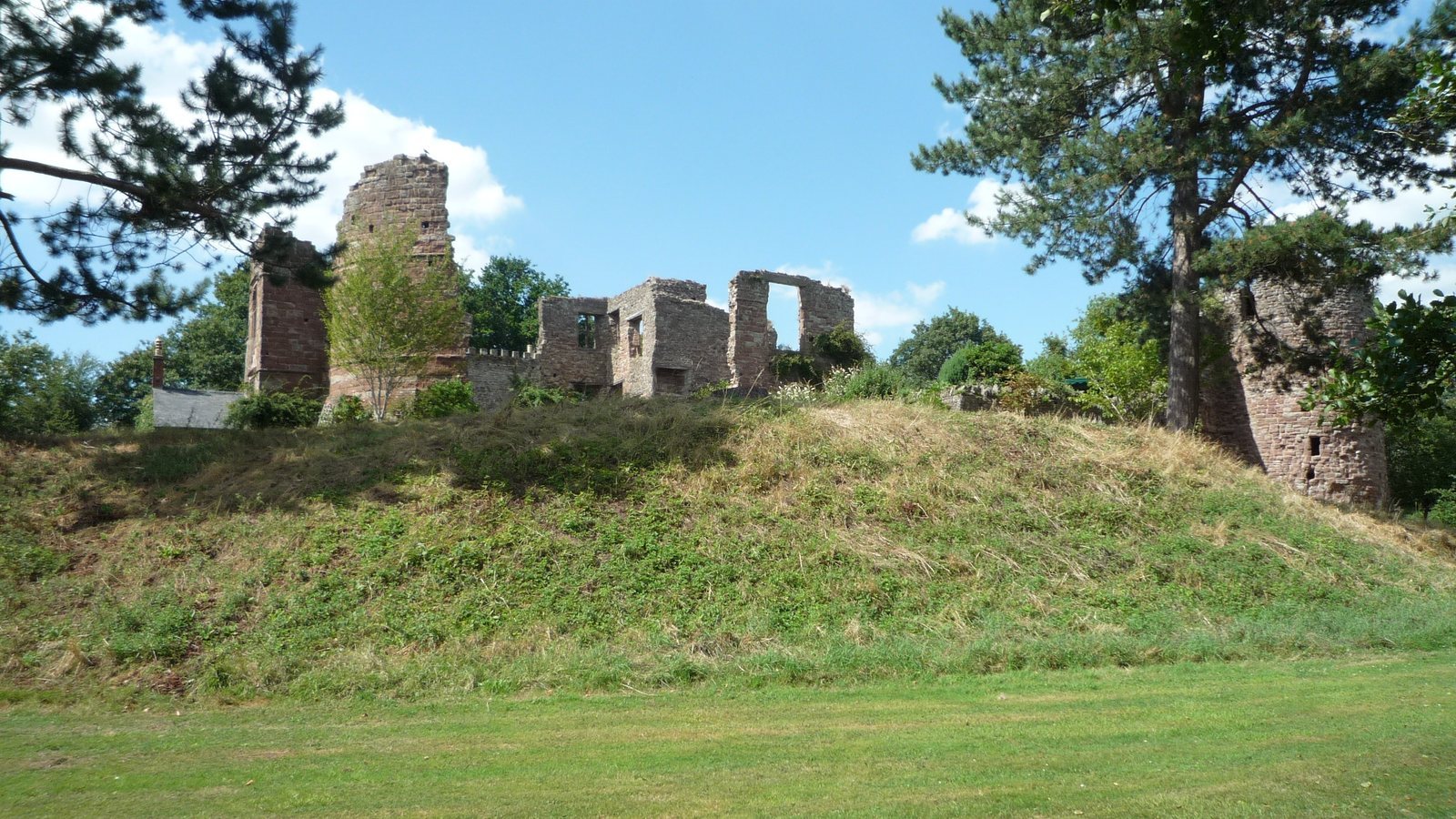
Wilton Castle, also known as Ross Castle, is a ruined medieval castle beside the River Wye near Wilton and Ross-on-Wye in Herefordshire, United Kingdom. It dates to the twelfth century, though construction could not have begun before 1154. A manor established here during that century replaced an earlier fortification.
The Longchamps held the castle and served in important roles, including as bailiffs in Normandy, chancellors of England, and sheriffs of Hereford and the Welsh Marches. They opposed King John and were connected with the Cantilupe and Grey families. Together, these families built a power base in Wales and the Welsh Marches, the borderlands between England and Wales.
In 1292, Matilda de Grey, born into the de Cantilupe family and wife of Reginald Grey, claimed in court before Edward I that her Longchamp ancestors had built the castle during the reign of Edward the Confessor. The claim was untrue: the castle could not have begun before 1154, while Edward the Confessor ruled from 1042 to 1066. Matilda also claimed rights held by lords of the Welsh borderlands, although the Grey barony had never possessed them.
The Grey family and the sixteenth century
The castle was held by the de Grey family, a Norman-descended noble line known as the Barons Grey of Wilton, from 1308 or earlier. A baron held a hereditary rank of nobility. In the fourteenth century, the castle was adapted into a fortified residence.
In 1557, William Grey, the thirteenth Baron Grey of Wilton, was captured by the French at the end of the defence of Guînes. He sold the castle to raise money for his ransom.
Fire, Civil War, and later use
A residence built within the castle walls during the sixteenth century burned about a century later, along with the fortification, and was not rebuilt. During the English Civil War, the conflict between Royalist and Parliamentarian forces in England from 1642 to 1651, troops led by local Royalist Barnabas Scudamore finally destroyed the castle.
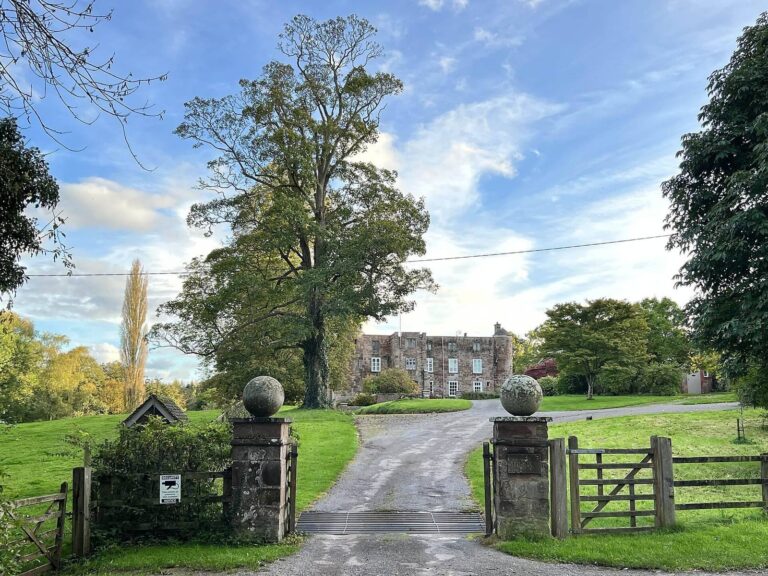
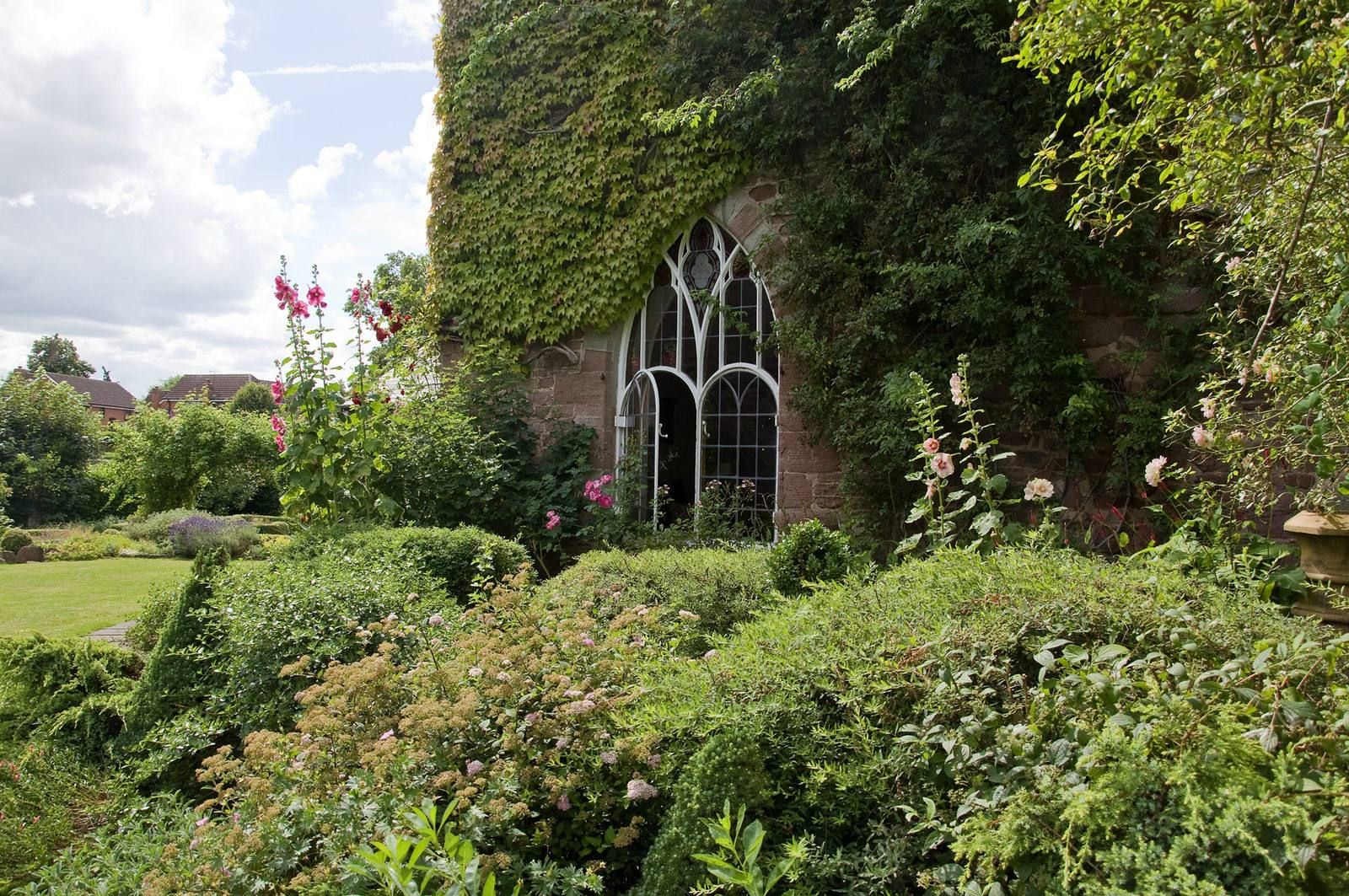
After its military use ended, the inner walls and one tower were used to breed pigeons. A new residence was built nearby in the nineteenth century. Wilton Castle is a Grade I listed building, England’s highest category of listed-building protection.
Remains
Castle enclosure
Layout and walls
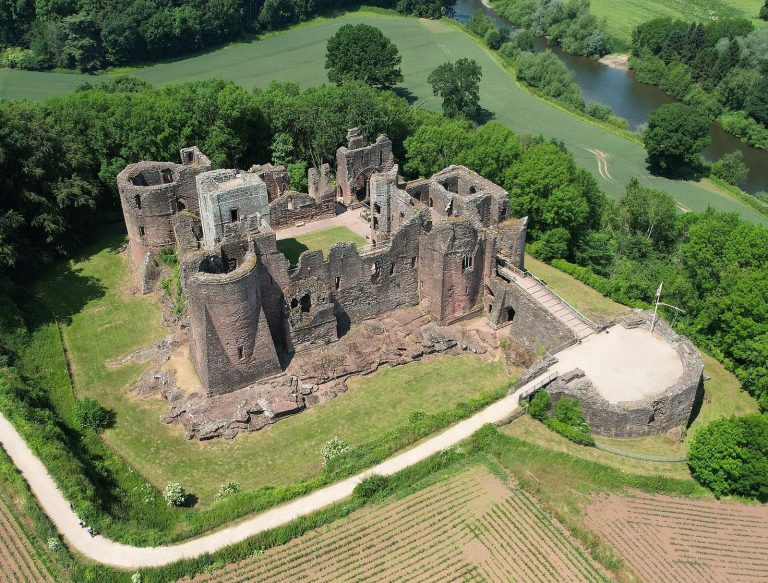
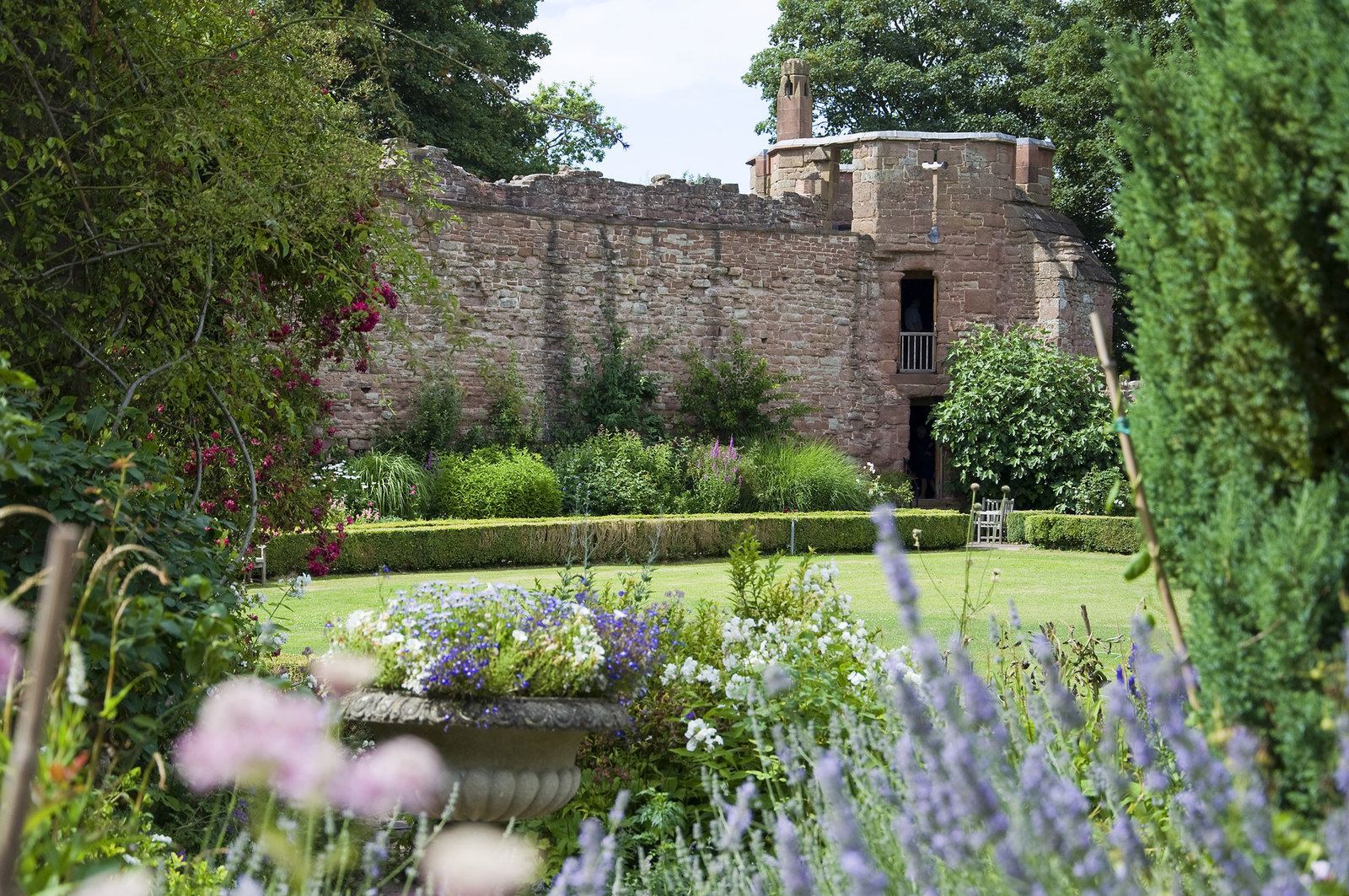
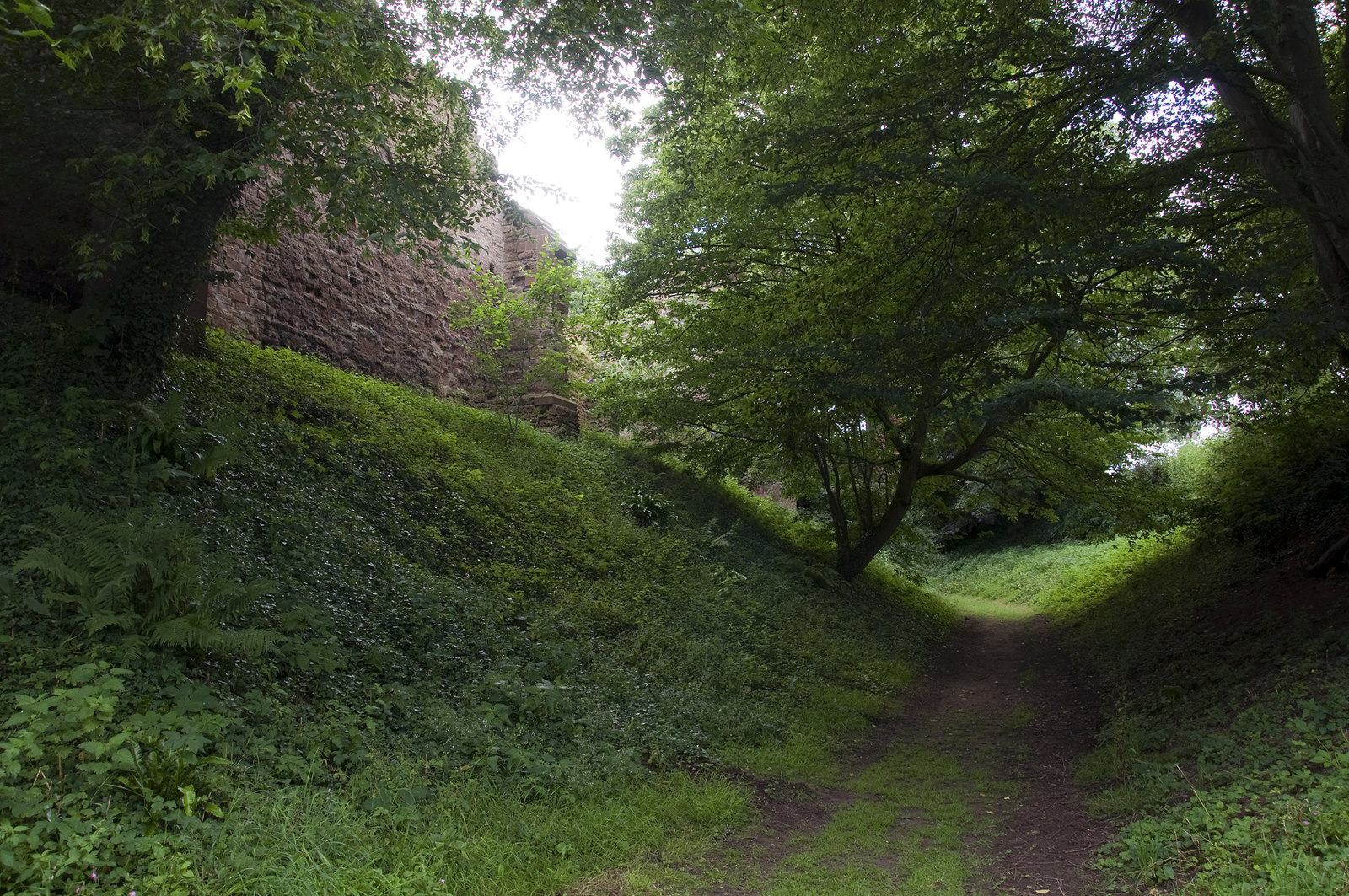
The castle has an irregular four-sided plan, with stone walls enclosing an inner courtyard and a fortified tower at each corner. The walls are made of local red sandstone and have notched defensive tops; most survive to the height of their battlements. The site also includes a two-acre garden surrounded by a dry moat.
Eastern tower
The eastern tower retains its original arrow slits. Rougher openings added later allowed small cannon to be fired from the tower.