Rinkesta: A Swedish Castle and Estate
Site at a Glance
- Popularity
- Medium
- Country
- Sweden
- Primary era
- Early Modern
- Eras represented
- Early Modern, Modern
- Civilizations
- Swedish
- Site type
- Domestic
- Remains
- Castle
On this page12 sections
History
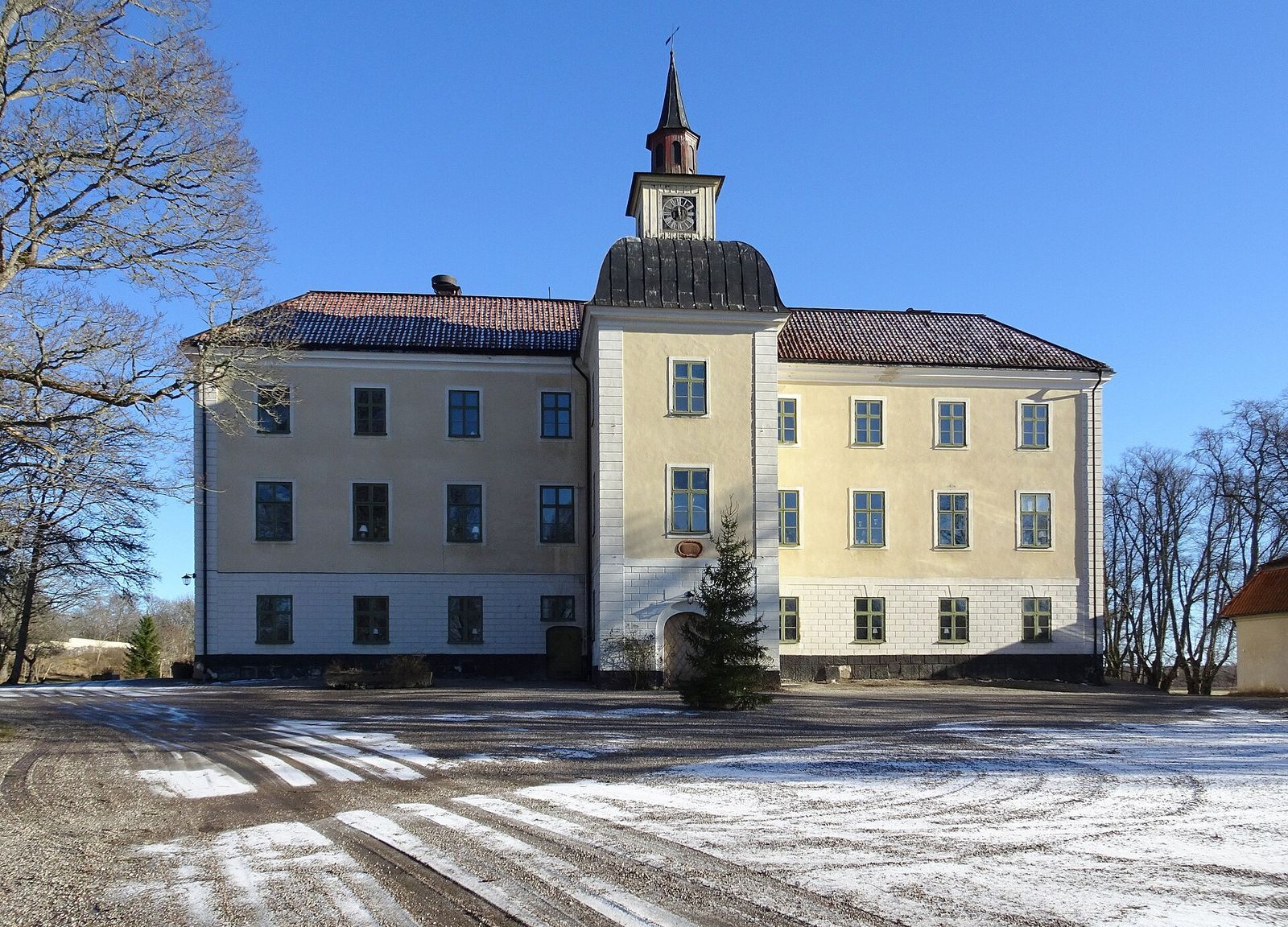
Rinkesta is a castle and estate in Ärla parish, Eskilstuna Municipality, Sweden. Its first secure record dates to 1379, when the Swedish magnate Bo Jonsson (Grip) gave Rinkesta Island to Strängnäs Cathedral. The principal residence was probably built for Barbro Axelsdotter Bielke, who inherited the property in 1597.
Medieval record and noble ownership
In 1594, the Crown transferred Rinkesta by exchange to Gustaf Gabrielsson Oxenstierna, a Chamber Councillor, a senior official in Sweden’s central financial administration. After his death, his widow Barbro inherited the estate and expanded it through further exchanges. Their daughter Elsa received it in 1624 with her husband, Åke Axelsson Natt och Dag. Their daughter Beata inherited in 1655, and in 1689 the estate passed to Beata’s son, Gustaf Larsson Sparre.
Eighteenth-century owners
Hans Wachtmeister purchased Rinkesta in 1711, and his son Axel Wilhelm inherited it in 1714. Johanna Wattrang, born Scharenberg, bought it in 1734. Thure Leonard Klinckowström became its owner in 1768. During his tenure, Rinkesta was made an entailed estate, meaning inheritance was legally restricted to specified successors. The entail was soon transferred to Graneberg in Gryt.
Nineteenth- and twentieth-century changes
Klinckowström faced financial problems and sold parts of the property. In 1820, he sold the main building to Bleckert Gustaf Wilhelm Wachtmeister, who later had to sell the estate because of poor business. Later owners included Carl Filip Sack in 1837, J. Mallig in 1841, Theodor Ludvig Bohnstedt in 1842, Bohnstedt’s son Edvard in 1888, and Arvid Frisell in 1914. Until about 1900, Rinkesta was a large estate that held most of the surrounding land; land was later sold.
Harald Mårtens, then mayor of Stockholm, bought Rinkesta in 1924 and later rented it for use as a private nursing home. Nursing-home operations at the estate ran from 1935 to 1989. Ragnar Åström bought the farm in 1978, and it was offered for sale in 2014. By 2015, the castle and estate belonged to the Nilsson family, who ran nearby Flättorp farm. The castle was then unoccupied, and its intended business use had not been decided.
Remains
The principal courtyard lies south of Norrsjön and north of Sörsjön, which is now completely dry. The surviving estate includes the castle and farm buildings, with many outbuildings and workers’ dwellings built as log structures clad in red-painted boards.
Castle and courtyard buildings
Main building
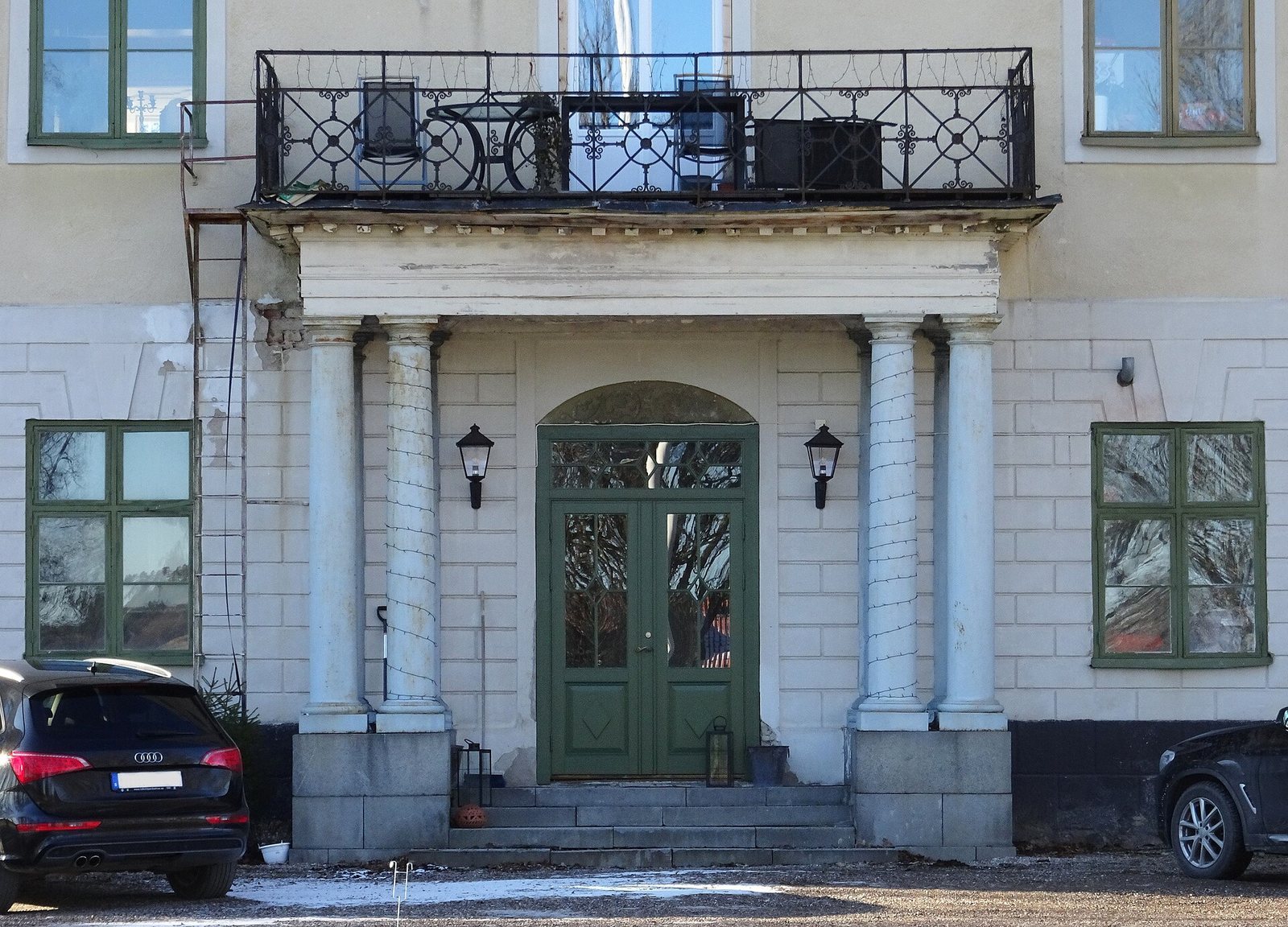
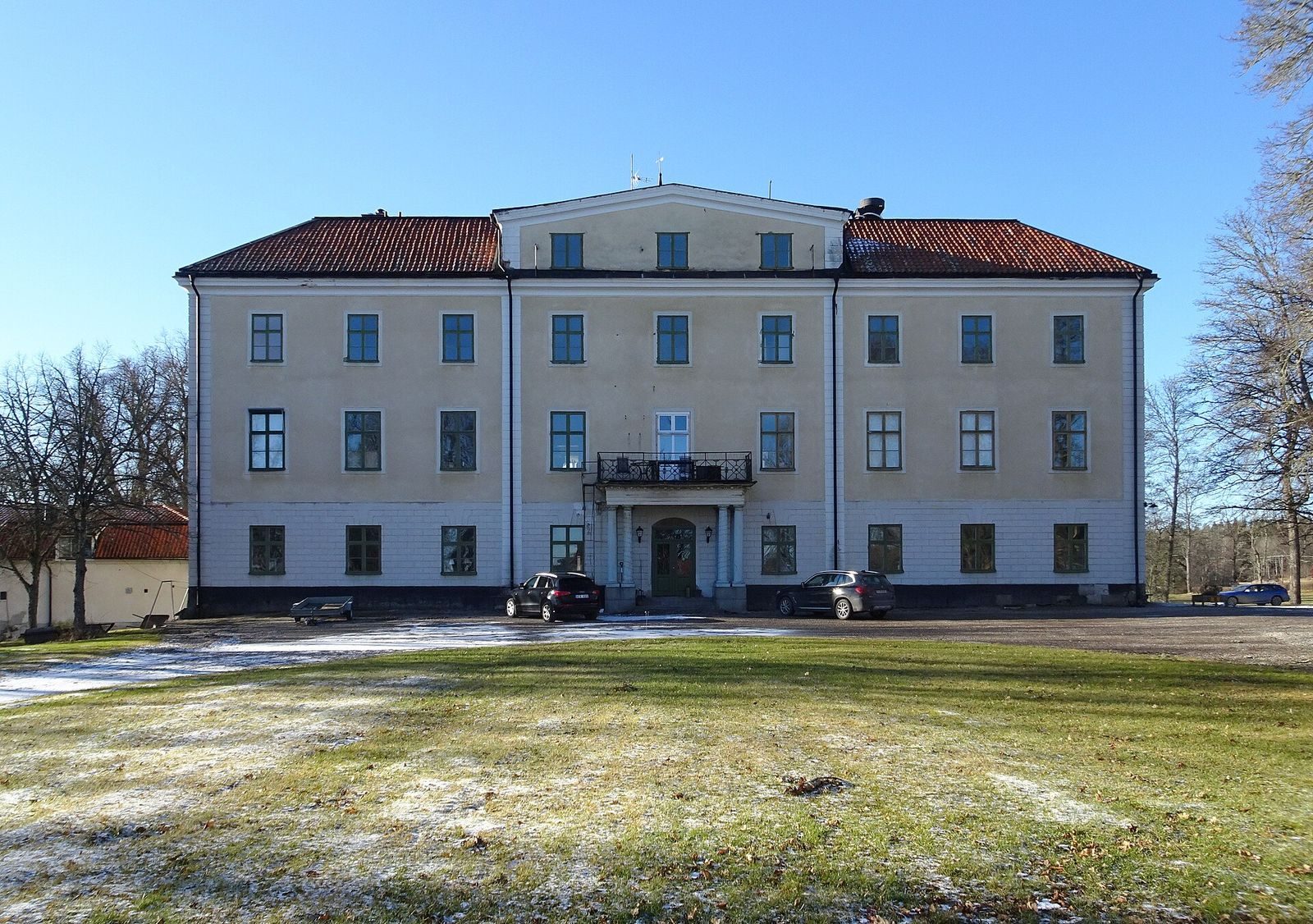
The main building was repaired after its upper storey burned in 1698. Extensive work in 1775 gave it its present appearance, including rough-textured plasterwork on the corners and ground floor, a shingled roof with a broken outline, and a projecting feature on the garden façade. An illustration by Erik Dahlbergh, a Swedish military officer and artist, depicts the castle with decorated façades, spires, and a high stone wall around it.
Estate steward’s residence
The estate steward’s residence had previously been the main building at Tummelsta. It was moved to Rinkesta in 1769.
Farm buildings and workers’ dwellings
Barns
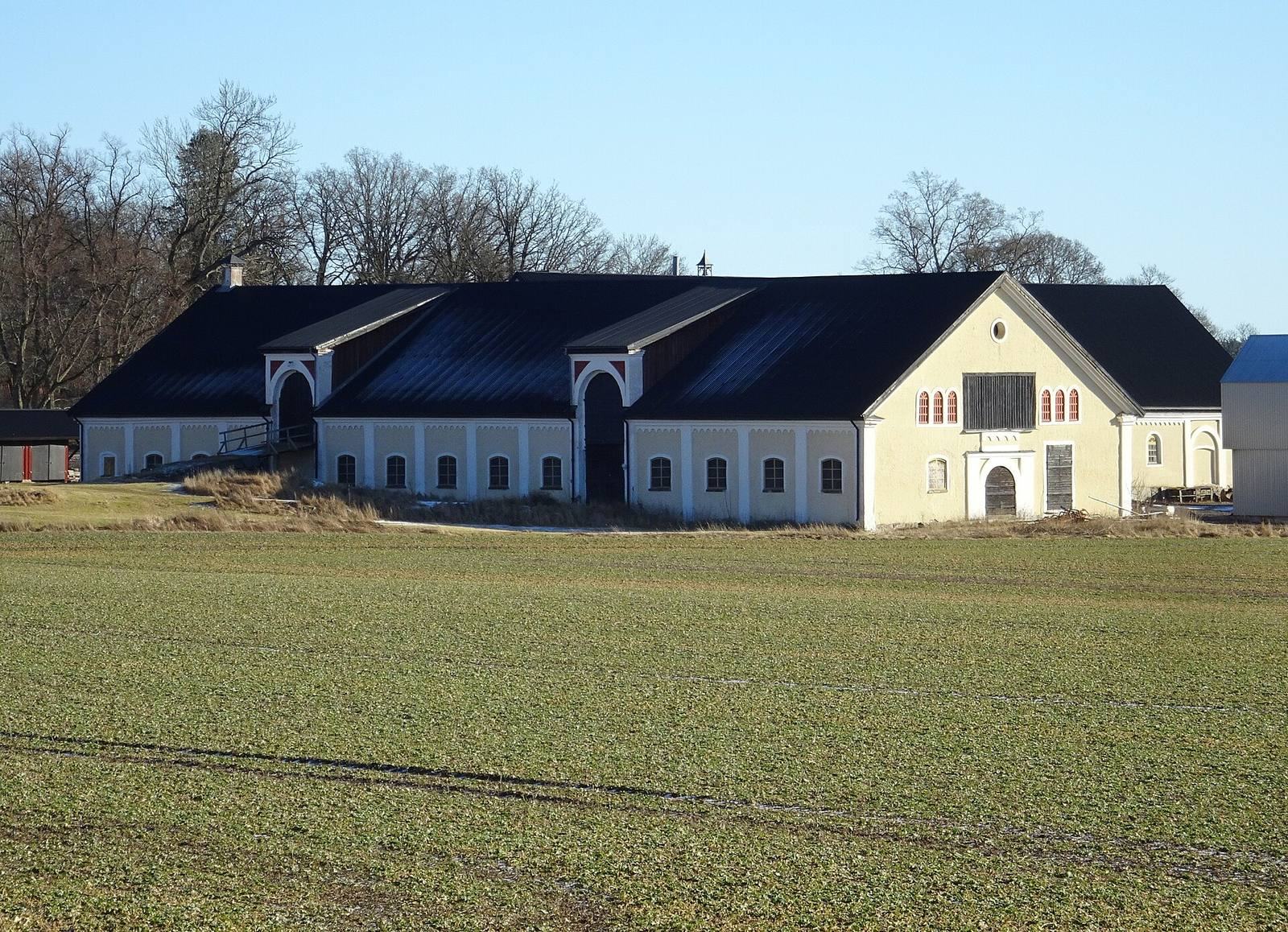
Two whitewashed barns dating to the mid-nineteenth century stand west of the castle.
Outbuildings and workers’ dwellings
Most of the estate’s outbuildings and workers’ homes are log structures with red-painted board siding. One workers’ dwelling, Malmen, formerly served as a shelter.
Warehouse
A red-painted warehouse was built in 1987 after a fire.