Nyby Hillfort: A Fortified Enclosure in Sweden
Site at a Glance
- Popularity
- Very Low
- Country
- Sweden
- Primary era
- Medieval
- Eras represented
- Medieval, Modern
- Civilizations
- Swedish
- Site type
- Military
- Remains
- Fort
On this page8 sections
History
Nyby hillfort is a fortified enclosure on a rocky knoll beside the Nybyån in Eskilstuna Municipality, Sweden. Its history includes a violent fire in the 14th century and later military use during the Second World War.
Hillforts in northern Södermanland
Across northern Södermanland, 80 hillforts were registered. Fifty underwent phosphate analysis, a soil test that can help identify traces of past human activity, and ten were test excavated. Radiocarbon dating, which estimates the age of organic material, places construction across the regional group from the pre-Roman Iron Age, the Scandinavian Iron Age phase before Roman influence, to the Viking Age, roughly the late 8th to 11th centuries. The dates cluster especially between AD 200 and 500, within the Migration Period, roughly the 4th to 6th centuries and associated with major population movements in Europe.
Regional interpretations suggest that the forts could oversee farmland and land and sea routes. Their positions may also have allowed signals to pass between sites as part of a coordinated defense. Traces of habitation suggest that some forts had small, permanent garrisons, while others were occupied intermittently. They have also been interpreted as expressions of elite authority over rural communities and territory, and perhaps as an early step toward forming a nation. One proposal is that, after an initial phase, the regional system could function with only a few centrally placed forts.
Fire and wartime use
An archaeological investigation in 1985 concluded that Nyby had burned rapidly and violently during the 14th century. Radiocarbon dating of material from the base of the rampart, a defensive bank or wall, gave an estimate of about 1390. The date was compared with the burning of Borganäs, a fort in Borlänge, Dalarna, at Midsummer in 1434 during the uprising led by Swedish nobleman and rebel leader Engelbrekt Engelbrektsson. Finds from the two forts were described as similar.
During the Second World War, defenses were installed at Nyby, including an anti-aircraft gun and machine-gun positions.
Remains
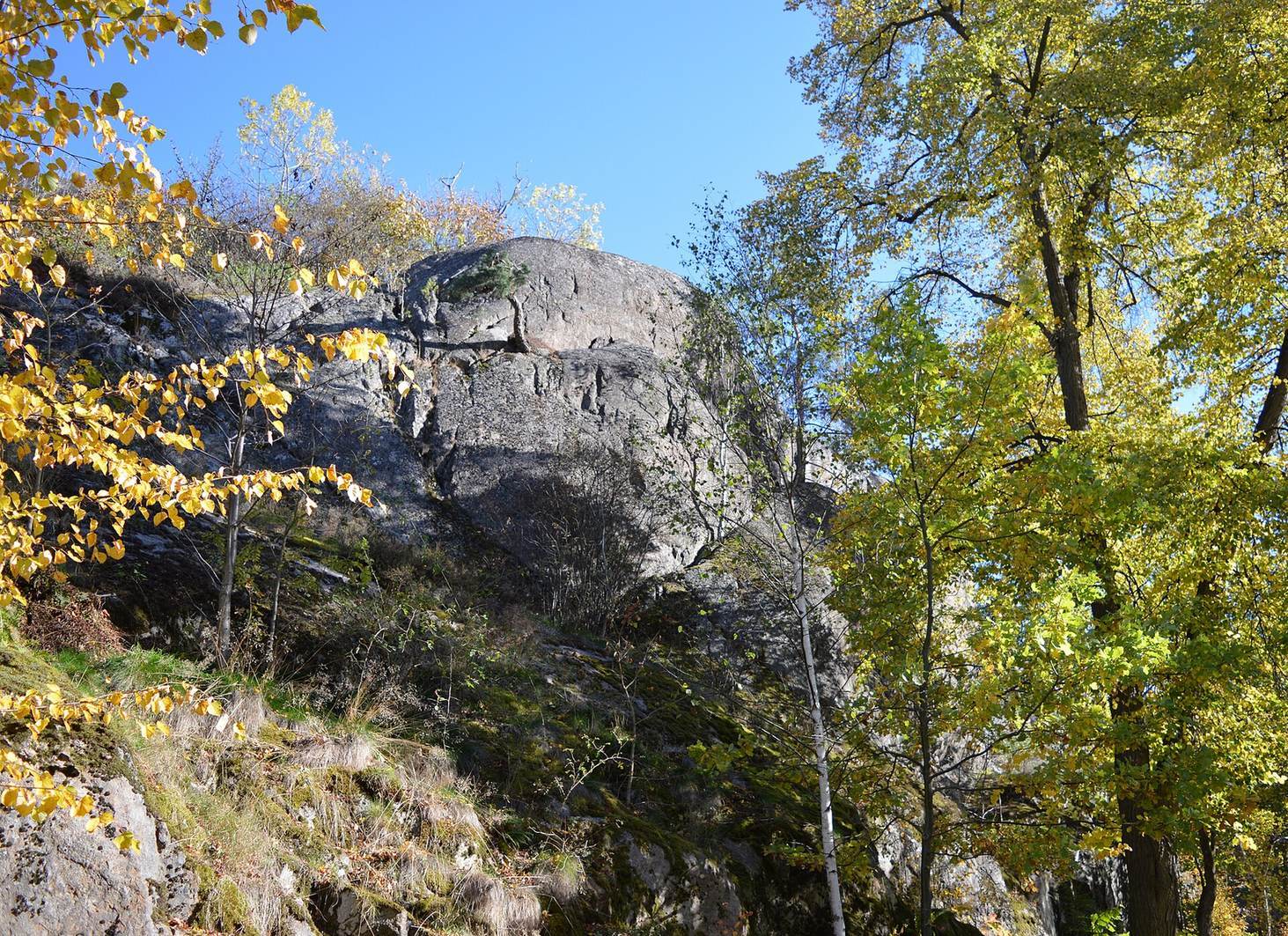
The enclosure occupies a rocky knoll beside the Nybyån, near the Nyby industrial works in Torshälla parish. A double stone wall forms its northeastern boundary; steep natural drops define the other edges.
Fire-altered remains
Inner rampart
A section through the inner rampart was about 0.3 metres thick. From top to bottom, it contained soil with angular stones, some possibly altered by fire, partly weathered gravel, soot and charcoal, and stony soil. Microscopic examination found cracked, rarely melted grains of quartz and feldspar within glassy material. Three glass types were distinguished: clear and colorless, clear brown, and cloudy dark brown. They blended only partly with one another. Their chemistry, including high aluminum levels in some samples, points to clay as a raw material. The differences between the glasses suggest intense heating of varied materials, with especially high heat in localized areas for a short time. The process appears to have required abundant fuel and dry material; a building coated with clay is one possible explanation.
Debris beyond the rampart
During the fire, molten silica dripped onto sand and gravel and cemented the surface. Afterward, the area was cleaned, and parts of the walls became debris. Excavations about 10 metres from the rampart found daub, a clay-based wall coating, slag, burnt bones, and several large rectangular pieces of daub. This evidence led to the interpretation of Nyby as an example of intentional vitrification, the formation of glassy material when intense heat alters minerals.
Second World War defenses
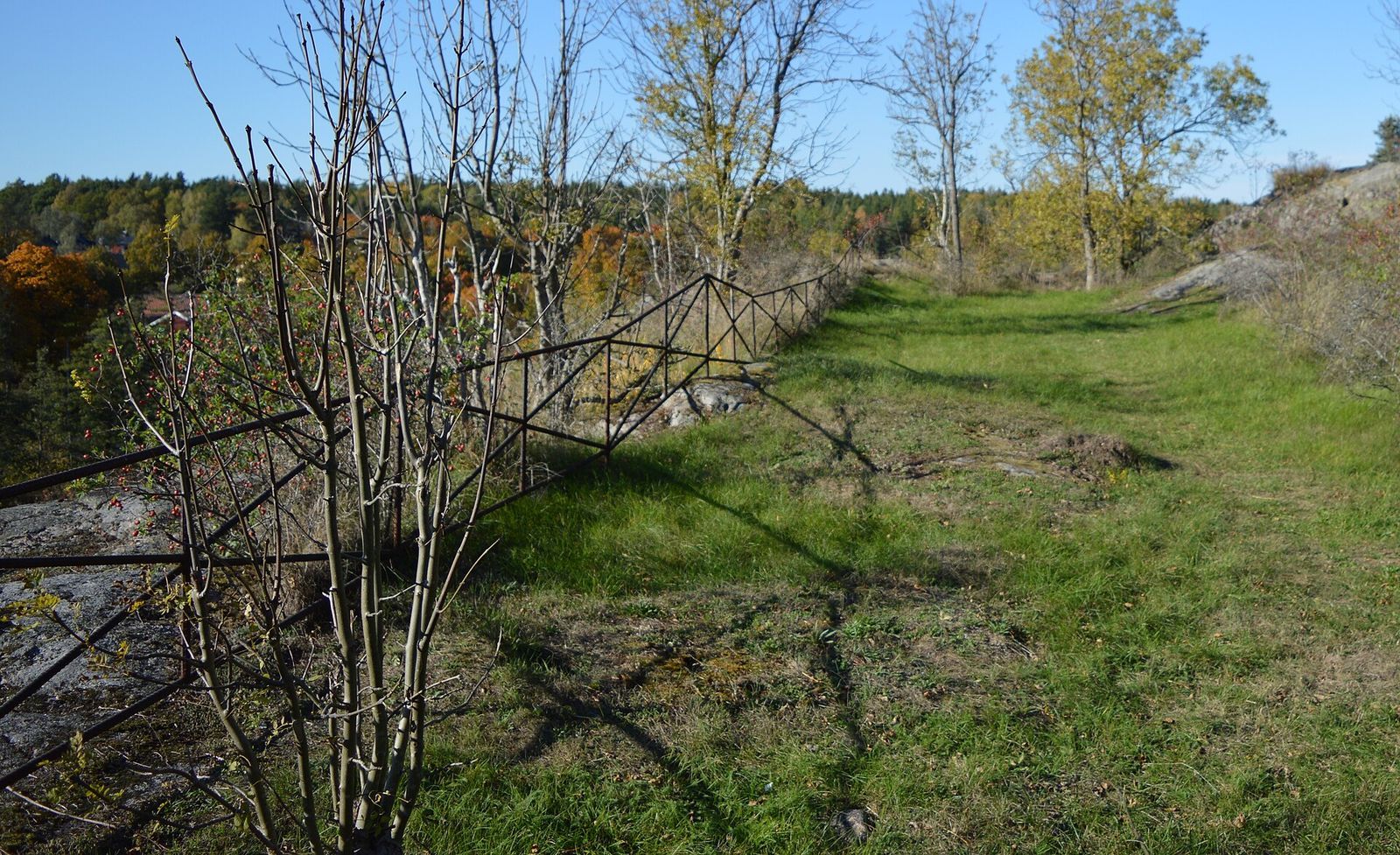
Remains of the wartime defenses are still visible, including machine-gun emplacements.