Burgschleinitz Castle: An Austrian Noble Residence
Site at a Glance
- Popularity
- Medium
- Country
- Austria
- Primary era
- Early Modern
- Eras represented
- Medieval, Early Modern
- Civilizations
- Duchy of Austria, Habsburg, Habsburg Austria, Holy Roman Empire
- Site type
- Military
- Remains
- Castle
On this page8 sections
History
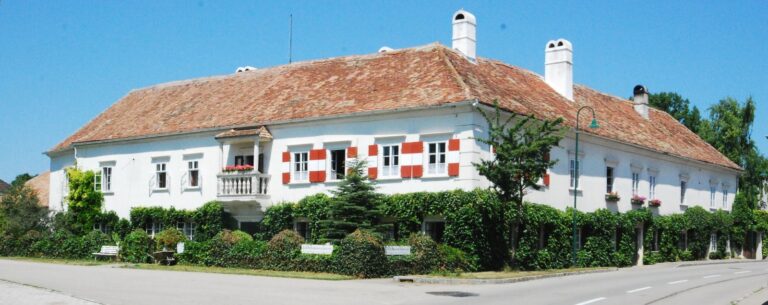
Burgschleinitz Castle is a historic castle in Lower Austria, Austria, and was the ancestral seat of an Austrian ministerial family. Medieval ministerials formed a service nobility, holding land and offices through service to a ruler or lord.
Medieval Lords and Hussite Occupation
Otto von Schleunz, the last member of the family, was killed in 1260 while fighting Hungarian forces near Staatz. Several changes of ownership followed. In 1480, Hussite troops occupied the castle under Wenzel Wlček, a military commander among the followers of religious reformer Jan Hus. Austrian forces recaptured it in 1482 and completely destroyed it.
Rebuilding and the Thirty Years’ War
Reconstruction began around 1543. From about 1589, Georg Bayer von Niederdürnbach oversaw an expansion. At the beginning of the Thirty Years’ War, the major European conflict fought from 1618 to 1648, Bohemian troops burned Burgschleinitz. The Counts of Kuefstein, who lived at Schloss Greillenstein, later rebuilt the castle.
Later Ownership
Around 1920, Anna von Sazenhofen, a widow from the Sazenhofen noble family, acquired the castle. It is now owned by the Eckert family.
Remains
Main Building and Courtyard
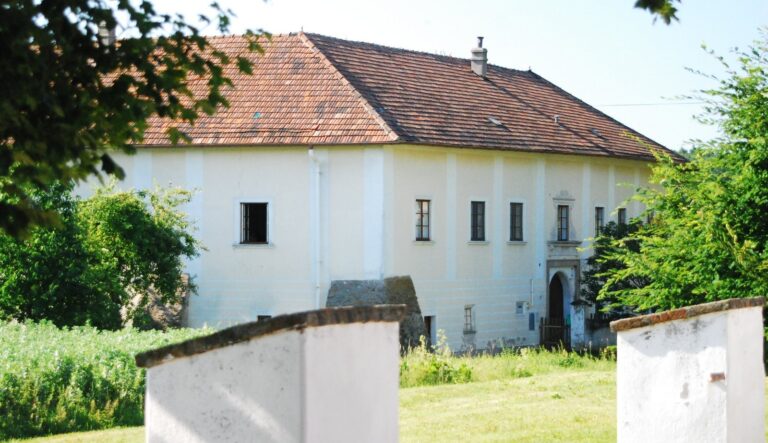
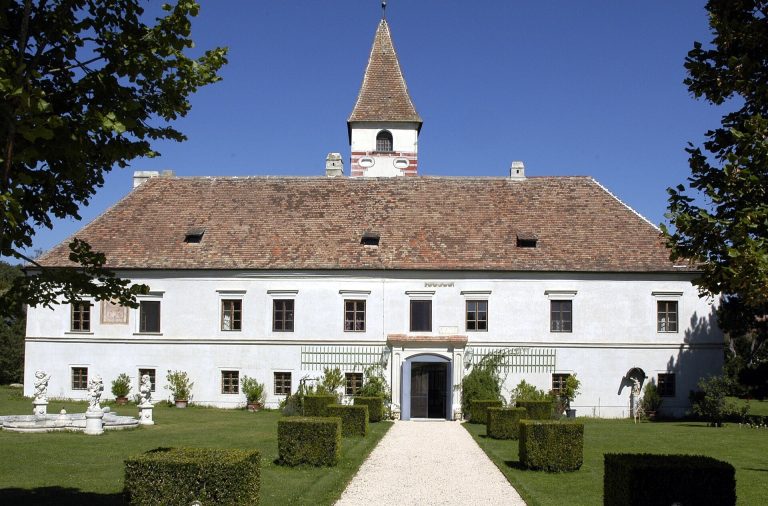
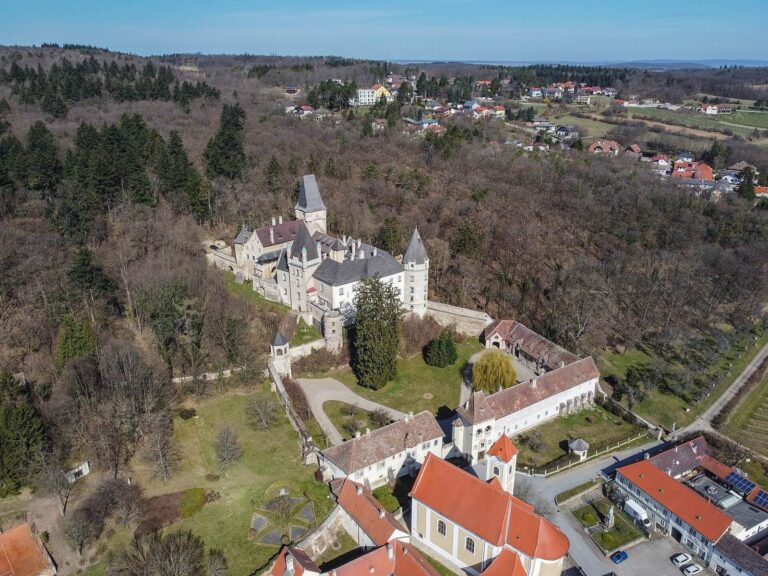
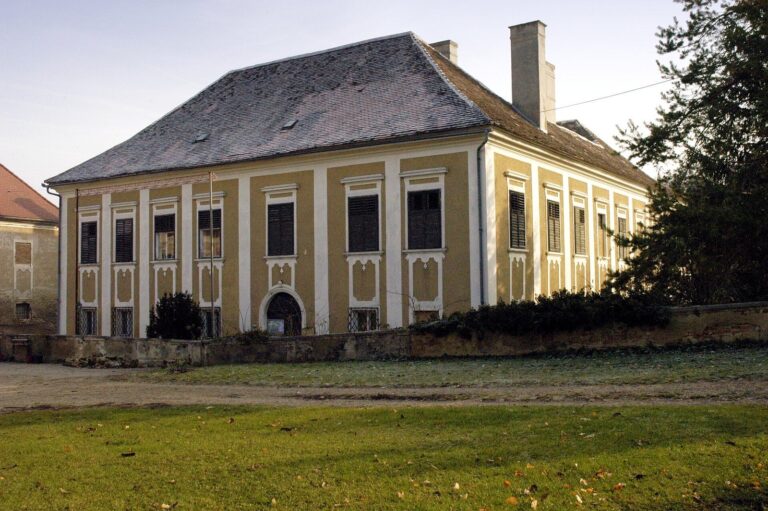
The castle’s main building consists of three two-storey ranges with hipped roofs, arranged around a narrow, irregular courtyard that is approximately rectangular. A wall closes the courtyard’s fourth side. Its doorway opens onto steps leading to a forecourt.
Forecourts and Entrance
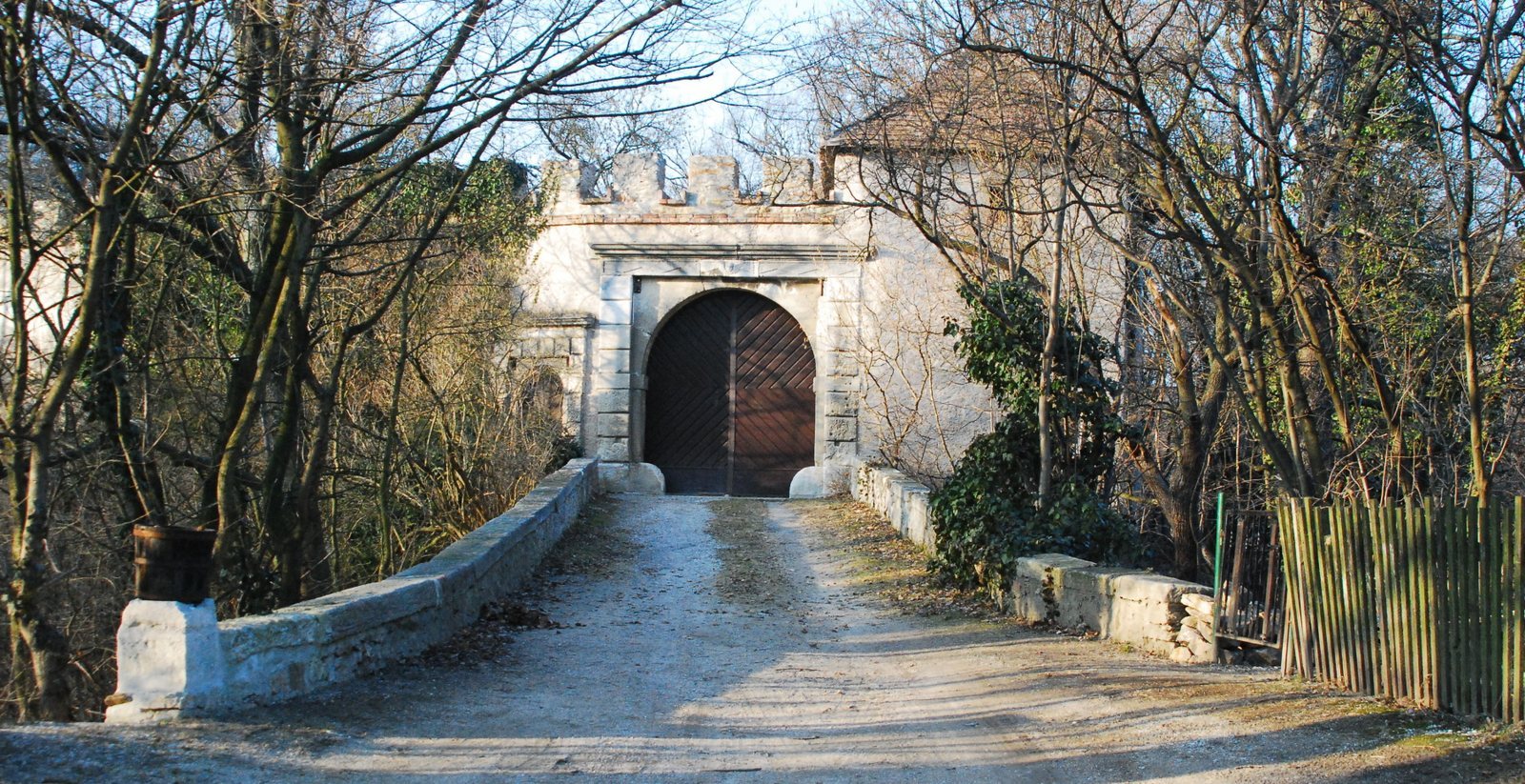
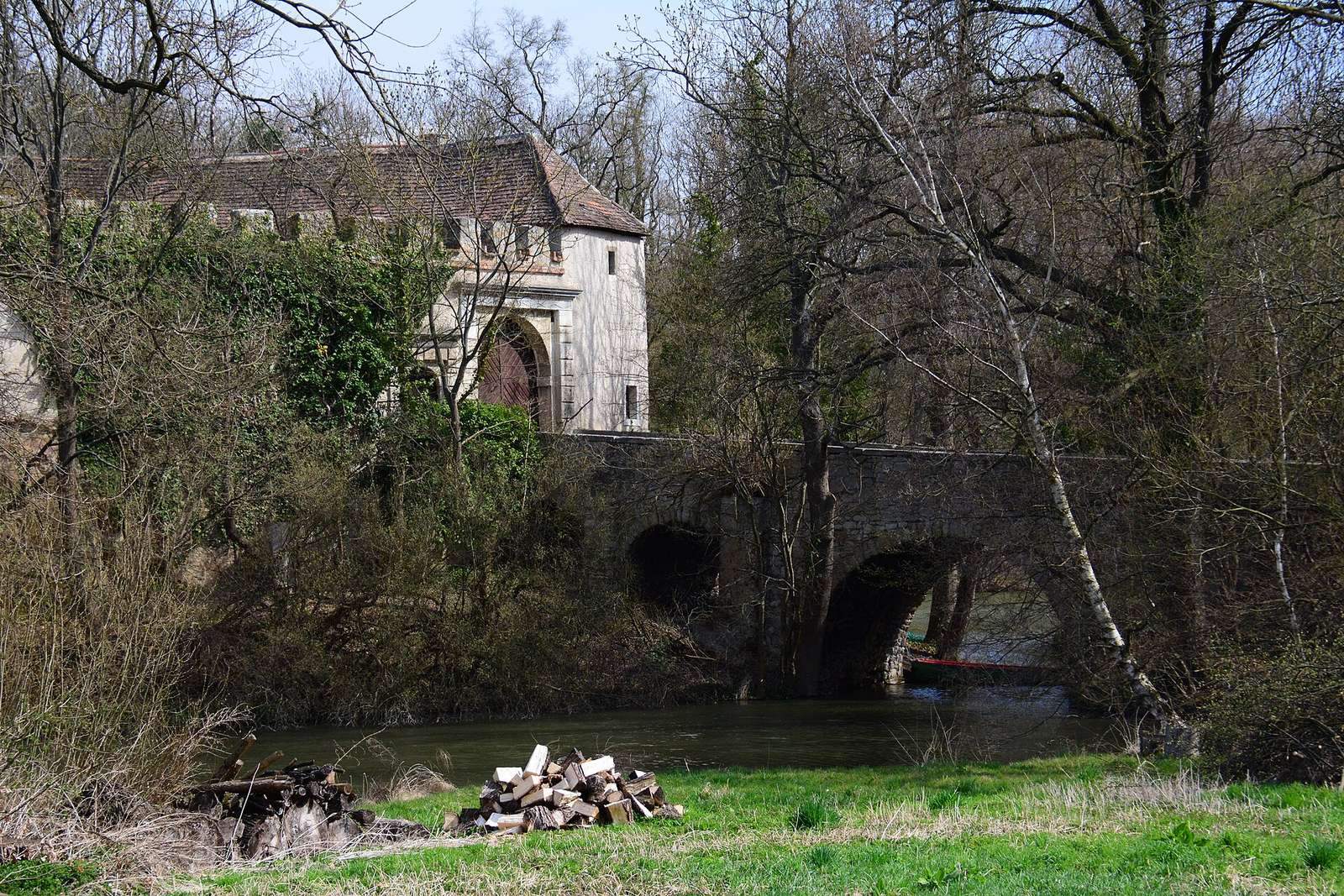
The first forecourt is semicircular and enclosed by rubble-stone walls. On its eastern side, a rectangular gate tower contains a round-arched passage. A second, irregularly rectangular forecourt is bordered by subsidiary buildings. Rubble-stone walls and a main gate close its outward-facing side.
Bridge and Surrounding Water
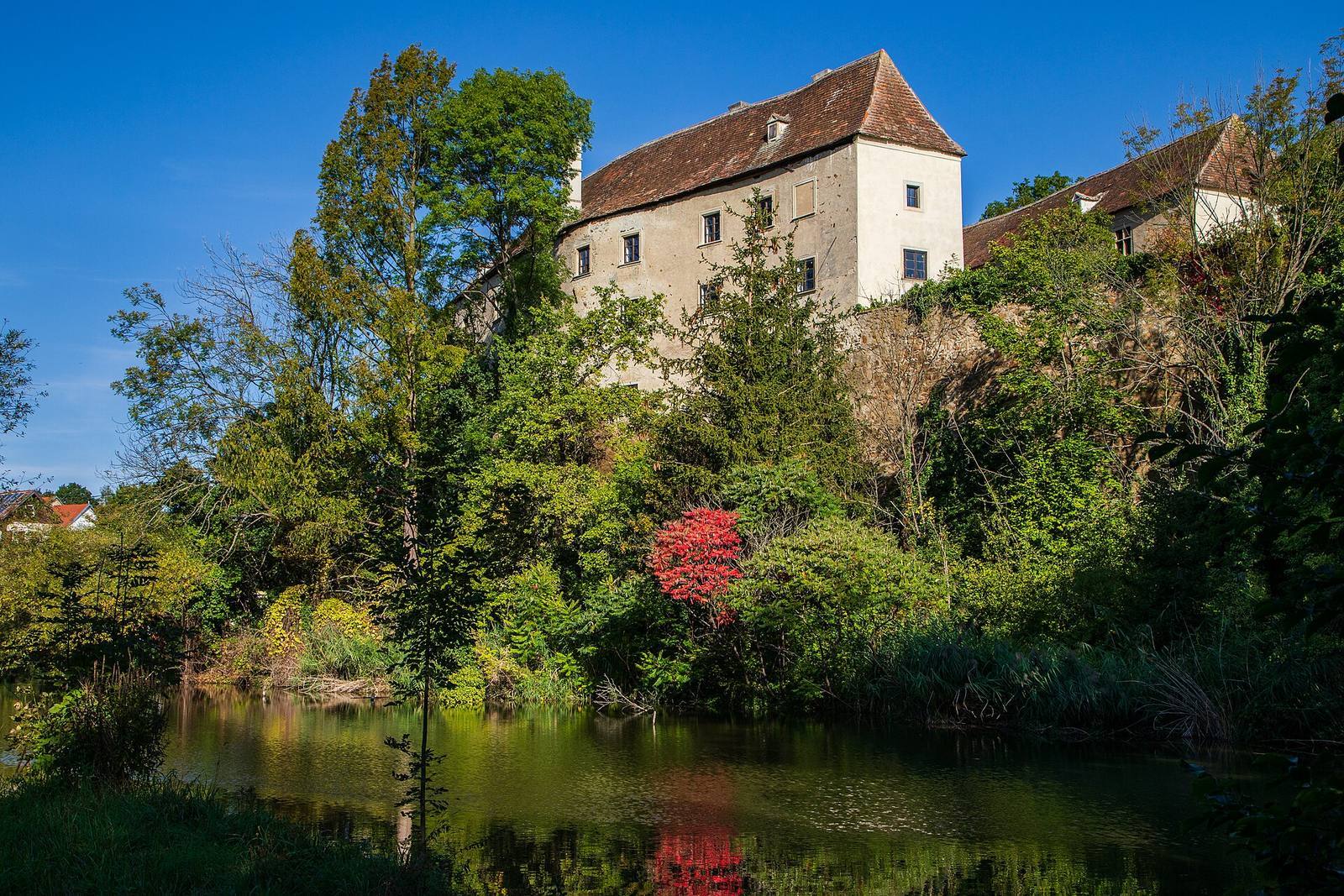
A pond surrounds the castle, which is accessible only by bridge. A bridge from the main gate crosses the moat; a drawbridge formerly stood at this crossing. The moat was refilled with water in 1974. Beside the bridge stands a statue of Saint John of Nepomuk, a fourteenth-century Bohemian priest venerated as a saint. The statue dates to the second quarter of the eighteenth century.