Hallerschloss: A Historic Castle in Graz, Austria
Site at a Glance
- Popularity
- Medium
- Country
- Austria
- Primary era
- Early Modern
- Eras represented
- Medieval, Early Modern, Modern
- Civilizations
- Duchy of Styria, Habsburg, Habsburg Austria, Holy Roman Empire
- Site type
- Domestic
- Remains
- Castle
On this page8 sections
History
Medieval origins
Hallerschloss is a historic castle in Graz, Austria. Its history reaches back to the thirteenth century, when a knight of Breuner probably built it around an older structure to protect roads and the territorial ruler’s property. From the second half of that century, the Rietenburger family lived there. Its members were ministerials, nobles who served a ruler or lord and could receive land in return.
The estate changed hands through a series of grants, sales, and exchanges. Lichtenstein endowed it to Rein Abbey, a Cistercian monastery in Styria, on 5 July 1359. On 23 March 1389, the castle and village of Waltendorf were sold to Hertlein von Lichtenstein. Rein Abbey exchanged the estate with Duke William for other lands on 25 October 1399. In the fifteenth century, the castle belonged to the Giebinger family.
Early modern ownership
After extended inheritance disputes, the property was sold to Mathias Aman in 1580. Aman later sold it to an archduke’s servant, and it passed among several owners before Hans Georg von Kaltenhausen acquired it in 1652. At that time, the estate included the castle, a manor farm, stables, rooms for the steward, barns, an ice pit, gardens and an orchard, a vineyard and wine press, two ponds, and fields, woods, and meadows. Sigmund Müller acquired the property in 1713 and later passed it to his son-in-law, Dr. Friedrich Karl Haller, who gave the castle the name Hallerschloss.
From the nineteenth century to 1945
During the 1809 siege of Graz in the Napoleonic era, Austrian general Count Gyulai, a senior officer in the Austrian army, used the castle as his headquarters. Composer Franz Schubert stayed there in 1827. Around 1900, the property belonged to industrialist Johann Weitzer, founder of the Graz Waggon Factory; he died at the castle in 1902. In 1945, representatives of the Red Army and British Army negotiated there over a change in the occupying power.
The castle underwent repeated remodeling during the nineteenth and twentieth centuries. The 1923 work followed plans by architect Julius Kubik.
Remains
Castle complex
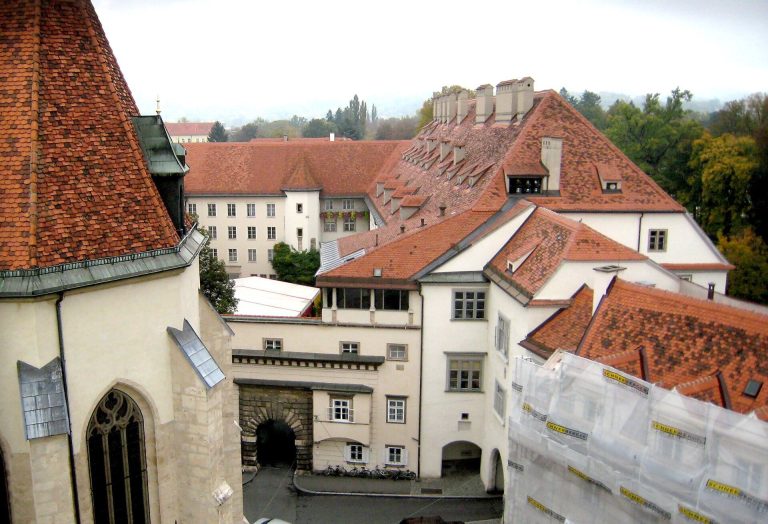
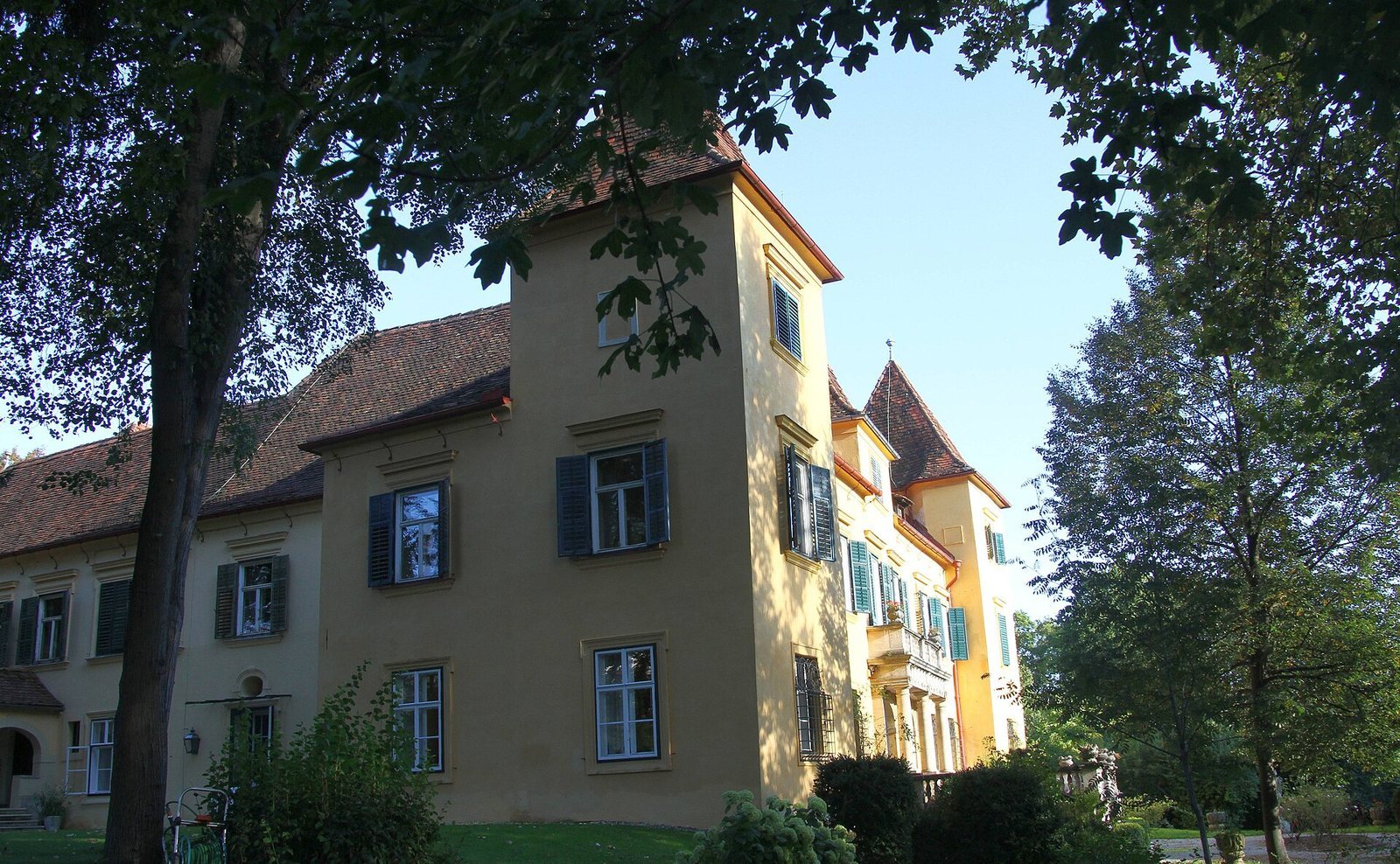
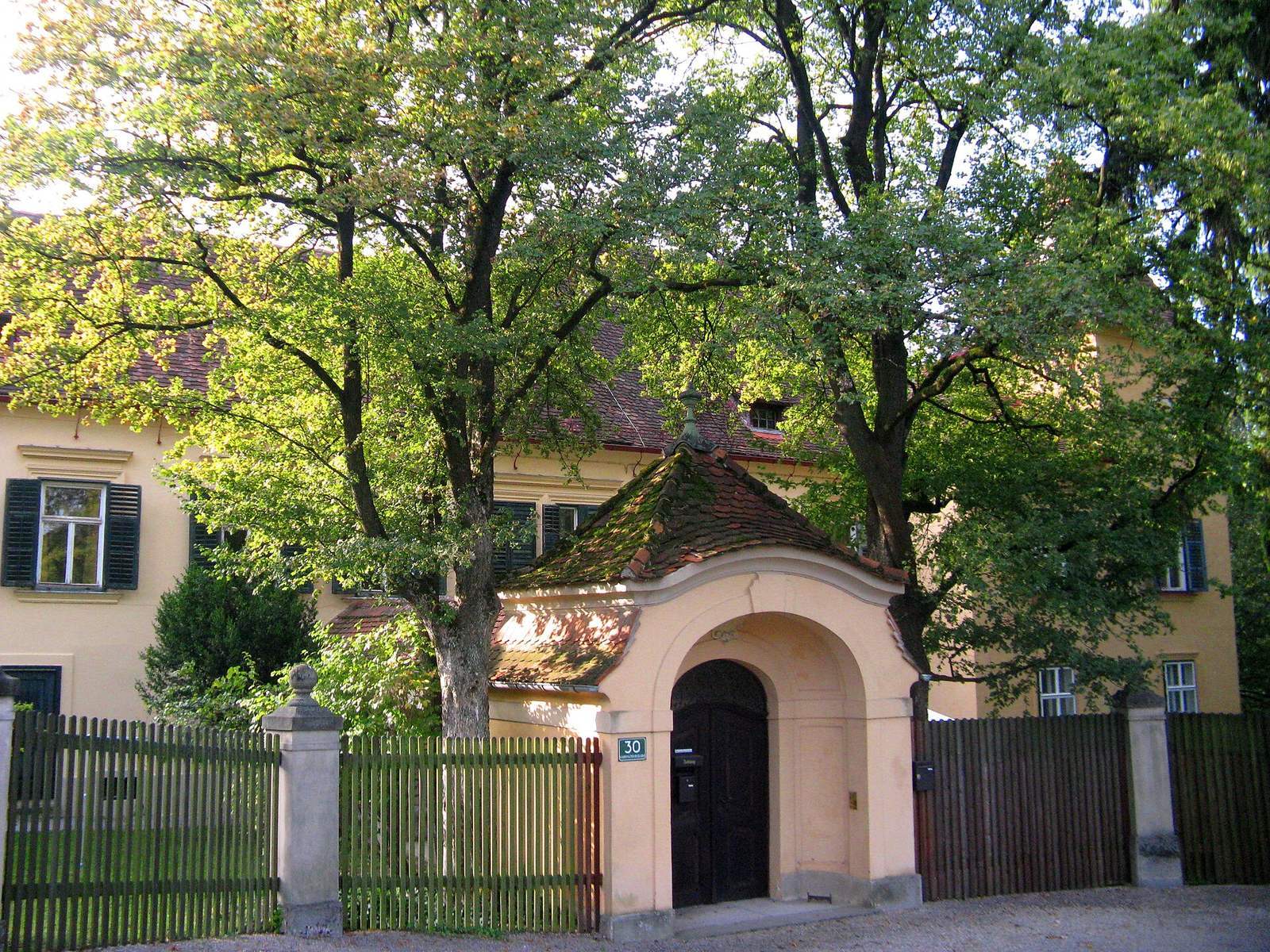
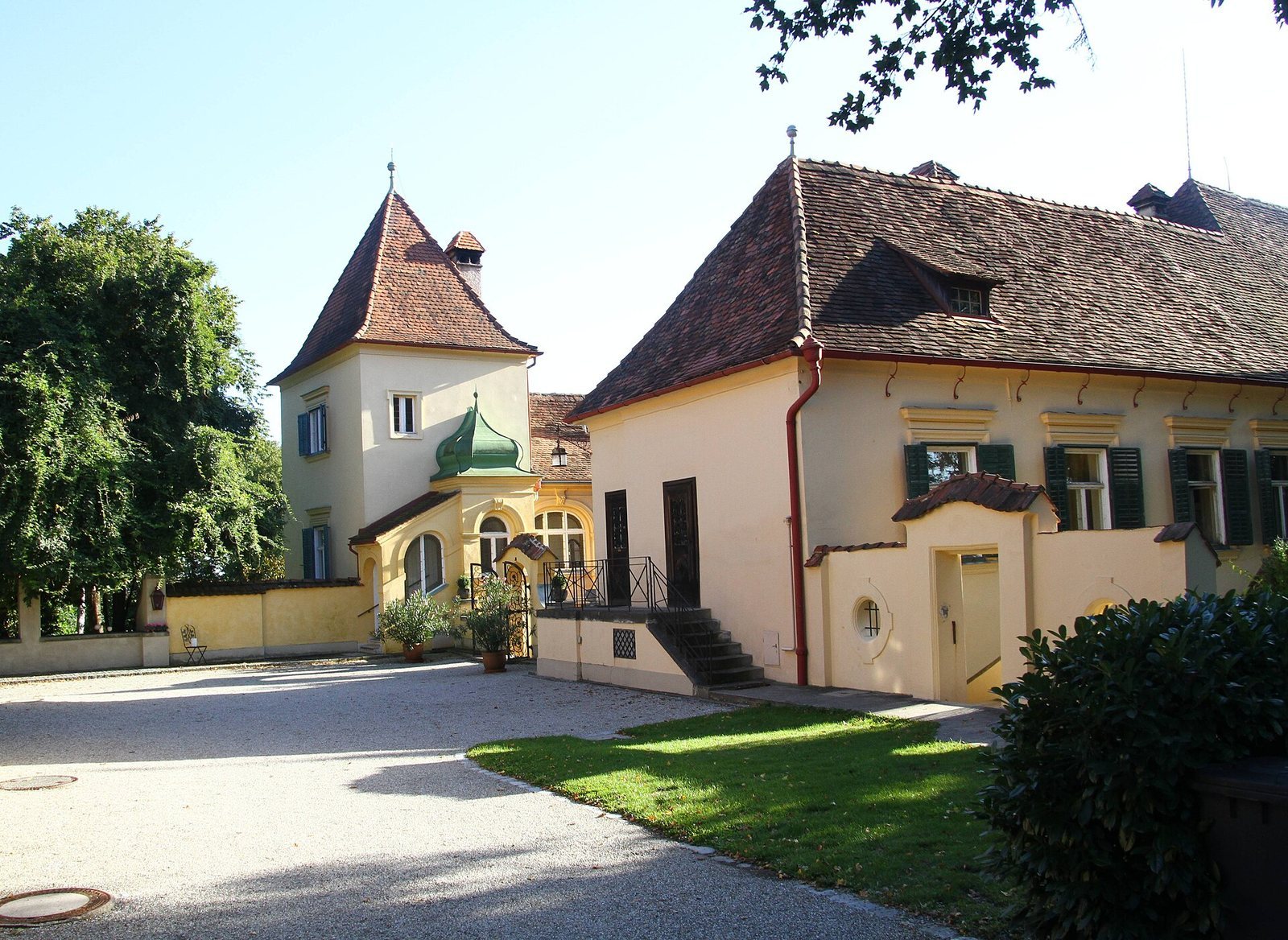
On the western slope of Ruckerlberg in Graz’s Waltendorf district, the two-storey castle has a U-shaped plan. Its present form derives largely from the seventeenth century. A small turret with a tent-shaped roof occupies the western side of the complex.
Twentieth-century additions
A tower on the southeast side and an arcaded courtyard in the Neo-Renaissance style, a revival of Renaissance architecture, date to the 1923 remodeling.
Chapel of Saint Catherine
The castle chapel is dedicated to Saint Catherine. Its stucco decoration uses the auricular style, with soft, lobed forms, and includes the coats of arms of the Counts of Breuner. The stucco and the surviving interior fittings date to 1660 and are attributed to the artist Mathias Camin.