Saarburg Castle: A Medieval Hill Castle in Germany
Site at a Glance
- Popularity
- Medium
- Country
- Germany
- Primary era
- Medieval
- Eras represented
- Medieval
- Civilizations
- Electorate of Trier, Holy Roman Empire
- Site type
- Military
- Remains
- Castle
On this page8 sections
History
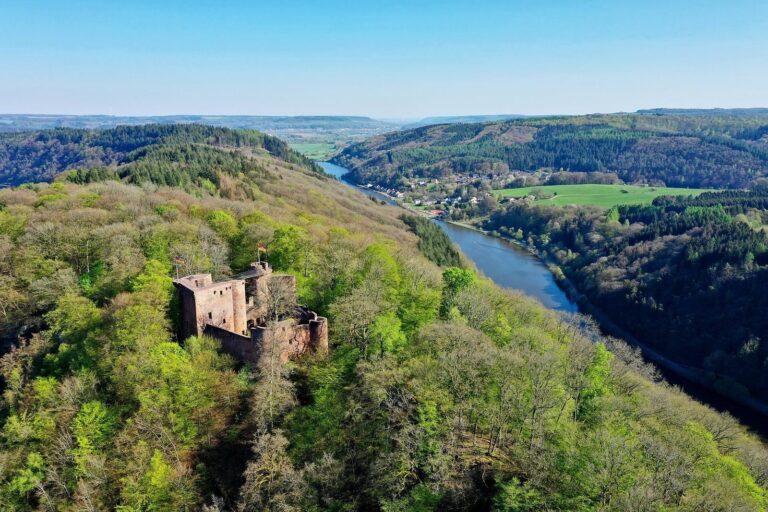
Saarburg Castle is a medieval hill castle above the old town of Saarburg in Germany, probably built in the tenth century. It is among the oldest hill castles in western Germany and is first mentioned in 964, when the Archbishopric of Trier granted it as a fief, a right or property held in return for allegiance or service, to Count Siegfried of Luxembourg.
From Luxembourg to Trier
After Siegfried’s son Adelbero died in 1046, the castle returned to the Archbishopric of Trier. The lords of Reuland later held rights through the counts of Luxembourg. Arnold of Reuland occupied the castle in 1300, but gave up his claim in 1313 after Archbishop Baldwin of Trier bought his rights. That same year, John of Luxembourg renounced the Luxembourg counts’ claims. The Electorate of Trier, a territory governed by its archbishops, who also held the rank of prince-elector in the Holy Roman Empire, became the castle’s sole owner. The archbishops subsequently enlarged it over time.
Destruction and rebuilding
Ulrich von Manderscheid attacked and destroyed the castle in 1431. John II of Baden rebuilt it, and in 1464 he was consecrated as Archbishop of Trier in the castle chapel. The castle withstood an attack by Franz von Sickingen’s forces in 1522, but Albrecht Alcibiades of Brandenburg-Kulmbach destroyed it about thirty years later. It was rebuilt at the end of the sixteenth century.
Military occupation and decline
During Louis XIV’s wars of conquest, French and Spanish forces occupied the castle several times. French forces captured it in 1702 during the War of the Spanish Succession; the Prussian Legion “Schwerin” retook it in 1704. From 1734, the castle saw little habitation and began to decay.
Remains
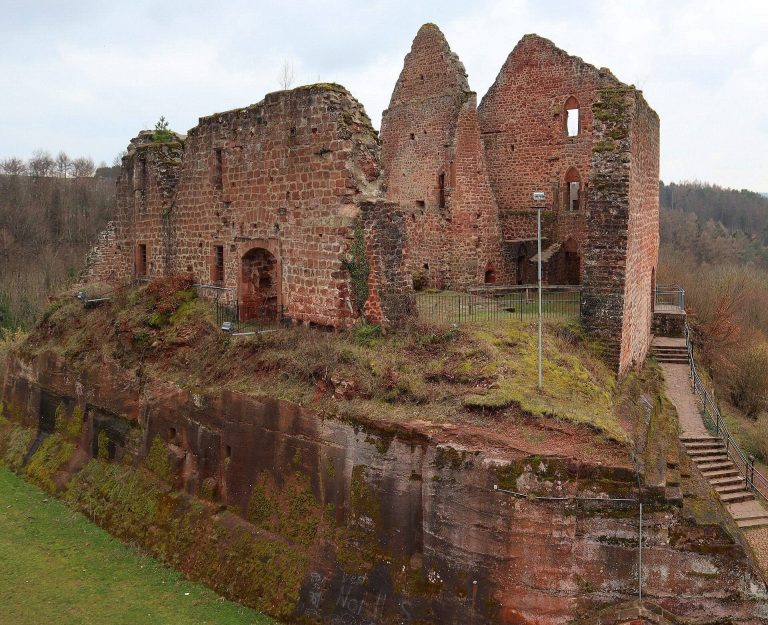
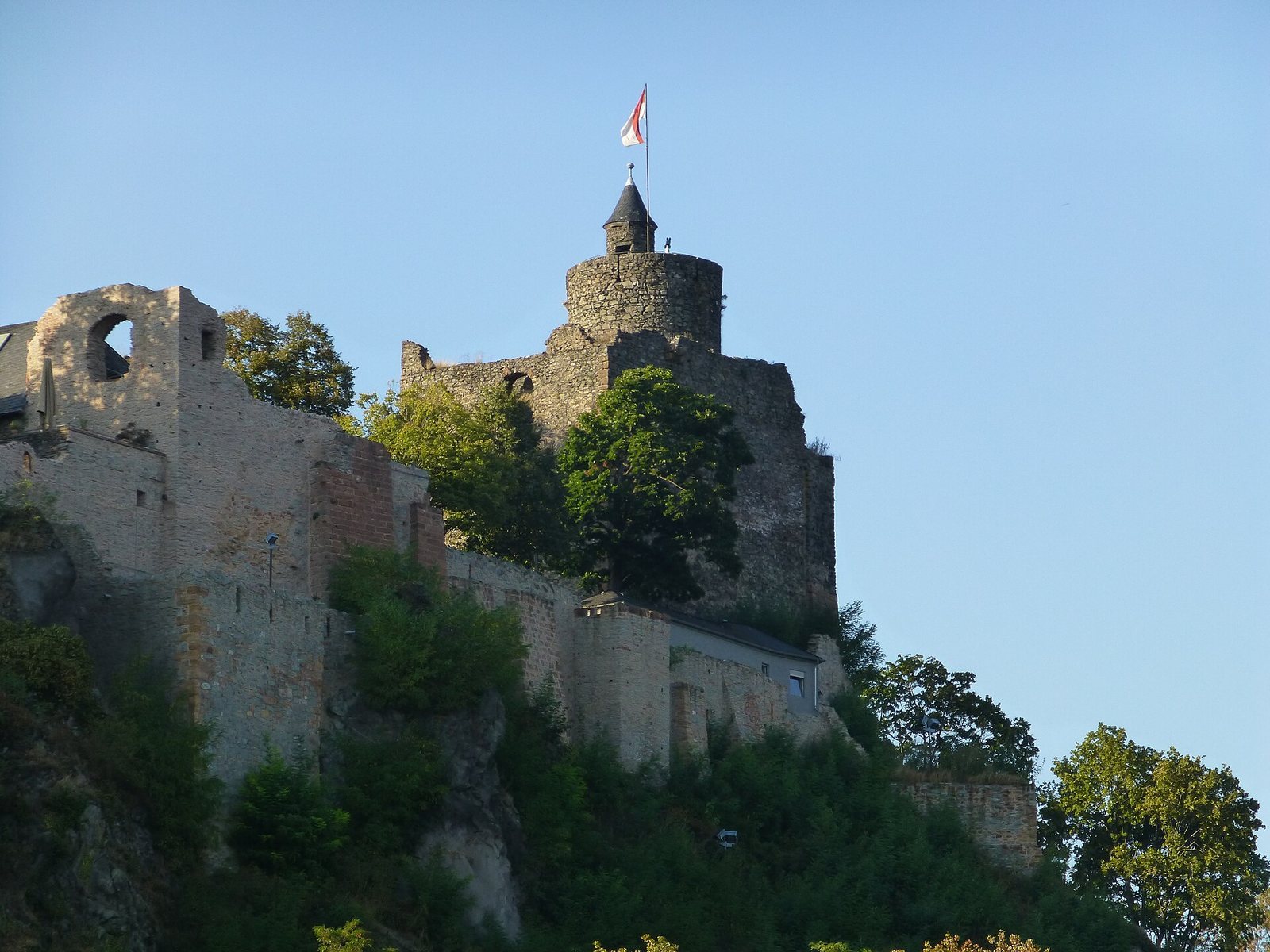
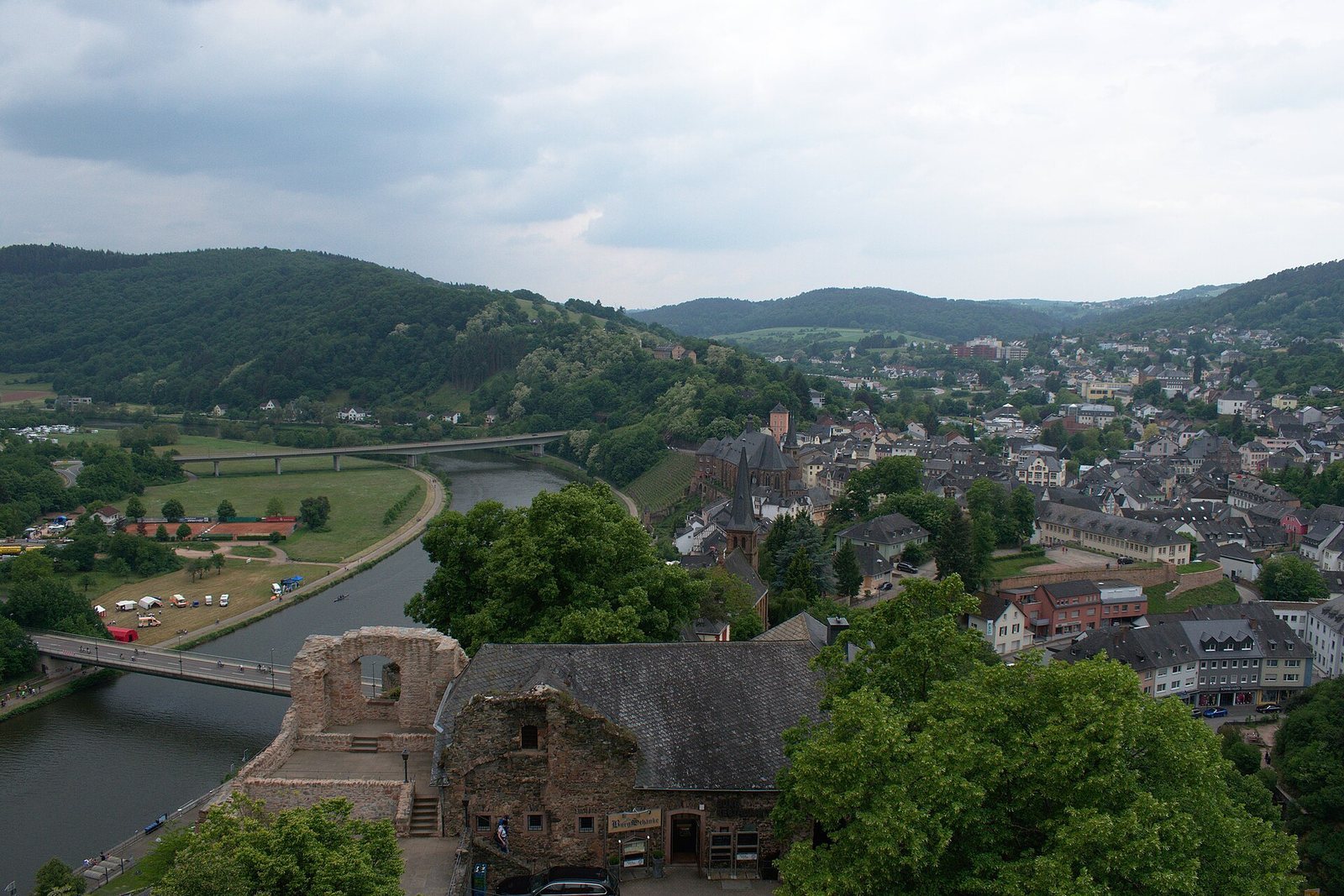
The ruins occupy a southern spur of the 206.5-metre-high Schlossberg, at an elevation of 202 metres above Germany’s standard elevation datum (NHN). The medieval castle extended 137 metres by 50 metres, and sections of its enclosing walls survive.
Enclosure and towers
Enclosing walls
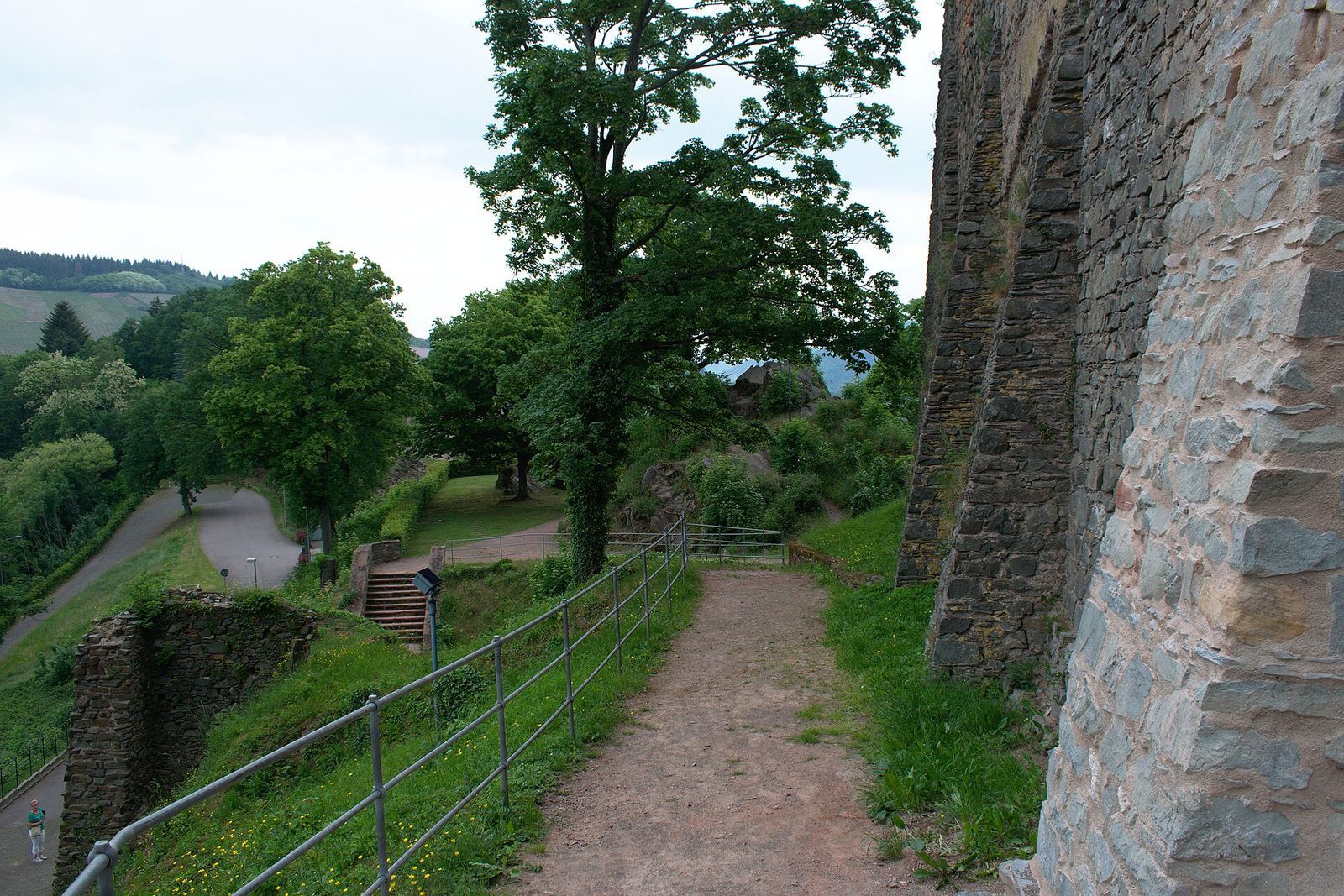
Parts of the walls that once enclosed the medieval castle remain. Their surviving sections mark portions of the perimeter of the former 137-by-50-metre complex.
Residential tower and keep
The surviving Romanesque residential tower, built in a medieval style marked by rounded arches and substantial masonry, began as a three-storey fortified house. It has an almost square plan of 13 by 15 metres, walls 1.5 metres thick, and stands 14 metres high. A round keep, the castle’s principal fortified tower, was later incorporated into it.
The keep is 7 metres across and about 21.5 metres high when its covered stair structure is included. Its entrance is raised about 4 metres above ground. A wooden spiral staircase leads from the entrance to a viewing platform 15.5 metres above ground.