Igel Column: A Roman Family Funerary Monument in Germany
Site at a Glance
- Country
- Germany
- Primary era
- Classical
- Eras represented
- Classical
- Civilizations
- Roman
- Site type
- Burial
- Remains
- Tomb
On this page11 sections
History
Roman construction and family use
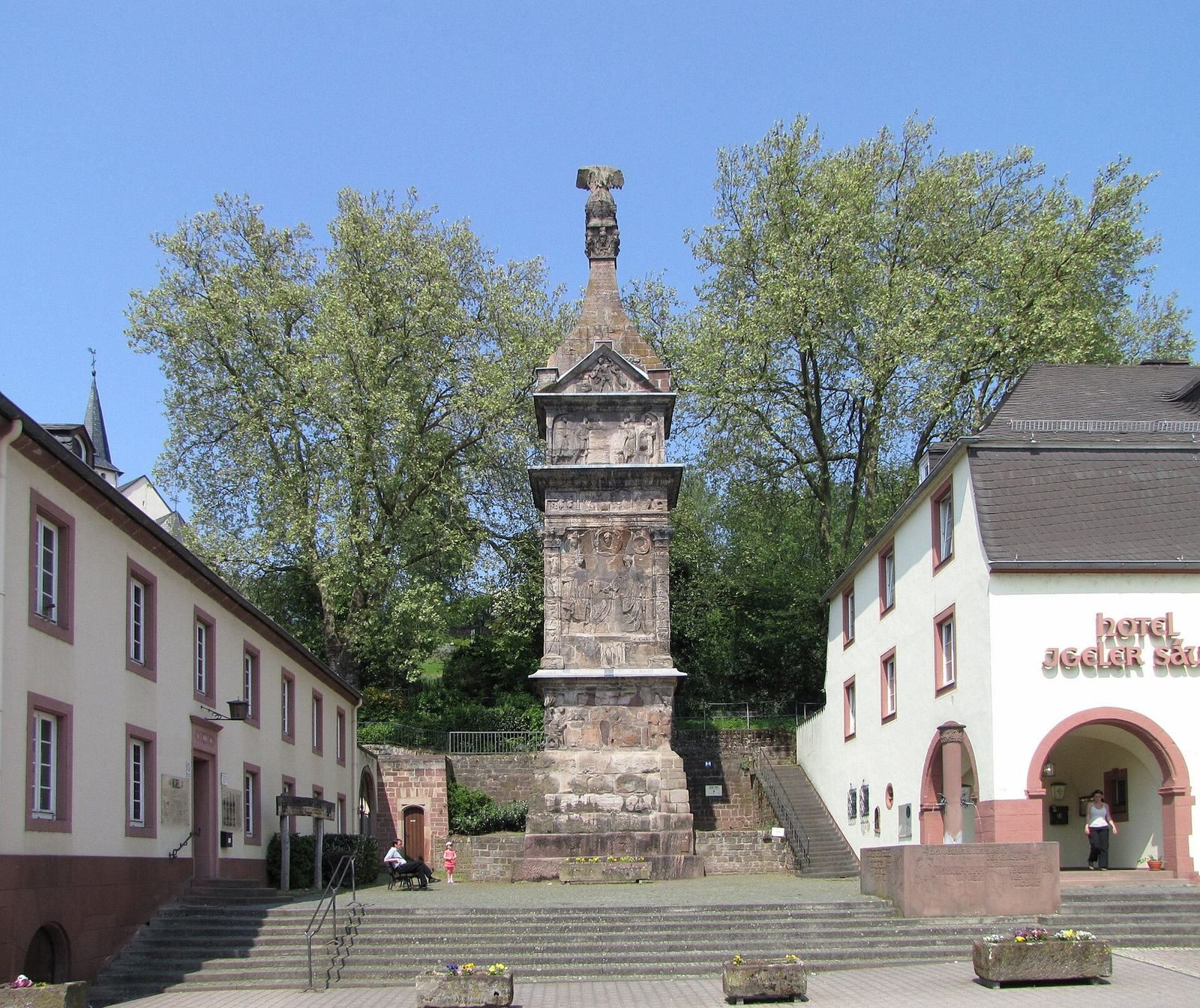
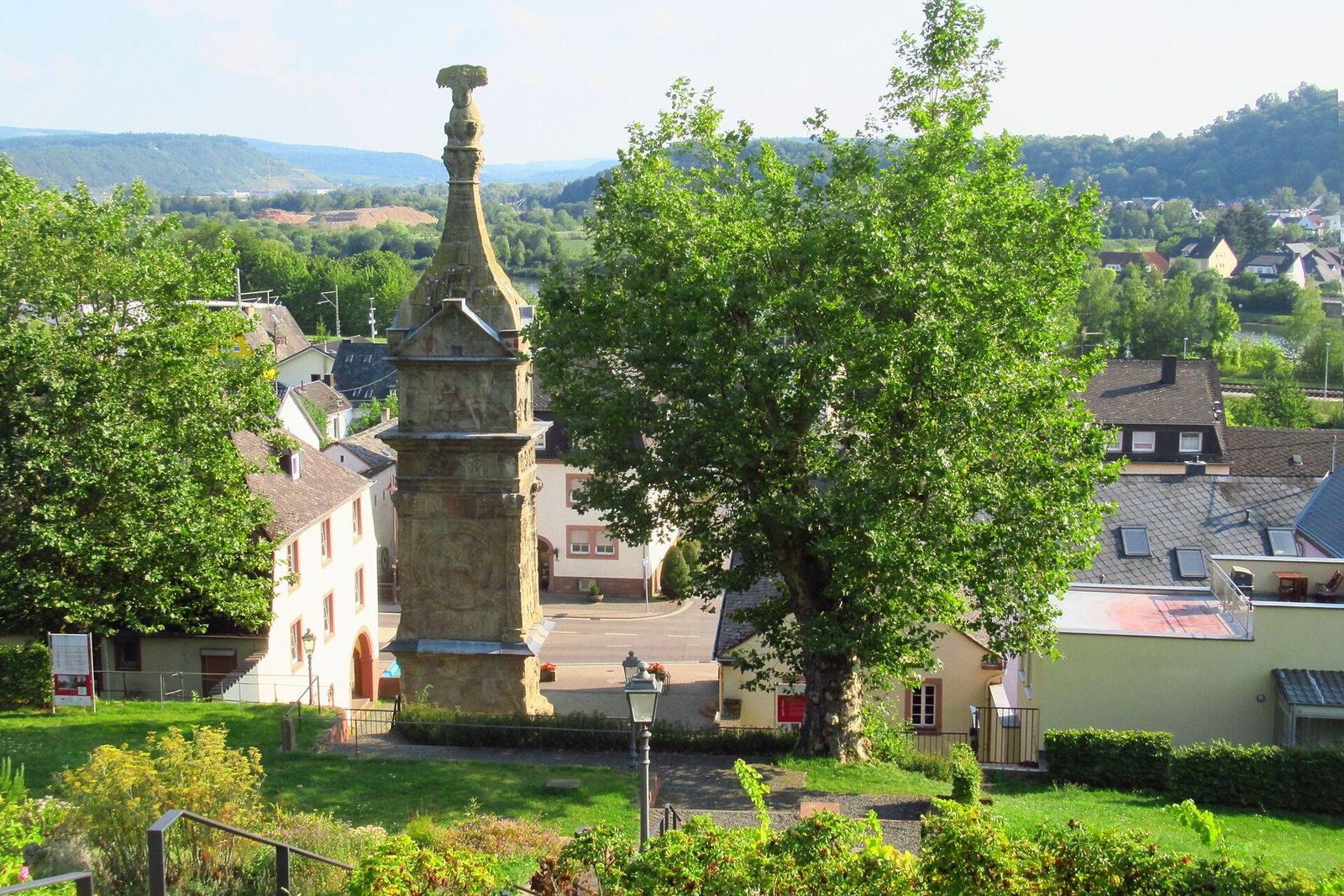
The Igel Column is a Roman family funerary monument in Igel, Germany, erected in the third century AD and usually dated to about 250, although its precise date is disputed. Alongside the Drusus Stone in Mainz, it is one of only two Roman funerary monuments north of the Alps to remain above ground at their ancient sites.
Its inscription and form identify it as a family memorial. The column may have served as a cenotaph, a tomb monument without a burial, while the family’s graves lay on their private land. The family were substantial landowners and traded cloth in Trier; the monument probably also promoted their business.
Medieval survival
After Roman rule ended, the column escaped destruction because people in the Middle Ages understood its principal south-side image as depicting the marriage of Constantius Chlorus and Helena, the mother of Constantine the Great. The monument was nevertheless damaged, including through attempts to remove its iron clamps for their metal.
Early modern records and interpretations
The name Igel has two traditional Latin explanations. One derives it from aquila, meaning eagle; another traces it to the medieval Latin agulia, a term for ancient Roman obelisks. Both interpretations link the settlement’s name to the monument.
On 14 January 1562, the Bolognese nobleman Fulvio Ruggieri visited the column while accompanying Giovanni Francesco Commendone, a papal special envoy and bishop of Zante, and described it in a travel account. It appeared on Gerardus Mercator’s map in 1567 and in a map by Joan Blaeu in 1649. In the sixteenth century, Peter Ernst I von Mansfeld, then Spanish governor of Luxembourg, may have considered moving it to the park of his castle at Clausen. Damage to the lower part may have resulted from an unsuccessful dismantling attempt, although both explanations remain uncertain.
Johann Wolfgang von Goethe visited on 26 August and again on 22 or 23 October 1792, describing and sketching the monument. He later wrote about it and assigned it to the Antonine period, the era of a Roman imperial dynasty that ruled from the late first through the second century AD. In 1829, the Sayner Hütte foundry at Bendorf produced a 19-inch bronze copy, designed by art caster Heinrich Zumpft from Carl Osterwald’s drawings. One of the first casts was sent to Goethe in Weimar that May.
Conservation and recognition
Restoration work in 1985–1986 formed part of the column’s modern conservation. The monument is protected under German monument law, listed as a monument of Rhineland-Palatinate, and protected as cultural property under the Hague Convention. Since 1986 it has belonged to the UNESCO World Heritage property “Roman Monuments, Cathedral of St Peter and Church of Our Lady in Trier.”
Remains
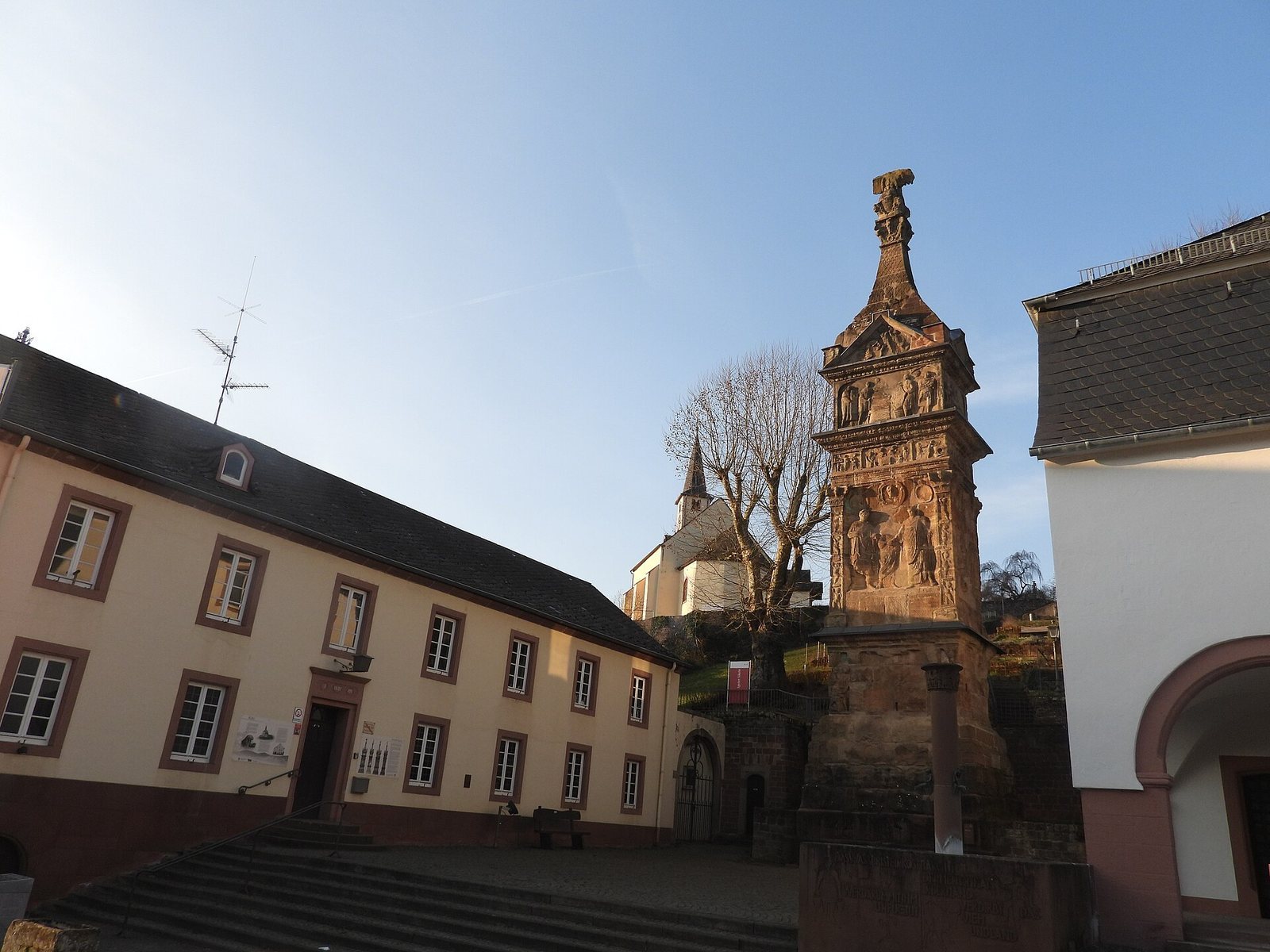
At its ancient location beside the Moselle, the Igel Column is a four-sided, multi-storeyed sandstone pillar about 23 metres high. Its red and red-grey stone rises from a four-stepped base set on a relatively low platform. Goethe described the surrounding terrain in 1792 as undulating and lush, with the Saar joining the Moselle opposite the monument.
Structure and sculpture
Stone structure
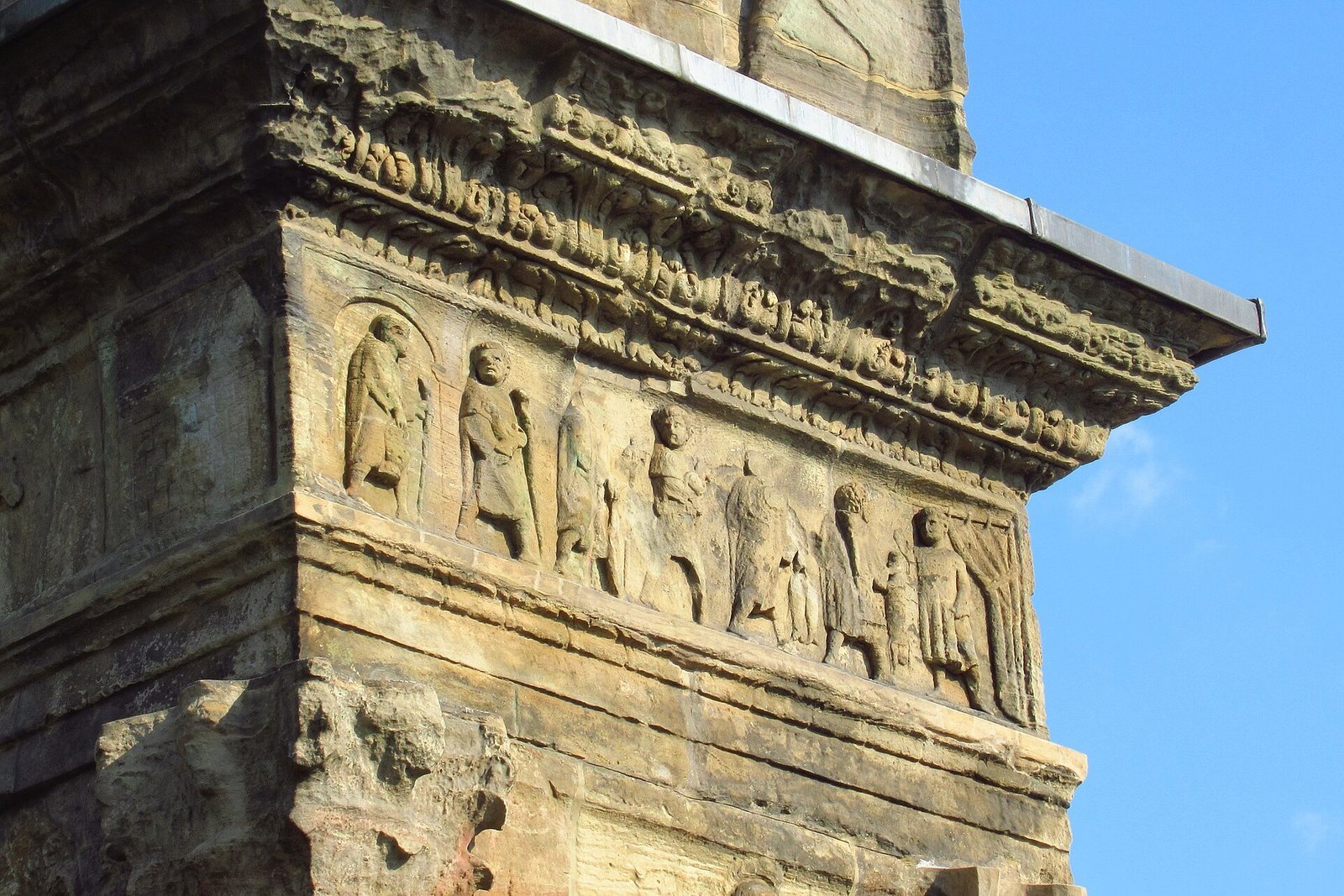
The pillar’s main body is divided by projecting cornices and has shallow Corinthian pilasters, flat wall projections in an ornate classical style, with decorated shafts. A horizontal beam, or architrave, sits above the supports, followed by carved decorative bands, or friezes, and a heavy cornice. The attic, an upper section above the main body, carries four triangular pediments with carved scenes. A crypt lies within the western part of the base.
Carved panels
The carved panels combine mythological subjects with scenes from the work and household life of cloth merchants. The monument was originally painted, and traces of pigment survived into the early nineteenth century. One panel shows six tenants bringing gifts to their landowner’s house and being received in its central court, or atrium. Their offerings include a hare, two fish, a young goat, an eel, a rooster, and a basket of fruit.
A scene with a wagon on the western attic includes a milestone marked LIIII. The mark represents four Gallic miles, a distance of about nine kilometres from Trier’s Roman bridge.
Crowning sculpture
The upper, pyramid-shaped section is about 3.5 metres high and bears a carved pinecone surrounded by four heads. Above it is a sculpture of Jupiter, the chief Roman god, and Ganymede, the mythological youth Jupiter abducted. The heavily weathered eagle with outspread wings is interpreted as showing the abduction, in which Jupiter took eagle form.
Copies and reconstructions
A multicolored reconstruction displayed at the Rheinisches Landesmuseum Trier suffered serious damage and was dismantled in 2022. A plaster cast of the column is held by the Museum of Casts of Classical Sculptures in Munich.