Wolfstein Castle: A Passau Episcopal Fortress and Administrative Seat
Site at a Glance
- Popularity
- Medium
- Country
- Germany
- Primary era
- Medieval
- Eras represented
- Medieval, Early Modern
- Civilizations
- Holy Roman Empire
- Site type
- Military
- Remains
- Castle
On this page9 sections
History
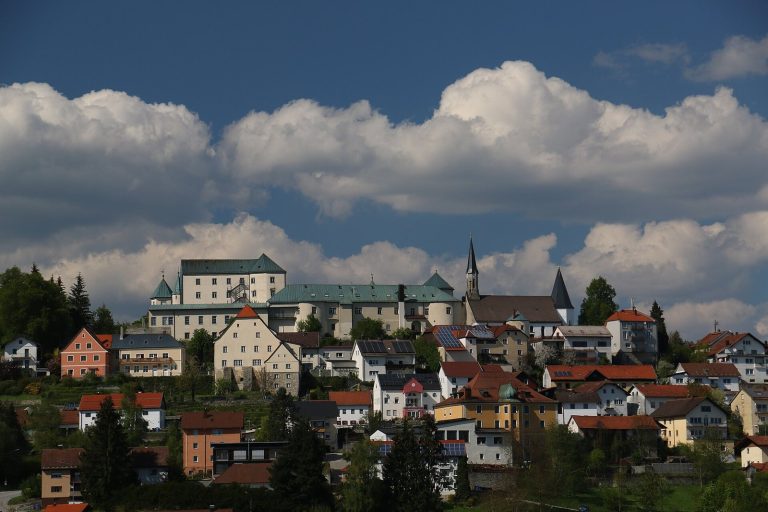
Wolfstein Castle is a medieval fortification on a rocky outcrop northwest of Freyung’s town centre in Germany. Bishop Wolfger von Erla built it around 1200, after Holy Roman Emperor Henry VI transferred the surrounding territory to the Bishops of Passau in 1193. Named for Wolfger, the castle served as a stronghold, an administrative seat and an episcopal hunting lodge.
Castle and settlement
In 1301, a settlement and associated woodland were first recorded in the area. The settlement later became Freyung, while the castle continued to serve the Bishops of Passau.
Territorial and administrative change
The Prince-Bishopric of Passau, a territory governed by a bishop who also held secular authority, was dissolved in 1803. Its lands were initially attached to the Electorate of Salzburg, a territorial state whose ruler held the rank of an elector in the Holy Roman Empire. In 1806, following the Treaty of Pressburg, which rearranged territorial control in central Europe, the area passed to the Kingdom of Bavaria.
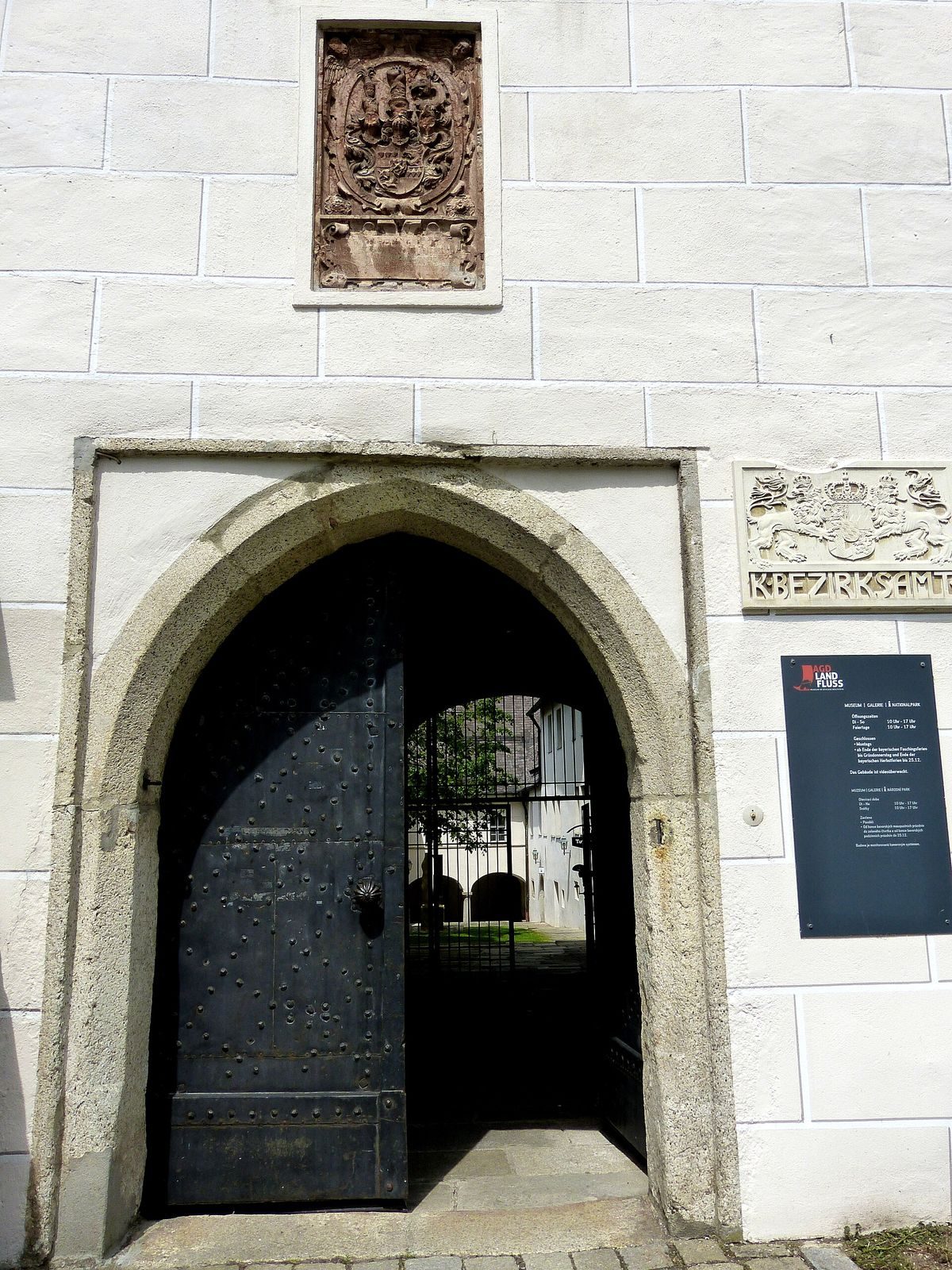
That year, the Wolfstein judicial district, an area served by a district court, was established with its seat at the castle in the municipality of Ort. It belonged to the Lower Danube Circle, a Bavarian administrative region renamed Lower Bavaria in 1838. In 1862, a Waldkirchen judicial district was formed from municipalities in the Wolfstein and Wegscheid districts, and the Wolfstein district court became the Freyung district court. Both districts belonged to the Wolfstein district office, a local administrative authority. In 1938, the districts became counties and the district offices became county offices.
Ort was incorporated into Freyung on 1 April 1954, bringing the castle within the town’s territory. The castle also gave its name to Wolfstein County, which was dissolved in 1972.
Cultural use
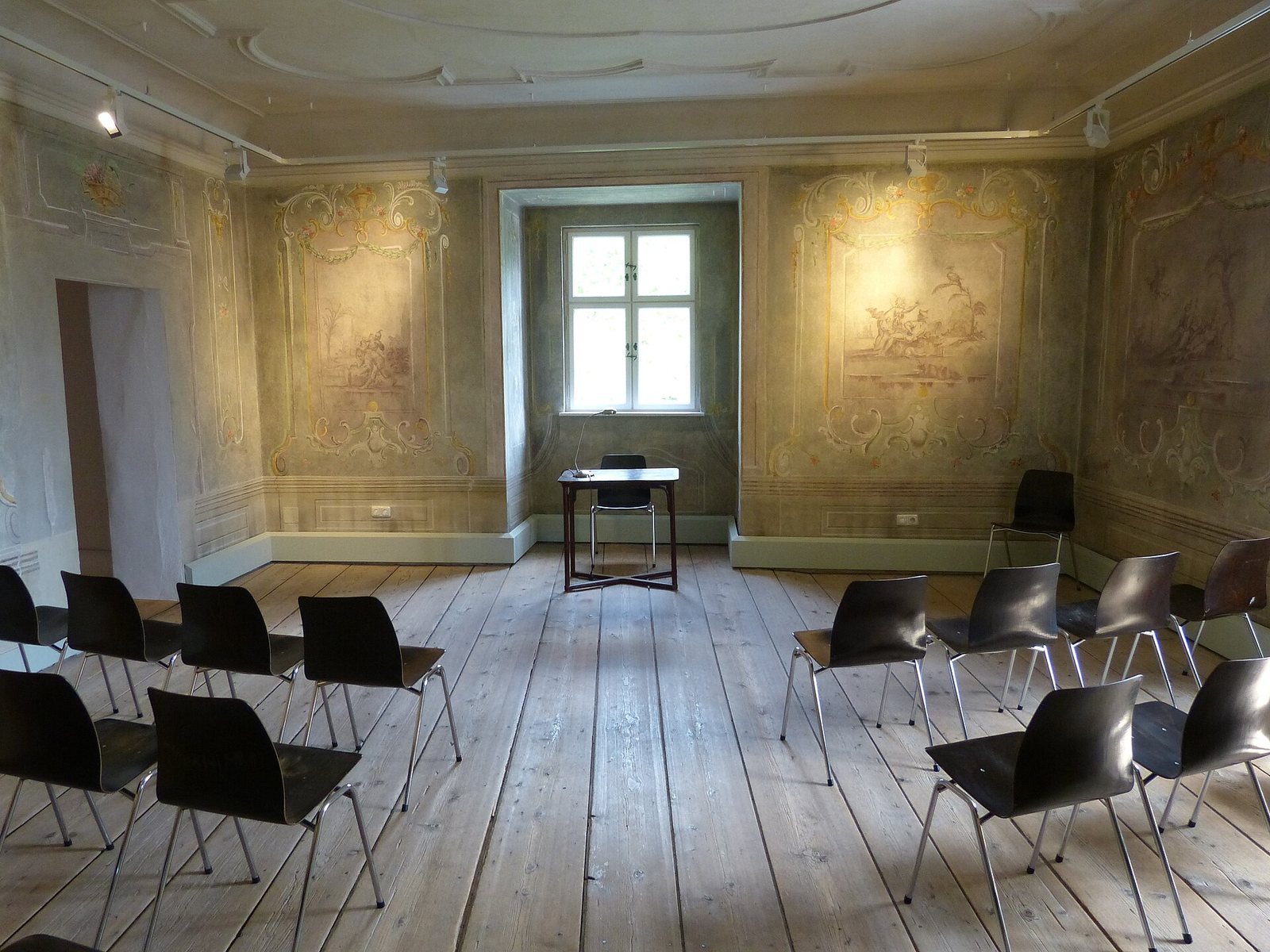
Since 1982, the castle has housed the county art collection, Galerie Wolfstein, which features contemporary art from Eastern Bavaria. The county’s Hunting and Fishing Museum has also been based there since 1989. It was redesigned in 2014 under the name Jagd Land Fluss, meaning “Hunt Country River.”
Remains
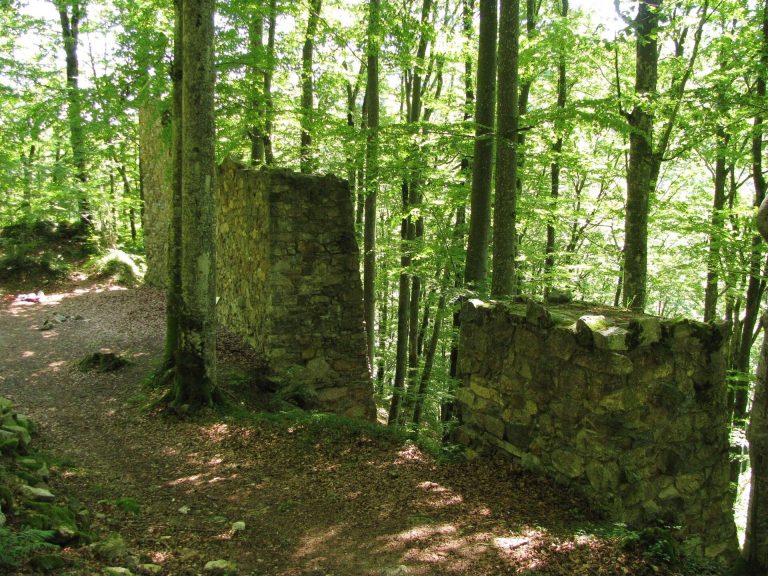
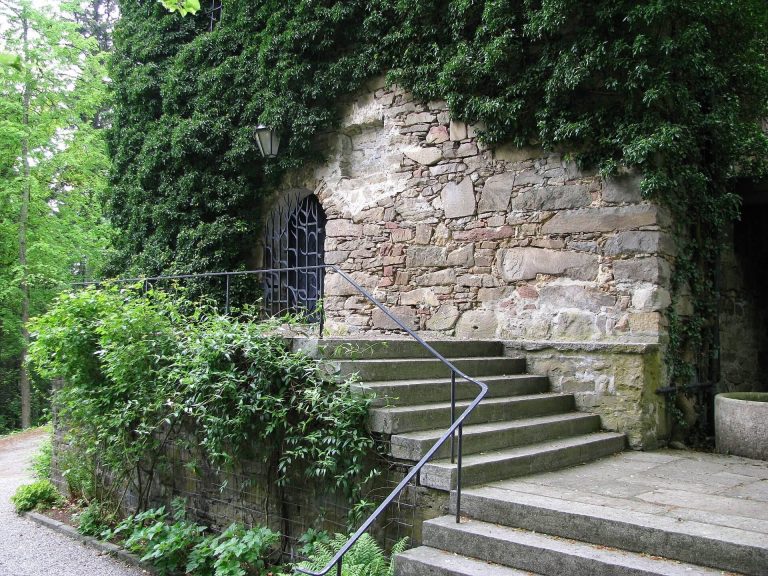
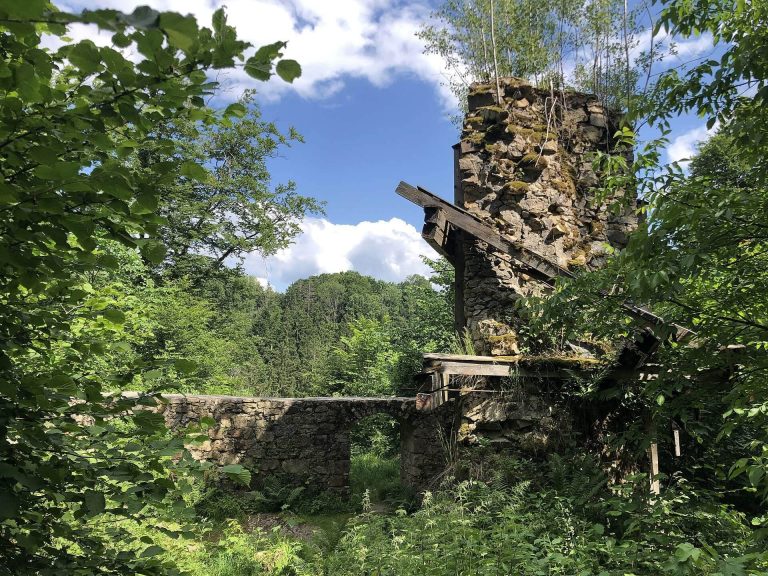
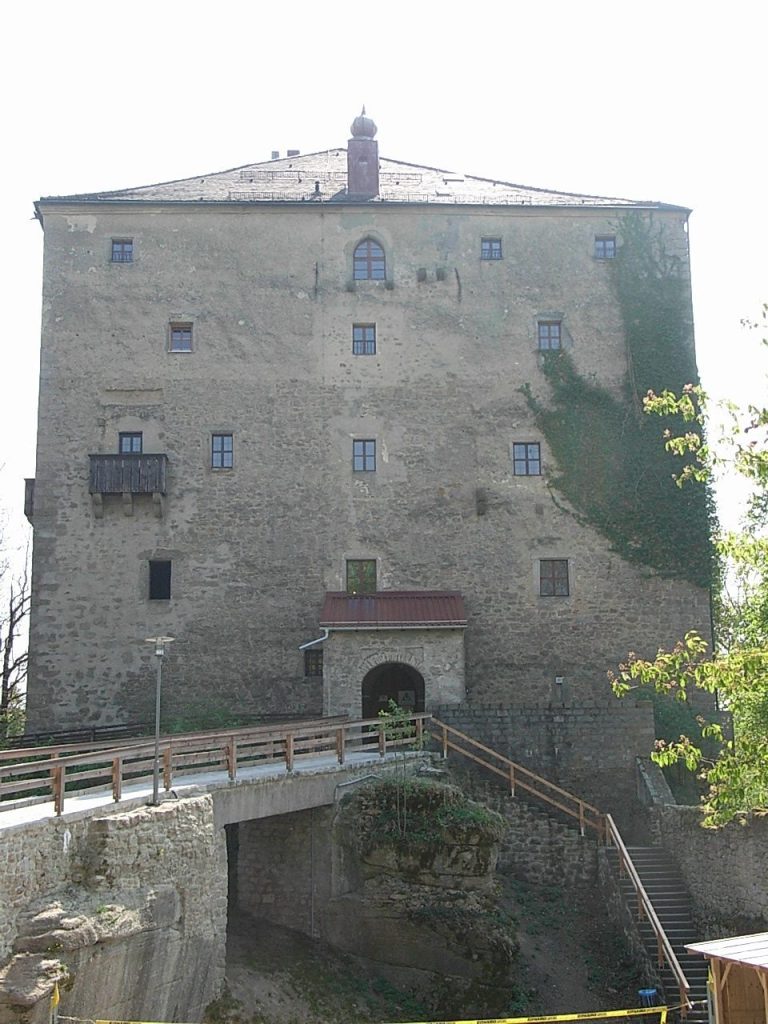
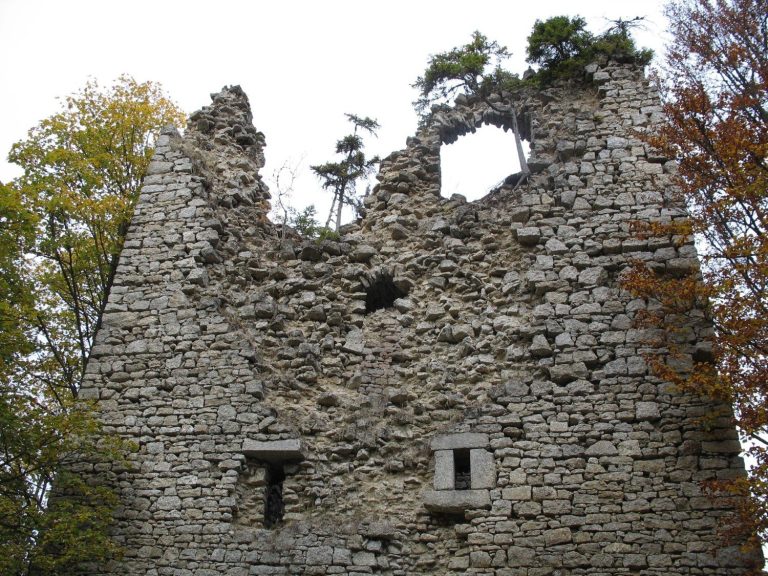
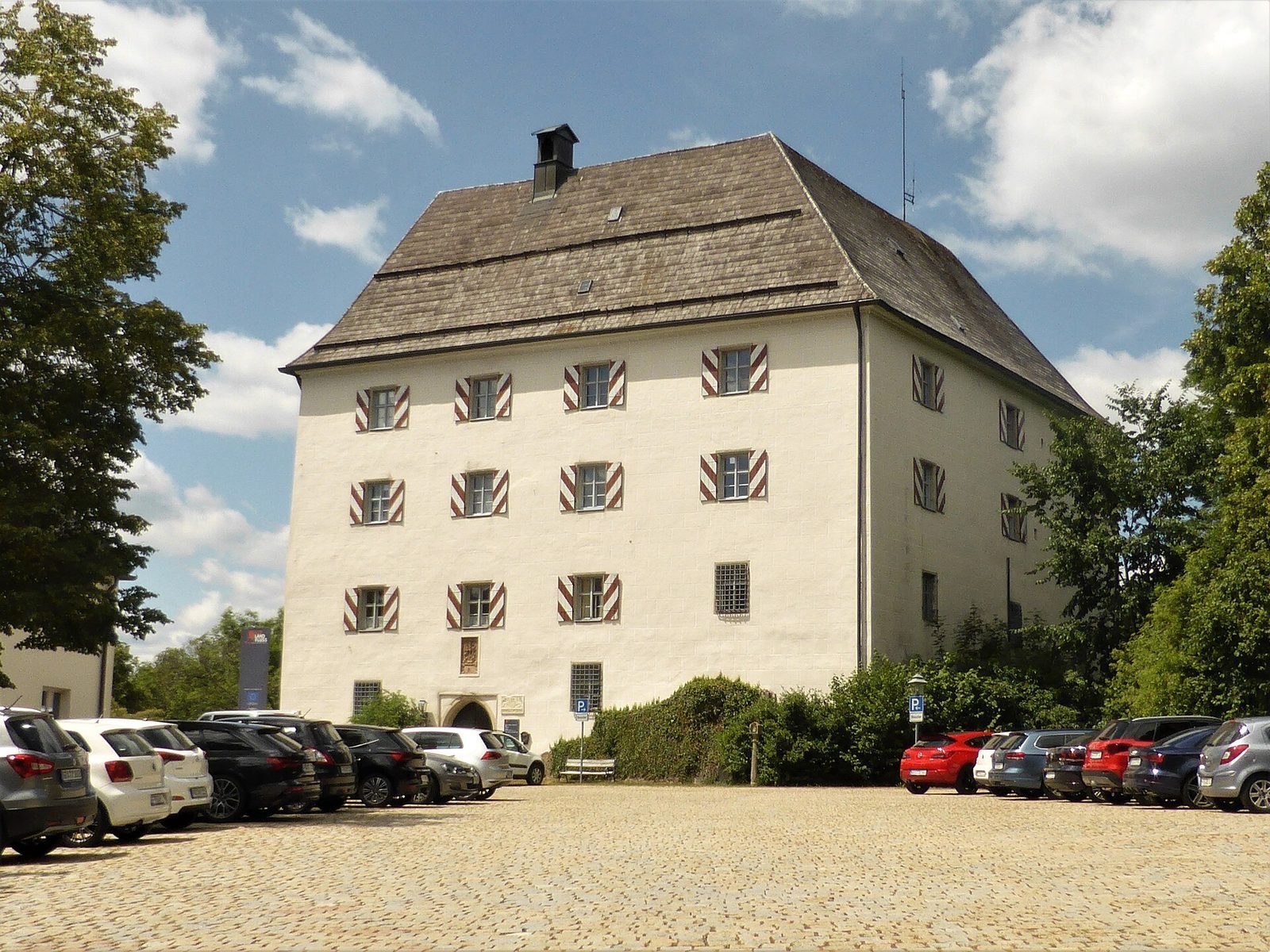
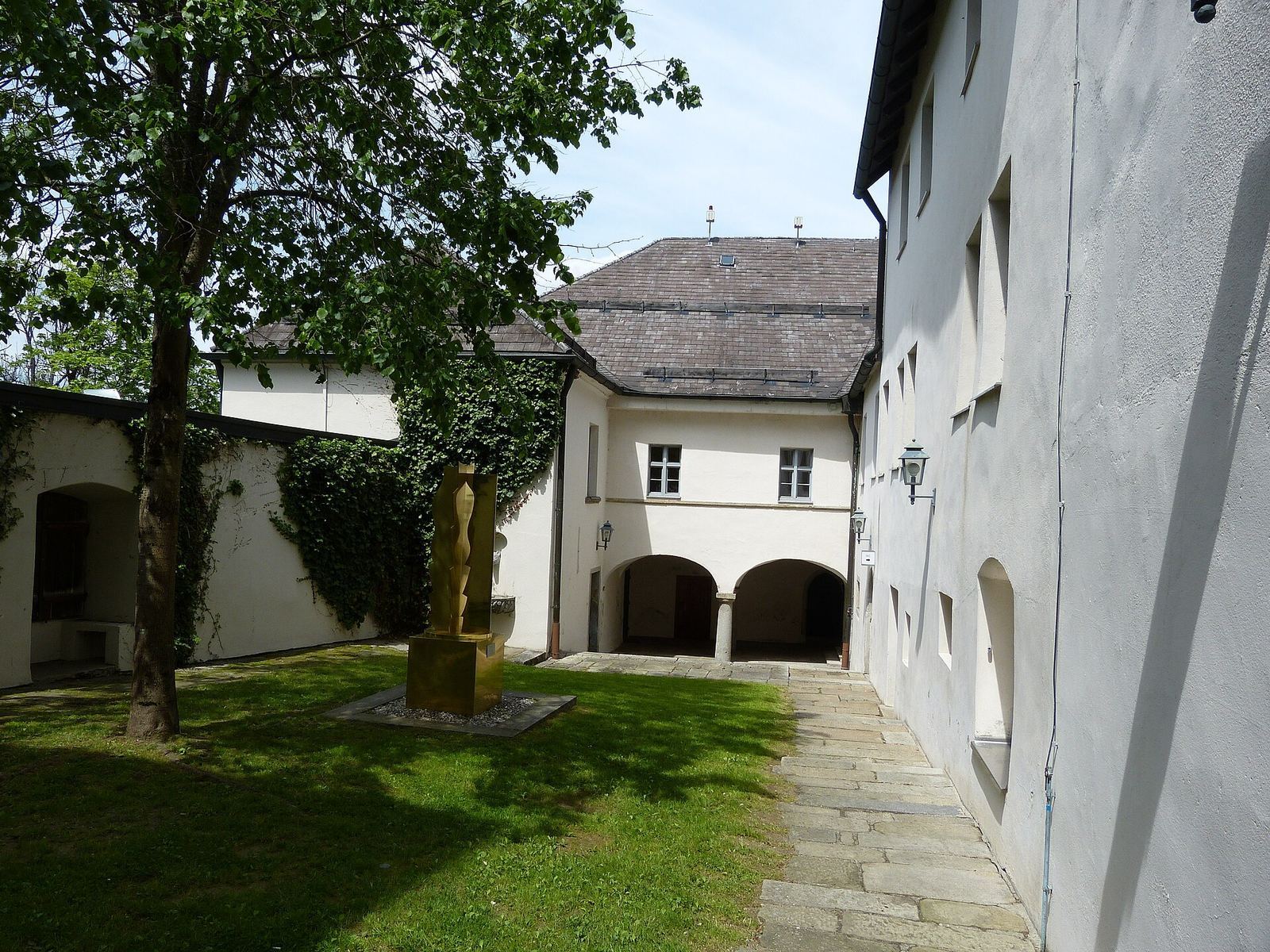
The castle stands on a rocky outcrop surrounded on three sides by the Saußbach River. Its buildings include a substantial residential tower and two low wings, while a castle wall encloses a four-sided courtyard.
Castle buildings and grounds
Residential tower
The substantial residential tower has construction phases dated to 1199-1204 and 1590.
Low wings
Two low wings with rows of arches date to the late 16th and early 17th centuries.
Courtyard wall and grounds
The castle wall encloses the courtyard. Medieval and early modern archaeological remains lie below ground within the castle grounds. A separate building directly in front of the castle houses the Freyung-Grafenau county offices.