Kunžvart: A Medieval Border Castle in Czechia
Site at a Glance
- Rating
- 4.4
- Popularity
- Low
- Country
- Czechia
- Primary era
- Medieval
- External website
- Open
- Eras represented
- Medieval
- Civilizations
- Holy Roman Empire, Kingdom of Bohemia
- Site type
- Military
- Remains
- Castle
On this page8 sections
History
Foundation and border role
Kunžvart is a ruined medieval castle in Czechia, near Strážný, probably founded at the beginning of the fourteenth century during the reign of John of Luxembourg. It occupied one of the highest castle sites in the country and helped secure the state border with the Duchy of Bavaria while protecting the Golden Trail, a medieval commercial route across the Bohemian Forest between the Vimperk region and Passau.
The foundation date remains uncertain, although archaeological finds show that the summit was used in the thirteenth century. The first written record dates from 1359, when Emperor Charles IV confirmed the holding of the Vimperk estate, including Kunžvart, to Pešek of Janovice and the sons of his brother Herbart. The castle therefore belonged to the Janovice lords.
Trade, administration, and decline
Kunžvart became more important after King Wenceslaus IV allowed the lords of Vimperk to restore a branch of the Golden Trail leading to Vimperk and collect tolls there. The castle housed a burgrave, the castellan and administrative commander serving the castle’s lord, together with a small retinue. Its position combined oversight of the route with control of a sensitive border area.
The castle was no longer inhabited by 1547. From 1575, its masonry was dismantled for building material, and two old chambers burned in 1578. From the middle of the sixteenth century, Kunžvart consequently developed into a ruin.
Archaeology and later identity
Soundings carried out on the spur and inside the tower in August 2000 and 2001 added archaeological evidence for the site’s use. The ruins have been protected as a cultural monument of the Czech Republic since 3 May 1958.
In the seventeenth and eighteenth centuries, the castle’s name became part of the history of the surrounding settlement. A depot on the Golden Trail was established at Bärenloch in 1672, and the settlement was renamed Kuschwarda or Kunžvart in 1735. After Border Guard units, a state force responsible for securing Czechoslovakia’s borders, were stationed there in 1951, the settlement was renamed Strážný in 1955. The town’s coat of arms depicts the castle tower.
Remains
Setting and layout
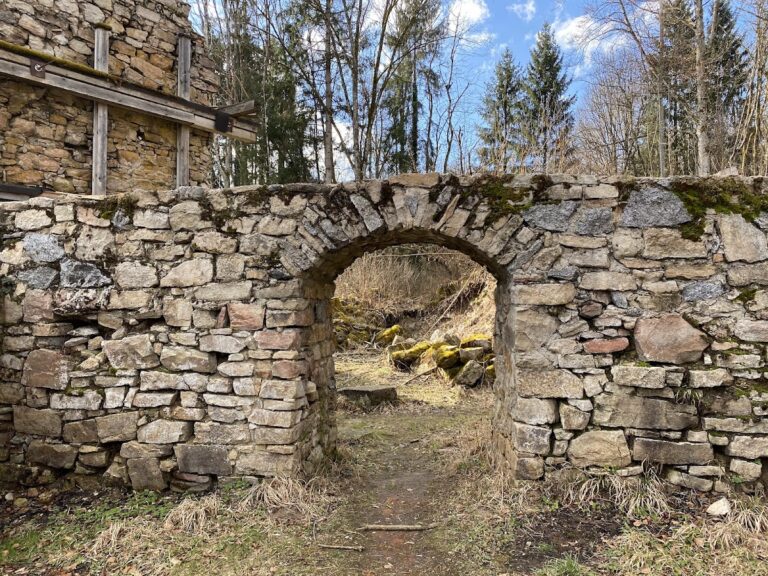
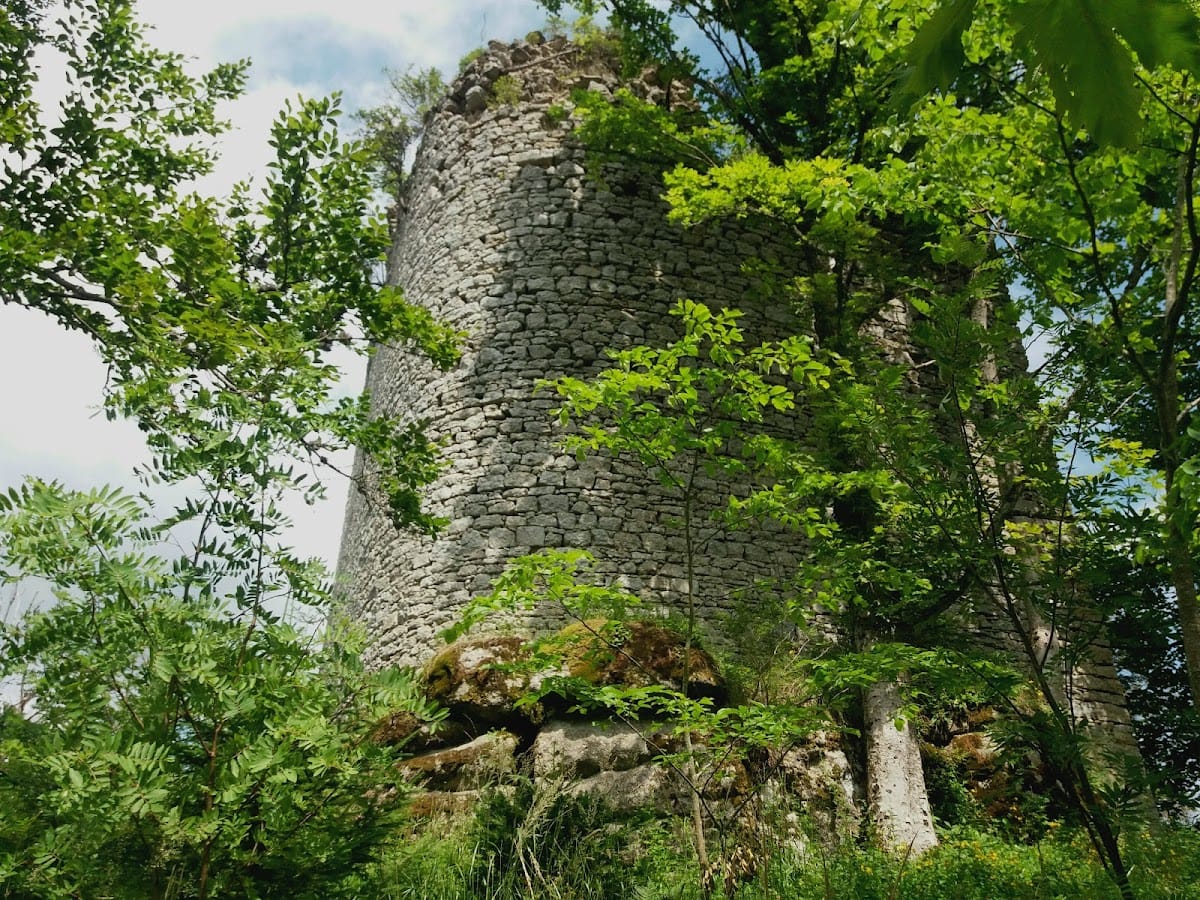
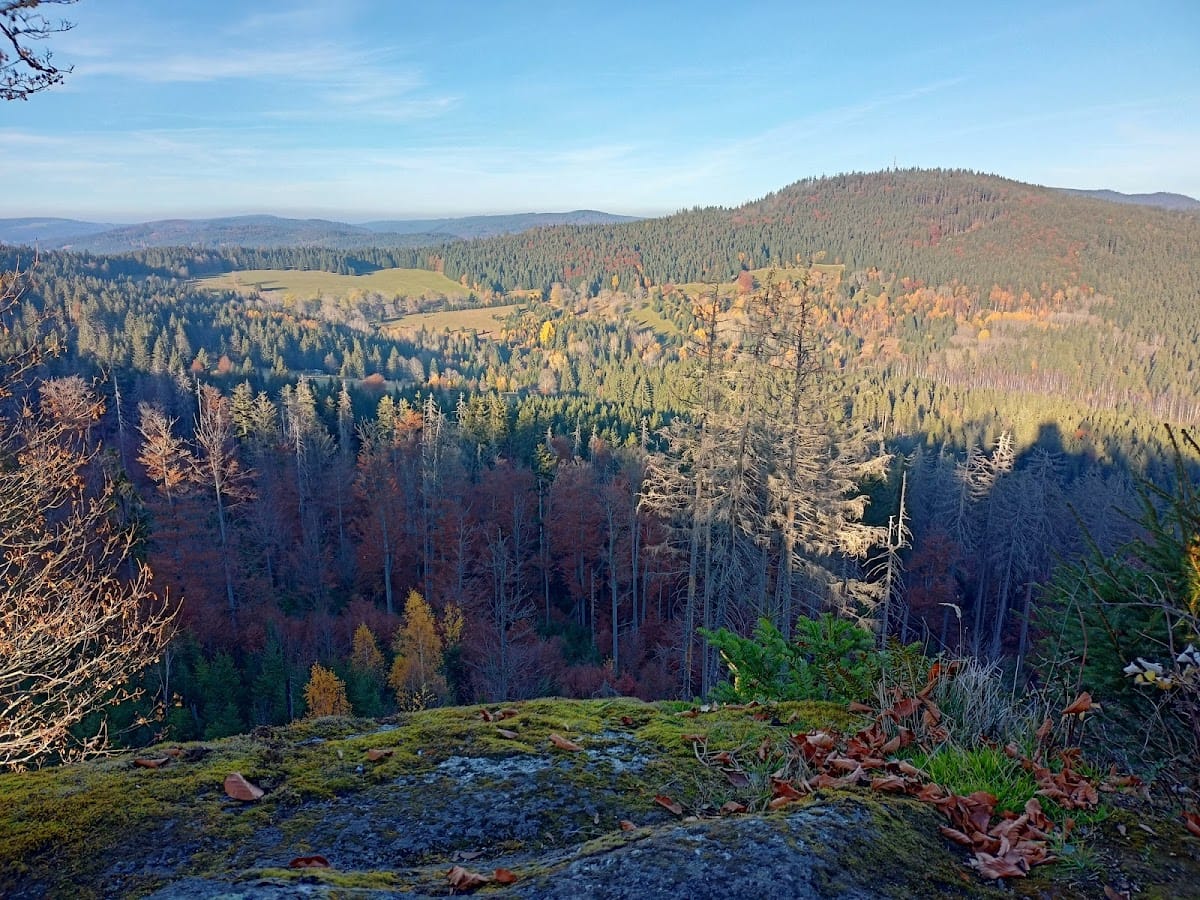
Kunžvart stands at approximately 1,033 to 1,037 metres above sea level on a granite outcrop forming a spur on the eastern ridge of Strážný Mountain. The castle lies about 800 metres west of the mountain’s 1,115-metre summit, in an elevated position within the Bohemian Forest. The approach came from the west, where a natural fissure in the rock was adapted into a moat. Wooden outer fortifications, together with possible timber or half-timbered structures and a palisade, formed the site’s outer defensive works.
Residential tower
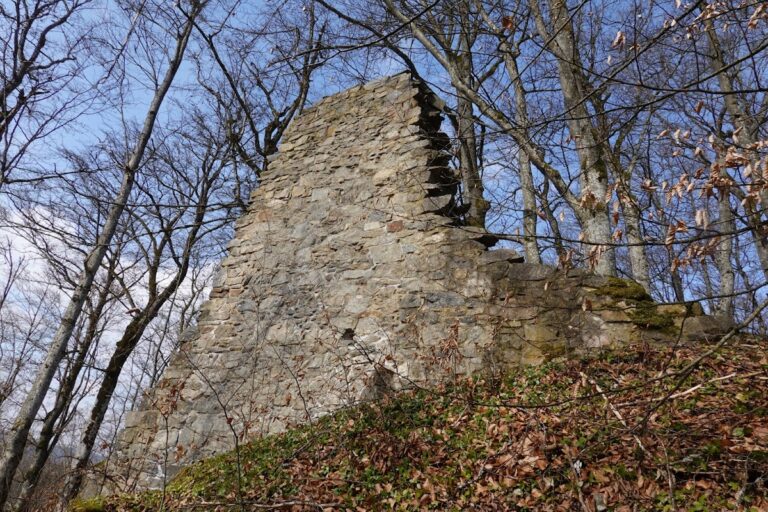
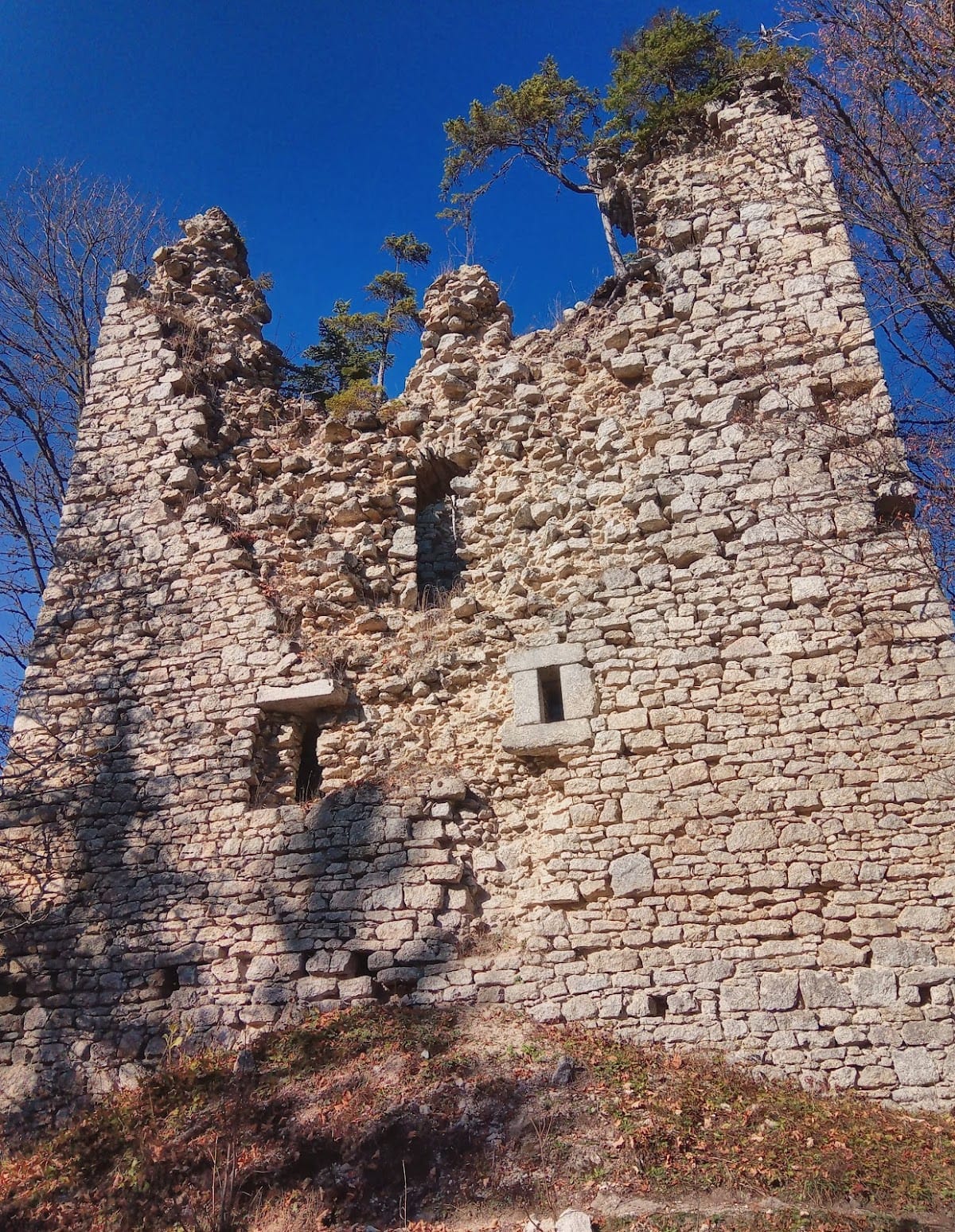
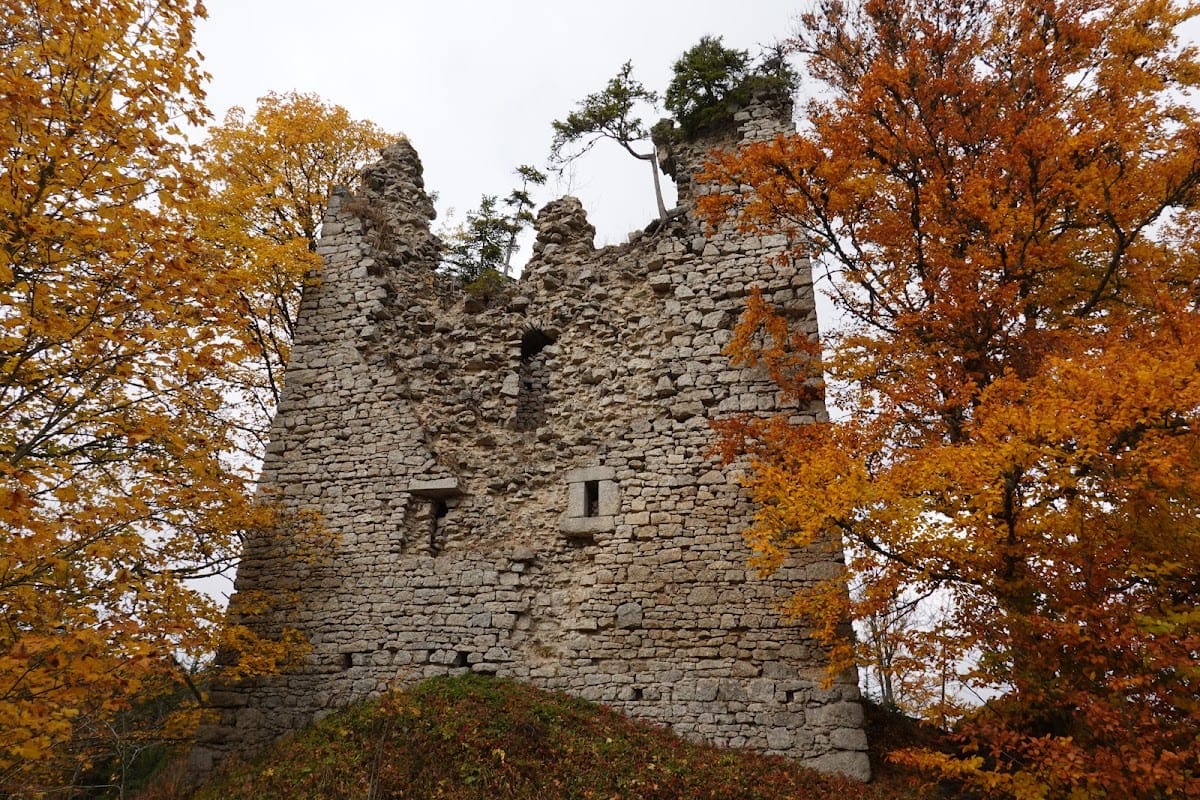
The principal surviving building is a square residential tower, or donjon, combining fortified, residential, and administrative functions. Its nearly square ground plan measures approximately 10.5 by 10.7 metres. The tower had three masonry storeys, with a possible additional upper structure made of timber or half-timbering. Its walls are about 2.4 metres thick, and the building had flat ceilings and a rounded western corner.
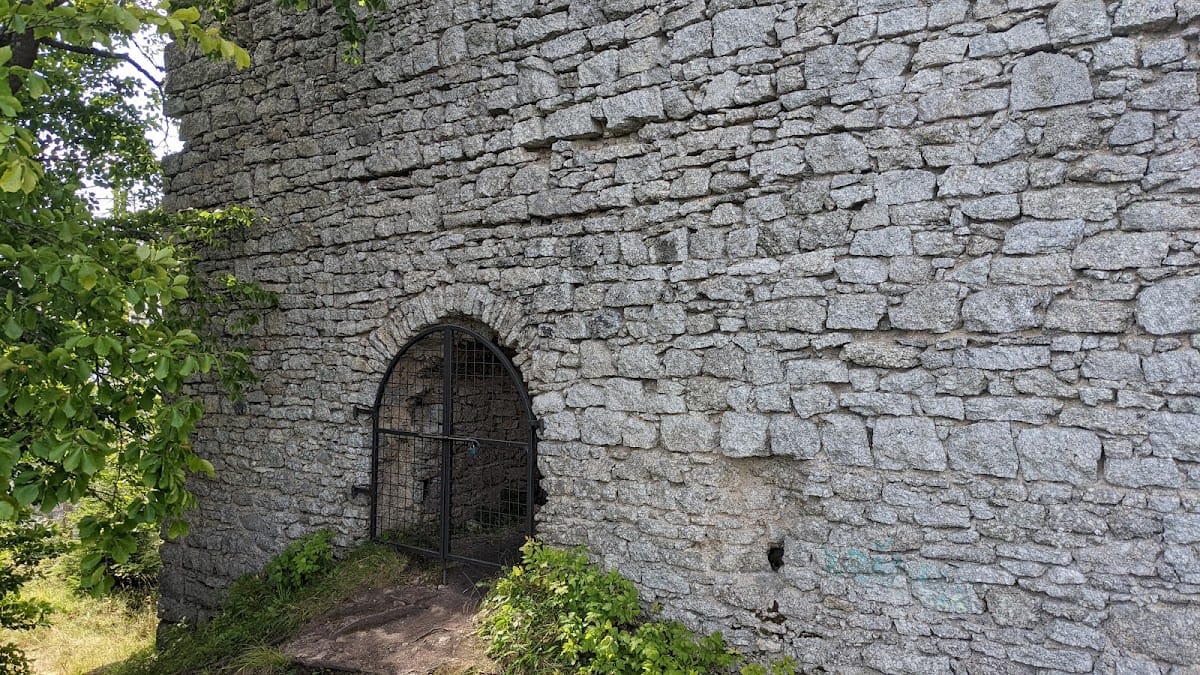
Three slit-like openings remain in the southeast wall, two at ground-floor level and one on the first floor. A fourth opening is set in the northeast wall above the entrance. The second floor contained three large square windows, two of which have collapsed. The ground floor was reached through a passage with portals at both ends, and the outer portal could be secured by a large crossbar. The first two storeys served operational purposes, while the living quarters occupied the second floor.
Parts of the tower’s portal lining were later reused as the entrance to Farmhouse No. 5 at Kořenný. Two pockets cut into the rock also survive within the ruined castle area.
Archaeological finds
Ceramics and horseshoes recovered from the spur and tower date from the thirteenth to the fifteenth centuries. Other ceramic remains belong to the Hallstatt period, an Iron Age period in this region dating roughly from the eighth through the sixth centuries BC, with the Kunžvart finds attributed specifically to the sixth century BC. The ceramic material is held at the Archaeological Institute of the Czech Academy of Sciences in Plzeň.