Burg Neuenbuchberg: A Medieval Spur Castle in Germany


Site at a Glance
- Rating
- 4
- Popularity
- Very Low
- Country
- Germany
- Primary era
- Medieval
- Eras represented
- Medieval, Early Modern
- Civilizations
- Duchy of Bavaria, Holy Roman Empire
- Site type
- Military
- Remains
- Castle
On this page5 sections
History
Foundation and the Buchbergers
Burg Neuenbuchberg is a medieval hilltop spur castle in Germany near Hohenau, built around 1375 by Seifried the Buchberger of Wildenstein. A spur castle is a fortification built on a projecting ridge or mountain spur, using steep ground for added protection. Seifried is documented between 1374 and 1393, while the castle itself was first mentioned in 1395.
The Buchbergers, also known as the Puchbergers, were an important noble family in Lower Bavaria until the sixteenth century. Their ancestral seat was Burg Buchberg in the Upper Palatinate. Neuenbuchberg formed part of the family’s network of lordships associated with Wildenstein and Buchberg.
Ownership, abandonment, and archaeological evidence
After the Buchbergers died out in 1558, the castle passed to Ottheinrich von Schwarzenberg. On 17 October 1592, Passau Bishop Urban von Trennbach acquired the lordships of Wildenstein, Buchberg, and Röhrnbach from Wolf Jakob von Schwarzenberg. Neuenbuchberg was left unoccupied and began to fall into decay from the seventeenth century onward.
Weapons, horseshoes, and arrowheads were excavated at the site during the nineteenth century, and these finds are now held in Landshut. The ruins are protected as both an architectural monument and an archaeological monument by the Bavarian State Office for Monument Preservation. The archaeological designation includes late-medieval and early-modern features and finds in the area of the former castle. Nearby Wildenstein Castle, built around 1200, stands across a depression from Neuenbuchberg.
Remains
Burg Neuenbuchberg occupies a promontory at about 560 metres above sea level on the southern slope of Buchberg in the Buchberger Leite. The spur is surrounded on three sides by the Wolfsteiner Ohe and lies on the valley slope north of the watercourse. The former castle had an elongated oval plan enclosed by fortifications.
Walls, cellars, and ditches
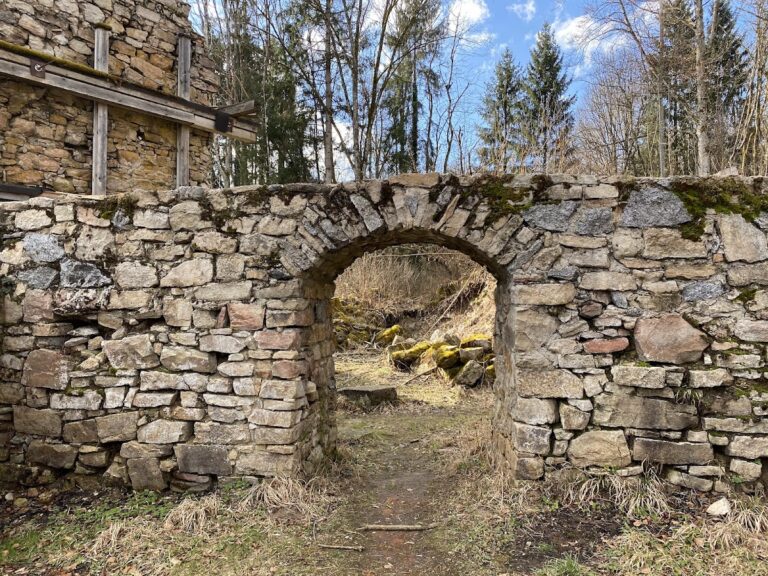
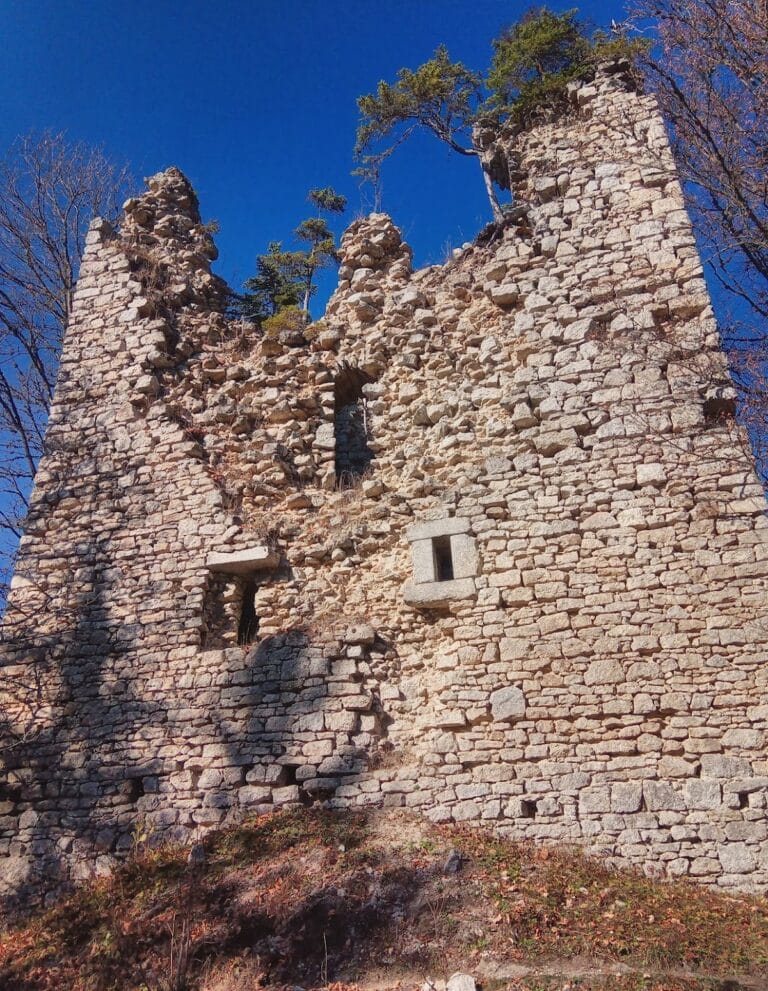
Only limited structural remains survive. Fragments of the ring wall, a continuous defensive wall enclosing the castle interior, mark parts of the former fortified enclosure. Inside it are areas of masonry rubble and surviving vaulted cellar spaces. Ditches remain as defensive excavations around or beside the former fortification. The surviving wall fabric consists of rubble masonry.
The excavated weapons, horseshoes, and arrowheads provide material evidence from the former castle site and are preserved in Landshut. Together with the wall fragments, cellar spaces, rubble, and ditches, they represent the physical and archaeological remains of Neuenbuchberg after its abandonment and decay.