Seligenstadt Water Castle: A Courtly Residence in Germany
Site at a Glance
- Popularity
- Medium
- Country
- Germany
- Primary era
- Early Modern
- Eras represented
- Early Modern
- Civilizations
- Electorate of Mainz, Holy Roman Empire
- Site type
- Domestic
- Remains
- Castle
On this page7 sections
History
Earlier fortifications
An earlier water castle stood on the site, though its age is unknown. A fortification there is recorded in 1266 and may have been the stronghold abandoned after Seligenstadt’s royal palace was built. A royal palace was a ruler’s residence used by the court, often during travel. In 1453, a document described a water-house called Geisennburgk.
A structure on the site was apparently destroyed during the Thirty Years’ War, the European conflict fought from 1618 to 1648.
The present residence
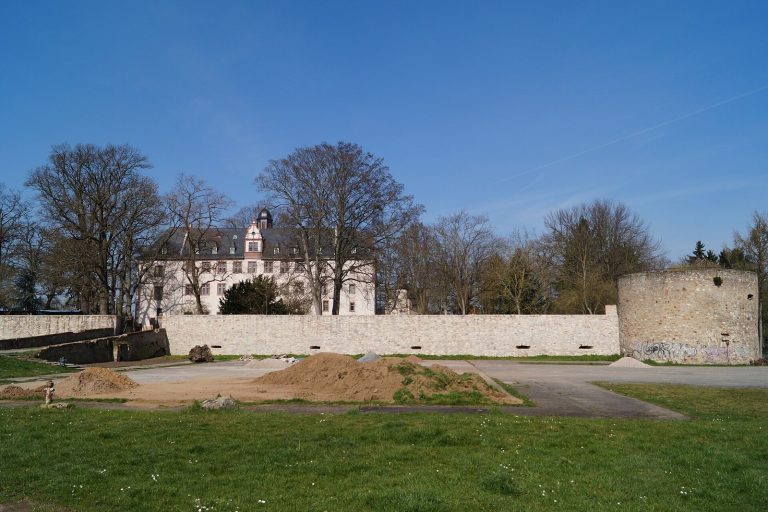
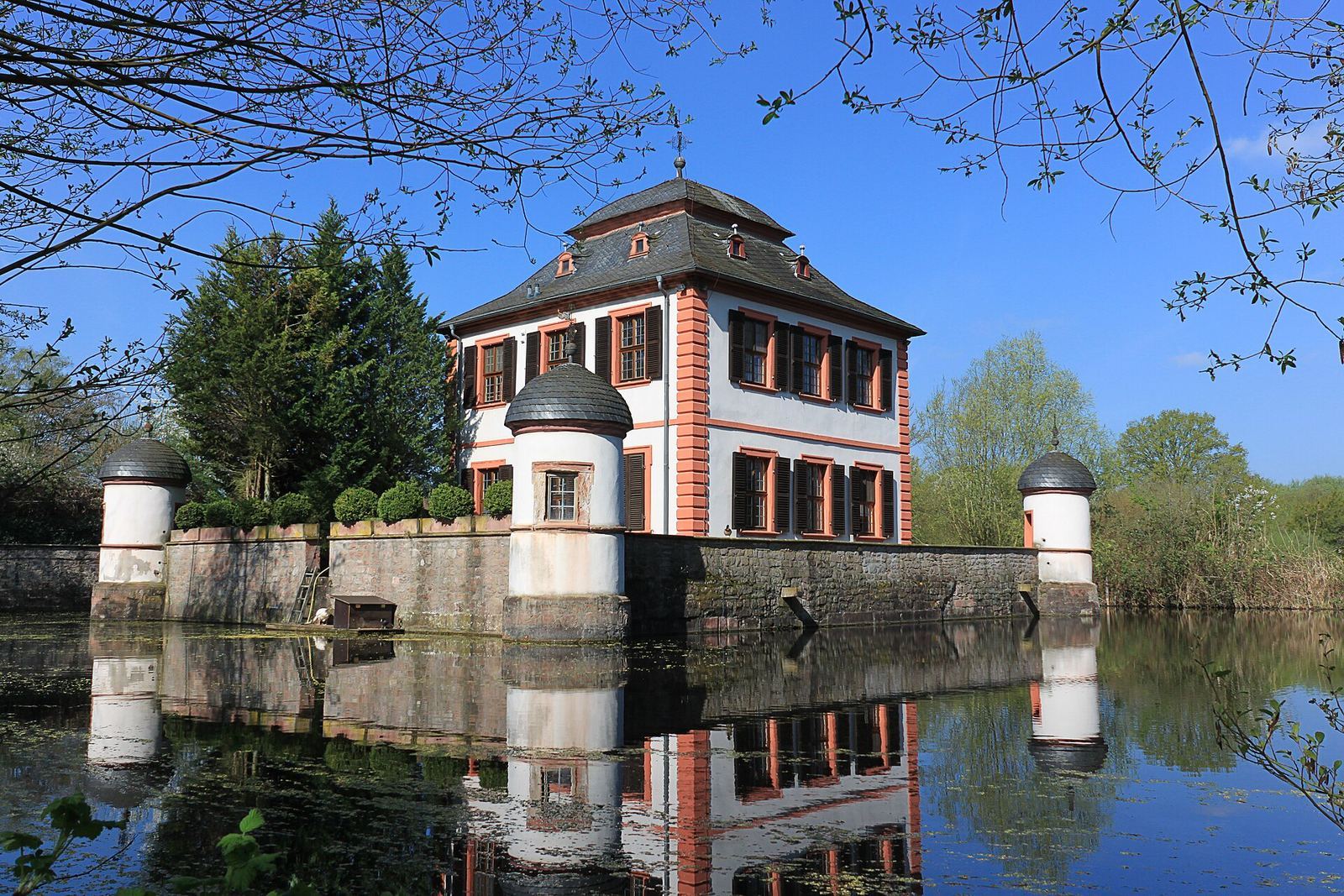
Seligenstadt Water Castle, a residence protected by a water-filled moat, stands on a small island near the Main at the southeastern edge of Seligenstadt, Germany. Franziskus II Blöchinger, abbot (head of a monastic community) at Seligenstadt from 1695 to 1715, commissioned the present building. It was probably erected around 1700 or 1705 as a country residence and garden house for courtly festivities.
Ownership and restoration
About a century later, secularization, the transfer of church property to secular control, placed the castle in state ownership. It was subsequently sold to private owners. After falling into disrepair following the Second World War, it was fully restored by a private owner in 1972 and has remained privately owned.
Remains
Residence and enclosure
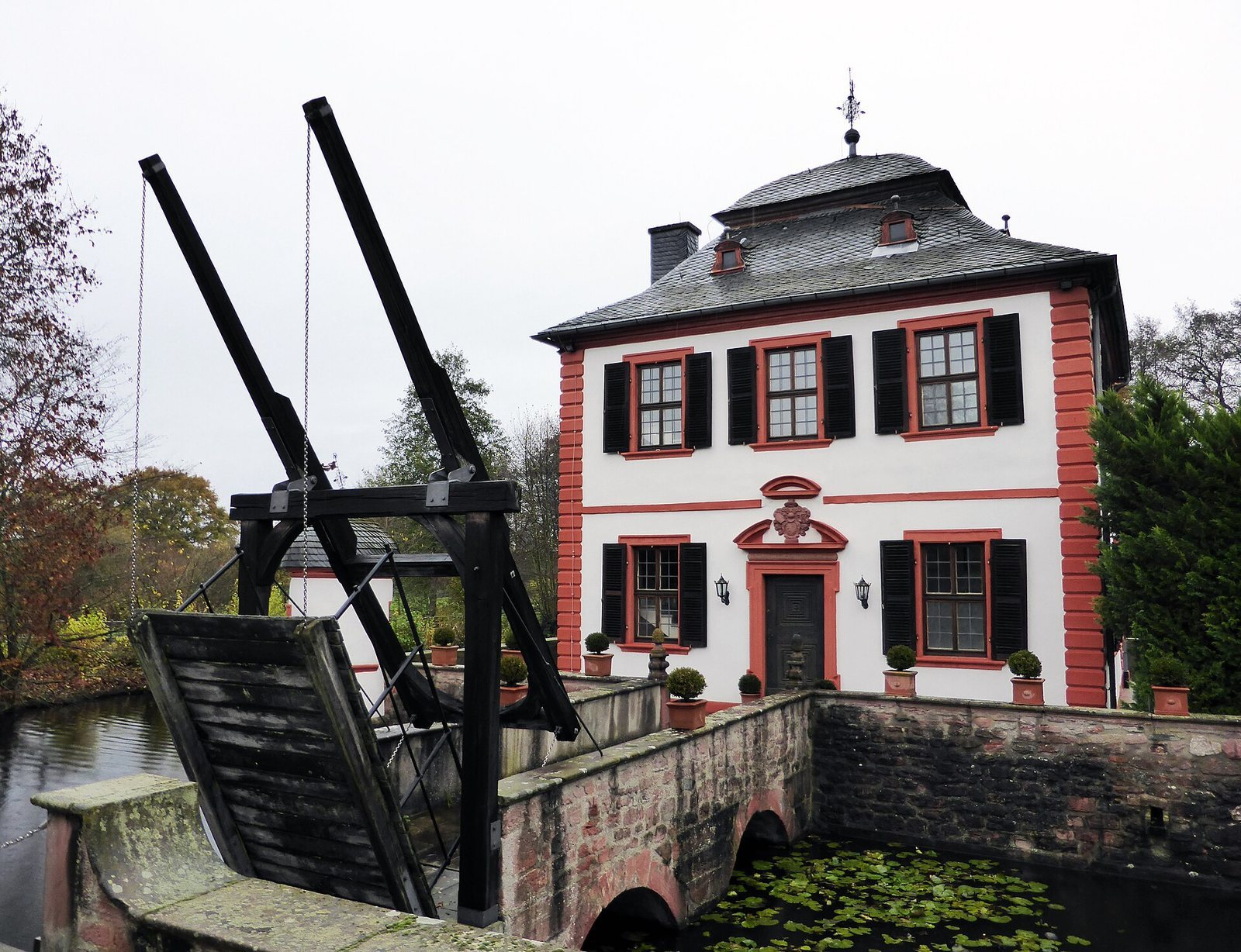
The complex combines a two-storey residence with features associated with late-medieval castles: a moat, a drawbridge that could be raised to control passage, an outer wall, and four small towers at the corners. The residence was designed as a pleasure castle, meaning a home chiefly for leisure and entertainment rather than defense. An inscription above its entrance reads, “This house stands in God’s hand / it is called the water castle.”
Garden
A spacious Baroque garden surrounded the residence. Baroque was a European artistic style widespread from the seventeenth into the eighteenth century. Remains of the former park and gardens survive, along with a gate in the wall around the garden.