Thurland Castle: A Historic Castle and Country House in Lancashire
Site at a Glance
- Popularity
- Medium
- Country
- United Kingdom
- Primary era
- Medieval
- Eras represented
- Medieval
- Civilizations
- English
- Site type
- Domestic
- Remains
- Castle
On this page6 sections
History
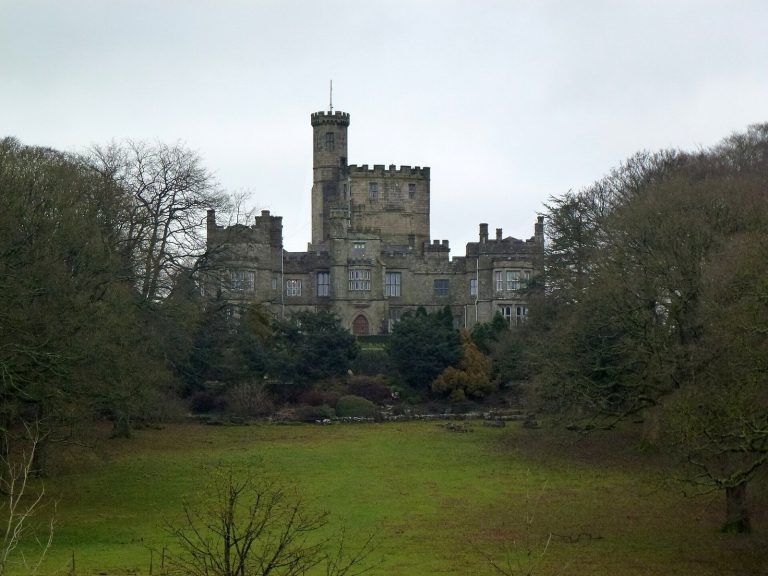
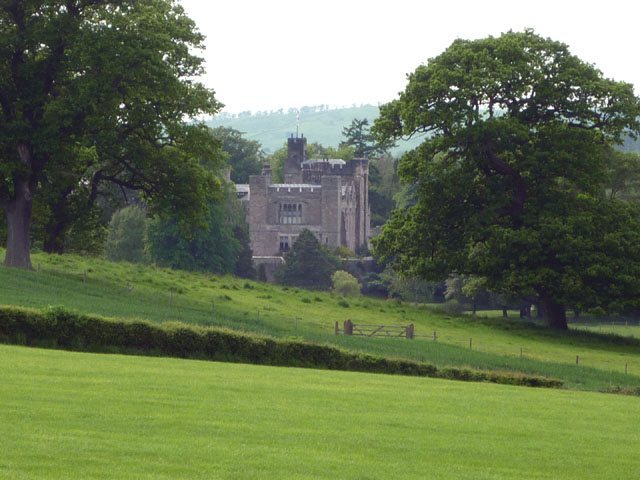
Thurland Castle stands in Lancashire, United Kingdom, between Cantsfield and Tunstall. Its earliest surviving fabric dates to the 14th century, and the present building is principally the result of a late-19th-century rebuilding in Elizabethan Revival, which draws on forms associated with Elizabeth I’s reign (1558–1603), and Gothic Revival, which reinterprets medieval Gothic architecture.
The Tunstalls and Girlingtons
The castle remained with the Tunstall family for generations. In 1402, Sir Thomas Tunstall received a licence to crenellate it, meaning to add battlements to its walls. The property eventually passed to his great-grandson Sir Brian Tunstall, who inherited it after the death of his brother, Thomas IV. Brian was killed at the Battle of Flodden in 1513, fought between English and Scottish forces. The king called him the “Stainless Knight,” and Sir Walter Scott later commemorated him in his historical poem Marmion: A Tale of Flodden Field.
After two or three more generations with the Tunstalls, the castle was sold to John Girlington in 1605. It later passed to his grandson, Sir John Girlington, a Royalist major-general who supported King Charles I during the English Civil War, the mid-17th-century conflict between Royalists and Parliamentarian forces. Parliamentarian troops besieged the castle in 1643, and the damage left it ruinous.
Country house and Victorian rebuilding
Architect Jeffry Wyattville worked on converting the building into a country house in 1810. George Webster carried out further work between 1826 and 1829. A fire gutted the castle in 1876, after which its owner, North North, commissioned Lancaster architects Paley and Austin to rebuild it. Work began in 1879 and was not completed until 1885; more than 100 men were employed, and the building that survives is chiefly their work.
Later ownership and use
The coal-mining Lees family owned Thurland Castle from 1885 into the early 20th century. The writer and architectural historian James Lees-Milne descended from a junior branch of the family. Later, the house and stables were converted into several apartments. The castle was designated a Grade II* listed building on 4 October 1967, a category in England for particularly important buildings of more than special interest.
Remains
Layout and surviving fabric
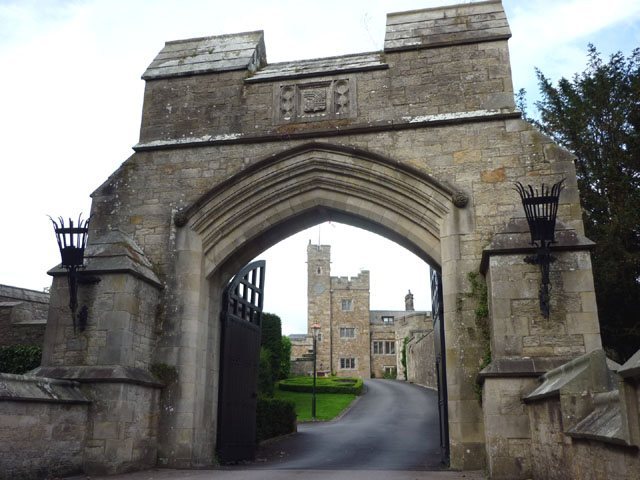
The castle occupies a low mound on a plain in the Lune Valley, within parkland between Cantsfield and Tunstall. A deep, circular moat surrounds it, with the River Greta to the south and Cant Beck to the north. An arched bridge crosses the moat to the building. The principal ranges form the north and west sides of a courtyard. Built of sandstone rubble beneath slate roofs, the castle has two towers, one two storeys high and the other three. Its windows are divided by vertical stone supports, with horizontal crosspieces in some openings. Many parapets have battlements, and terraces with projecting defensive platforms extend around the building.