Arnside Tower: A Late-Medieval Fortified Tower House in Cumbria


Site at a Glance
- Rating
- 4.4
- Popularity
- Low
- Country
- United Kingdom
- Primary era
- Medieval
- External website
- Open
- Eras represented
- Medieval
- Civilizations
- English
- Site type
- Military
- Remains
- Tower
On this page8 sections
History
Arnside Tower is a ruined late-medieval tower house in the United Kingdom, located at Far Arnside between Arnside and Silverdale in Cumbria. Built in the second half of the fifteenth century, it was a fortified residence that combined domestic accommodation with defensive features in a northern border region threatened by Border Reiver raids. These raiding groups operated along the Anglo-Scottish border and helped encourage the construction of strongly built residences.
Late-medieval construction
The tower was established during a period of political instability along the borderlands. Its form reflects the role of a tower house, which provided a defensible home for its occupants. Anthony Emery has suggested that its design may have been influenced by Ashby de la Zouch Castle, rebuilt by Lord Hastings in 1464. The adjoining wing, built to the same height as the main tower, created an arrangement more common in Scotland than in English tower houses.
Fire and later occupation
A serious fire damaged Arnside Tower in 1602. The building was repaired and remained in use afterward. Anthony Emery places its use until the end of the seventeenth century, while Roy Palmer states that William Coward and his sister Agnes Wheeler lived there at the end of the eighteenth century.
Decline and protection
One of the tower’s walls collapsed around 1900. By 2014, English Heritage judged the building to be in very poor condition and stated that urgent works were required. Arnside Tower is privately owned and protected as both a Scheduled Monument, meaning a nationally important archaeological or historical site protected by law, and a Grade II* listed building, a particularly important structure of more than special interest.
Remains
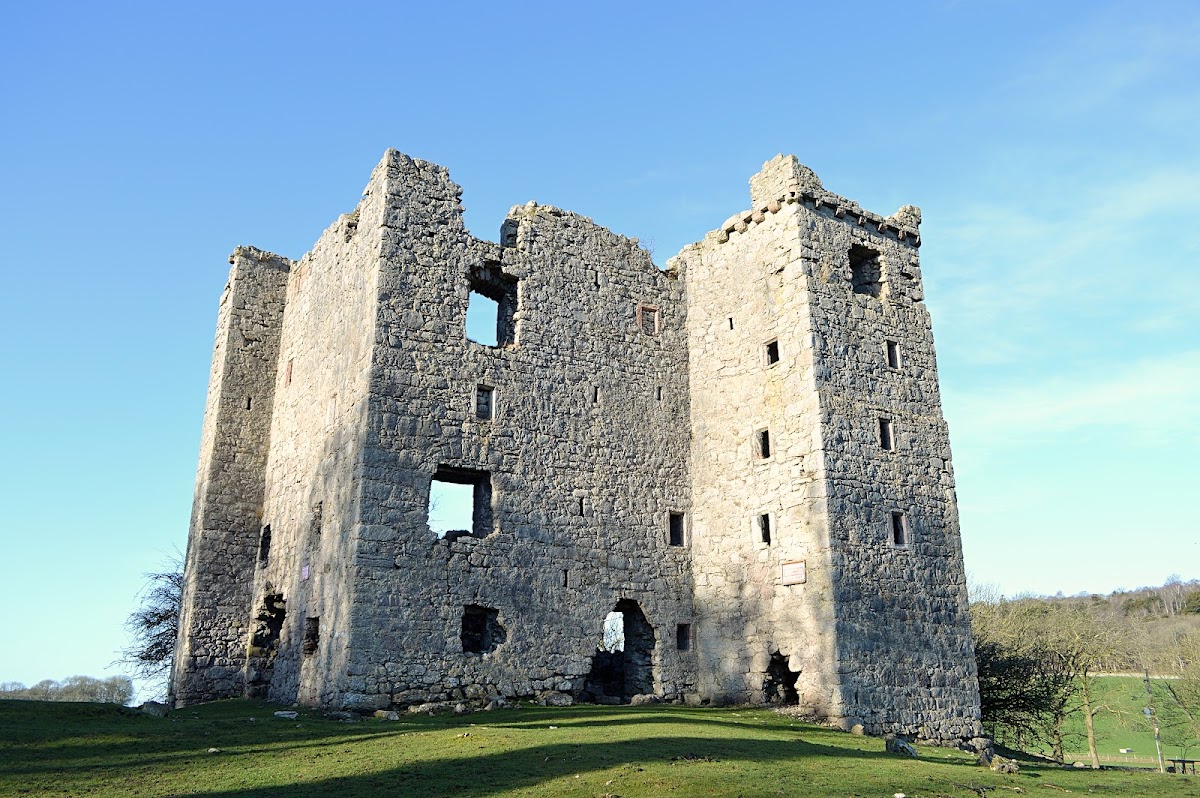
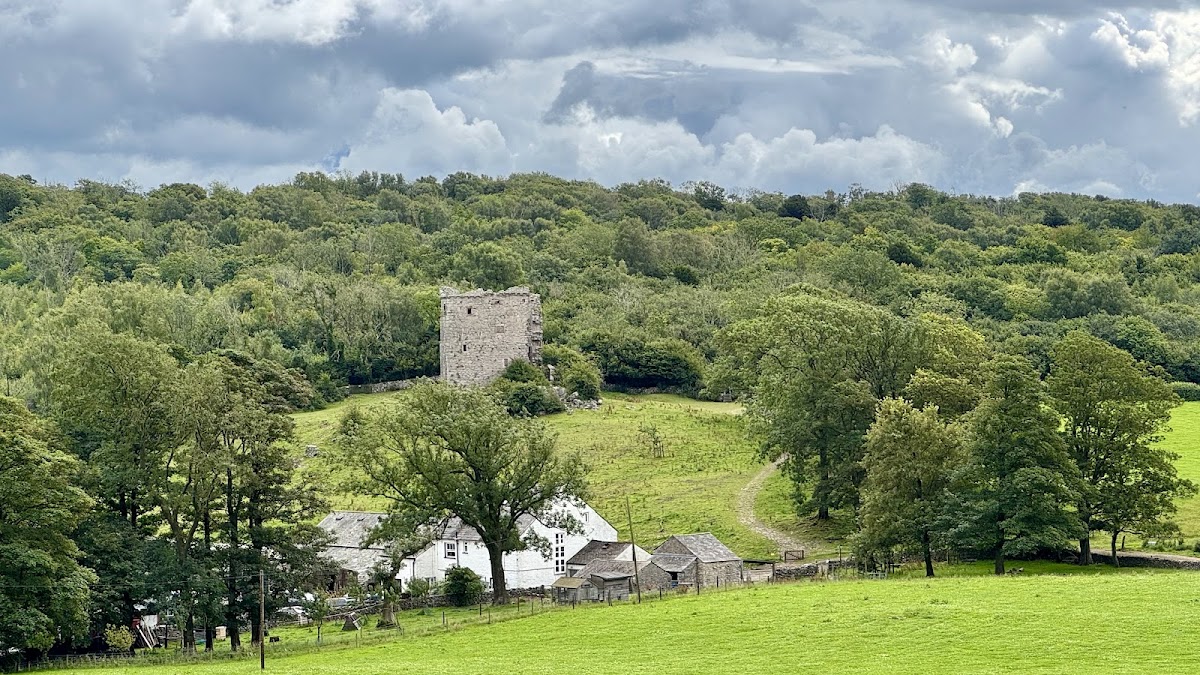
Arnside Tower stands immediately south of Arnside Knott, between Arnside and Silverdale. The ruined building is constructed of limestone rubble and consists of a main tower with an adjoining wing of equal height. Together, these elements form a substantial fortified residence whose unusual paired arrangement has been noted as more familiar in Scotland than among English tower houses.
Surviving structure
Main tower
The main block originally rose five storeys and measured approximately 50 feet by 34 feet, or about 15 metres by 10.2 metres. Its limestone-rubble construction survives in a ruined state. The scale and height of the block reflect the tower house’s combined residential and defensive purpose.
Adjoining wing
An adjoining wing was built against the side of the main tower and reached the same height. This unusual arrangement formed part of the building’s original design. The wing’s surviving relationship with the main block helps explain the distinctive plan of Arnside Tower, despite the later collapse of one of its walls.