Judges’ Lodgings: A Historic Judicial Residence in Lancaster
Site at a Glance
- Popularity
- Medium
- Country
- United Kingdom
- Primary era
- Early Modern
- Eras represented
- Classical, Early Modern, Modern
- Civilizations
- British, English, Roman
- Site type
- Domestic
- Remains
- House
On this page13 sections
History
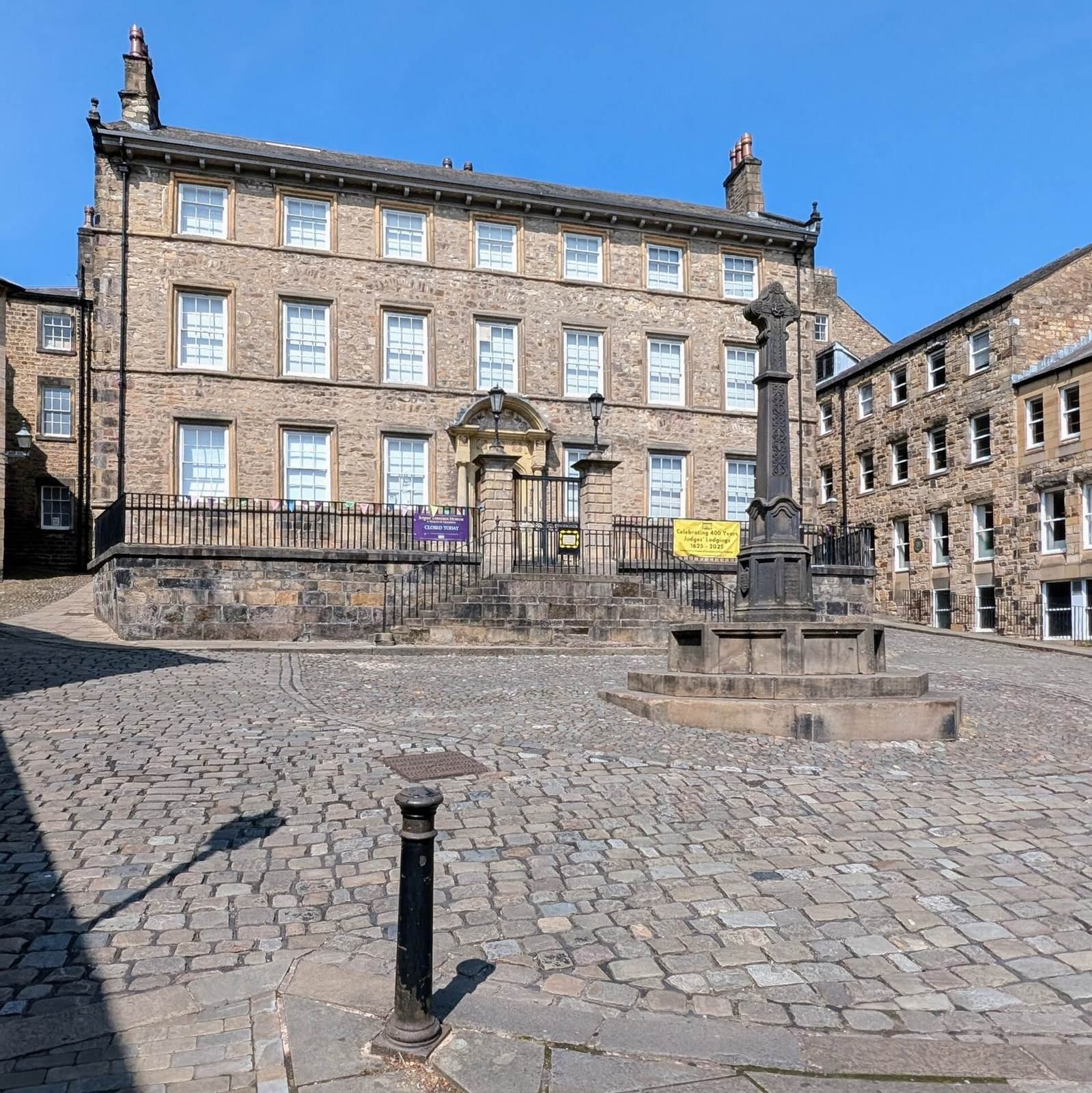
The Judges’ Lodgings is a historic town house in Lancaster, United Kingdom, built around 1625 and described as Georgian in style. It became accommodation for judges attending court sessions at Lancaster Castle and is Lancaster’s oldest surviving town house.
Early house and judicial use
Buildings stood on the site before the present house. The earliest dwelling was probably timber-built and was later replaced with a stone house. A residence built for the English nobleman Robert de Holland in 1314 may have occupied this location. The oldest surviving parts of the present building date from the 1550s.
The house built around 1625 reused structural timbers and may also have rested on an earlier foundation. Its use for judges attending the Assizes, periodic court sessions held in county towns, dates at least to 1635. Thomas Covell, Lancaster’s mayor and the official responsible for Lancaster Castle, owned it by 1639. The house was also the first in Lancaster to have shutters.
New Hall and county ownership
Thomas Cole, a deputy lieutenant of Lancashire, acquired the property around 1662. In 1675 the house was enlarged and altered, and it was called New Hall; it was also known as the Old Hall. County magistrates, local judicial officials, bought it in 1826. A side extension and further changes followed.
Judges’ residence and museum
Judges continued to use the house until 1975, when it became a museum with a Museum of Childhood and displays of furniture associated with Gillows. The building was listed at Grade I in 1953, the highest category of listed-building protection in England.
Remains
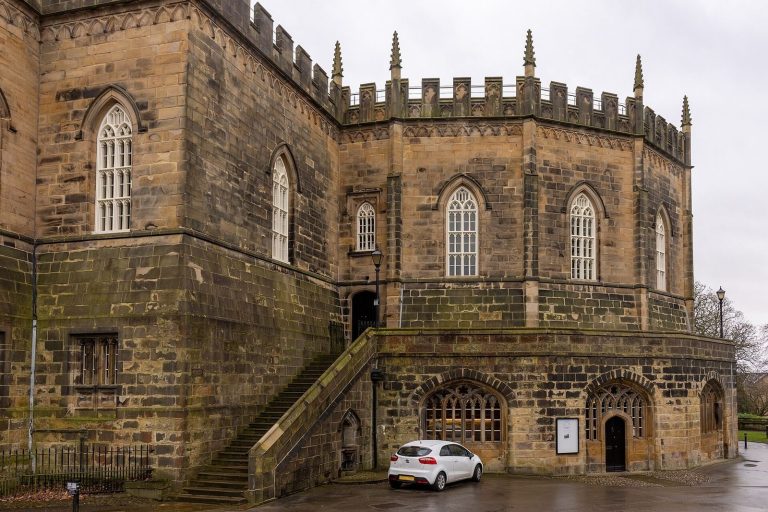
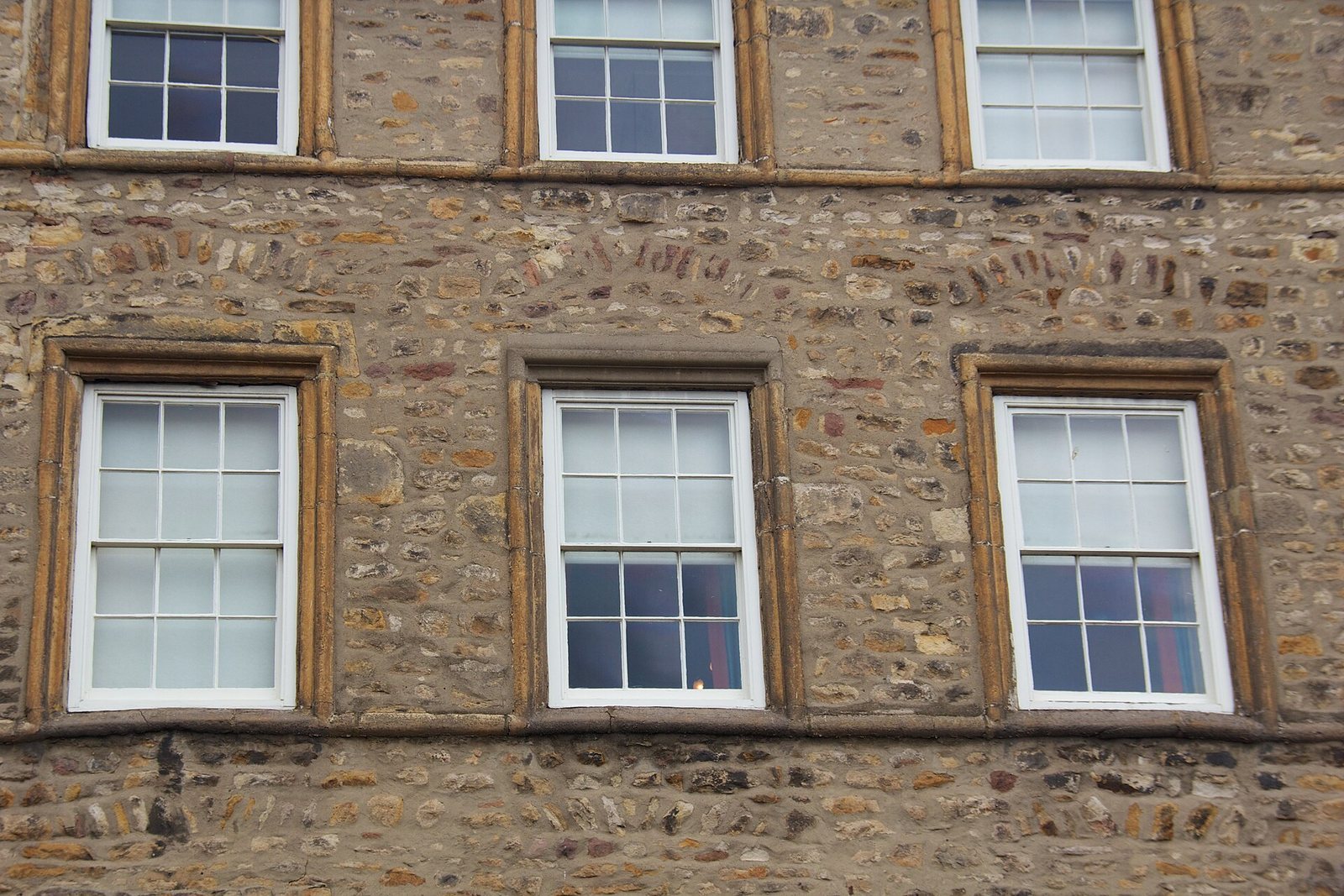
The house has a U-shaped plan and is built of sandstone rubble with carefully dressed stone details and slate roofs. Its west-facing entrance front is symmetrical, with three storeys above a basement and seven divisions across the façade.
Exterior and interior
Entrance front
The central doorway is framed by Tuscan columns, a simple classical form. They support blocks carved with lions’ heads. Above them, a band decorated with flowers sits beneath an open, curved pediment containing a painting of Lancashire’s arms.
Entrance hall
A substantial stone fireplace in the hall dates to the 1550s, making it part of the building’s oldest surviving fabric.
Garden archaeology
Remains of a Roman kiln, a furnace used to fire materials, were discovered in the garden.
Museum collections
Gillows furniture
The furniture collection is presented both through displays about the firm and in rooms arranged in period styles. Many pieces were made to the requirements of individual clients. Robert Gillow began making furniture around 1727. His family sold the business in 1813 to Redmayne, Whiteside and Ferguson, who continued to use the Gillow & Co. name. Waring of Liverpool acquired the firm in 1903 after its move into complete interior decoration had strained its finances. Waring & Gillow folded in 1962, and the Lancaster workshops closed.
Designer Bruce James Talbert worked with Gillows during the 1860s and 1870s. His 1867 book showed how Gothic forms could be applied to furniture and home decoration, influencing commercial furniture-making. One displayed sideboard, the Dundee Cabinet, was made to his designs around 1872. It combines carved squares, geometric patterns and rows of spindles, with stained baywood and inlays of thuya and boxwood. The cabinet bears the stamp ‘Gillows of Lancaster’. A matching piece appears in a Gillows estimate sketchbook entry dated 8 March 1872, whose note indicates that a similar cabinet had been made earlier. Talbert included a more elaborate version in a book published in 1876. A second sideboard, displayed in the butler’s pantry, is made of oak with boxwood panels.
Paintings
Paintings on display include works by George Romney, Joseph Wright of Derby and Sir Thomas Lawrence. Romney’s portrait of Abraham Rawlinson, a Lancaster member of Parliament in the 1780s, hangs in the entrance hall. The museum acquired it in 2006. Six French paintings came through the bequest of Lionel Hewlett. Two are landscapes by Armand Guillaumin, one depicting the River Creuse and the other the Île de Ré. Both reflect the influence of Guillaumin’s friend Vincent van Gogh.
Museum of Childhood
The childhood displays include a nursery with a three-seat rocking horse and a reconstructed classroom. Their central collection is a group of dolls assembled by Barry Elder and purchased for the museum in 1976. It includes peg dolls, pressed-felt dolls by Lenci, poured-wax figures, unglazed bisque-porcelain dolls and composite-material dolls by Armand Marseille, Simon & Halbig and S.F.B.J. Cabinets also display dolls’ houses, Lego, Meccano and Hornby trains.