Château de Chavagneux: A Medieval Castle and Seigneurial Estate in France
Site at a Glance
- Popularity
- Medium
- Country
- France
- Primary era
- Early Modern
- Eras represented
- Medieval, Early Modern, Modern
- Civilizations
- French
- Site type
- Domestic
- Remains
- Castle
On this page7 sections
History
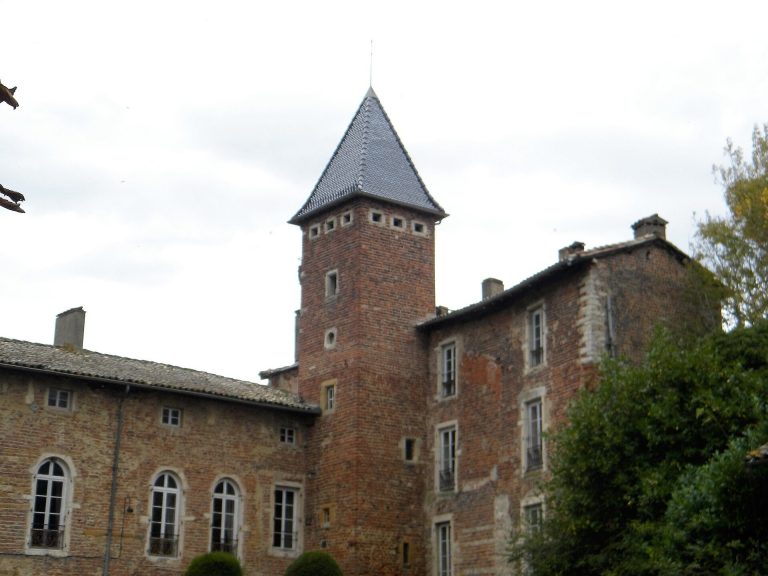
Château de Chavagneux is a medieval fortified castle in France that served as the center of the lordship of Chavagneux. Its fortress dates to the 13th century, and the lordship also carried a toll on the Saône, collected at Belleville from that century.
The Vaux lordship
In 1296, the knight Milon de Vaux held the castle and lordship as an allodial estate, meaning land free of feudal obligations. In April 1310, he accepted the lordship as a liege fief from Guichard VIII, lord of Beaujeu, placing it under an obligation of feudal allegiance. Milon’s son Hugue paid homage, a formal act of allegiance, in 1327 and 1328.
The Vaux family later adopted the name Chavagneux and died out around 1375. The estate passed to Clémence de Beauvoir, wife of Artaud de Chandieu. In 1384 she ordered a new terrier, a register of the lordship’s lands and rights. The property subsequently passed to the houses of Vichy de Champremont and La Porte.
Division and reunion of the estate
In 1530, Jean and Antoine de la Porte divided the estate into Grand-Chavagneux and Petit-Chavagneux. Antoine de la Porte II and his sister Pernette transferred their share to their cousin Antoine de Semur. On 23 July 1546, Semur sold it to Jean de Cléberg, lord of Champ, Châtelard and Villeneuve. Cléberg’s descendants retained this share through Suzanne de Cléberg, who married Jean Sajot, lord of Chambon.
On 17 November 1617, Sajot bought Petit-Chavagneux from Jacques de Nagu, baron of Lurcy and husband of Hélène, a granddaughter of Antoine de la Porte I. Sajot left the reunited lordship to Jacques Moyrou, baron of Saint-Trivier. In his will of 12 October 1651, Moyrou bequeathed it to the Charité de Lyon, a charitable institution. The institution sold the estate in 1770 to Bona de Perrex, governor of Bâgé, who was lord of Chavagneux in 1789.
The later château and estate
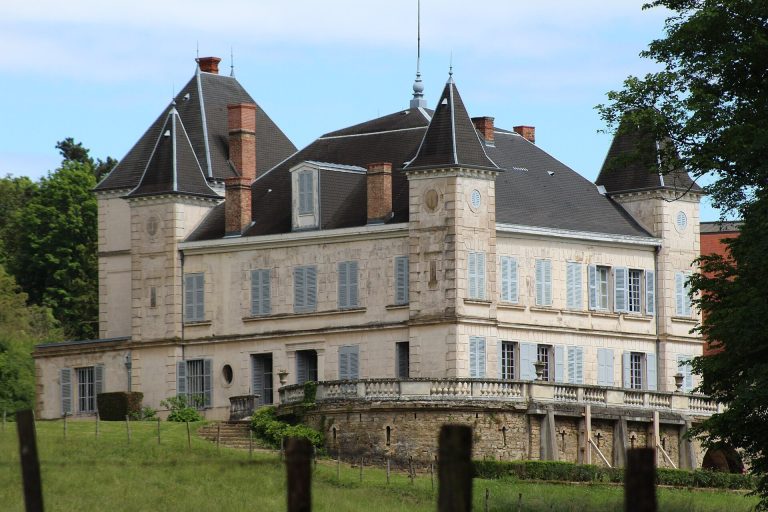
The Bonna de Perrex family built a second château and partly demolished the old fortress. The estate later passed by inheritance to the baron of Varey, who altered the new château’s west façade in the 1830s and laid out a formal French-style park. The Rohan-Chabot family acquired the property in 1900 and sold it in 1907 to Pierre Frerejean, a descendant of a prominent Lyon family of ironmasters. The Frerejean family remains its owner, and restoration work has taken place across the estate. The keep and remains of the old fortress received historic-monument registration by an order of 17 December 1942.
Remains
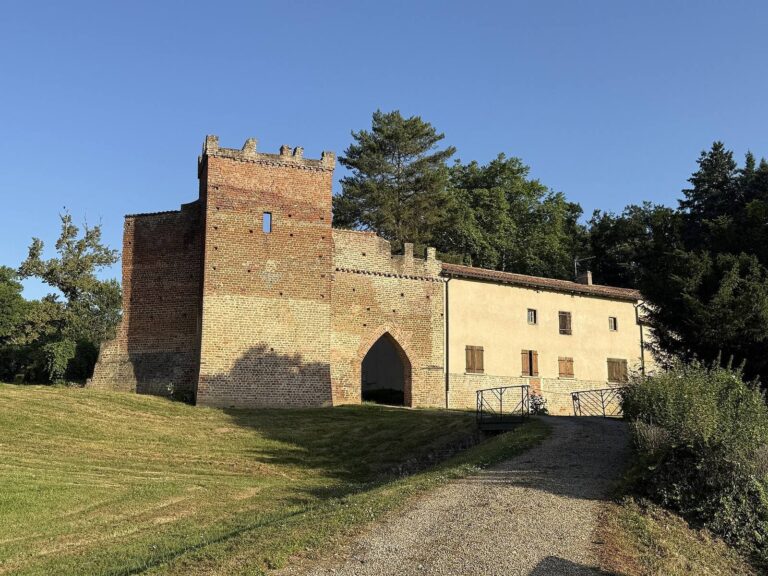
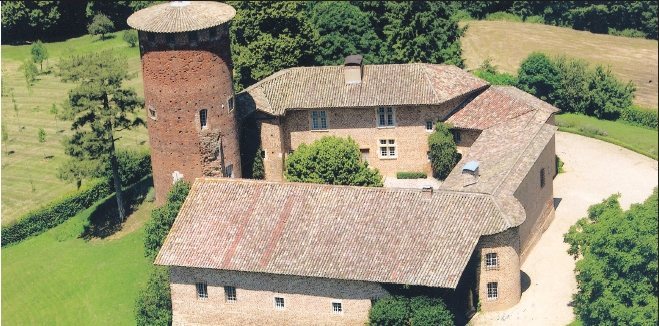
The estate contains the cylindrical brick keep of the medieval fortress and a separate, later château about 100 metres away. The later building’s grounds include a formal French-style park.
The medieval keep
The fortress’s surviving keep is cylindrical and built of brick. Its construction dates to around 1290–1300, and its form is comparable to the keeps at Montellier and Plantay.
The later château and park
Built in 1774, the château incorporates Savoyard bricks taken from two demolished towers and the enclosure walls of the earlier fortress. Work on its west façade in the 1830s included the addition of a pediment. The surrounding grounds were developed as a formal French-style park.