Château de Beaumont: A Nineteenth-Century Château in Ain
Site at a Glance
- Rating
- 5
- Popularity
- Very Low
- Country
- France
- Primary era
- Modern
- Eras represented
- Medieval, Modern
- Civilizations
- French
- Site type
- Domestic
- Remains
- Elite Residence
On this page8 sections
History
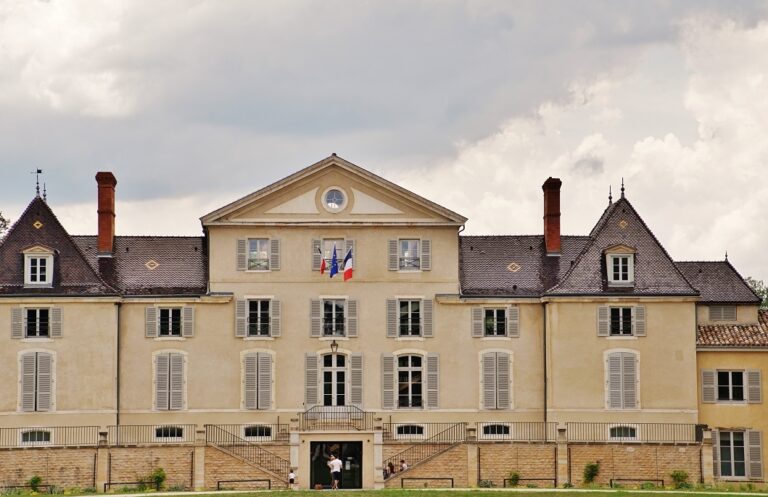
Château de Beaumont is a nineteenth-century château in Saint-Étienne-sur-Chalaronne, France. Built in the historical region of Dombes, now largely within the Ain department, it replaced a medieval fortified castle that stood on a raised earthwork known as a motte. The earlier castle was recorded around 1330 and was demolished around 1853, while construction of the present building began in 1865.
Medieval and Early Modern Ownership
Around 1330, the Beaumont fief, a landed holding granted within a feudal relationship, was held with full judicial rights by Étienne de Laye after the Sire of Beaujeu granted it to him. These rights gave the lord extensive local jurisdiction. The property belonged to Pierre de Marmont in 1372 and to Fromentin du Saix in 1374, then remained with the du Saix family for several generations.
Lionnet du Saix later left Beaumont to his widow, Claudine de Ponceton. On 15 April 1571, she gave the property to her nephew, Lionnet de Challes. Challes sold it to Daniel Gilles, Lord of Montezan, but after the estate was seized from Gilles, it was awarded in March 1626 to Abraham Valier, a councillor of the Parliament of Dombes, the region’s sovereign judicial institution.
The estate subsequently passed through the Janin, de la Garde, Joli de Choin, Collabau, and Trollier families. In 1759, Jean-Baptiste Trollier, an esquire, sold it to the minor children of the late Louis-Hector de Cholier, Knight and Count of Cibeins. The children still possessed Beaumont in 1789.
Transformation in the Nineteenth Century
The medieval castle was altered several times before being transformed around 1853 to make way for the present château. The new building belongs to the nineteenth-century phase of the estate, with construction beginning in 1865. A private individual is its current owner. A decree of 5 July 2006 listed the château’s façades and roofs, the stable block, well, kitchen garden and associated structures, the medieval castle mound, and most of the estate parcels as historic monuments. The land occupied by the tennis court was excluded from that protection.
Remains
Nineteenth-Century Estate
Château and Stable Block
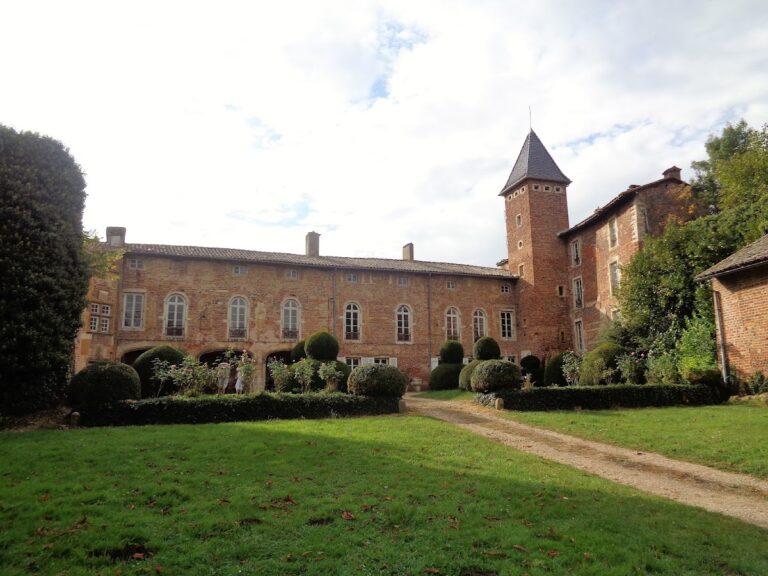
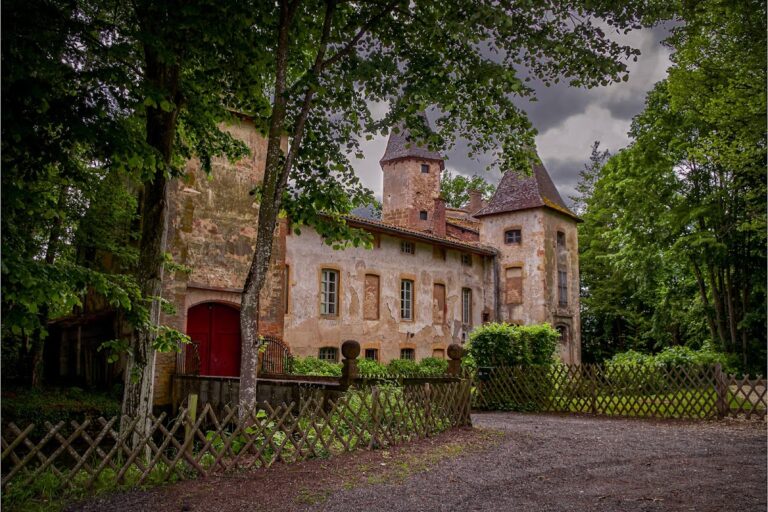
The present Château de Beaumont is the nineteenth-century residence begun in 1865. Its protected physical elements include the façades and roofs, together with the complete stable block. These structures form the principal built part of the later estate.
Garden and Service Features
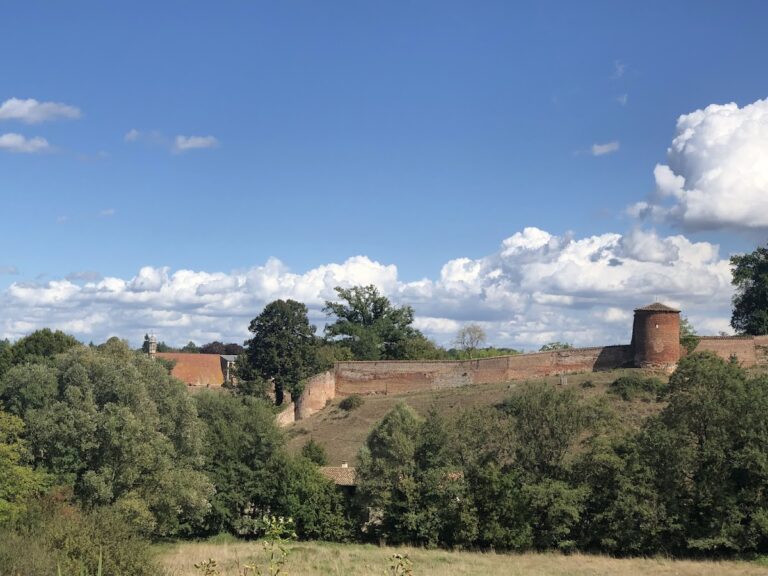
The protected grounds include a well and a kitchen garden enclosed by its boundary walls. Pavilions associated with the kitchen garden are also included, as is the wider parcel layout of the estate except for the tennis-court land. Together, these features preserve the organization of the château’s grounds and its service areas.
Medieval Castle Mound
The earlier castle occupied a fortified motte, a raised earthwork that supported a medieval fortified residence or castle. The mound survives as one of the protected elements of the Château de Beaumont estate, linking the present nineteenth-century residence with the medieval foundation it replaced.
Nearby sites