Hitis Church: A Wooden Cross Church in Finland
Site at a Glance
- Popularity
- Low
- Country
- Finland
- Primary era
- Early Modern
- Eras represented
- Early Modern, Modern
- Civilizations
- Swedish
- Site type
- Religious
- Remains
- Church
On this page12 sections
History
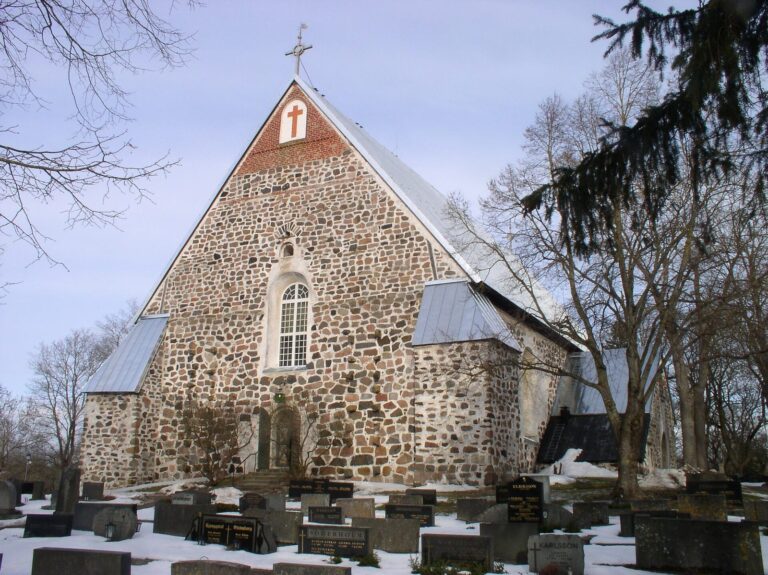
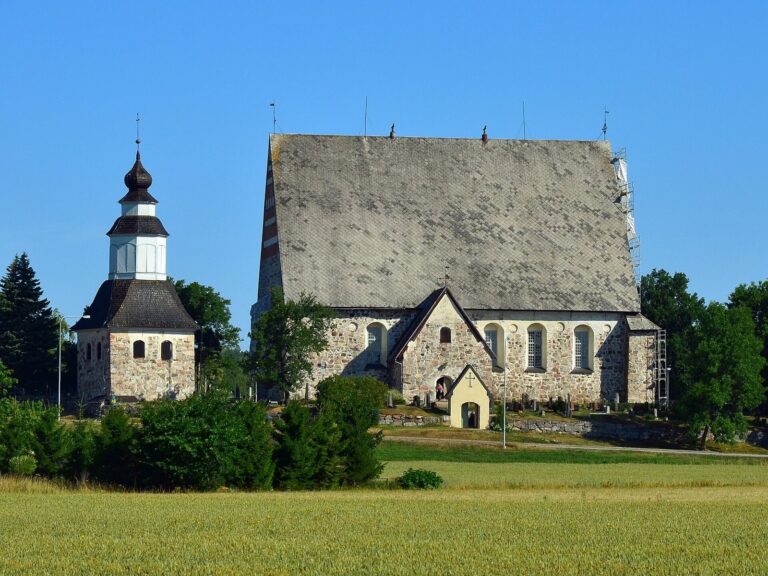
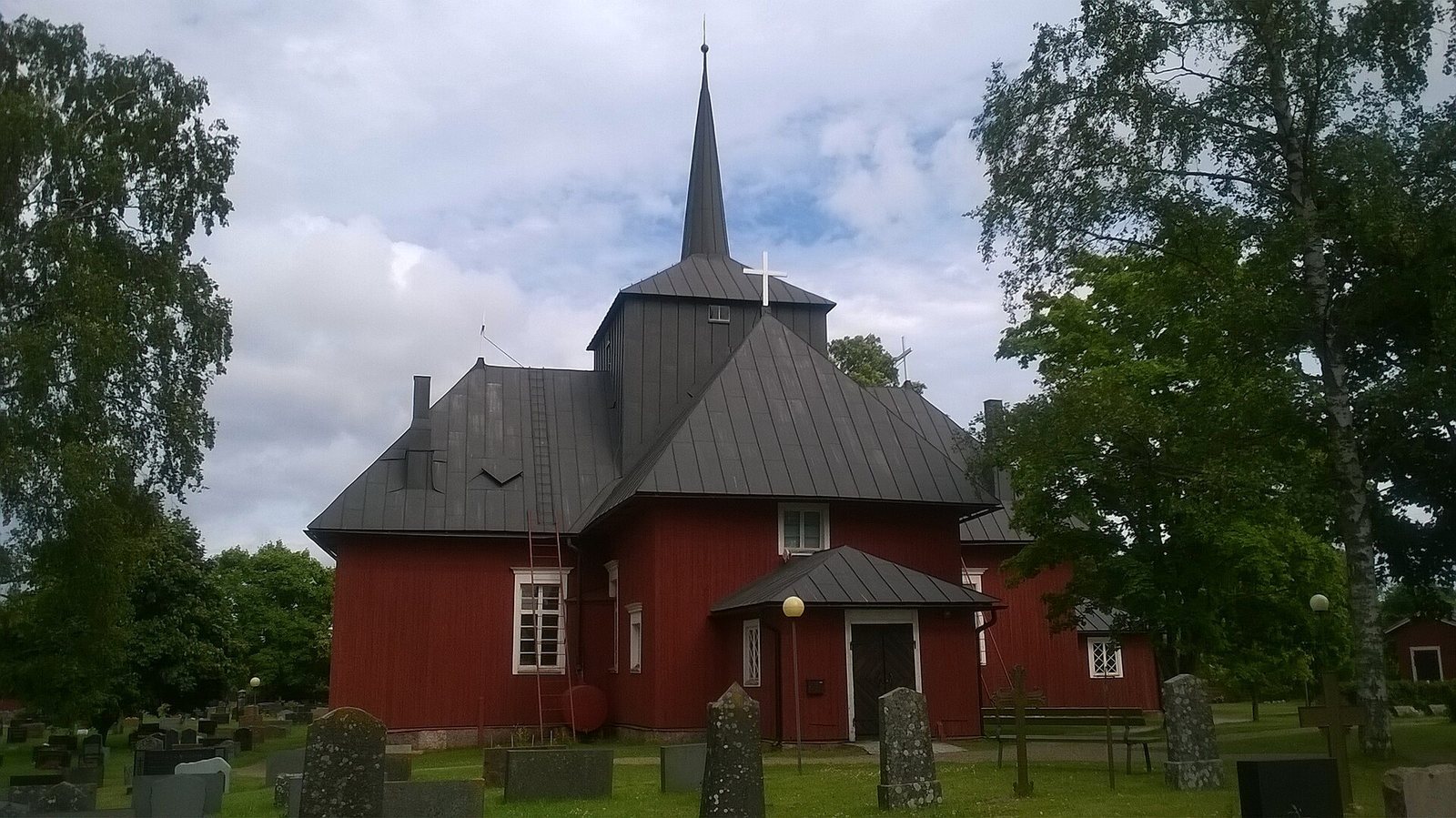
Hitis Church is a wooden church with four equal arms meeting at a central crossing in Hitis, Finland. Master builder Josef Svensson Brun built it in 1685–1686, and it is Finland’s second-oldest surviving wooden cross church. The older Elimä Church began as a long church in 1638 and was enlarged into a cross church in 1678. Hitis Church was named St Andrew’s Church after Andreas Prytz, then parish priest of Kemiö.
Earlier chapels and construction
Wooden chapels and a graveyard had served the community since the thirteenth century beside Kyrksundet on Kyrkön. A chapel there, measuring 9.5 by 8 metres and accompanied by a bell tower, was used until 1637. A replacement was then built in Hitis village beside the present church. It served for about forty years before the current building was erected.
A communion book records the church’s completion in 1686. Later entries say the congregation built it without outside assistance or a public collection. In the early 1950s, Finland’s Archaeological Commission in Helsinki, the country’s archaeological and monument-preservation authority, described Hitis as the oldest preserved example of the West Finnish cross-church type and urged especially careful preservation.
Parish history and preservation
Hitis was a chapel under Kemiö from 1674 until 1861, when the parish and municipality became independent. A shared curate was based in Hitis from 1695, followed by a permanently resident curate serving the archipelago from 1706. In 1969, Hitis parish began sharing finances with Dragsfjärd parish. It became part of Kimitoön parish following the 2009 municipal merger.
Renovations took place in 1863, 1871, 1882, 1899, 1914, 1923 and 1958. A thorough restoration followed in 1968–1969. In the late 1990s and early 2000s, the roof was replaced and the walls were painted, alongside further repairs and conservation work.
Remains
The church is a wooden, equal-armed cross church, with its four arms arranged around the central crossing. It accommodates about 300 people, although a little over 200 can see the altar from the pews. A massive tower rises above the crossing beneath a pointed tent roof, while the arms have low hipped roofs. A low sacristy, used for clergy preparation and storing worship items, stands beside the choir arm. Vestibules were added at the ends of the south and west arms in 1746, and a separate bell tower dates to 1752. Brun’s design drew on precedents in Stockholm, where he had worked previously.
Interior and fittings
Pulpit and organ loft
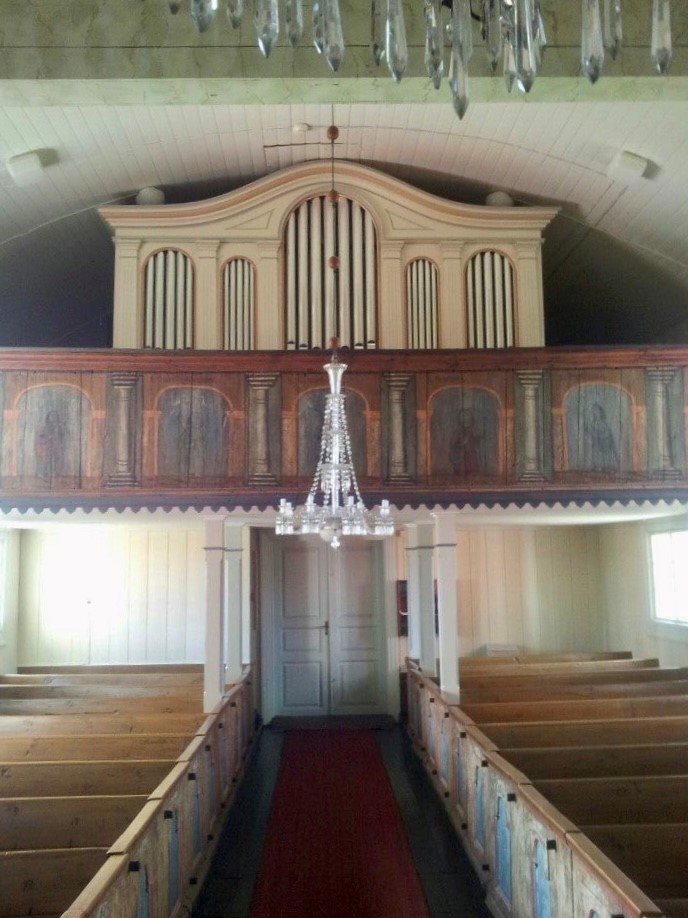
The church’s fixed interior fittings date from the eighteenth century. Installed in 1710, the pulpit depicts the Saviour and five disciples; the other seven disciples appear on the organ loft.
Altarpieces and paintings
The principal altarpiece, a wooden painting of the Last Supper, dates to 1785. Its broad frame has wings, an upper section and turned knobs. A large Crucifixion painting by A. F. Ahlstedt, donated in 1866, hangs on the north wall beside the altar and served as the altarpiece during the twentieth century. On the south wall, a smaller wooden Crucifixion painting, probably the church’s first altarpiece, was donated by skipper H. Andersson. Its dedication, dated 1678, refers to danger at sea and gives thanks to God. An older textile painting of the Crucifixion hangs on the north wall and probably dates from 1733.
Stained-glass windows
Stained-glass windows by Ilmari Launis and G. Forsström date to 1923 and 1936. The altar windows, made by S. Wuorio of Helsinki, depict musical angels and sacred representations of the senses. Bruno and Lydia Krok of Biskopsö donated them in 1935. A south window by the same maker shows a cross; the Kroks gave this window as well, and it was installed in 1947.
Organs
K. G. Wikström of Naantali made the first organ in 1898; it had six stops, controls for sets of pipes. A second instrument, built by the Kangasala Organ Factory, had 13 stops and two transmission stops, which allowed a set of pipes to be used from more than one organ division. It came into use on Advent Sunday in 1943. The present organ, made by Paschen Kiel Orgelbau, was installed in 2005 and has ten stops.
Ship models and memorials
Votive ships
The church holds four votive ships, models offered as religious dedications. They include the frigate Lionstierna, the four-masted Amor and a three-masted ship that served as a perpetual trophy. The Hitis Civil Guard, a Finnish volunteer defence organization, won the trophy in an annual competition for three successive years, from 1935 to 1937. A separate miniature model of the trawler Stjärnfors commemorates the trawler Diana, which was struck by another vessel off Hanko in 1980. One person died and three survived; skipper Hemming Eriksson, one of the survivors, donated the model in 1996.
Memorials
A plaque in the vestibule commemorates a rescue at Jungfrusund on 29 October 1700, when local islanders saved 80 soldiers, 30 crew members and 75 horses from a shipwreck. The memorial to the war dead, designed by architect Carl-Johan Slotte, was unveiled on 16 August 1964.