Schloss Schönau: A Moated Castle in Aachen, Germany
Site at a Glance
- Popularity
- Medium
- Country
- Germany
- Primary era
- Early Modern
- Eras represented
- Medieval, Early Modern, Modern
- Civilizations
- Duchy of Jülich, Holy Roman Empire
- Site type
- Domestic
- Remains
- Castle
On this page8 sections
History
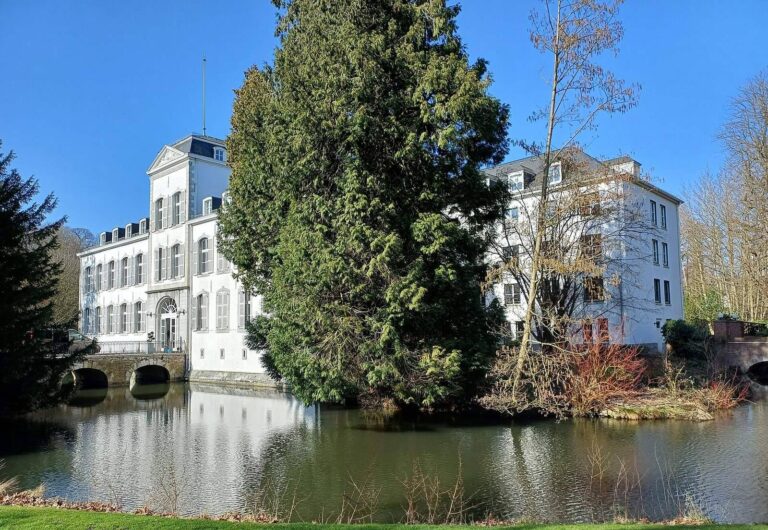
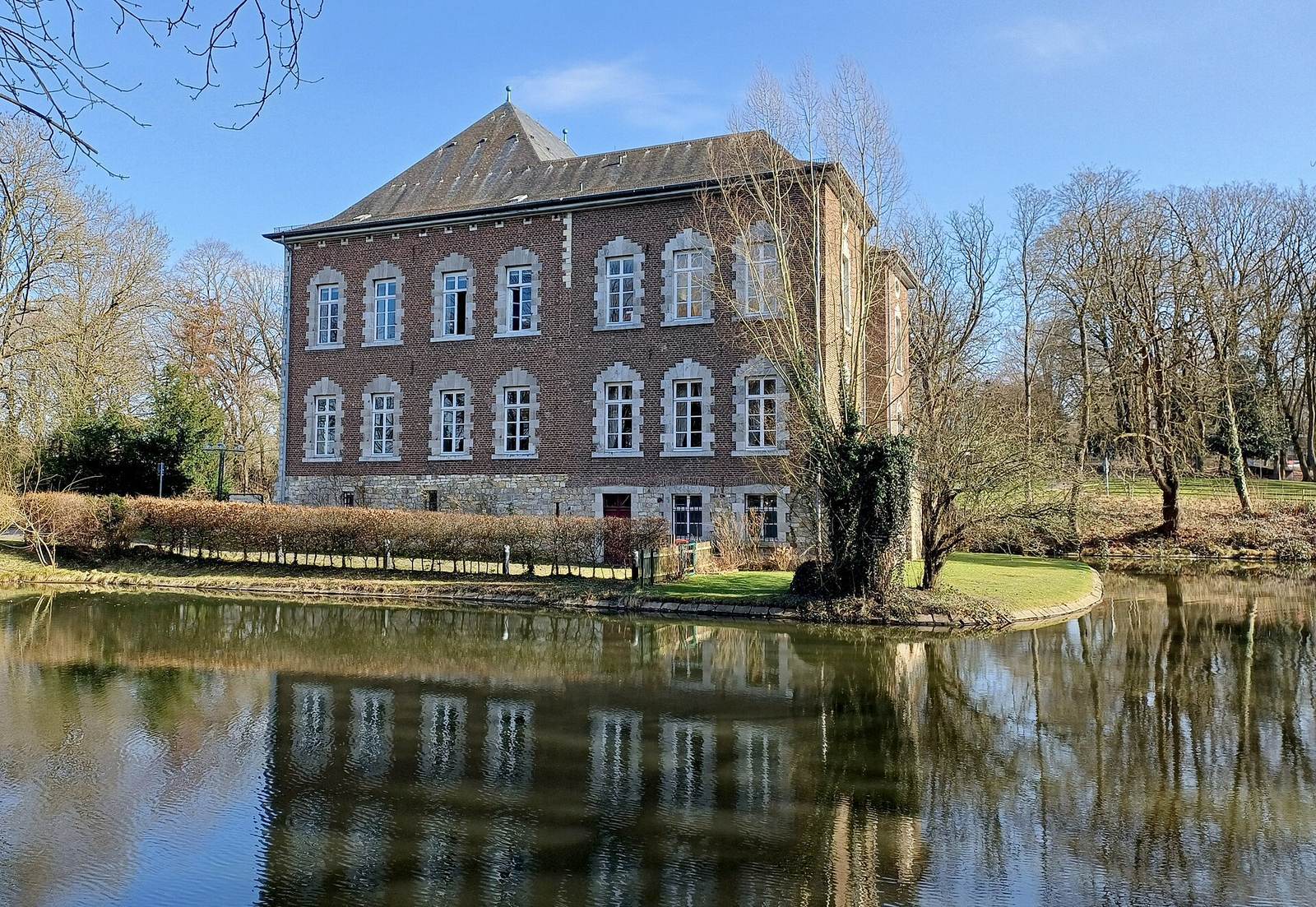
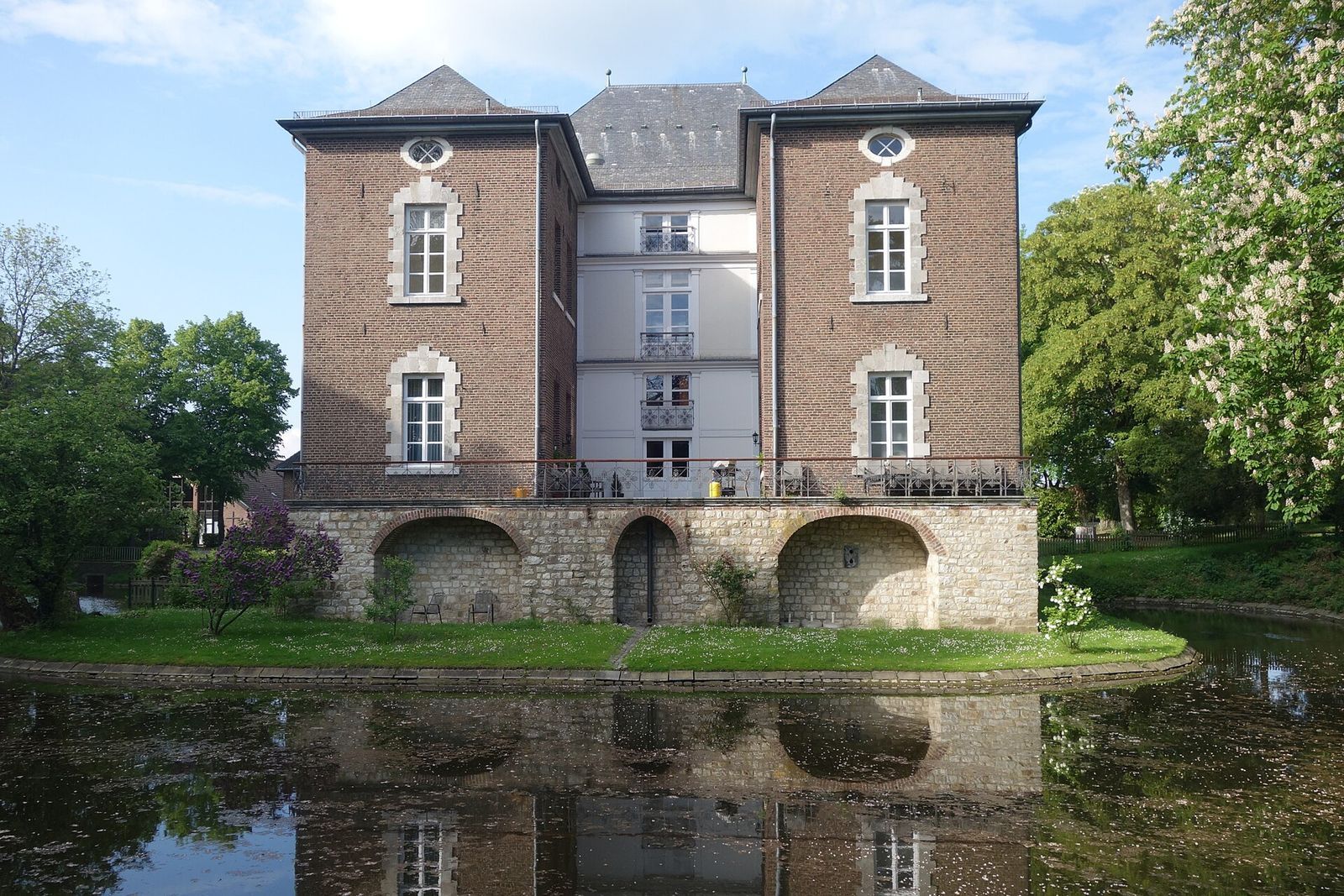
Schloss Schönau is a small moated castle in Richterich, a district of Aachen, Germany. Most of its present buildings date to 1732.
Medieval land and lordship
In 1244, Frederick II, a medieval ruler of the Holy Roman Empire, a political union of territories in central Europe, transferred ownership of the land around Schönau to Heinrich von Aachen. Heinrich had served as Aachen’s treasurer and established the von Schönau family. After the family received the lordship of Schönforst as a fief, land held under a superior lord’s authority, and built a castle there in the first half of the fourteenth century, it also became known as von Schönforst.
In 1396, Schloss Schönau and its surrounding territory became a fief of the Duchy of Jülich, a principality in the Lower Rhine region. The territory remained a subordinate lordship, a smaller jurisdiction within a larger lordship. It passed by inheritance to the von Millendonk family, which held it from about 1450 until 1695, and then passed by marriage to the von Blanche family.
Rebuilding and later ownership
Johann Gottfried von Blanche commissioned the castle’s rebuilding. He also tried without success to restore the territory’s imperial immediacy, meaning direct subjection to the emperor rather than to an intervening territorial lord. In 1759, he was imprisoned in Jülich Castle.
Through family ties to the von Blanche family, Arnold Carl Maria von Broich (1797-1873) acquired Schloss Schönau. His son Eduard (1834-1907) was the last owner from the von Broich family. The city of Aachen now owns the castle, which is used as a restaurant and for cultural events organized by associations.
Remains
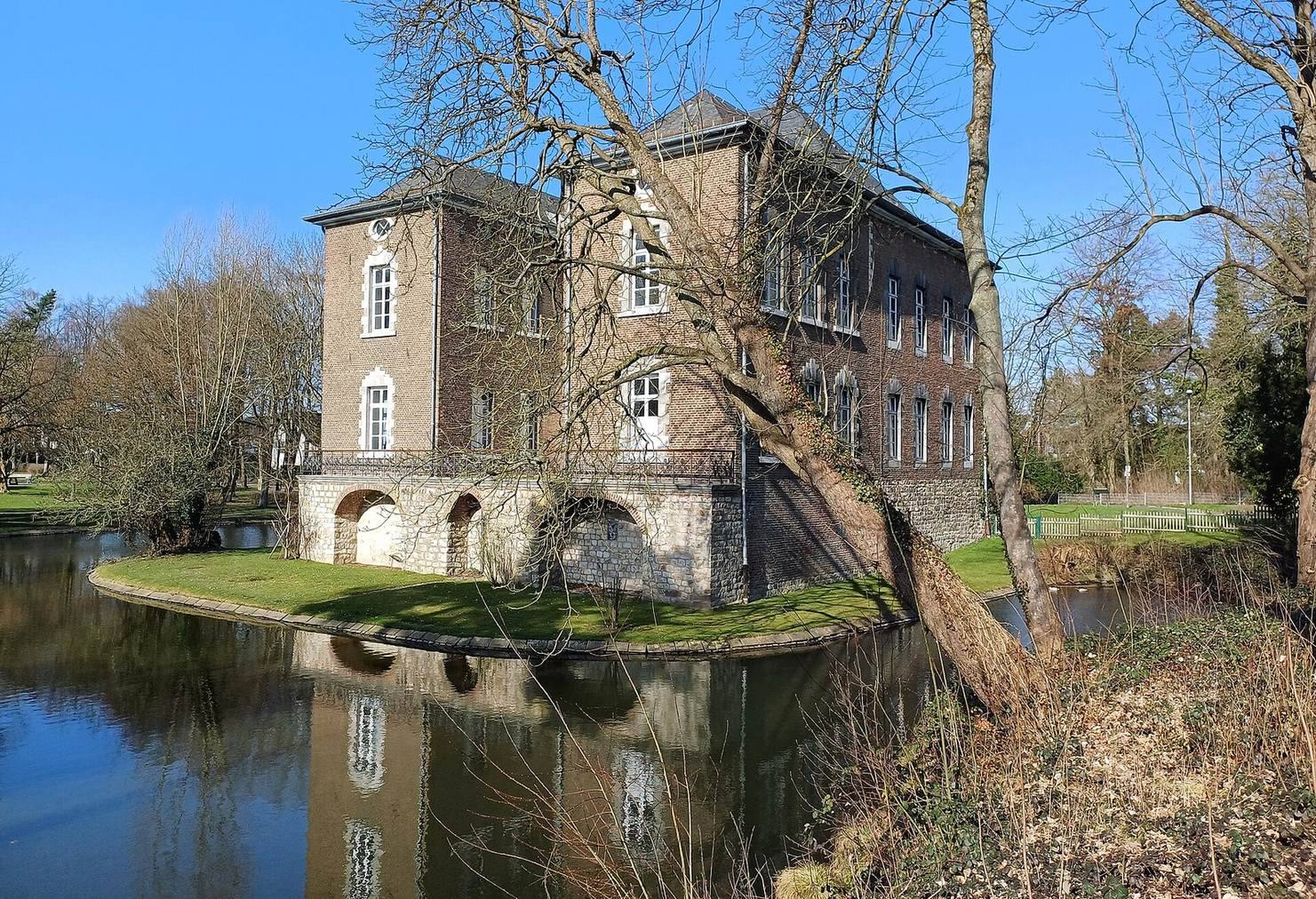
The present complex combines an eighteenth-century main building, later additions on the park side, and foundations belonging to an earlier castle surrounded by water.
Castle architecture and earlier remains
The 1732 building
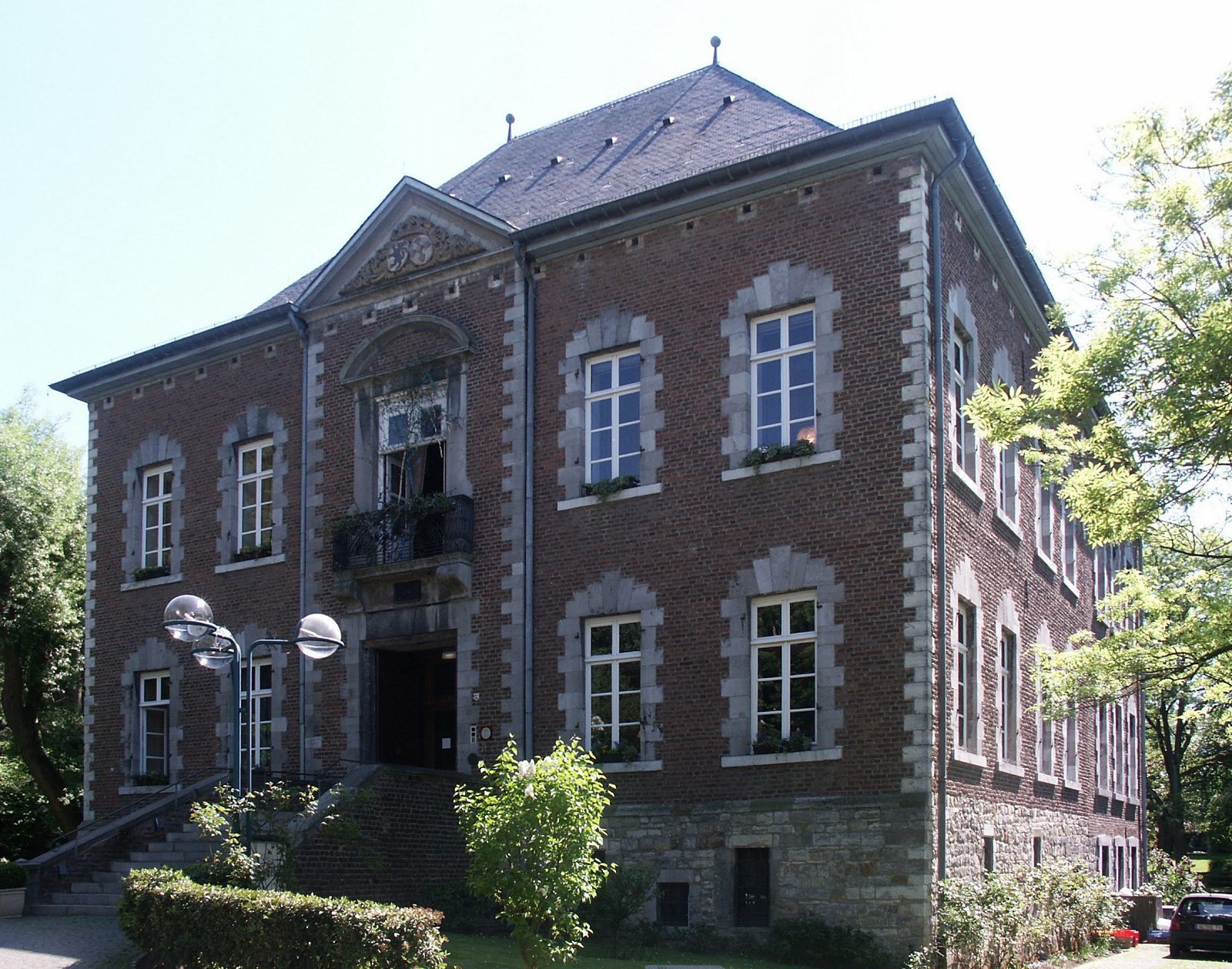
Aachen master builder Laurenz Mefferdatis designed the building erected in 1732. It is made of brick on a base of dressed stone. Toothed blue-stone surrounds frame the windows and doors, while the entrance sits in a central gabled section that projects from the facade.
Late-medieval complex
The eighteenth-century castle was built on the foundations of a late-medieval complex enclosed by water. That earlier complex had three wings and a two-wing outer bailey, an area beyond a castle’s principal buildings.
Park-side wings
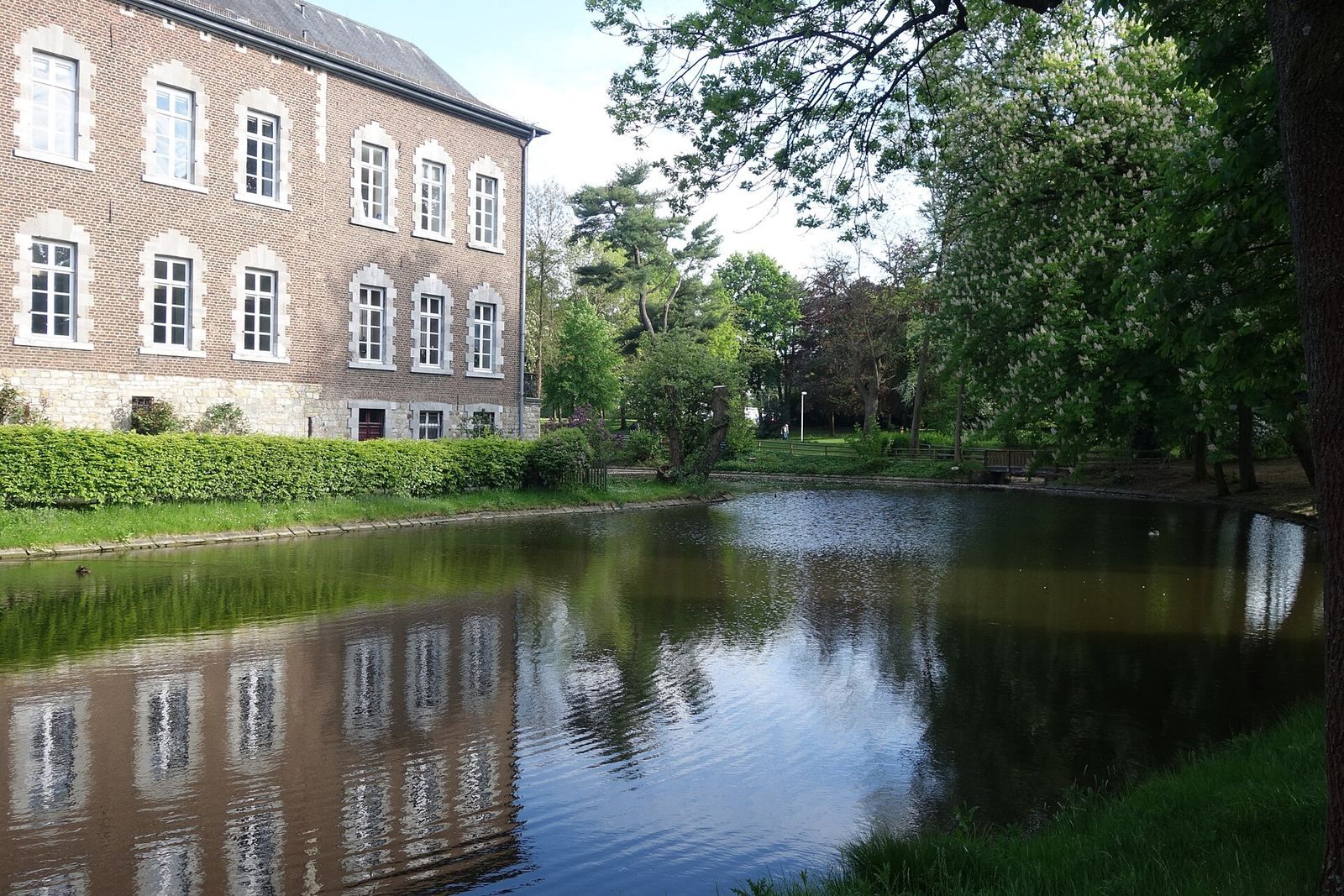
Two additional wings were added on the park side in the nineteenth century. Their design was intended to match the style of the existing castle.