Santa Brigida, Naples: A Roman Catholic Church and Sanctuary
Site at a Glance
- Popularity
- Medium
- Country
- Italy
- Primary era
- Early Modern
- Eras represented
- Early Modern, Modern
- Civilizations
- Habsburg, Italian, Kingdom of Naples, Spanish
- Site type
- Religious
- Remains
- Church
On this page15 sections
History
Santa Brigida is a Roman Catholic church and sanctuary on Via Santa Brigida in Naples, Italy, built in stages from 1609 to 1726. Dedicated to Saint Bridget of Sweden, it is also the historic seat of the Military Order of the Most Holy Saviour and Saint Bridget of Sweden. The dedication is linked to Bridget’s pilgrimage to Naples, dated to 1365–1372.
Foundation and dedication
In 1609, Neapolitan merchant Giovanni Antonio Bianco established a chapel to Saint Bridget in his home and began building a residence for widows beside it. Church authorities halted the work because it lacked their approval. Bianco’s premises were then sold to Giovanna Guevara, a devout benefactor who secured authorization from the archbishop and provided funds. The church opened in 1610.
Leonardine expansion
In 1637, the church was placed in the care of the Clerics Regular of the Mother of God, a Catholic order founded by Saint John Leonardi. Its members were also known as Leonardines or Lucchesi. They started enlarging the church in 1640. In 1675, they commissioned architect Francesco Antonio Picchiatti to complete a new building that replaced the original chapel.
Spanish authorities capped the dome’s height at nine metres after the commander of nearby Castel Nuovo objected that a taller structure could obstruct the castle’s cannon positions. The church’s construction is dated broadly from 1609 to 1726.
Changes in religious administration and later history
The Leonardines were expelled during the French domination of 1805–1815 and returned under the Bourbons, the royal house restored to power after French rule. By then, some of their original buildings had been absorbed into other civil properties. The Savoy, who ruled Italy after its unification, expelled the order again in 1862. The Leonardines returned permanently in 1919.
At the direction of Ferdinand II, king of the Kingdom of the Two Sicilies, architects Federico Bausan and Pietro Glejeses restored the church from 1852 to 1857. The church belongs to the Archdiocese of Naples and serves as a parish and sanctuary governed by the Order of the Mother of God. It is included in the UNESCO World Heritage inscription for the Historic Centre of Naples, made in 1997.
Devotion at Santa Brigida includes decorating the statue of Our Lady of Sorrows each year on 1 June and 15 September, and publicly venerating the reliquary bust of Saint Caesarius of Terracina on 1 November. In the seventeenth century, the Lucchesi brought a bone fragment of Caesarius to the church from Santa Maria Corteorlandini in Lucca. The martyr’s cult is described as having replaced and Christianized Naples’ earlier cult of Augustus, Rome’s first emperor.
Remains
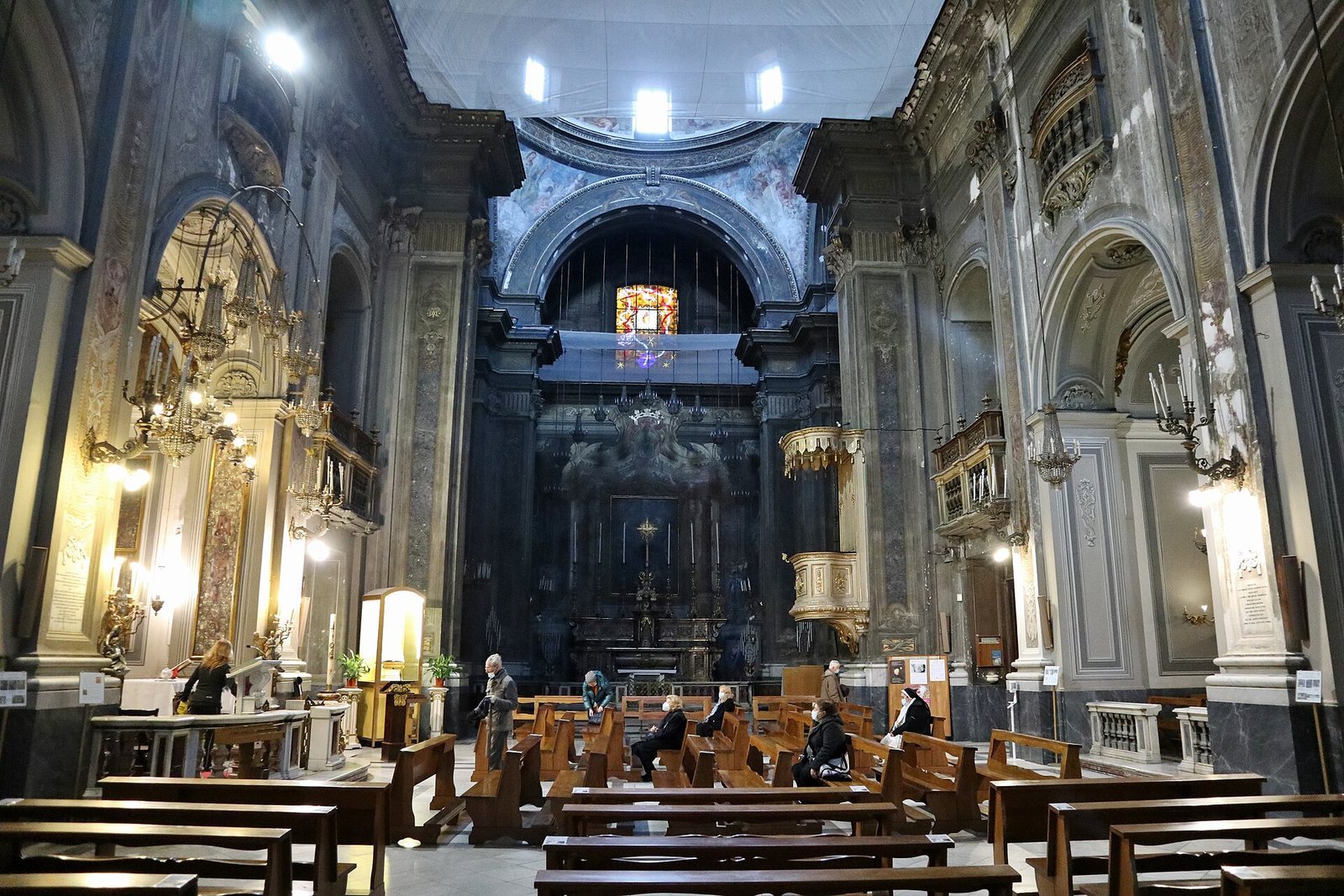
The church’s surviving arrangement combines a two-level façade with a Latin-cross interior, meaning a cross-shaped plan with a longer central nave, and side chapels. The convent grew alongside the church and is now incorporated into Palazzo Barbaja.
Façade and interior plan
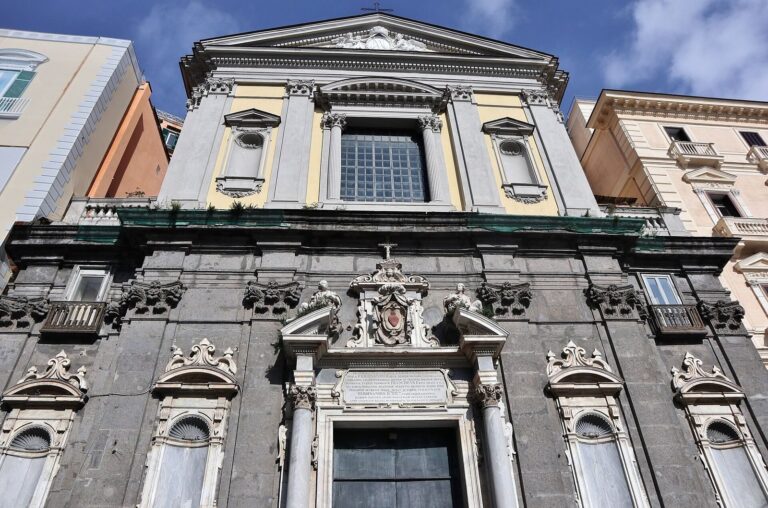
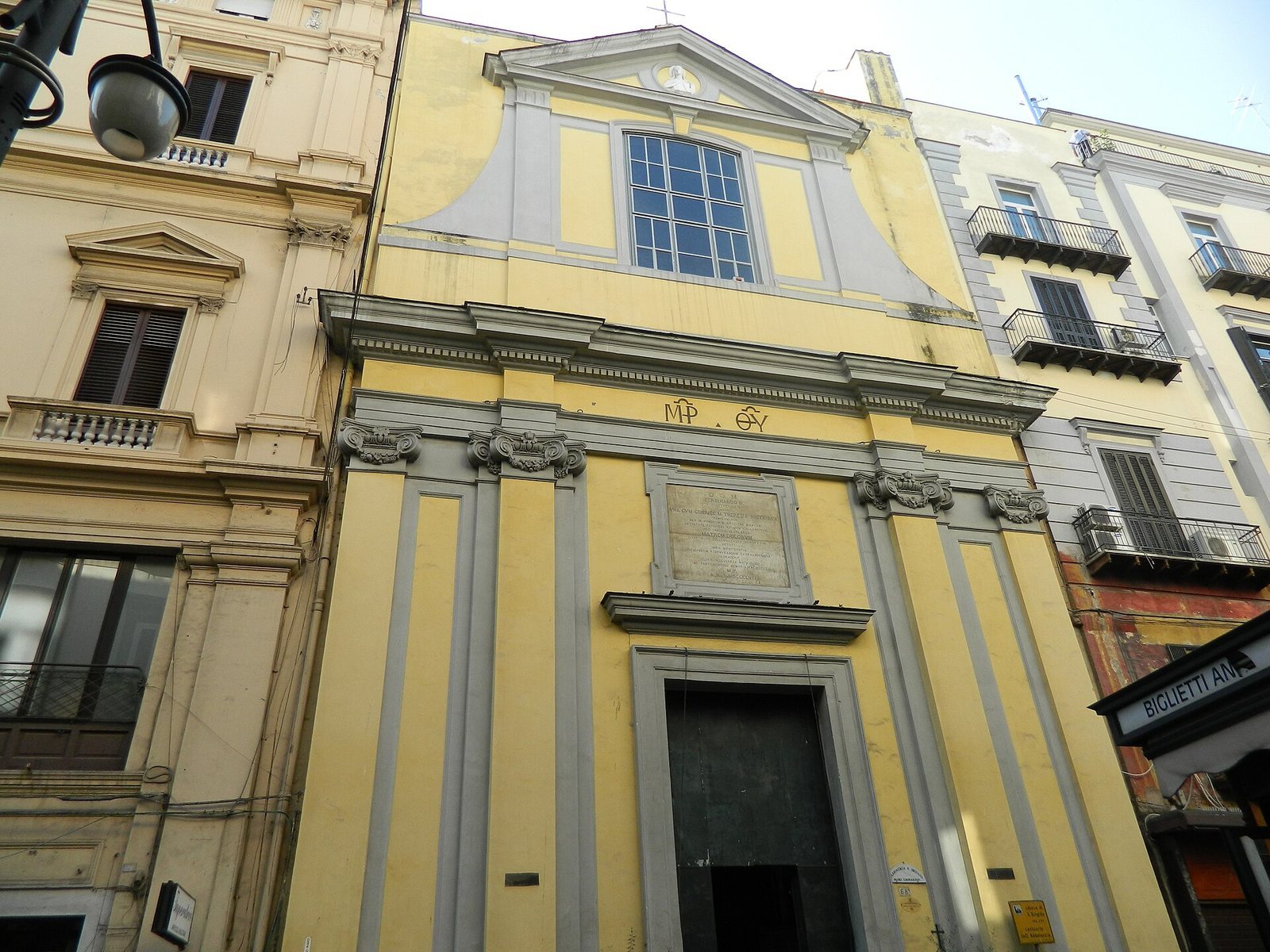
The lower level of the façade has a portal, a plaque, and columns with Ionic, scroll-shaped capitals. A Greek inscription appears on the horizontal band above, within the Leonardines’ coat of arms. The upper level is marked by a large window.
Dome and painted decoration
Dome
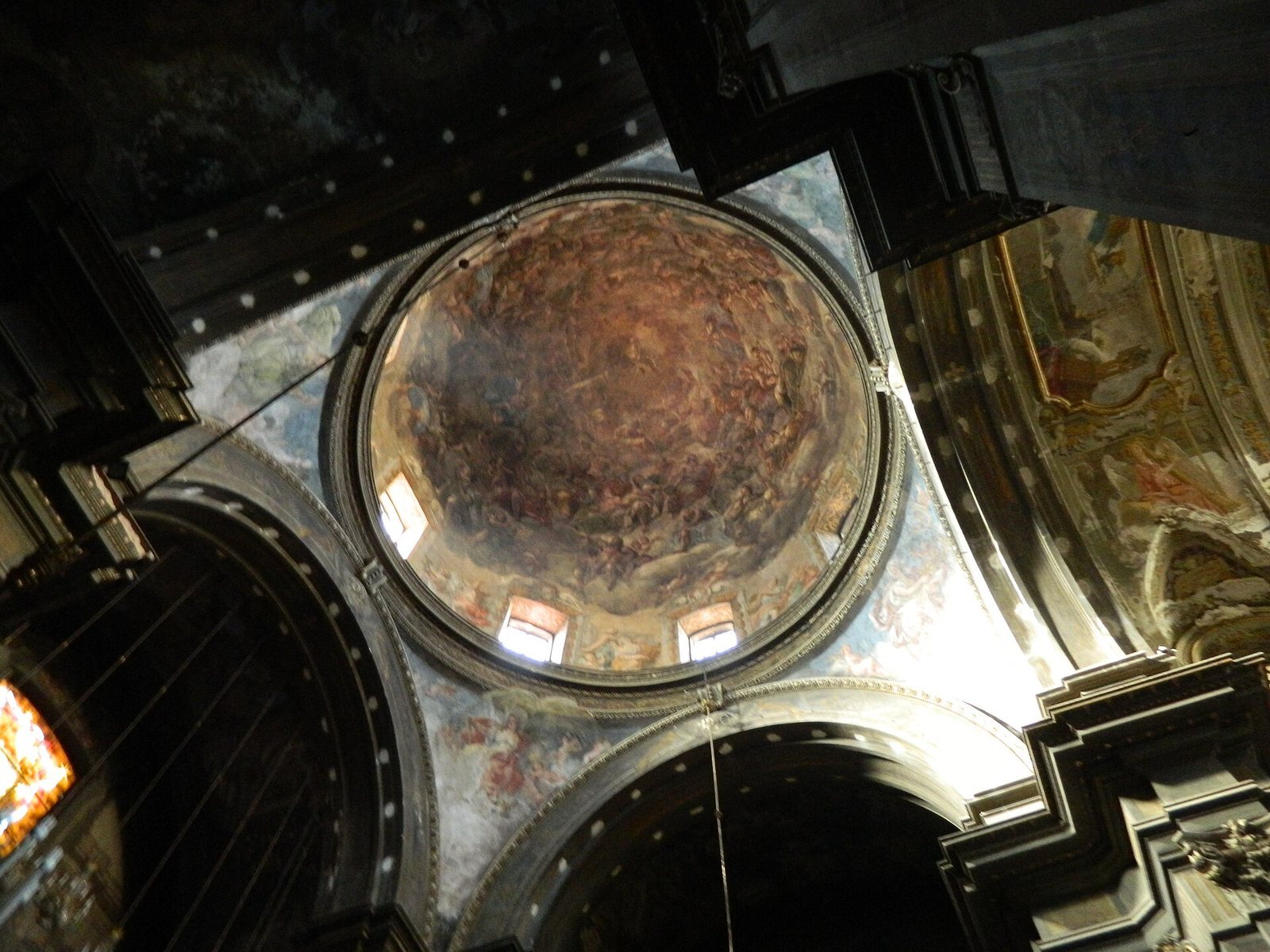
The dome, including its drum, the base beneath the dome, reaches nine metres. Luca Giordano painted a perspective effect on its interior that makes the dome appear more slender, along with a scene of Saint Bridget’s glory in Heaven. Above it, a spiral-shaped lantern, a small tower at the dome’s crown, has small oval openings around its base.
Vault and sacristy paintings
Paolo Vetri’s frescoes cover the vault, replacing eighteenth-century paintings by Giuseppe Mastroleo that were lost during construction of the adjacent Galleria Umberto I. Giordano began the frescoes in the sacristy, the room used for clergy preparation and storage; Giuseppe Simonelli completed them after Giordano’s sudden death. Other Baroque pictorial cycles attributed to Giordano portray Saint Bridget, Saint Nicholas, the Last Judgment, and the Passion.
Transept altar paintings
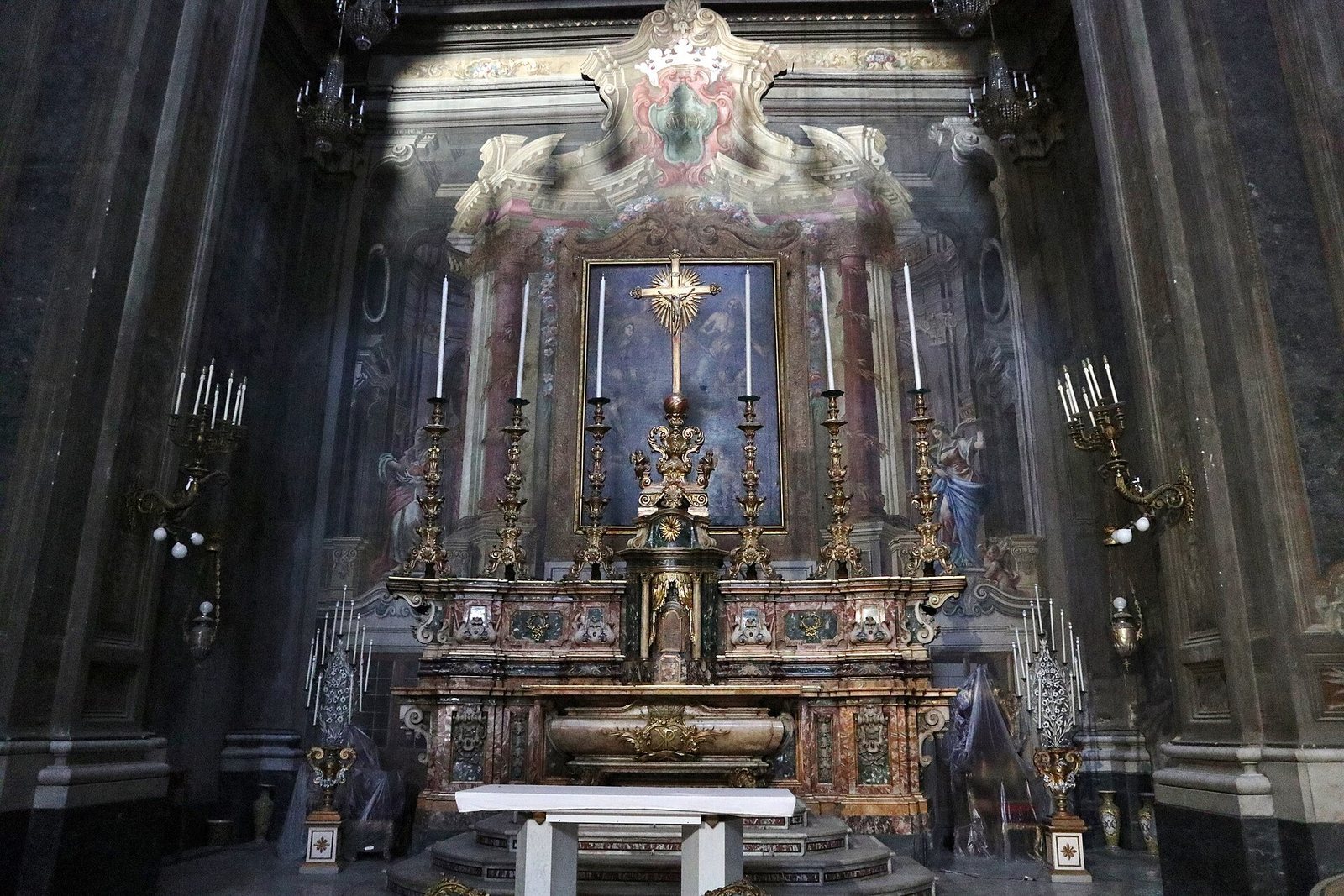
Above the left transept altar, Luca Giordano’s Miracle of Saint Nicholas, dated 1655, reflects the Veronesean influence of his early work. A slab near the altar marks Giordano’s burial. Above the altar on the opposite side is Massimo Stanzione’s Ecstasy of Saint Anthony.
Other paintings
Other works include Giordano’s Saint Anne and the Virgin Child; Paolo De Matteis’s Immaculate Conception; and Giacomo Farelli’s Saint Bridget Contemplating the Passion of Christ and Receiving Revelations. In the sacristy antechamber is Fedele Fischetti’s Our Lady of Sorrows. Nicola Peccheneda’s The Archangel Raphael Restoring Sight to Tobias’s Father, Franceschitto’s Saint Joseph Holding the Child, and Paolo Vetri’s small image of Saint Lucia on the left transept altar are also in the church.
Giovanni Salomone painted Our Lady of Mount Carmel Giving the Scapular to Saint Simon Stock, and Giuseppe Aprea painted The Apparition of the Madonna and Child to Saint John Leonardi. Works by unidentified painters include Saint Anthony Abbot, Madonna and Child with Saint Apollonia, and Madonna and Child with Saint Philip Neri.
Chapels and relics
Chapel of Our Lady of Sorrows
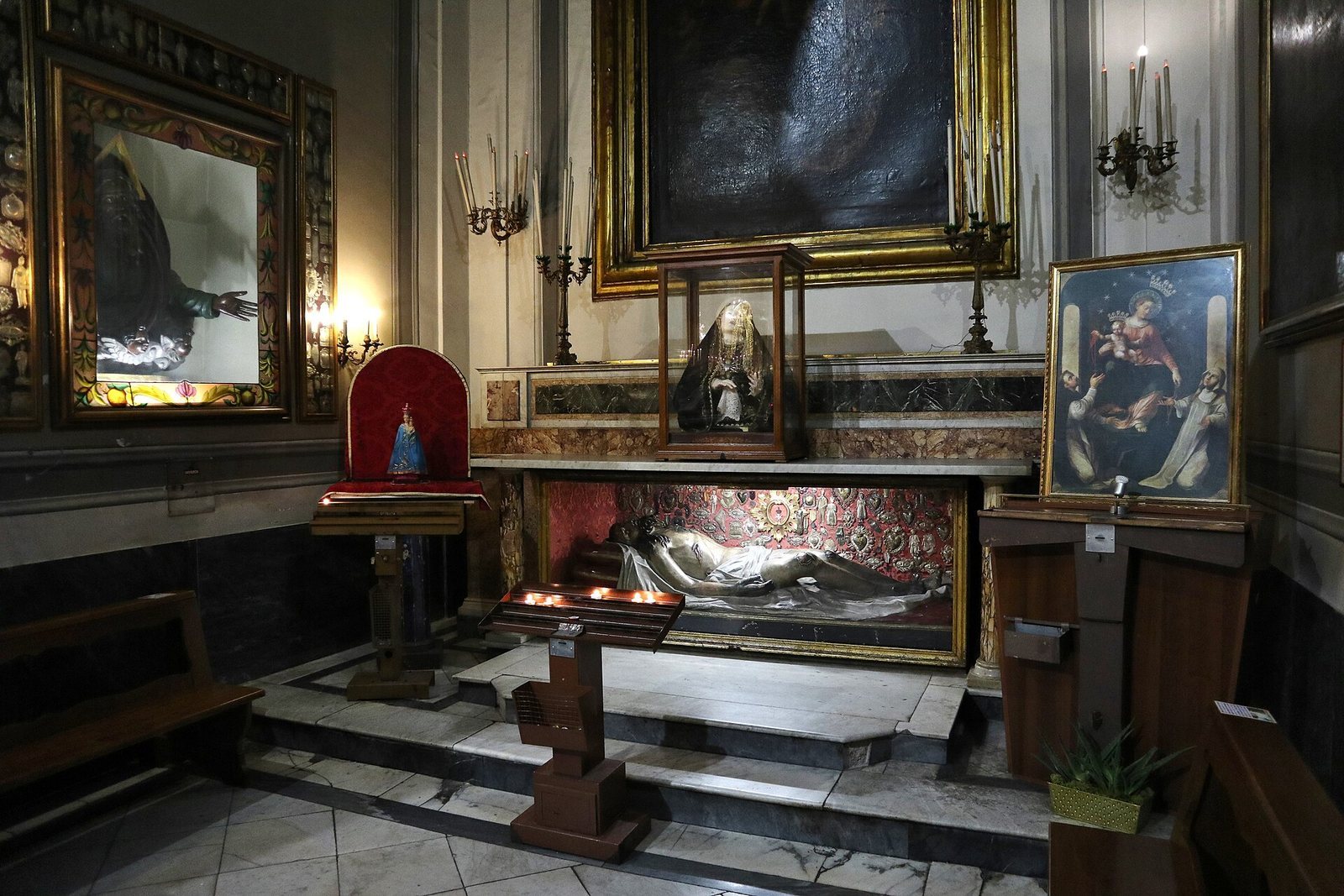
The chapel contains an eighteenth-century statue of the Virgin regarded as miraculous. Our Lady of Sorrows is a devotional title for Mary that emphasizes her grief at Christ’s Passion.
Saint Caesarius reliquary
In the sacristy, a reliquary cabinet covered with ex-votos, offerings made in fulfilment of a vow or in gratitude, holds a nineteenth-century bust of Saint Caesarius of Terracina. The reliquary, a container for a sacred relic, is carved and gilded wood.
Pipe organs
The church has two pipe organs. Mascioni opus 439, built in 1931, stands in the choir loft opposite the façade. It has pneumatic action, which uses air to operate the pipes, 22 stops that control sets of pipes, two keyboards of 61 notes each, and a 32-note pedalboard. A smaller positive organ, a compact pipe organ, was made by Pasquale Palmieri in the nineteenth century and later modified. It is in the small left choir loft in the nave’s final bay and has mechanical action, eight stops, one keyboard, and a pedalboard.