San Giacomo degli Spagnoli: A Sixteenth-Century Basilica in Naples
Site at a Glance
- Rating
- 4.5
- Popularity
- Very Low
- Country
- Italy
- Primary era
- Early Modern
- Eras represented
- Early Modern, Modern
- Civilizations
- Kingdom of Naples, Spanish
- Site type
- Religious
- Remains
- Basilica
On this page10 sections
History
San Giacomo degli Spagnoli is a Roman Catholic church in Naples, Italy, founded in 1540 during the Spanish viceregal period under Pedro Álvarez de Toledo, the viceroy who governed Naples on behalf of the Spanish monarch. Its first stone was laid on 10 June 1540, and Ferdinando Manlio was the architect. Dedicated to Saint James the Greater, one of the Twelve Apostles traditionally regarded as the patron saint of Spain, it was established alongside an existing hospital or hospice created through the efforts of Spanish nobles.
Spanish foundation and civic role
The church became the national church of Spain in Naples and was administered by the Real Hermandad de Nobles Españoles de Santiago, a Spanish noble confraternity dedicated to Saint James. Its foundation therefore linked religious life in Naples with the Spanish community and institutions that governed the city. The church is regarded as an important surviving work of Naples’ viceregal period.
Transformation under the Bourbon government
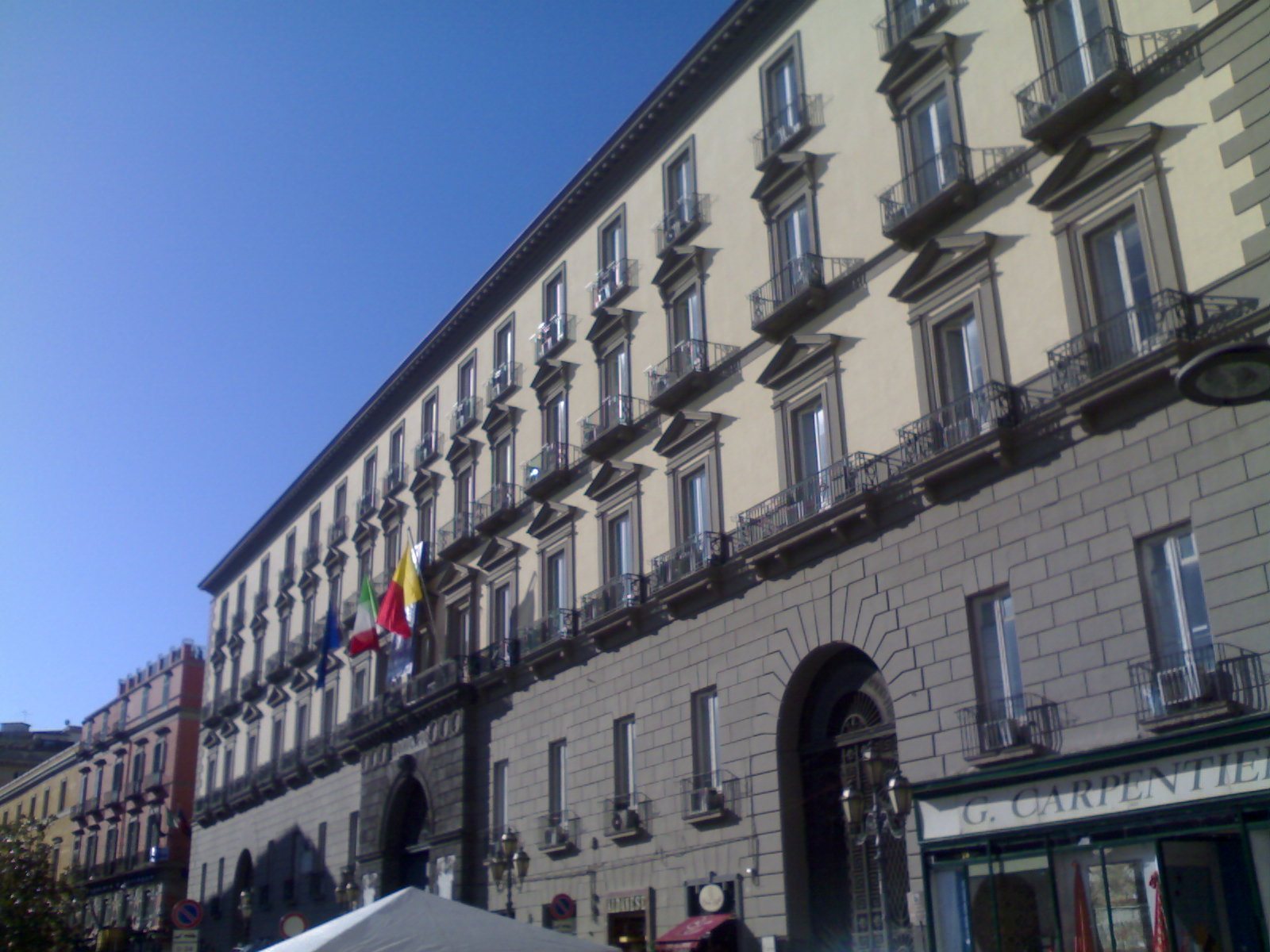
Major alterations began in 1741, when the associated hospital was demolished to make way for the Bourbon government’s Palace of the Ministries. The Bourbon government was the administration established by the Bourbon dynasty in the Kingdom of Naples. The new complex, now called Palazzo San Giacomo, later became the seat of Naples’ city government. Joachim Murat ended the activities of the hospital and its associated bank in 1809.
The church was incorporated into Palazzo San Giacomo in the early nineteenth century. The process is dated to 1812 and was completed through further work between 1819 and 1825. This construction eliminated the church’s original facade, while its sixteenth-century plan and internal arrangement remained in place. The church suffered damage during the Allied bombing of Naples in summer 1943. Poor condition and lack of funds then kept it closed to visitors for several decades, followed by restoration works and occasional public openings reported after 2014.
Ecclesiastical and heritage status
Pope Pius X elevated San Giacomo degli Spagnoli to the rank of minor basilica on 26 April 1911. A minor basilica is a church granted a special papal title recognizing its ecclesiastical and devotional importance without making it the seat of a bishop. The church belongs to the Archdiocese of Naples. Together with Palazzo San Giacomo, it forms part of the Historic Centre of Naples World Heritage property, inscribed in 1995.
Remains
Plan and interior structure
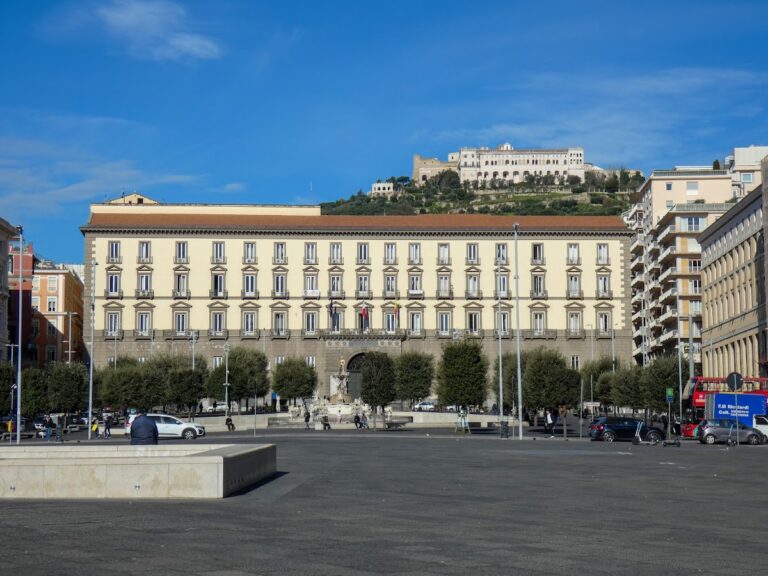
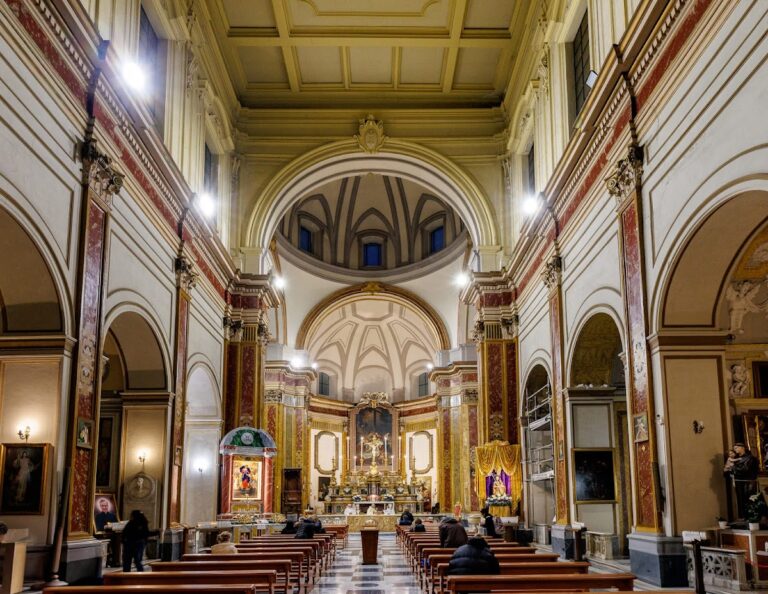
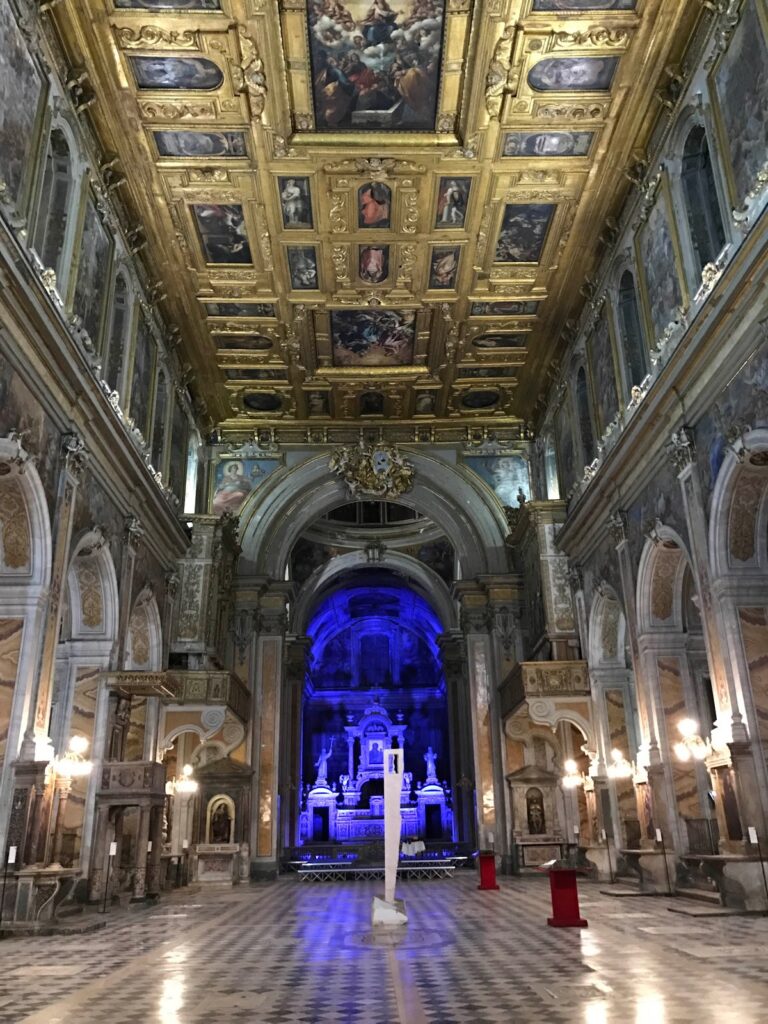
The basilica stands in Piazza Municipio within Palazzo San Giacomo. Entry is through the palace’s entrance vestibule, reflecting the later integration of the church into the government complex. Inside, the sixteenth-century Latin-cross plan remains legible. This layout has a long central axis crossed by a shorter transept, with the transept separating the nave from the area around the apse. Three naves organize the interior. The central nave is covered by a high barrel vault with lunettes, curved vault sections formed where openings or cross-vaults cut into a larger vault, while the side naves contain a sequence of small domes. A central dome rises above the space between the transept and the apse. The post-1741 interior includes pilasters made from dark piperno, a volcanic building stone widely used in Naples.
Funerary monuments
Monument to Pedro de Toledo
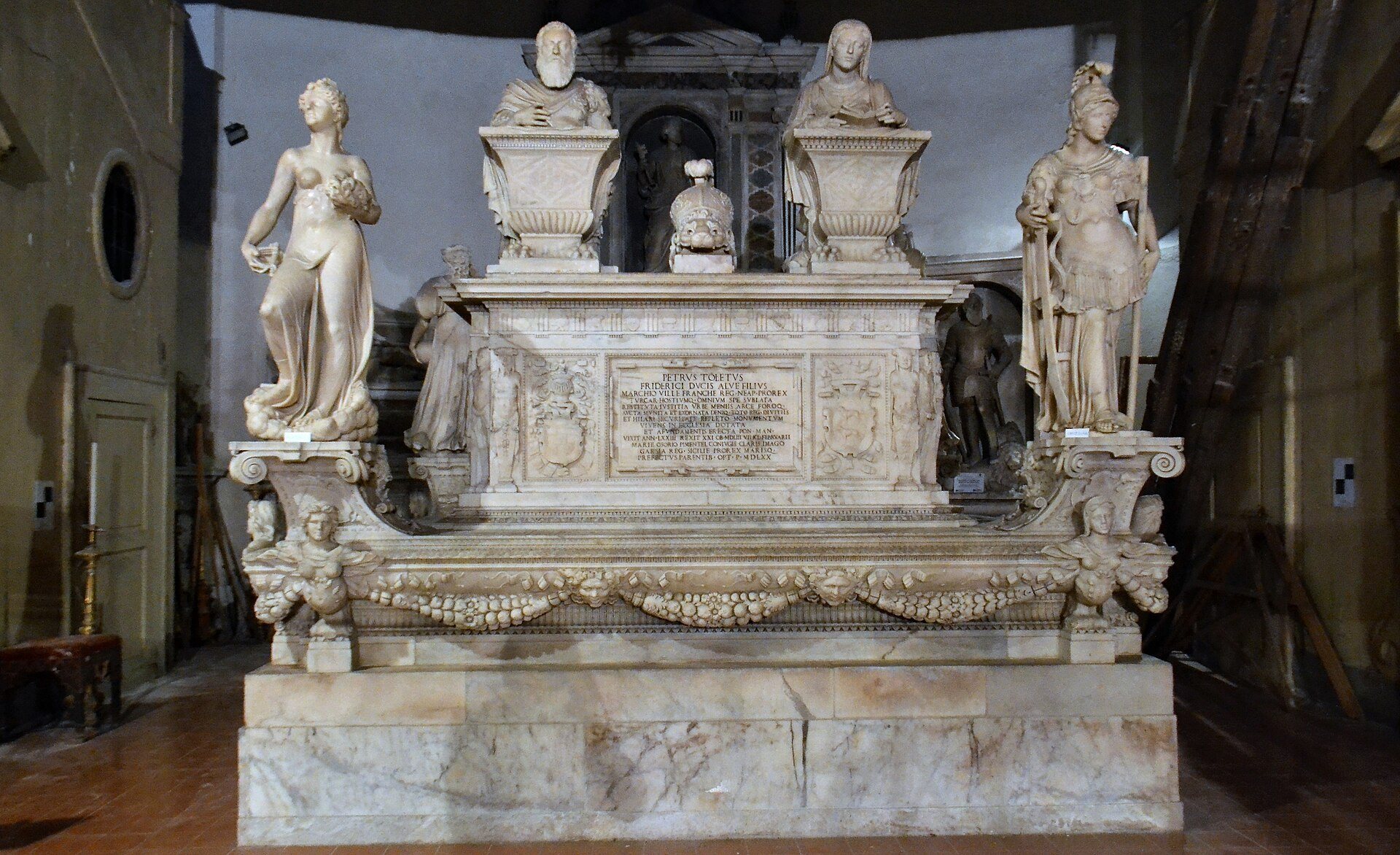
The principal tomb is the marble monument to Pedro de Toledo, positioned behind the high altar in a room beside the apse. It is reached through a door on the left side of the presbytery. Giovanni da Nola made the monument at the viceroy’s request, and it was completed in 1570 after almost two decades of work involving Annibale Caccavello and Giovanni Domenico D’Auria. Allegorical Virtues support the sarcophagus, which is accompanied by statues of Pedro de Toledo and his wife and reliefs celebrating the Spanish government. Pedro de Toledo died in 1553 while travelling as captain-general of the Spanish armies toward besieged Siena. Because the monument was unfinished, he was buried in Florence Cathedral instead.
Entrance and apse tombs
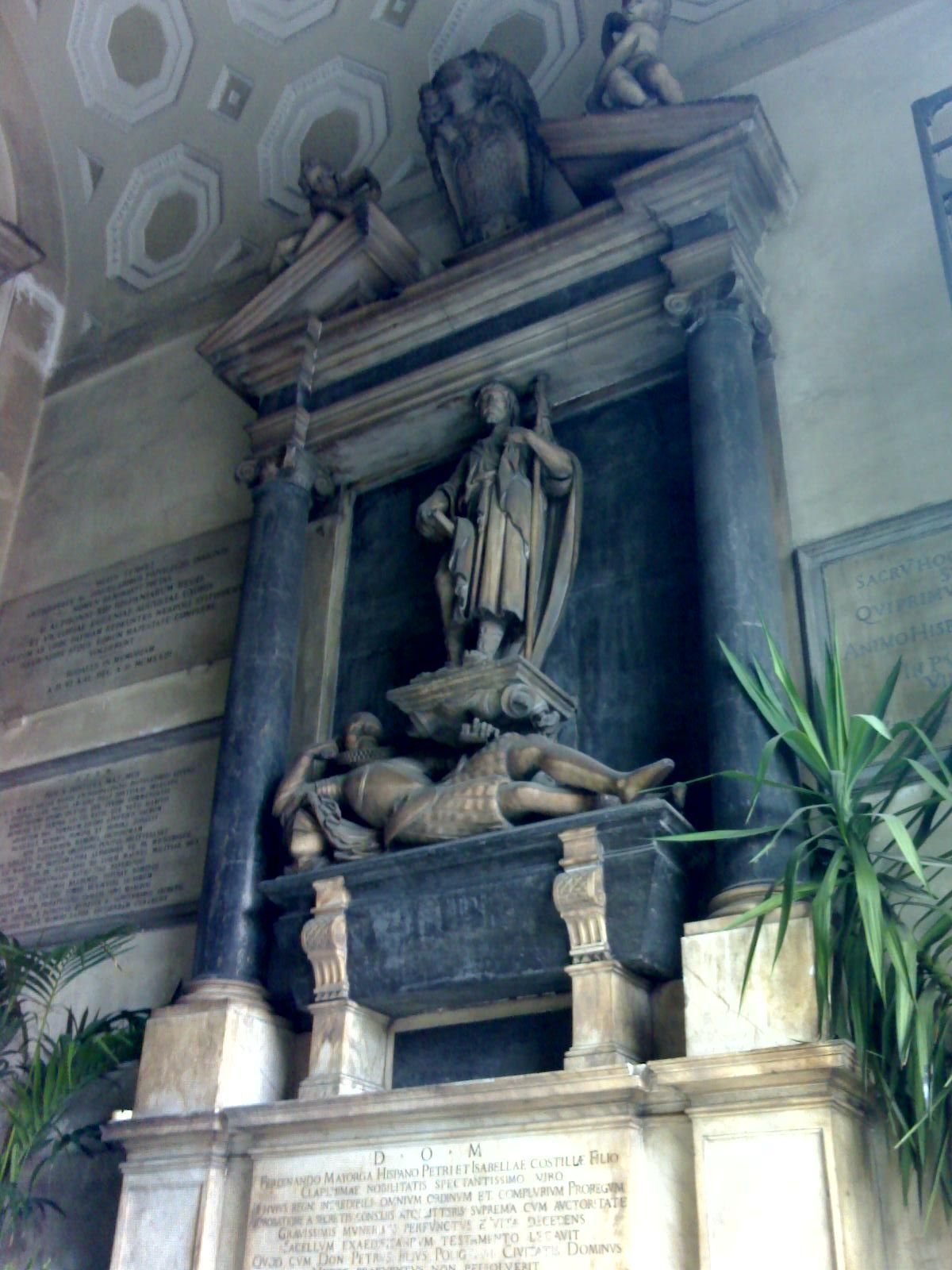
Other funerary monuments stand beside the entrance, including two sculptures by Francesco Cassano on the side walls of the access stairway. Near the apse are the tombs of Ferdinando Maiorca and his wife, Porzia Coniglia, made by Michelangelo Naccherino. The apse area also contains five additional funerary monuments. Among them is the tomb of Alfonso Basurto, governor of Lucania, commissioned by his wife Eleonora di Nocera and made by Annibale Caccavello and Giovanni Domenico D’Auria. It stands behind Pedro de Toledo’s monument. Another tomb, belonging to Federico Vries, is attributed to Domenico Caccavello.
Altarpiece and paintings
The high altar is surmounted by a large eighteenth-century organ. The church’s paintings trace developments in Neapolitan painting from the second half of the sixteenth century. Works by Marco Pino include a Crucifixion, Saint James the Apostle, and the Madonna with Saint Anthony of Padua and Saint Francis. Other works from this period include Giovanni Bernardo Lama’s Deposition, dated 1588, Michele Curia’s Madonna and Child with Saint Jerome, the Madonna and Child with the Magi from the school of Giorgio Vasari, and Giovanni Angelo Criscuolo’s Assumption of the Virgin.
Marco Pino’s Crucifixion is in the second chapel on the left, while Lama’s Deposition is in the third. Paintings of the Virgin with Saint Anthony and Saint Francis by Marco Pino and of the Virgin and Child with angels and Saint Jerome by Giovanni Demio are also located in the nave. Seventeenth-century works include Andrea Vaccaro’s Saint Lucy, Luca Giordano’s Apparition of the Virgin of the Pillar to Saint James, and an Immaculate Conception attributed to Massimo Stanzione. The latter two paintings are in the sacristy and have been restored.
Eighteenth-century works include Domenico Antonio Vaccaro’s Saint James Led to Martyrdom and Pietro Bardellino’s Madonna of Victory with Saint Pius V and Don John of Austria. A portrait of Philip VI of Spain, painted by Giovanni Gasparro in 2021, is located in the private rooms of the archconfraternity.