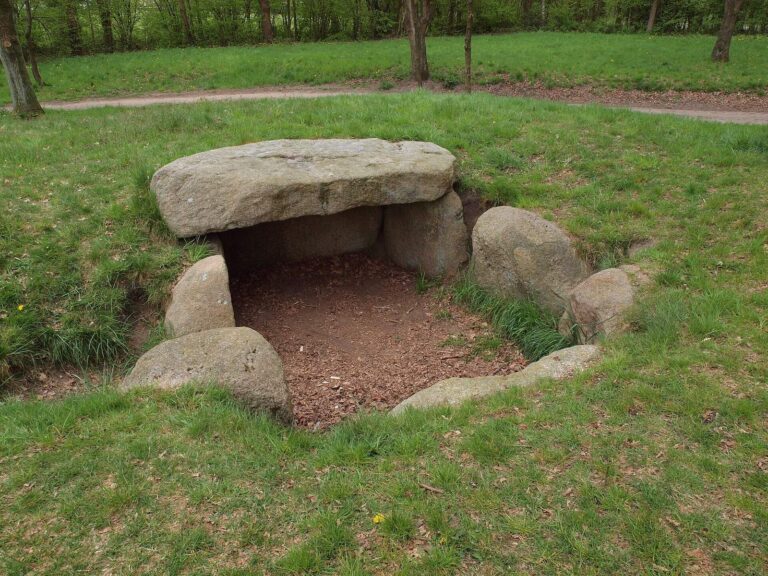
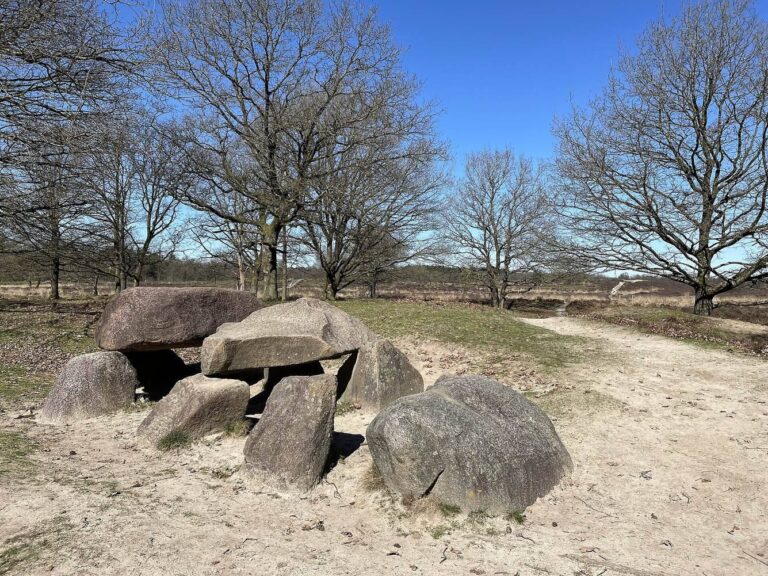
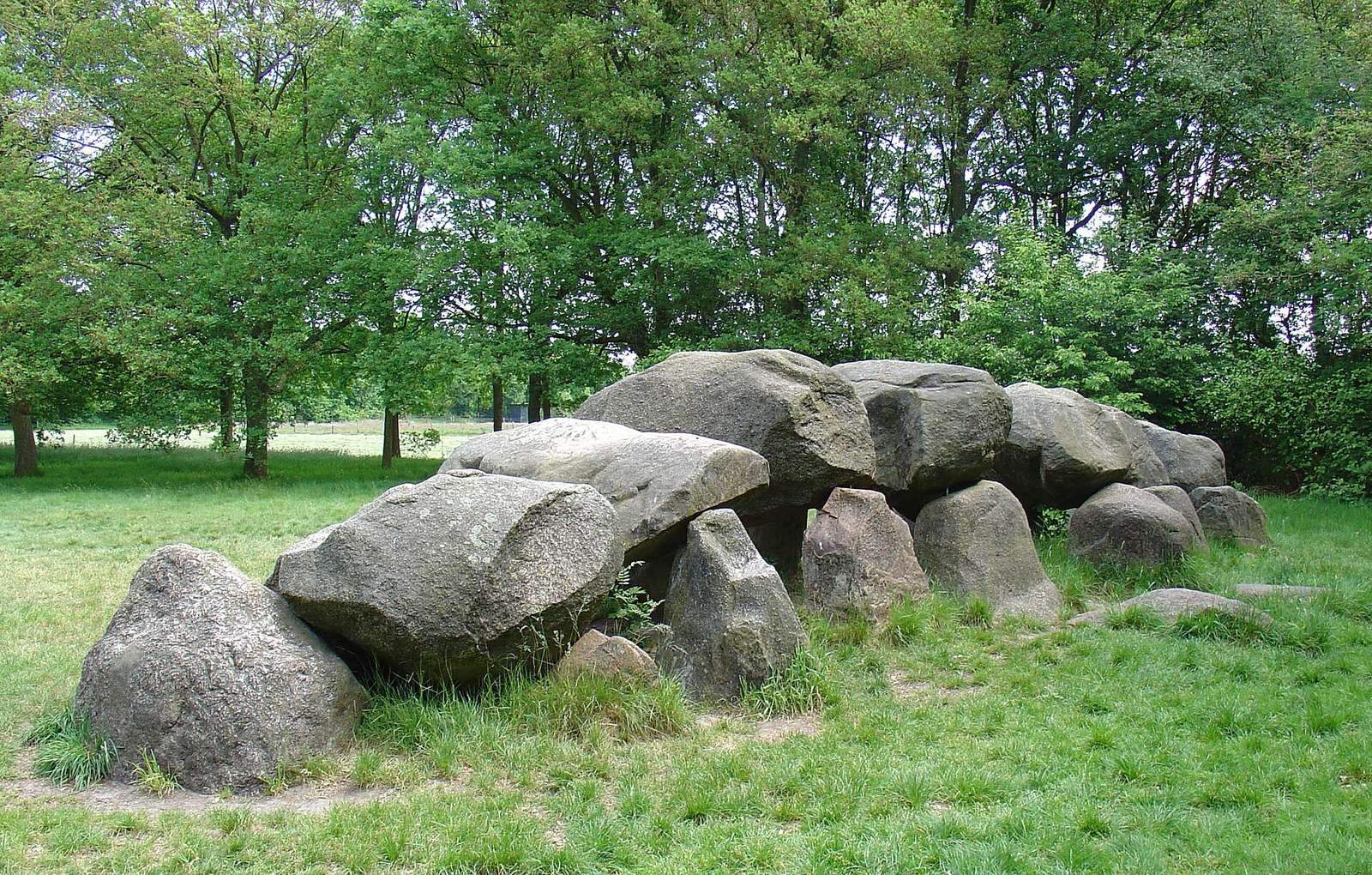
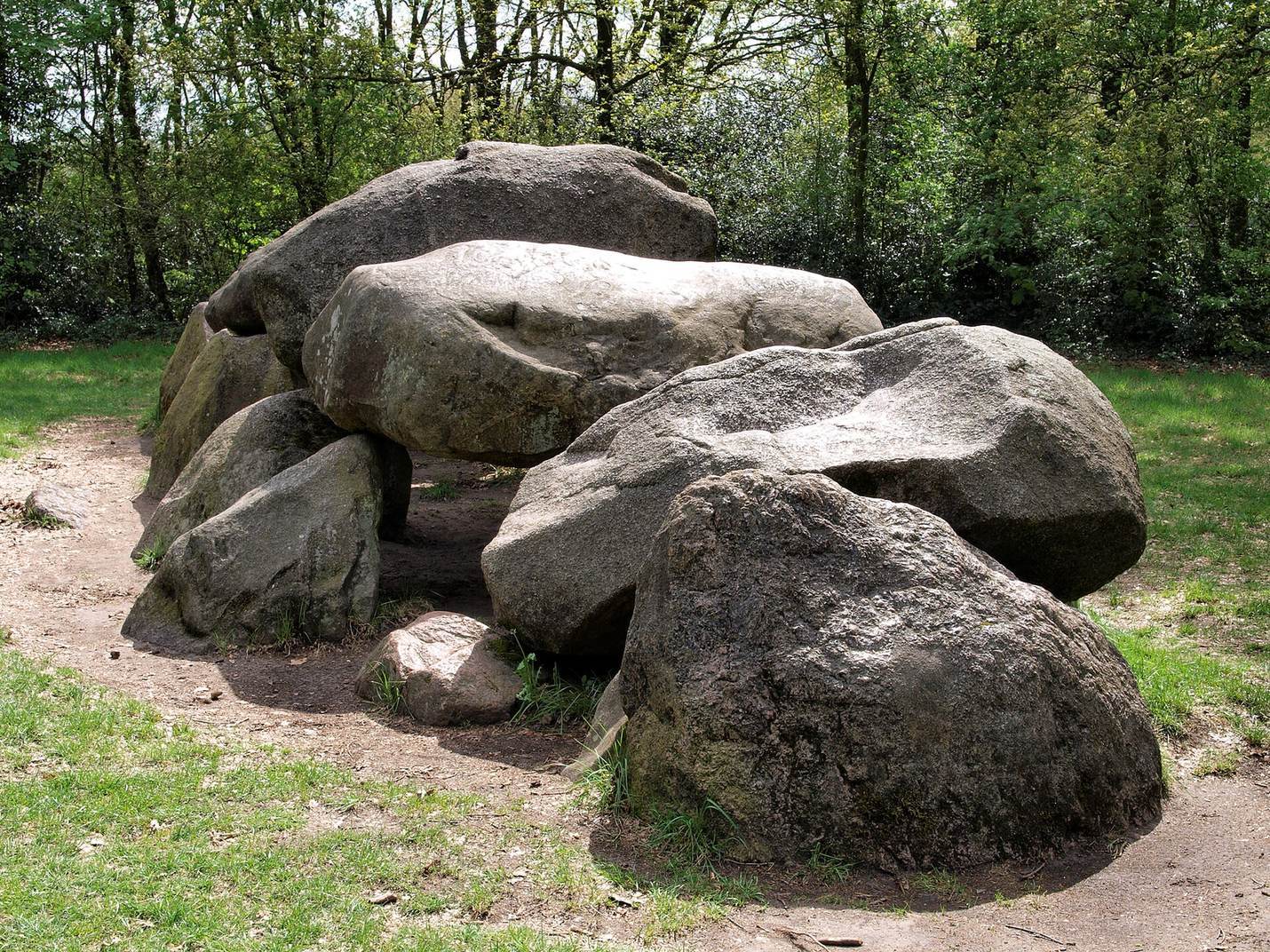
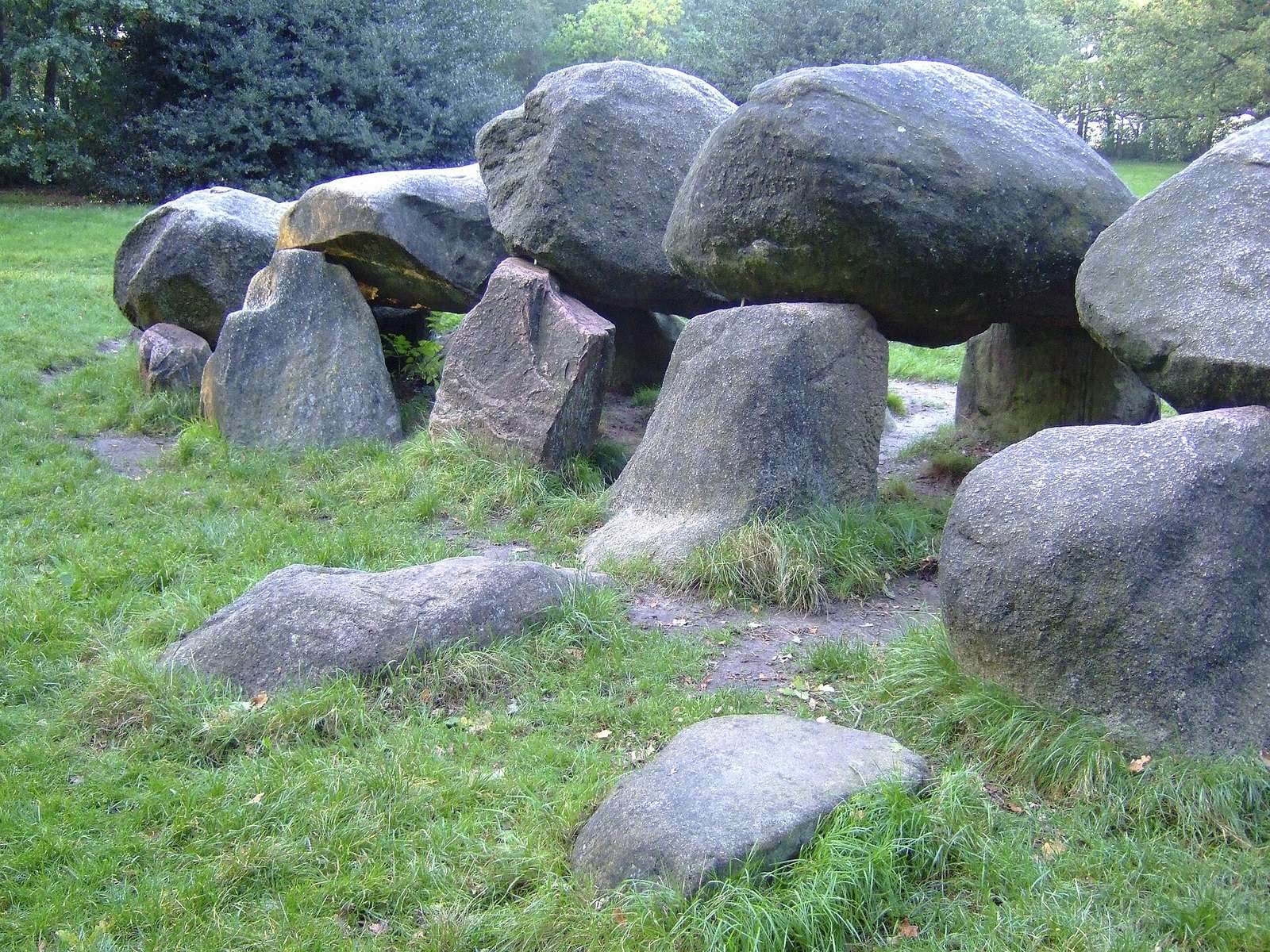
D18: A Funnelbeaker-Culture Dolmen near Rolde, Netherlands
Site at a Glance
- Popularity
- Low
- Country
- Netherlands
- Primary era
- Stone Age
- Eras represented
- Stone Age
- Civilizations
- Unclassified
- Site type
- Burial
- Remains
- Tomb
On this page7 sections
History
Neolithic construction
D18 is a prehistoric megalithic tomb, or dolmen, northeast of Rolde in the Netherlands. People of the Funnelbeaker culture, a northern European Neolithic culture named for its characteristic funnel-shaped pottery, built it between 3400 and 3200 BC.
Early written tradition
A description from 1547 may be the earliest written reference associated with the tombs at Rolde, but it is uncertain whether it refers to D18, nearby D17, or D10. The account describes “Pillars of Hercules,” a name for a legendary pair of pillars associated with the Greek and Roman hero, and an offering stone above a narrow passage beneath the megaliths. Its writer claimed that people had been sacrificed there before Boniface, an eighth-century missionary bishop linked with the spread of Christianity among Germanic peoples. The account also describes strangers being forced to crawl beneath the stones while pelted with manure, and gives the monument the insulting nickname “the Devil’s backside.” These claims cannot be assigned specifically to D18.
Transfer, restoration, and study
The Boermarke of Rolde, a local communal landholding body, sold D17 and D18 for a total of 150 guilders following mediation by the town’s mayor, Alexander Carel Jan Frederik Bouwmeester. A public sale had been planned, but the provincial executive objected. Following advice from the Ministry of the Interior, the tombs were sold to the state. D17 was sold in 1872 and D18 in 1873.
A restoration is attributed to Joan Lodewijk Gerhard Gregory, the province’s Crown-appointed senior official, known as the King’s Commissioner. Further restoration campaigns took place in 1873, 1931, 1936, from 1957 to 1965, and in 1993. By 1905, D18 and D17 were among the Netherlands’ few archaeological attractions. They appeared widely on postcards and were also depicted in paintings and on tiles.
Concern in England about Dutch restoration practices led the director of the Society of Antiquaries in London, a British learned society focused on antiquarian and archaeological study, to commission William Collings Lukis and Sir Henry Dryden to record the monuments. In July 1878, they measured and described 40 tombs on the Hondsrug, a long sandy ridge in Drenthe, and painted watercolors of them. Their report was not published at the time. In 2015, Drenthe archaeologist Wijnand van der Sanden published their work with an introduction and a history of research on the tombs through that year; he judged their records to be of high quality.
Remains
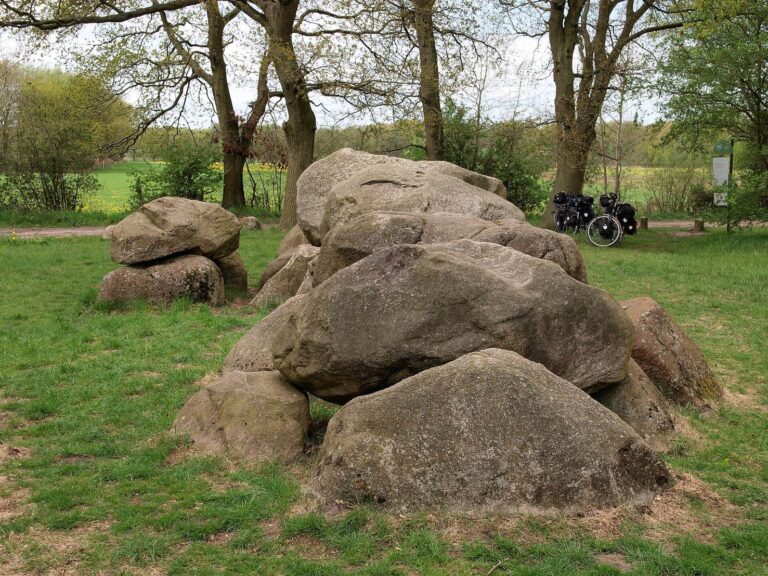
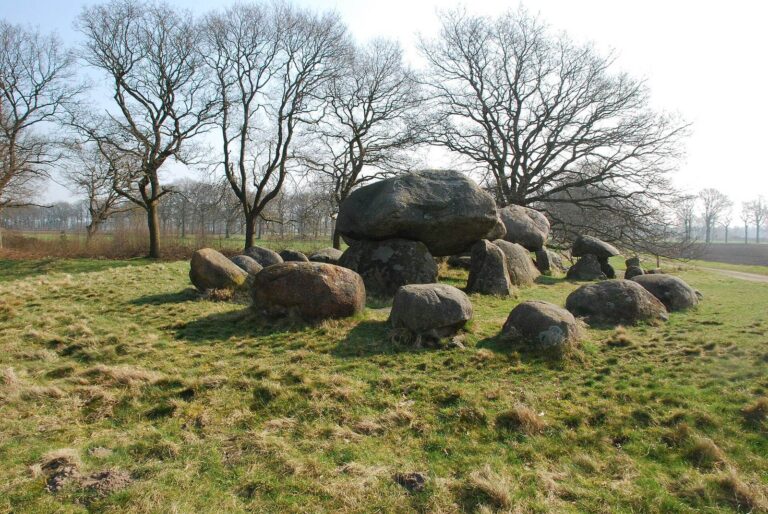
D18 stands on arable land northeast of Rolde, near the cemetery and St. James’s Church. The neighboring tomb D17 is close by. D18 is more orderly in appearance than D17, whose stones are more ruinous.
Stone chamber and entrance
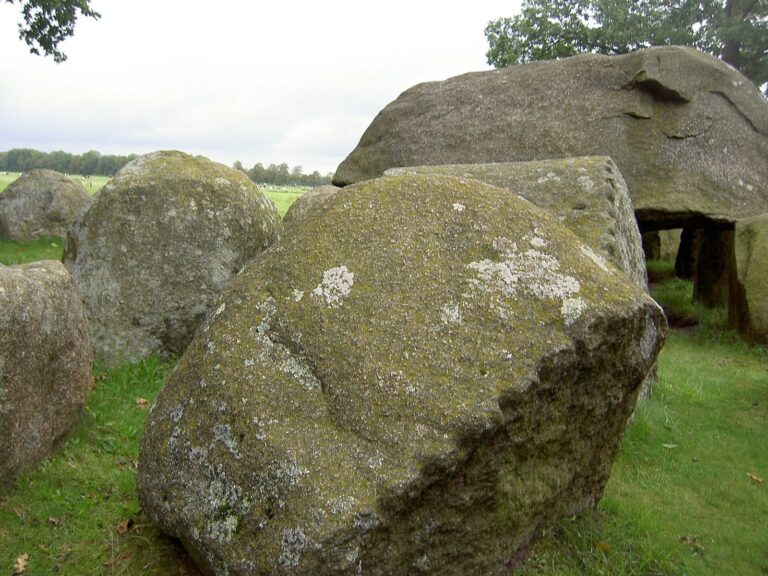
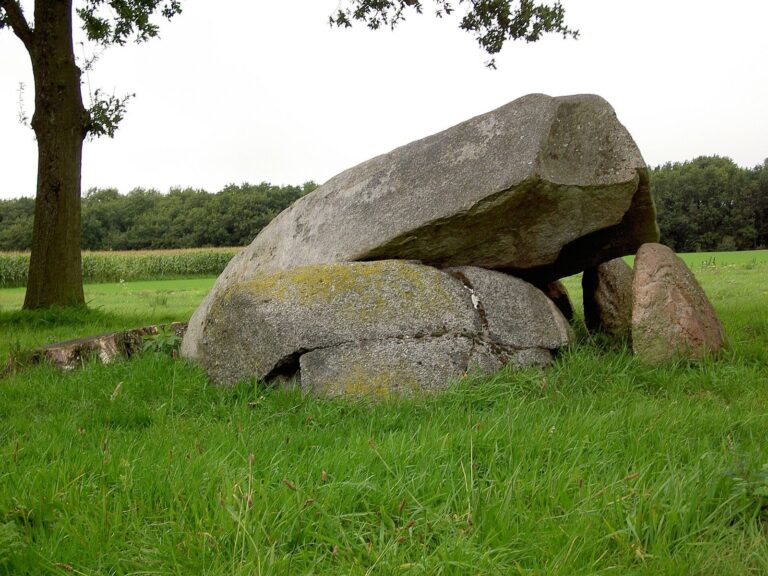
The monument measures 12.6 metres long and 3.5 metres wide. Its listed arrangement consists of seven capstones, the slabs laid across upright supports, and 14 support stones, together with two end stones. Two further stones flank the entrance, which faces south.
Plans and observations
Lukis’s 1878 plan also shows seven capstones, but records 16 support stones, as well as the south-facing entrance. It notes an urn found by the archaeologist Janssen and reports Janssen’s statement that a covering mound remained when he examined the tomb; Lukis rejected Janssen’s stated orientation. Later, archaeologist Van Giffen considered D18 to be in good condition, though he regretted that leveling the surrounding ground had removed possible traces of a mound and its edging stones. Robert Dehon suggested that the tomb to the left when viewed with one’s back to the church might bear inscriptions.