Eğirdir-Han: A Seljuk Caravanserai in Turkey
Site at a Glance
- Popularity
- Very Low
- Country
- Turkey
- Primary era
- Medieval
- Eras represented
- Medieval
- Civilizations
- Seljuk
- Site type
- Economic
- Remains
- Caravanserai
On this page8 sections
History
Eğirdir-Han is a Seljuk caravanserai on the shore of Lake Eğirdir, about 3 km south of the town center in Turkey. A caravanserai was a roadside complex offering lodging and services to travelers and trading caravans. Construction began in 1229 under Sultan Alaeddin Keykubad I and was completed around 1237–38 under his son and successor, Kaykhusraw II. The Seljuks, a Turkic dynasty whose rulers established a sultanate in Anatolia, built the han as part of their network along an old trade route from Antalya toward Akşehir and Konya.
Fire and reuse
A fire almost destroyed the complex in 1298. As Seljuk rule declined, the han was not rebuilt and continued to deteriorate. In 1301, regional ruler Feleküddin Dündar Bey ordered much of its stonework and the collapsed main portal moved into Eğirdir.
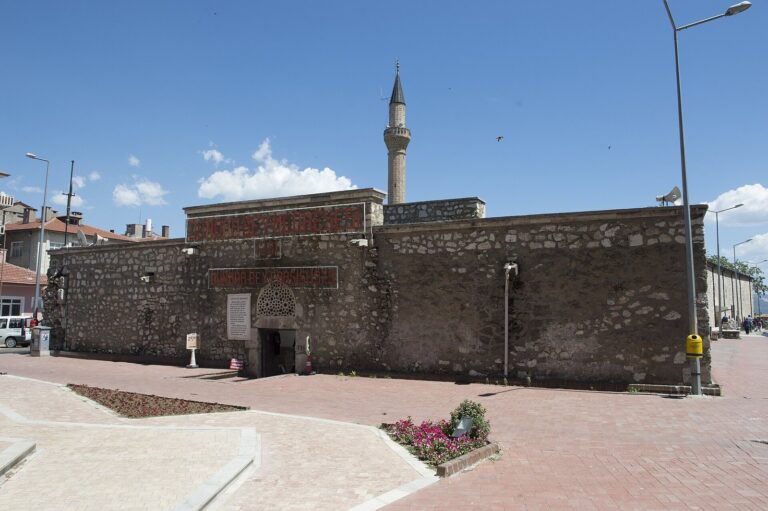
The materials went into converting the town’s earlier caravanserai into a school for Quranic learning, now called Taş Medrese. Other stones were reused in the facing of the Ulu Cami, or Great Mosque, and in the town wall.
Name and archaeological work
The han takes its name from the town and lake. Until 1982 it was called Eğridir Han, a form derived from Akrotiri, the Greek name for the lake and town; in that year, the official name changed to Eğirdir. Keyhüsrev Caravanserai and Gıyaseddin Keyhüsrev Han are other names for the site, both referring to its patron.
Excavations from 1990 to 1993 uncovered an inscription bearing the year 1237. The Isparta Museum carried out further excavations in 2006 and 2007. Eğirdir-Han was also included with other caravanserais in a nomination for UNESCO World Heritage status under the title “Seljuk Caravanserais on the Denizli–Doğubayazıt Route.”
Remains
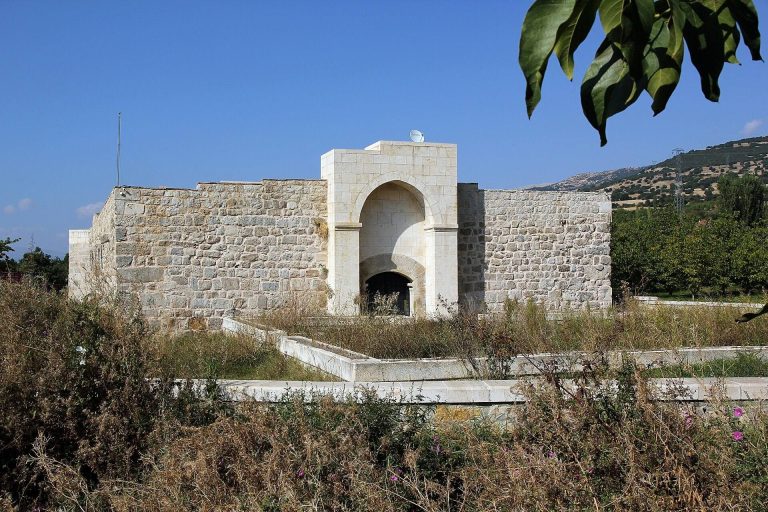
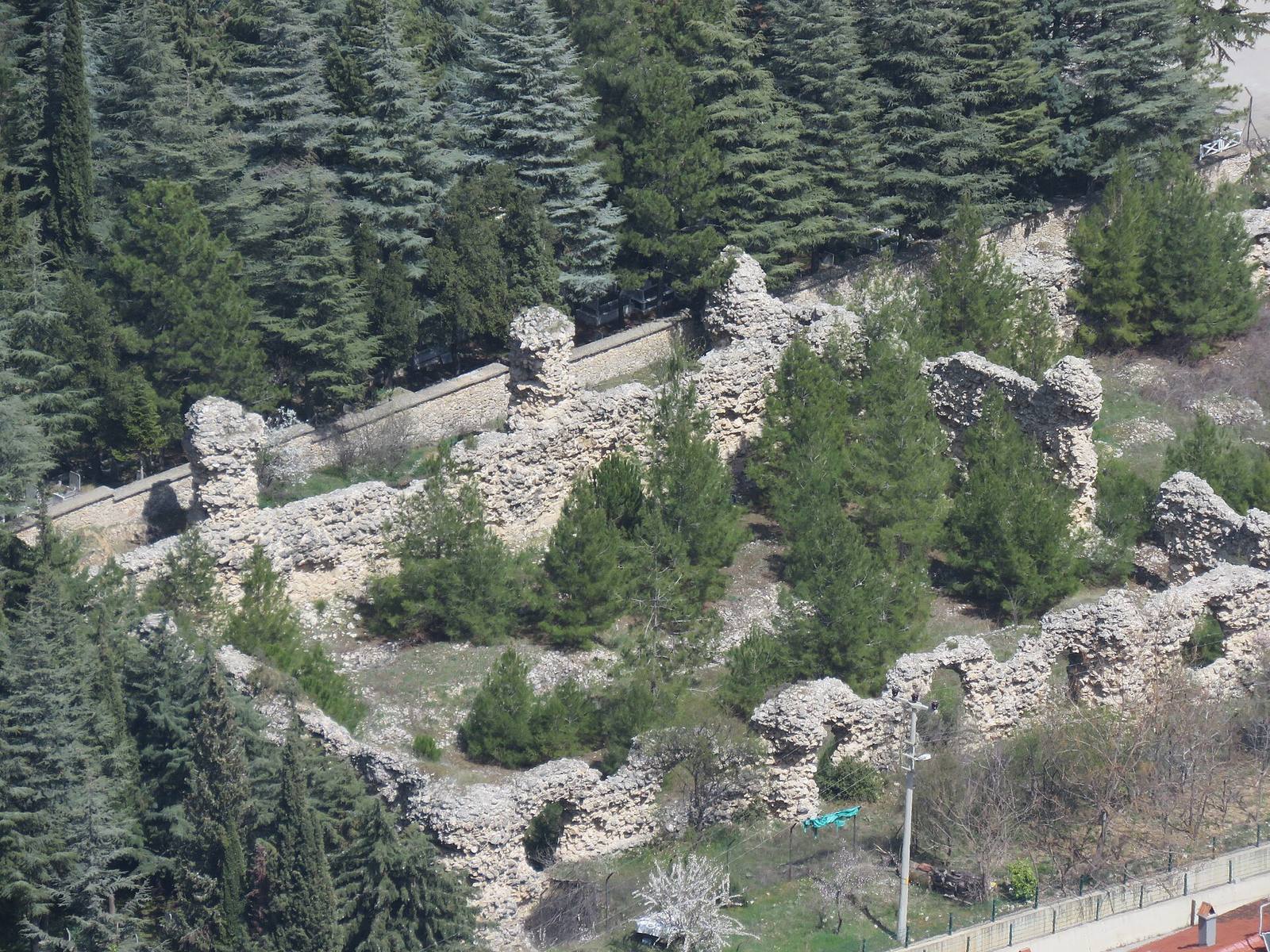
The complex followed a symmetrical Seljuk plan, with two connected buildings. When it opened, its built-up area exceeded 3,500 m², making it the third-largest han in Anatolia. A cemetery borders the site to the north and east; a narrow lane separates it from newer development to the south, and the main road runs along its eastern side.
The two connected buildings
Main building
The street-side main building was a square measuring 48 m on each side. Its gate faced east toward Lake Eğirdir. Walls enclosed a courtyard 35 m wide and 46 m long, while seven sleeping rooms of varying widths, each 7 m long, stood along the building’s southern side.
Winter hall
An attached winter hall lay to the east of the main building. Measuring 45 by 27 m, it was roofed throughout with a barrel vault, a continuous arched roof. A central aisle ran between seven sleeping chambers on each side, each about 10 by 6 m. A dome covered the center of the hall, in an arrangement compared with Karatay Han.
Surviving fabric
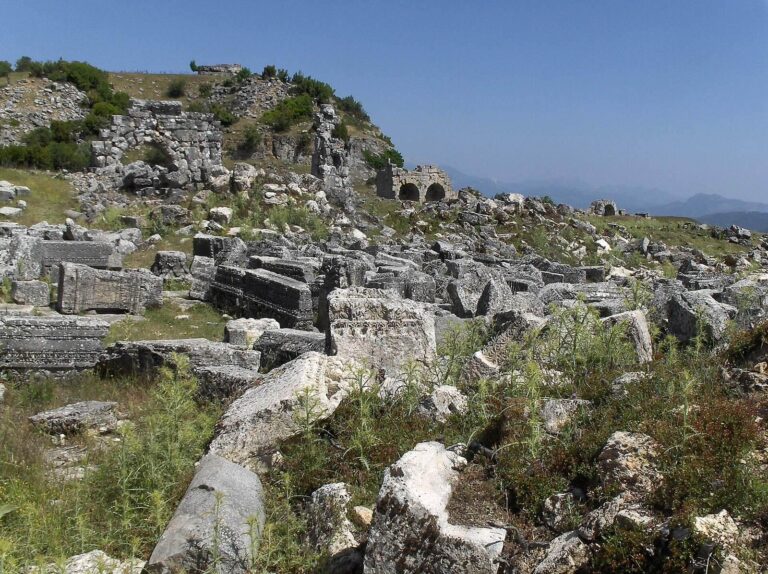
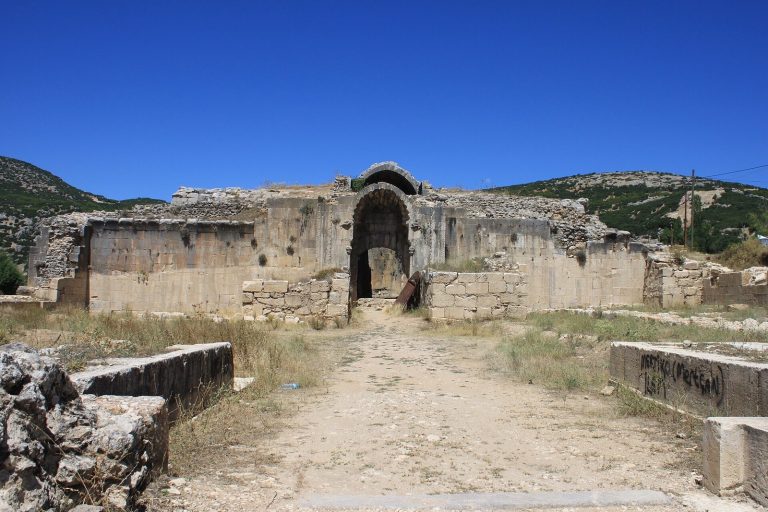
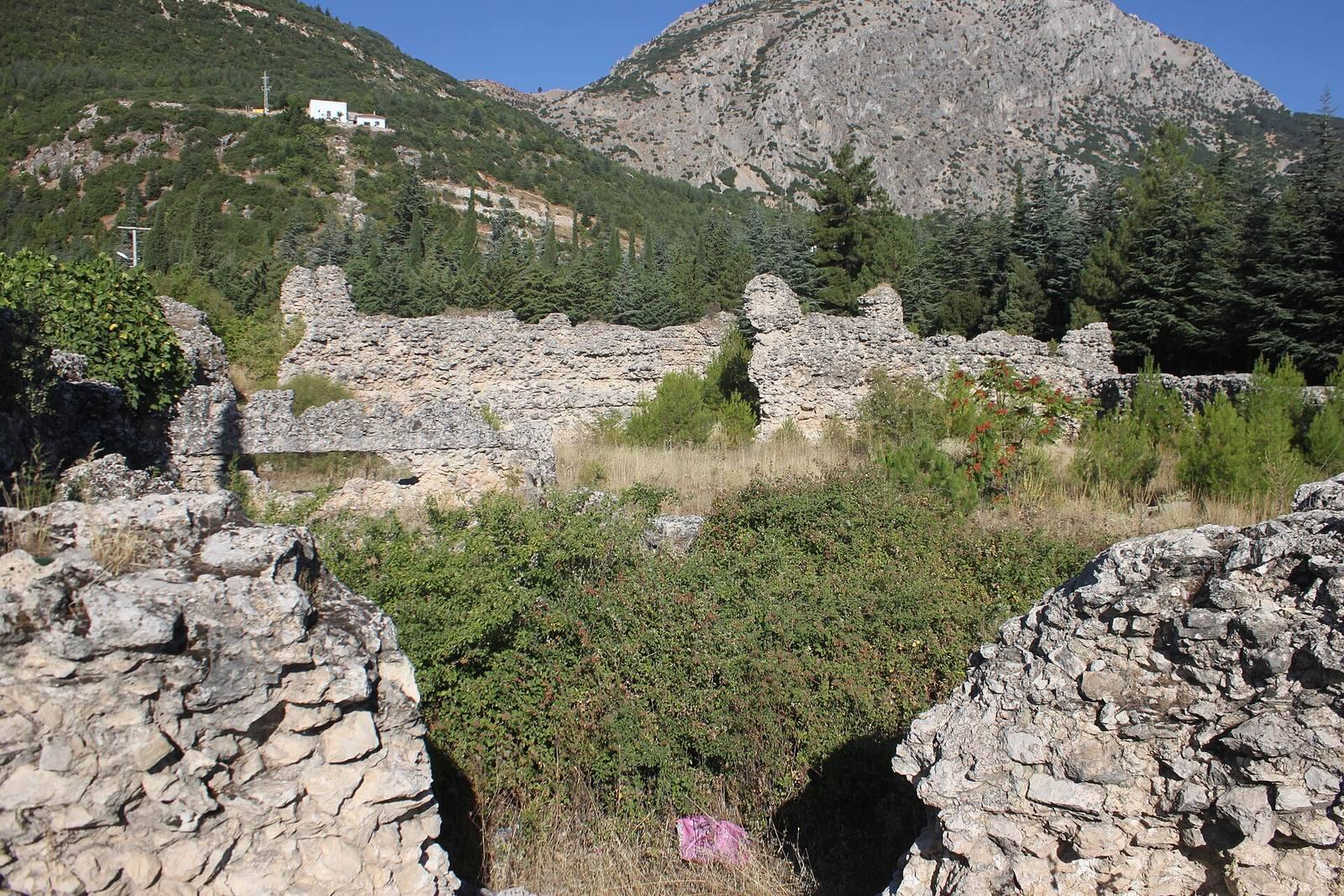
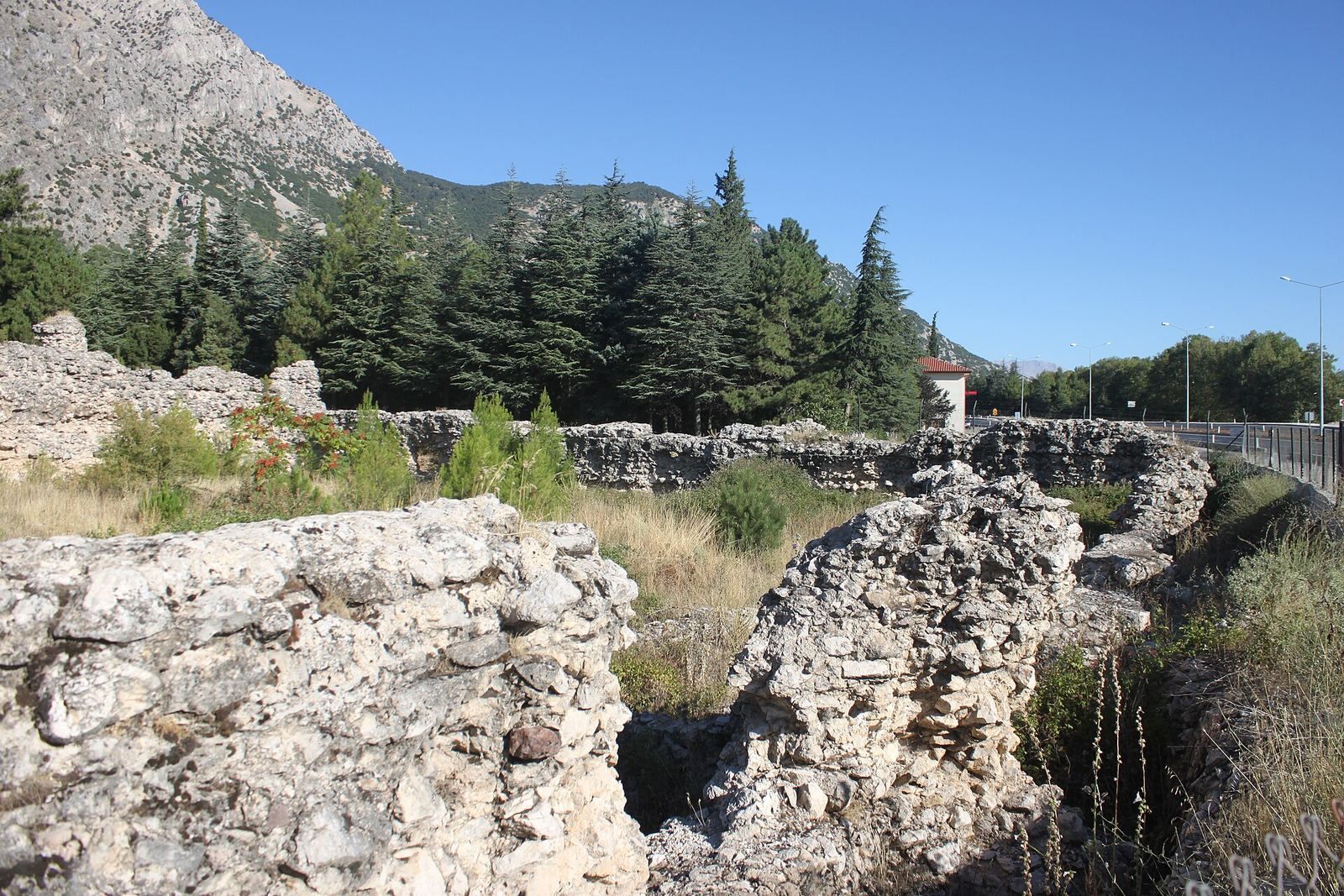
Foundations and sections of the outer wall remain visible, with the wall sections standing about 1–3 m high. The site is overgrown. Fragments of the main entrance portal recovered from the site were incorporated into Taş Medrese.